Blue Socks

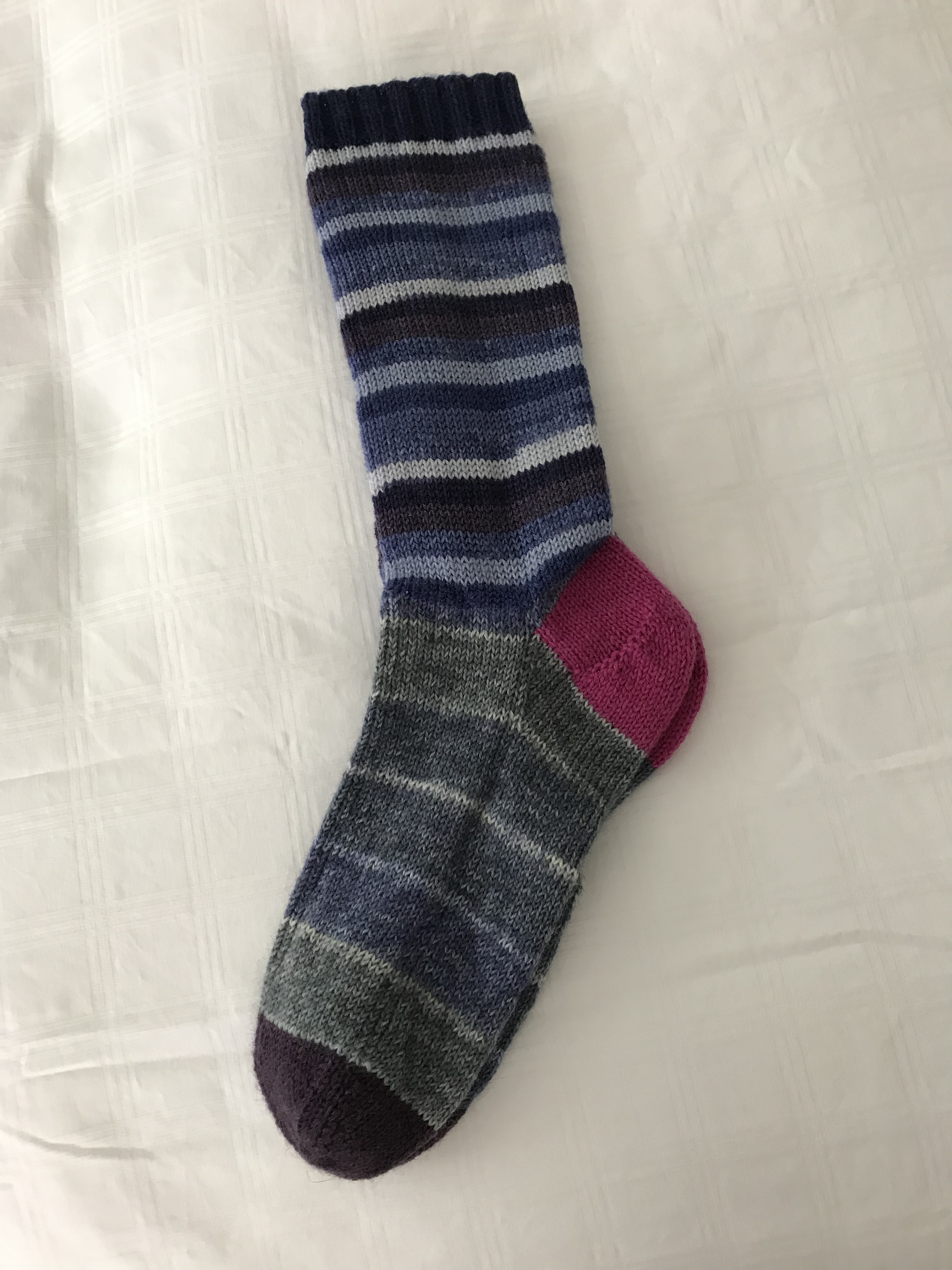
Finished last evening. This pair has a longer foot than I usually make – 60 rows from gusset to toe-off rather than 50. My friend wears a women’s size 10 shoe (as compared to my size 8) so I made the foot longer.

Blue Socks

Hope it’s not too long! If it is, I’ll unmake the toe, remove 4-5 rows and reknit the toe.

Before / After

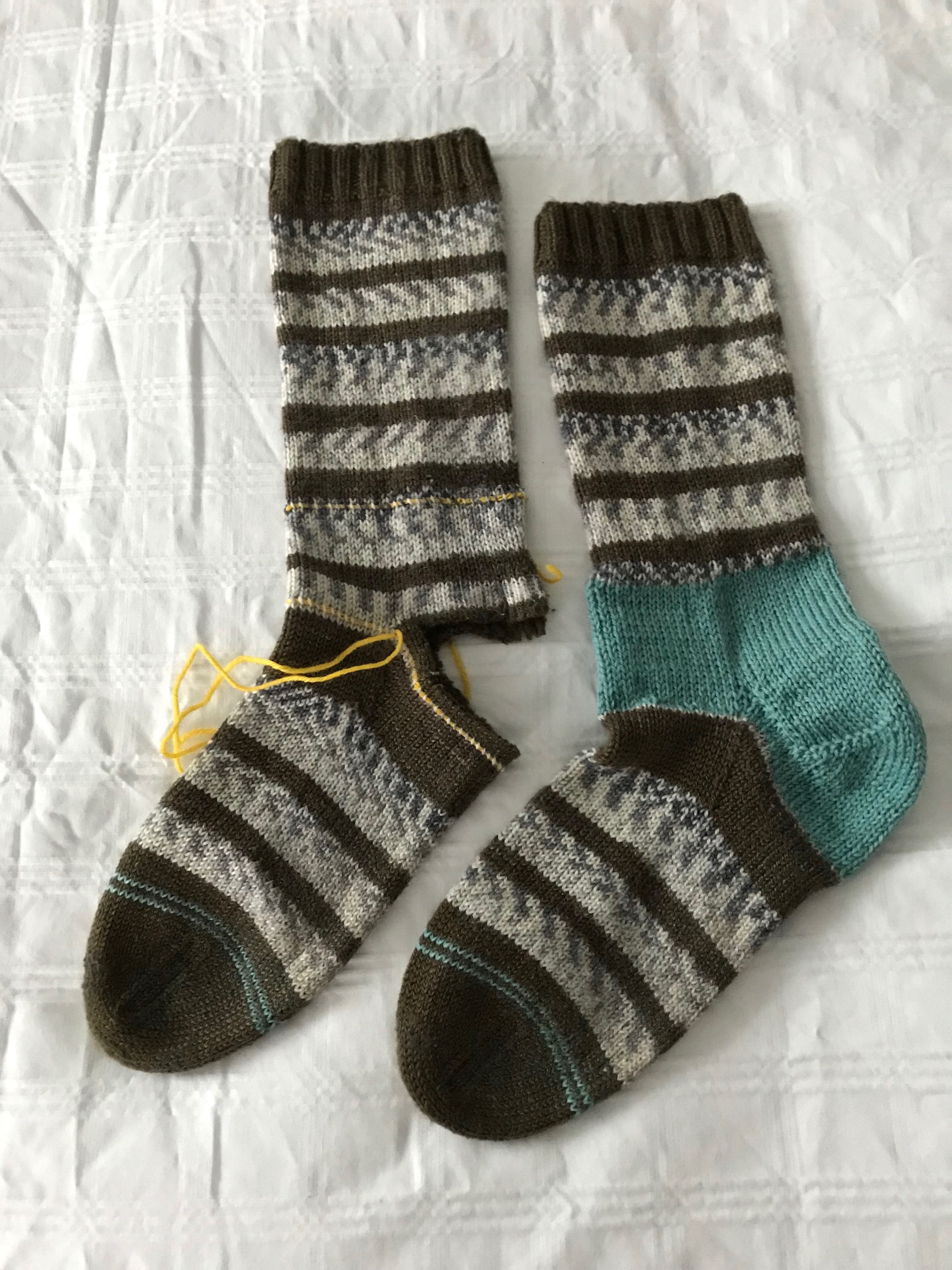
I have a basket of socks beside my chair all in need of repair – the heels are worn (some worn through, hopefully the holes are still small enough that a heel replacement will do). The pair below, however, is a left over from the previous batch of repairs – put aside because they needed more than a heel replaced – the back of the leg was also worn through to the point that I knew I’d have to cut it off and reknit part of the leg – a rebuild, not a repair.

I decided to work on them after I’d calculated the time it would take to rebuild the socks – about 7-8 hours compared to  25 hours to knit a new pair.

Before / After

This is the before and after – the before sock has already been set up with stitches picked up on the leg and across the instep. Next steps are to cut close to the carrying thread, pick away the extra rows to get to the stitches on the thread, pick up stitches on the leg, extend the leg, create a heel, and then the difficult/tedious part – grafting back the foot. It’s worth saving the foot beyond the instep because it still has lots of body.

It took me about 4 hours yesterday to do the prep work and rebuild the sock on the right. It’s now a wearable sock for a couple of more seasons.

Grey/Yellow Socks

Finished last evening. I probably worked on them for 10 days or so (same 25 hours it takes me – I just knit more each evening). I was given the yarn by one of the women in the Friday knitting group – she picked it out of a donations bin at her church, didn’t want to use it herself, but thought I might like working with it.

The yarn (an older Regia pattern) looked pretty dull, someone had knit and unravelled a portion of it, but I thought the yellow offered some possibilities, so I added in the yellow stripe at the top, alternated rows for the next 10 rows, then knit the remainder of the sock as the yarn worked out. Cuffs, heels, and toes all used a bluish grey which blended well with the greys in the yarn.

Grey/Yellow Socks

Not a bad looking sock. Turned out to have more life than I’d anticipated.


Regia Pairfect #2

Schachenmayr, the company that makes Regia sock yarn, has had for the past few years a line called “Pairfect” – designed to created a patterned sock without any decision-making. I tried it when it first appeared and found it boring to work with – very dull patterns. This season the variegations looked like they’d be more interesting with clearly different cuffs, heels and toes.

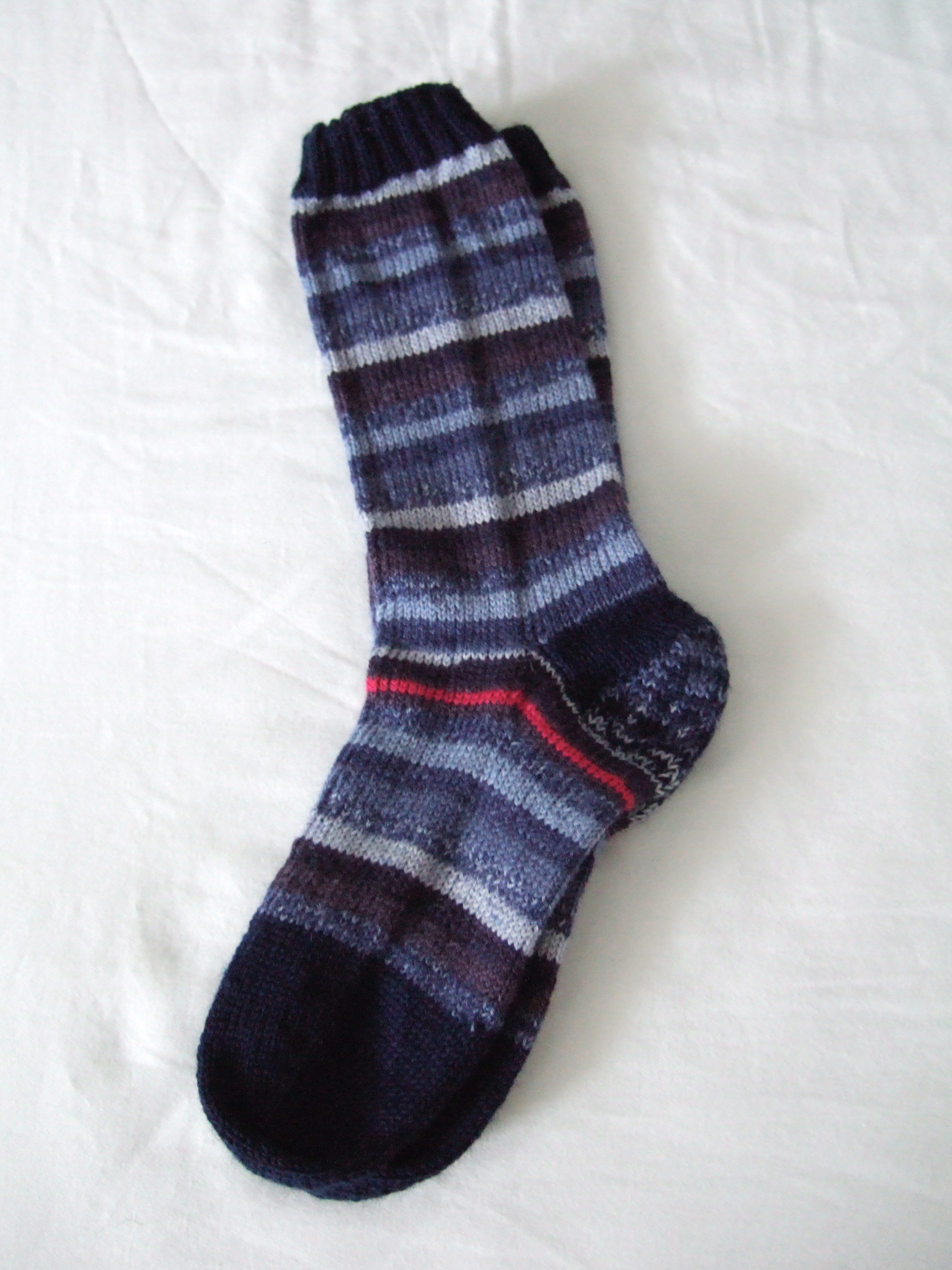
Finished this pair of socks (#2) last evening:

Regia Pairfect in Blue

Still just as boring to knit – no decision-making required – the yarn for the two socks is marked with a length of yellow yarn (intended to be discarded – or saved for another project). When making the first pair using the yarn a couple of weeks ago I changed up the design but then had to do quite a bit of reconnecting to be able to complete the socks.

This time I decided to follow the yarn. It knits up nicely but the part of the sock-making that I enjoy is deciding what colours contrast with my variegated yarn and where to insert contrasting strips, whether to change the heel colour, maybe even a third colour for the toes! So even though the variegated design changes and the repeat is a long one, there’s no creativity in knitting these socks.

If you’re not an adventurous sock knitter then you’ll love this yarn because it does knit up a respectable patterned sock. I’m not going to use it again.

Regia Yarn – “Pairfect Design Line”

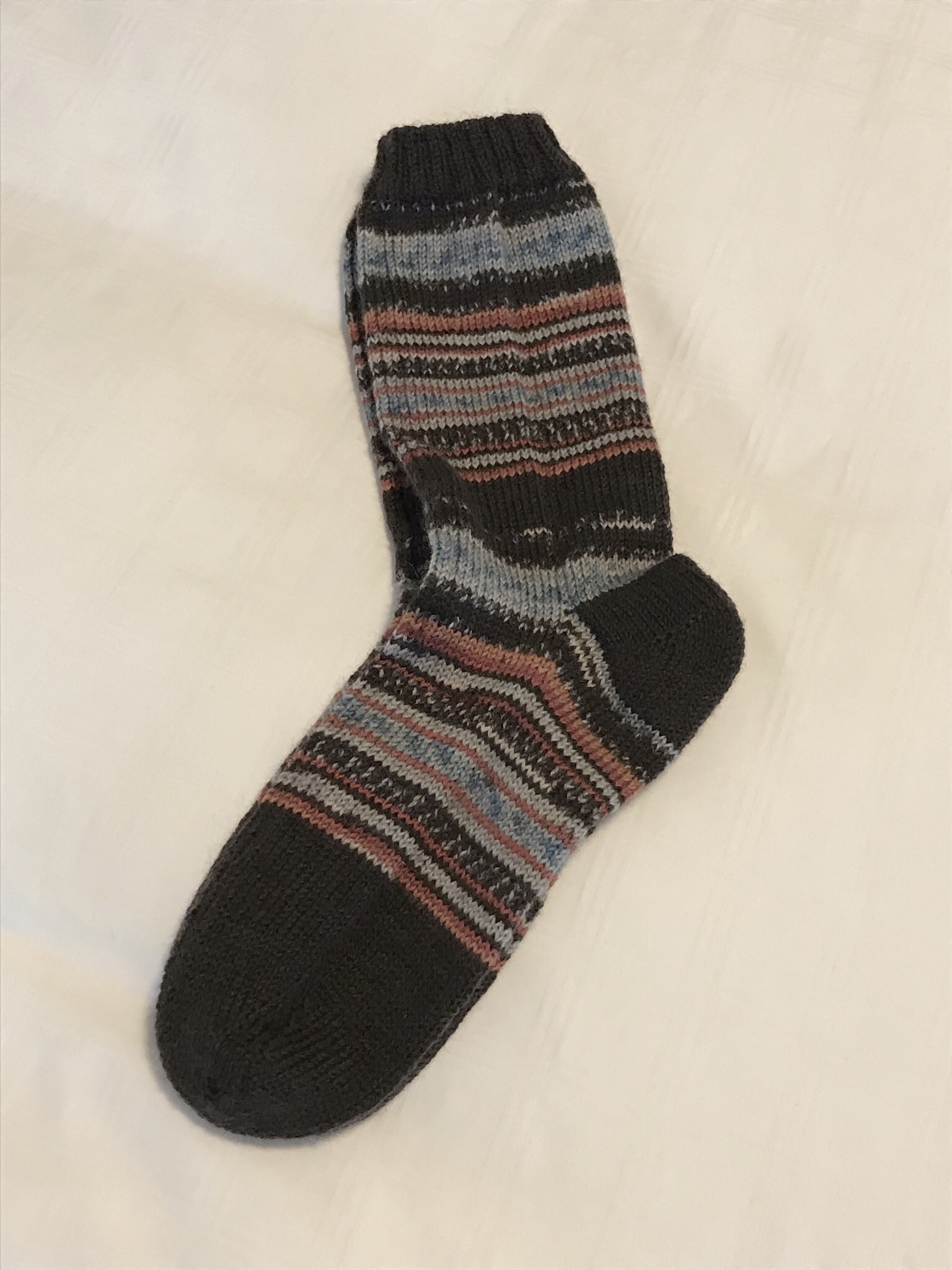
Brown Socks

This Regia yarn is dyed to create a complete sock with contrasting cuff, heel, and toe and a variegated yarn between to create a design.

However, the yarn expects a 24-row cuff and I only ever knit 12-rows so I cut out the extra and carried on. But then I ended up with a short leg; I continued the leg past the yarn intended for the heel and into the second patterned section. When I get to the heel I need brown yarn   – I added back the brown I’d cut out. I knit the heel, continued on with the foot and ended up needing more brown for the toe. I used the last scraps from the upper leg and fortunately had enough yarn to complete the foot.

The second sock was easier since I knew how it would knit up.

I have a second ball of that yarn in blues and mauve – this time I’ll just keep knitting through – changing from cuff to leg without changing the yarn. When I get to the “heel” I will turn it and carry on .

Final Sock Remake

Final Sock Remake

Finally done with remaking and repairing socks. Four pairs (one was too far gone to work on so I discarded it). Three pairs have been returned to their home. I’ll get this one back later in the week.

Now to return to making new socks. I have a good supply of yarn in the yarn stash – enough to keep me going for the next three-four months.

#3


Restored this pair last evening. Straightforward heel replacement. No fussing. I was even able to come close to the original yarn I used for the heels.

Now working on pair #4 – another full foot replacement. That’ll take 4-5 days. Then back to new socks.

Socks – New Again

New Again – Sept 2017

5-6 hours later and here’s a new pair of socks – restored with new heels (Click here for the socks before I reknit the heels). If you’re a dedicated knitter and want to know how I do it check out my instructions.

Knitting a heel itself doesn’t take long – each heel takes about an hour – it’s all the preparation, picking up stitches on a carrier thread, carefully pulling out excess knitting (from the cut edge), and then finally grafting the instep onto the new heel (this last step requires slow careful stitching – done loose and then tightened just enough for an even finish, stitch by stitch).

Obviously replacing heels goes a lot faster than reknitting an entire foot – but I can only get away with this easier repair if the holes aren’t too big. If the worn heel includes some of the instep, I have to cut off everything, retaining just the legs and building a new sock from there.

Socks Revisited

January 2008

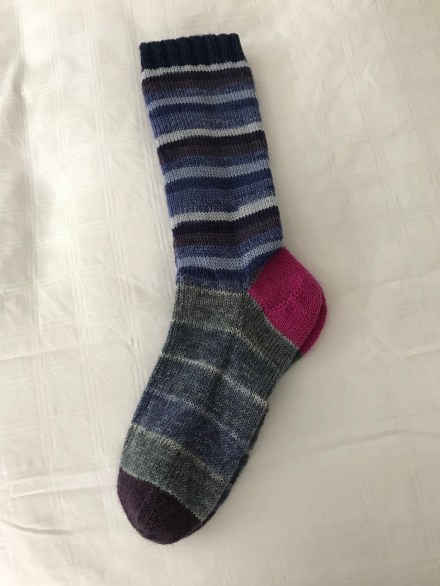
Here’s a pair of socks I made in 2008. The heels were repaired once in the interim. I got them back again for repairs a couple of weeks ago – heels for sure, but when I went to work on the socks I thought the ball of the foot was too worn to keep, so full feet were needed. The socks are still worth salvaging – the legs are fine, and that’s half the work! Nine years of wear is pretty good.
Remake September 2017

For the remakes I use whatever yarn I have on hand that might sort of blend. I could always use a solid, but where’s the fun in that. I’m not into boring – what makes the sock knitting work for me is a constantly changing pattern which the variegated yarn offers. I decided on bright heels to offset the darker yarn I used for the foot. These socks will serve for another 5-7 years!

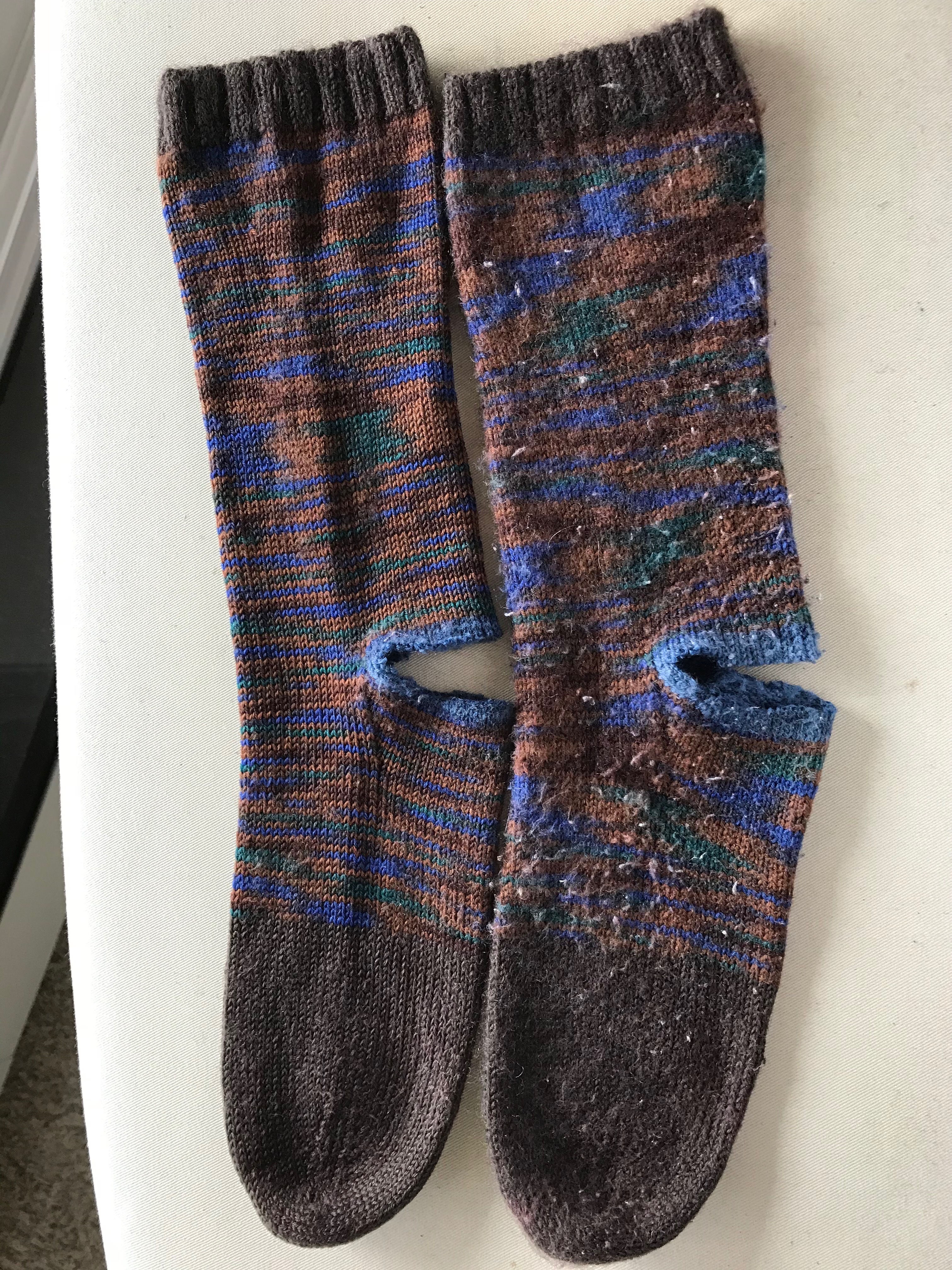
The reality is when these socks come back to me, they look like this – holes and full of nubbies:

After & Before! (Worn heels removed)

These socks are well used – they’re slept in on flannel sheets! You can see what they look like before I begin working on them. The first step in the restoration is to shave them – this morning, I used my electric clothes shaver to clean up the nubbies so I have a clean sock to work with. This pair has an intact foot, so all I need to replace are the heels. This is the pair I will work on next.

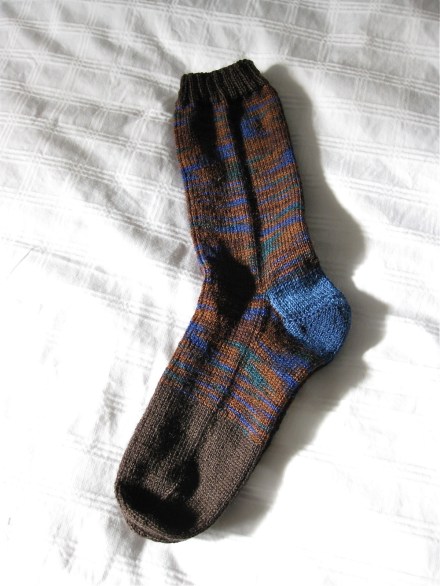
Here’s the original pair from 2010:
2010

When I’m done with the repairs these socks will look almost like the original socks. Seven years of wear before a heel replacement – pretty good!

I still have a couple of pairs of socks in my sock drawer from 2004/2005 (I began sock making in October 2003)! These socks live a long time when they’re cared for. That’s why I still find making them so satisfying. I know my sister Barb has some that are that old (her’s also get repaired when needed) Gotta keep these socks alive.