The election is over. Now what?

That’s David Suzuki’s headline from the piece linked below

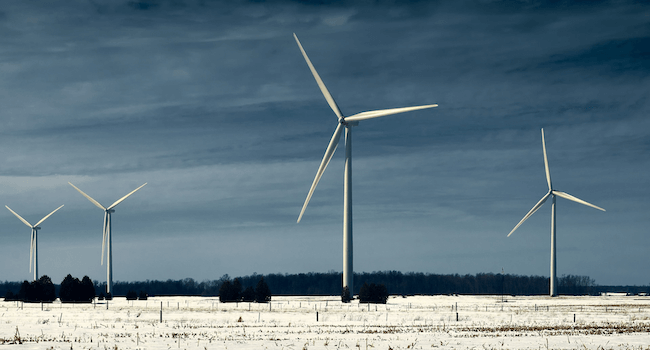
Climate issues disappeared during our election. Building energy independence, self-sufficiency, expansion of pipelines were the “big” ideas. The costs of sustaining our reliance on fossil fuels were nowhere to be found. 

OK, so we understood the “enemy” we were fighting was US expansionism, Canadian annexation, trump’s threatening the destruction of our economy. Except for our determined Green Party, the other leaders were focused on the economic realities facing us. We accepted that.

But the election is over. Now what? 

We can’t lose sight of the overarching threat that ignoring climate issues presents us. We can’t forget about the economic and social costs of increasingly destructive heat domes, violent storms, wildfires, floods, droughts, migrating disease threats, habitat loss, and on and on. We can’t pretend these threats don’t matter – they impact everything else in our lives.

We need to keep discussion about these serious issues alive; we need to place them at the forefront of all decision-making going forward.

The tough conversation is, of course, what balance can we, must we, strike between sustained use of fossil fuels and changing over to clean energy resources. That conversation threatens Canadian unity! 

Both Alberta and Quebec claim they feel exploited/hard done by/undermined/ignored by the rest of the country. Alberta is threatening to vote for separation.

Nevertheless, we’ve got to find a way to talk about these tough issues in a civil manner. We’ve got to drop the bombast and hostility and name calling and threats in order to solve what are existential problems!

am holding my breath, hoping this election has sent a message to our politicians about how they MUST conduct themselves! We’ve sent them to Ottawa to solve serious problems! They damn well better get to work and stop with the name calling and other stupidity we’ve seen for far too long! Our parliamentary system may be confrontational by design. Right now, I believe, all parties must cooperate to resolve the many grave issues we’re facing.

I suppose, in the global scheme of things, Canada’s contribution to climate change is relatively small, but that’s no reason for not putting climate issues at the centre of all our political decisions. There are a number of tipping points to be concerned about: the mass death of coral reefs, the abrupt thawing of the permafrost, collapse of the Greenland ice sheet, breakup of west Antarctic ice, sudden shift in the West African monsoon, loss of Amazon rainforest, shutdown of Atlantic currents. Any one of these impending scenarios could have catastrophic consequences for all life on earth.

The thawing of the permafrost is of particular concern to Canada since most of our north is frozen and increased thawing is causing major difficulties for northern communities (not to mention the release of astronomical amounts of methane into the atmosphere). But even more than that we are experiencing drought on the prairies, heat domes in the west, more severe storms affecting the Atlantic provinces, wildfires in many parts of the country, unexpected flooding following torrential rainfall everywhere – we’ve experienced all of these disaster events during the past decade. We should all be concerned. 

(From Suzuki’s piece this morning):

This election was in large part about countering threats from our neighbours to the south — neighbours we once thought we could rely on but who have turned against us in efforts to weaken our economy and come after our resources. Let’s hope our new government is up to the challenge. Part of that will be showing there are better ways.

During the election campaign, the fossil fuel industry and its political supporters used the tensions between the U.S. and Canada to argue for ramping up the industry — to build more pipelines and oil and gas infrastructure. The ostensible justification is that doing so will make Canada more energy independent. It’s a bogus argument, given that pipelines and oil and gas infrastructure don’t get built overnight.

If we truly wanted to become energy independent, we would focus on the most cost-effective and efficient energy: renewable energy from wind, solar, geothermal and energy storage. We need a clean-powered, connected electricity gridthat facilitates interprovincial transmission. That would give us independence not only from the U.S. but from the multinational oil companies that seek only to enrich their owners, executives and shareholders.

The election is over. Now what? 

Our election may be over, but our work is just beginning.

I agree!

Working With Decorative Zipper

Normally, when you apply a zipper, the zipper tape is hidden within the garment or bag or whatever. But lately I’ve been using a decorative zipper which has interesting tape I want to showcase. How do you apply a zipper in that situation?

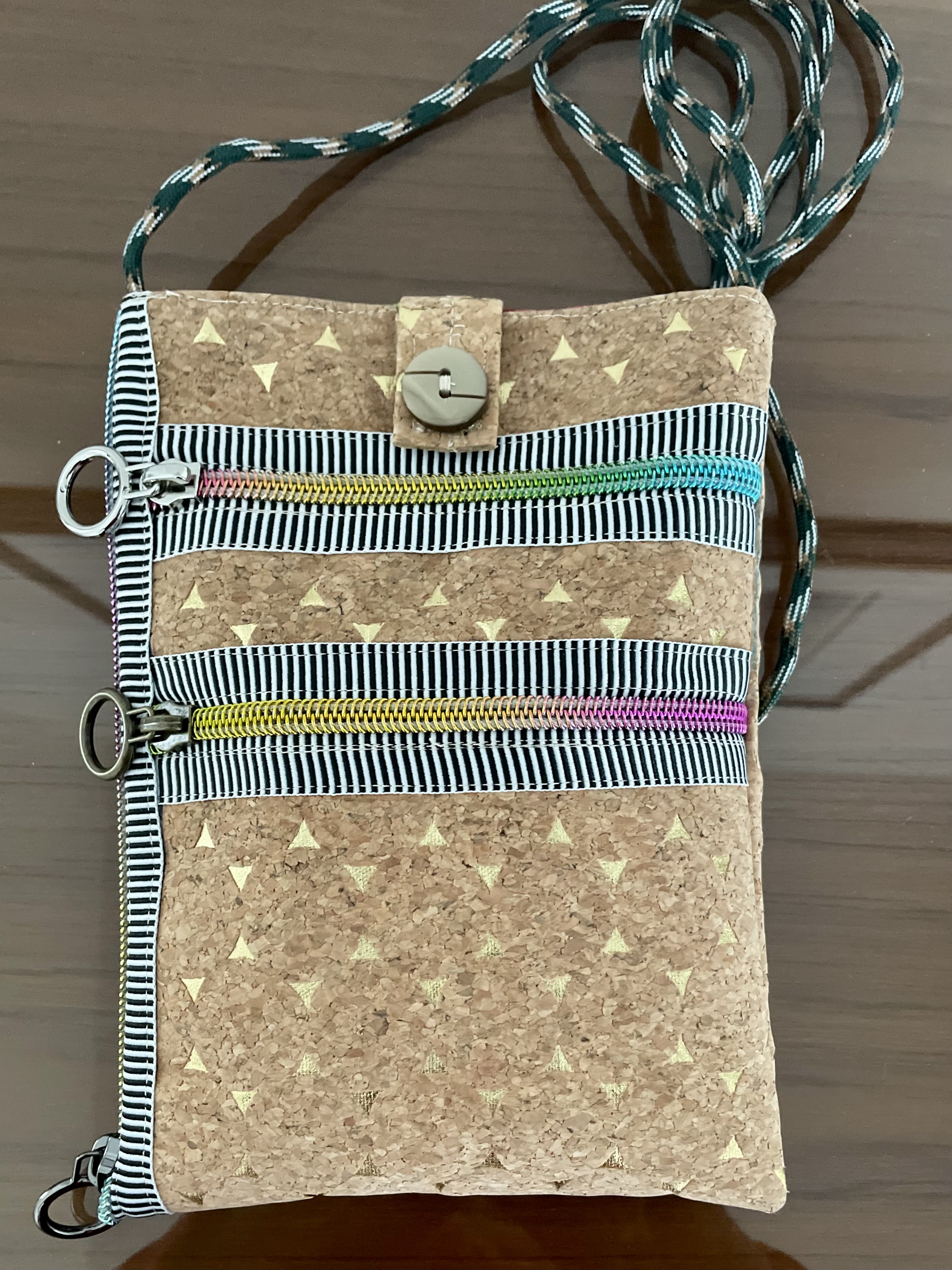
Here’s my cork iPhone case which I finished a couple of days ago using the zipper tape as a focal detail:

iPhone Case using Cork and Decorative Zipper

Now, that I have finally figured out how to apply decorative zipper tape, I’m about to make another bag – I will take photos at each step so I can prepare instructions.

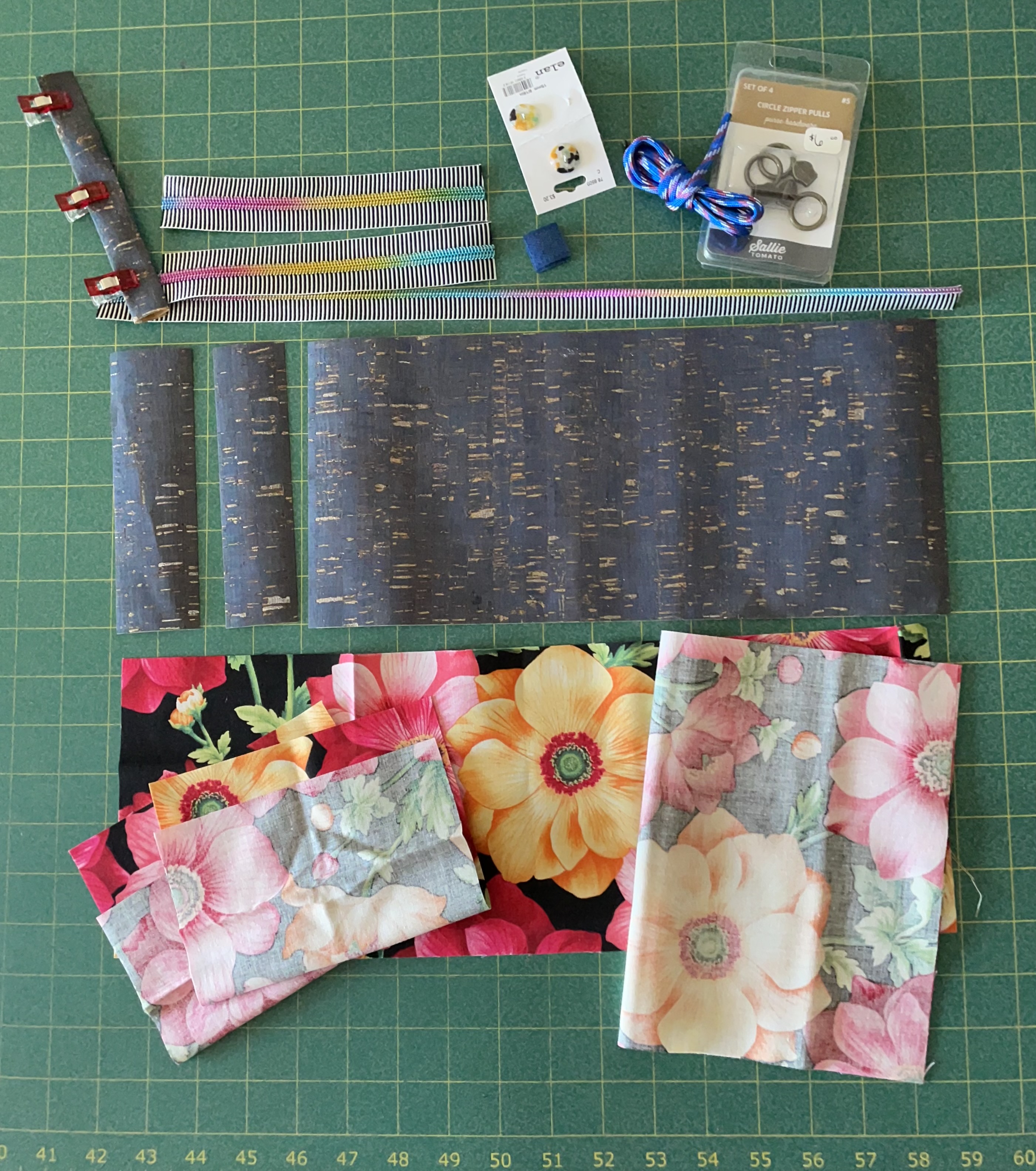
Step one – prepare all the elements:

Supplies for iPhone Case

What do I have?

I’ve cut a 6″ x 16″ wide strip from some denim cork fabric;
I cut 1 3/4″ and then 1 1/2″ pieces from one end;
I had a leftover 2″ x 6″ piece which I’ve folded in thirds for the tab (upper left with clips).

I had one 17″ length of zipper tape (the other half of the tape I had used on the completed bag above), I cut two more 7″ pieces of zipper tape (longer than the width of the bag so I have some wiggle room to add the slides); I have three slides.

I cut four pieces of lining fabric:
one piece of 6″ x 16″,
one piece – 8″ x 12 1/2″,
two pieces 6″ x 8 1/4″ (to accommodate the size of a credit card)

A piece of velcro
An interesting button
48″ of parachute cord

With everything prepared, I’m ready to sew.

I will start by constructing the tab – the cork strip is folded in thirds, I’ll use a decorative stitch to hold it together; next, I’ll add the “hooks” part of the velcro to one end; last, I’ll stitch the button to one end (as a decoration).

Step two – the body.
I’ll start by applying zipper tape between the small strips, then along one side….

Now – on to actually making the case. I hope to have the photos by later this afternoon. I’ll write instructions tomorrow and add them here when they’re done.


May 3 2025

I made the second bag two days ago, taking pictures as I worked, only to discover when I went to document the process that I’d created the pockets “top-down” (which works but is too difficult to describe and follow because you’ve got to keep your pocket linings out of the way as you work your way down!).

I should have worked from the “bottom-up” – adding zipper and pocket lining to the “bottom” pocket first, then the upper pocket second. So now I have to make another bag, take pictures as I work, so I can describe what I do.

I’ll get to that when I can. (Here’s where I’d put a “sad” emoji).

Here’s the finished bag:

You can’t tell how I constructed it once it’s done. However, it would have been much easier to describe the process had I installed the bottom pocket first.

Oh, well.

Take a deep breath…

Bernie commented on my previous post – Collaboration, NOT Confrontation – with the link above. She had included this commentary by Marc Doll in her piece. Here’s what Marc Doll had to say

If you voted Conservative and already hate Mark Carney.

Take a breath.

Ask yourself why?

How did it happen that you harbour such a strong emotion against someone who… up to this point has likely only done things you like.

He replaced Justin Trudeau.
He got rid of the Carbon tax.
He has promised middle class tax cuts…. etc.

From my perspective we have just elected a Centre-Right government led by a well-respected economist who may well be the most knowledgeable leader in the Western World, who was appointed not once but twice to be the top Banker of 2 separate nations by 2 very right wing governments, who was educated in two world renowned Universities, and who currently has no scandals to his name.

Ask yourself how you came to a head-space where you abhor someone who is by all measures a Progressive Conservative? Why do you have a high level of antipathy towards someone who you likely agree with in all but the colour of the flag he chose to fly? Ask yourself how much money had to be invested by political interests to get you to already feel such strong emotions against someone you would have supported strongly under a different colour banner?

I know why I am sceptical about the direction the Liberals are going to take our country as I’m one of the weird folks who still think the environment, some controversial social issues, respect for international borders, international law and a redistribution of power and money from the billionaire class back to the regular Canadians as top issues.

Carney has a far from stellar record on any of the issues I deem important but still I recognize he is the adult in the room and frankly the only leader who is equipped to deal with the Threat that we as a nation face.

If you are filled with anger. I can tell you it is an anger that someone spent a lot of money to make you feel.

It is time for Canada to come together as a Nation and your ‘purchased’ anger needs to be set aside at least until he has a record which you can actually point to as a reason to hate him.

In the meantime. Let’s get on to team Canada against our current enemy.

Let’s work to break down the economic trade barriers inside our own country.

Let’s give ourselves more than the US can take away.

Let’s continue to boycott everything from the nation that threatens our existence.

Let’s be leaders and build partnerships with the remaining stable and sane countries in the world.

Lets’s continue to plan our vacations in Canada and buy Canadian.

Let’s pull for our Country and stop letting the billionaire class divide us and create hate and antipathy so that they can enrich themselves and consolidate their power.

Marc Dole

Latest Socks

While watching the election coverage the other night, I finally finished a pair of socks.

I was’t sure I had enough of the mauve yarn to complete two toes – so I dug through my stash for another leftover. Came up with the turquoise. There was enough in that ball to finish the pair of socks.

Into the stash they’ve gone.

Collaboration – NOT Confrontation!

I just hung up from a long conversation with a good friend. A day has passed since the Canadian federal election. She wanted to know what my take was on the outcome. I’ve had a couple of days to think about that.

My first takeaway is that the Ottawa riding of Carleton said to Poiliever – no thank you. We saw the real you at the “freedom” convoy in Jan/Feb 2022! We remember; not fooled by your election persona. Poilievre lost his seat in Parliament.

The Conservatives didn’t win the most seats. While they gained 24 they fell short of any kind of win. Enough Canadians didn’t trust Poilievre to take the helm. Enough Canadians wanted nothing to do with his confrontational politics – his constantly blaming everybody else for what he called a failed Canada. Enough Canadians couldn’t imagine this one-song candidate as Prime Minister of the country. Enough Canadians sent a message to Poilievre and his Conservative party – we don’t like how you play this game.

You refuse to acknowledge the global climate crisis.
You are blind to our country’s need to find a path toward a fossil-fuel-free future. We need to build energy independence across Canada – using fossil fuels for now perhaps, but simultaneously and collectively we must build a cross country non-carbon energy network.
You don’t seem to understand that going forward any consideration of natural resource extraction/development will have to include Indigenous peoples in any decision-making.
You seem more than willing to jettison foreign aid as an extravagance, yet foreign aid builds friends and allies; helping less fortunate nations provide medical, agricultural, educational resources for their population benefits us, too.
You totally don’t get the important role the CBC plays in our cultural landscape – it can’t be defunded without great cost, particularly to our rural and northern communities.
You say nothing about supporting Ukraine – a beacon in the fight for national freedom from which Canada could learn a lot (we could easily be in the same position were trump to make good on his insistence that Canada become the 51st state!).
You tout “the biggest crackdown on crime” – but ignore the difficult circumstances that nurture criminal activity.
Your view of immigration is blind to the realities that force people to seek refuge from the political violence and climate driven changes where they live.

Fortunately, enough Canadians voted against this Canada.

Enough Canadians supported Carney for the Liberal Party to win the largest number of seats in Parliament – 169 (three short of a majority); but there was skepticism, too. There was enough support for him to become PM, but not enough for the Liberal Party to work unencumbered!

What I think the electorate has said to Parliament is,

“Hey folks! It’s time to collaborate!”

The economic, social and political threats to Canada are great.
We can’t afford the luxury of the constant negative harping about what the government is doing wrong now and in the past.
We’ve drawn a line and said “Work with one another!”

We all agree on the problems we face –
the economic challenges wrought by trump’s tariffs
his threat to our sovereignty
our housing shortage
pathways to a renewable energy future
our healthcare chaos
income inequalities
a balance in immigration
sustainable cities
a stronger federal/provincial working relationship…

We’ve said: “Work together to solve these and other problems.”

And do it as quickly as you possibly can – the future will be upon us before we realize it!


iPhone Case

I’ve been making new iPhone cases for myself after having finished the one for my friend Heather.

In fact, this is the third one. I made one using a bit of leftover painted leather, but wasn’t happy with it – the design wasn’t straight on the piece leather and it annoyed me. I did a second using some leftover royal blue leather, but when I took it apart to add some firm backing, the leather split!

This one is made from a cork fabric. Not easy to work with – it’s stiff and turning the bag rightside out took a bit of effort, but I’m happy with it, even if it could be a 1/2″ wider. I can still get everything into it, but it’s a tight squeeze. I’m hoping the fabric will soften and stretch a bit, maybe not. I also have no idea how long the fabric will last before the thin layer of real cork begins peeling off!

Now on to fixing some errant place mats I made for a friend. We didn’t preshrink the fabric (a bad decision) and the backing fabric shrank when she washed them. I made eight. Four are still unused. I’m going to quilt them with a tight design so when the backing shrinks it will just give the placemats some texture. The other four I’m going to have to take apart, and remake trimming the top fabric to fit the backing. Once they’re sewn back together, I’ll quilt them, too. The taking apart is an evening project while watching TV.

The Coltsfoot Is Back

In my neck of the woods, the first serious harbinger of spring is the coltsfoot – small yellow flowers close to the ground. A friend had a few show up at her place two weeks ago. They showed up around my apartment building early this past week. Most people don’t look closely enough and mistake them for dandelions.

I love how they peek out from the gravel and bits of dead vegetation. You can’t miss them. Those small green leaves in front of the flowers are actually wild strawberry, they’ll get buried by the large coltsfoot leaves which will show up after the flowers are done.

They offer a cheery pause from all the gloomy news both in Canada and the US and the rest of the world!

Why We Need The Banker as PM

Just read this very interesting piece on Substack that I feel I should share:

Carney’s Checkmate: How Canada’s Quiet Bond Play Forced Trump to Drop Tariffs

Let’s talk about the moment Donald Trump blinked. It wasn’t loud. It wasn’t a tweetstorm or a rally rant. When the tariff threats that had the world on edge—125% on China, 25% on Canada’s autos, a global trade war in the making—suddenly softened. A “pause,” he called it. A complete turnaround from the chest-thumping of the past week. And the reason? Mark Carney and a slow, deliberate financial maneuver that most people didn’t even notice: the coordinated Treasury bond slow bleed.

This wasn’t about bravado. It was about leverage. Cold, calculated, and devastatingly effective. 

Trump’s pause wasn’t because people were getting yippy…

Turns our PM was at the helm, here! He saw what was coming and did something about it – no fanfare on the campaign trail, no waving flags, no patting himself on the back. He talked to the EU, to Britain, to Japan, others, with a plan – slowly sell their US Treasury Bills and let the market do the talking. They were ready for the tariffs that trump had announced well in advance of “Liberation Day”. When those silly tariffs were announced the selling began. It didn’t take long.

Rewind a bit. While Trump was gearing up his trade war machine, Carney, Canada’s Prime Minister, wasn’t just sitting in Ottawa twiddling his thumbs. He’d been quietly increasing Canada’s holdings of U.S. Treasury bonds—over $350 billion worth by early 2025, part of the $8.53 trillion foreign countries hold in U.S. debt. On the surface, it looked like a safe play, a hedge against economic chaos. But it wasn’t just defense. It was a loaded gun.

Carney didn’t stop there. He took his case to Europe. Not for photo ops, but for closed-door meetings with the EU’s heavy hitters—Germany, France, the Netherlands. Japan was in the room too, listening closely. The pitch was simple: if Trump went too far with tariffs, Canada wouldn’t just retaliate with duties on American cars or steel. It would start offloading those Treasury bonds. Not a fire sale—nothing so crude. A slow, steady bleed. A signal to the markets that the U.S. dollar’s perch wasn’t so secure.

Blundell explains how it all worked. Click on the link, scroll down a bit and you’ll find out how this setup all worked, and why.

That’s the message Carney delivered in his call with Trump last week. No leaks on the exact words, but the outcome speaks volumes. Trump didn’t just pause the tariffs; he backpedaled hard. China’s still in the crosshairs—125% duties are no joke—but Canada? The EU? Japan? They’re off the hit list. For now, at least. Why? Because Carney’s play wasn’t noise. It was power.

Let’s be real: Trump’s spent years calling Canada a freeloader—remember his 2019 NATO jabs?—while ignoring the inconvenient truth. Canada’s $350 billion in U.S. debt isn’t charity. It’s a lifeline. Japan’s trillion-plus? Same deal. The EU’s pile? Ditto. These countries aren’t just buying bonds to be nice; they’re bankrolling the U.S. government. And when they threaten to pull the plug, even slowly, Washington listens.

This was the determining factor in Trump’s surrender. Not the public spats, not the retaliatory tariffs Canada slapped on U.S. autos (though those stung). It was the quiet, coordinated threat of a Treasury bond unwind that bent Trump’s knee. Carney didn’t need to shout. He didn’t need to posture. He lined up the free world—Japan, the EU, Canada in lockstep—and showed Trump the cliff’s edge. Strategic brilliance doesn’t get louder than that.

Carney also issued Canadian Treasury bonds in USD which was another brilliant way to strengthen Canada’s position and financial reputation. Little triggers and strategies you get when the world’s most respected economist is your PM…

You get the drift. Apparently, the instigator of the T-Bill selloff that scared the shit out of trump was Carney. The experienced banker. The person who understands international finance.

Carney made sure to tell the world that despite Trump kissing our northern ring, we’re not negotiating shit until after the election. He also said we’re still moving away from our relationship with the US for greener, saner pastures.

Looks like we have THE man for the job.

We need to make sure we elect enough Liberals for him to continue in the job. PP wouldn’t have had a clue how to do this, or that it could be done. All he knows is how to name call. To act like trump.

It’s clear we need The Banker!

[If you want more information on Carney check out Dear Canada: We’re at the Peak of the Election “Smear Campaign” ]

I Am Canadian!

I wrote this piece on Oct 19/24 – after reading Lozada’s piece. I thought I’d share it today because the excerpt from Obasan is even more relevant than it was in October!

This is my own my native land.

I wonder whether others are feeling the same ambiguity I am about what being Canadian involves, particularly as election day draws closer and we are facing perhaps a life-shaping decision between the divisive, trumpish, anger of PP and the well informed, experienced, financial expert to lead our government. We don’t vote for a Prime Minister, which makes the decision more complicated but ultimately that’s the decision influencing how I will mark my ballot. As things stand, I can’t vote Conservative no matter how capable my local candidate may be.


An immigrant from Peru, Lozada details the conundrums he faces daily regarding his immigrant identity. I was deeply moved by his writing. Moved enough to write a personal note to him at his email address at the NYT. (I don’t expect him to answer.)

His opinion piece evoked a memory of what Joy Kogawa had to say in Obasan, her novel written in 1981. I felt compelled to find those words again and share them with Lozada.

Here is the letter I wrote him:

Carlos, 

As I was reading your piece, I can’t tell you how it resonated for me.  What’s interesting is I was born here in Canada, my mother was born in Canada, my father was an immigrant as were all my grandparents; I personally feel more “immigrant” these days than at any other time in my life (I’m heading toward 82!). In today’s actively antisemitic world I feel my token “jewishness” separating me from my “christian” friends and neighbours. The conundrums you describe are present in my life in such subtle ways but they are there.

I feel my “immigrantness” weekly when I visit two young Afghan families recently come to Canada. I spend a couple of hours a week with each family chatting in English, reading children’s books in English, to help them learn a language they are working so hard to learn. I visit weekly for these young women to help them overcome the isolation a lack of common language forces upon them. These new permanent residents to Canada have become like grandchildren/great-grandchildren in the almost two years I’ve known them. 

I can’t imagine their decision to leave Afghanistan and their families behind. I know the facts of their escapes through Iran, arriving in Turkey as illegals, the unimaginable luck of making contact with a Canadian citizen sponsorship group who helped bring them to Canada. I’m not an official part of that group (my youngest sister is), but through my investment of time these past two years, I have come to feel a small bit of what my grandparents must have experienced, who knew they would never see those they left behind, many of whom a few decades later would have ended in Nazi crematoria. Both sets of grandparents left Lithuania and Poland/Ukraine respectively and arrived in Canada in the early 1900s. I have no names of those left behind but I am absolutely certain many relatives did not survive WWII.

Canada, like the USA, is a nation of immigrants, yet so many people seem disconnected from that reality. In Canada, we’re a bit more aware of our crimes against the First Nations people – our halting attempts at reconciliation keep reminding us that we displaced them, disenfranchised them, demeaned them and that everybody else has immigrant origins from all over the world. 

We are experiencing in Canada a growing sentiment that we don’t want more immigrants, we need to keep “these people” out – they’re taking “our” jobs (in spite of the fact that Canadians don’t want to do the jobs they are willing to do), making housing impossible to find (that’s really the fault of those of us who made development decisions fifty years ago), overrunning our healthcare system (who actually made the decisions to cut back spending on medicine, education, dentistry, social work, … forty  years ago?). We need these new people for their willingness to work hard, for the cultural diversity they bring to us, for their talents and skills which enrich our community.

Shortly after it was published (1981) I read Joy Kogawa’s novel “Obasan” – there’s a passage in it that has stayed with me these 40+  years – written words of the Aunt (Obasan) who had been born in Canada but sent with her family to a Japanese internment camp during WWII:

—————————————

“The entire manuscript was sixty pages long, I skimmed over the pages till I came across a statement underlined and circled in red: I am Canadian. The circle was drawn so hard the paper was torn. Three lines of a poem were at the top of the page.

Breathes there a man with soul so dead
Who never to himself hath said:
This is my own, my native land!

The tanned brown edges of the page crumbled like autumn leaves as I straightened out the manuscript.

The exact moment when I first felt the stirrings of identification with this country occurred when I was twelve years old, memorizing a Canto of “The Lay of the Last Minstrel.”

So many times after that I repeated the lines: sadly desperately, and bitterly. But at first I was proud, knowing that I belonged.

This is my own, my native land.

Then as I grew older and joined the Nisei group taking a leading part in the struggle for liberty, I waved those lines around like a banner in the wind:

This is my own, my native land.

When war struck this country, when neither pride nor belligerence nor grief had availed us anything, when we were uprooted, and scattered to the four winds, I clung desperately to those immortal lines:

This is my own, my native land.

Later still, after our former homes had been sold over our vigorous protests, after having been re-registered, fingerprinted, card-indexed, roped and restricted, I cry out the question:

Is this my own, my native land?

The answer cannot be changed. Yes. It is. For better or worse, I am Canadian.”

—————————————

Securely Canadian having been born here myself, I still feel Obasan’s struggle as somehow my own.

Your NYT piece has evoked all those same feelings about country and belonging that I found those many years ago in Kogawa’s writing,

Thanks for such a passionate piece.

Judith Newman


I finally made it back to my sewing machine. This week I finished a housecoat (no photo since I’m wearing it!) Today I made an iPhone case for a friend – she asked me to make her a new one since her new phone is too large for the old one. I just finished it:

Now to make another for myself.

Substack!

Over the last couple of months I’ve been sucked into that giant whirlpool called Substack. It began when trump first announced impending tariffs on Canada, ridiculing our Prime Minister (“governor”), and declaring Canada would become the 51st state. I couldn’t tear myself away from the train wreck happening in real time.

I found it impossible not to become glued to the “news’ and since the US media (both TV and print) have largely stopped covering and analyzing the “real” news (those institutions have fallen on their faces to accommodate trump) I turned to Substack – the independent writing platform that has drawn many wonderful, serious political writers. Many good Canadian writers have found a home on Substack, as well. I can’t pull myself away from their analyses of what’s going on.

I found myself reading and responding several times a day. I even contributed to the raging discourse. I realized my life has slowly been taken over by the pull of what is very good writing and opinions I feel compelled to respond to.

I have done almost no sewing/quilting/making for the past six weeks! (I have continued knitting most evenings.) I suppose you could say my “creative” energy has gone into writing, but I’m not sure there is anything creative in my commentary.

Let me share some writing I think has merit.

At the top of my list is Charlie Angus. I don’t know how he manages it, but every day there’s a new, interesting, piece about the reality Canada is facing.

His (trump’s) rhetoric towards Canada and his attacks on our national economy have intensified, and the consequences are very real.

What surprised trump is that Canadians don’t take kindly to being treated as the chump who gets thrown into the turnbuckle. We are fighting back hard, and trump didn’t see it coming

Angus has become a prominent cheerleader for Canadian sovereignty.

Next on my list is Timothy Snyder (currently at Yale University but moving to U of T soon).

Take today’s piece – excerpts from his book On Tyranny read by John Lithgow.

1. Do not obey in advance. Most of the power of authoritarianism is freely given. In times like these, individuals think ahead about what a more repressive government will want, and then offer themselves without being asked. A citizen who adapts in this way is teaching power what it can do.

Lithgow is a wonderful actor. His reading of Snyder’s text is powerful. These lessons are relevant for Canadians, too!

Then there’s John Pavlovitz – a former southern Baptist preacher who’s left the fold. What drew me to him was his rejection of what Christianity in the US has become for so many people. His “Dear Jesus, Do I really have to love my Enemies? is a wrenching plea to his god to help him understand his Christian responsibilities.

It was a lot easier to aspire to loving my enemies when they didn’t seem so close, so loud, and so prevalent; when I didn’t have so many daily reminders of just how much loving I’m now required to do.

I now have to love my enemy across the table at family gatherings.
I have to love my enemy on my dear friend’s social media profiles.
I have to love my enemy in my neighbor’s driveway.
I have to love my enemy in the carpool line.
I have to love my enemy at the gym who interrupts my workout with unsolicited opinions.
I have to love my enemy at restaurants who I can overhear in the booth next to me.
I have to love my enemy driving in front of me on the highway.
I have to love my enemy at my former church.
I have to love my enemy at my current church.

Loving my enemies now seems a lot more labor intensive and a lot more complicated than it used to. To be honest, when I see some of the things these people are saying, the hatred they’re perpetuating, and the damage they’re inflicting—I’m not that interested in loving them.

It’s the lists that grab me. As an avowed Jewish atheist I’m an outsider – I’m not party to his Christian angst, but his expression of that angst fascinates me and strengthens my atheist core.

I follow Elizabeth Rybak (A Letter From A Maritimer) – she lives in New Brunswick. I haven’t gone back to her earlier writing, but lately she’s offering an interesting perspective on Canada and the world.

There have always been more kind people than unkind people. There have always been more people who choose to help, who build things, who take care of others, and who work to heal and protect. More people who want to make the world better, safer, and fairer for everyone. And just as meanness and cruelty may spread from one person to another, kindness spreads too. A single act of kindness can set off a ripple that touches so many lives in ways you may never see. And kindness is more powerful than meanness because kindness creates, while cruelty only destroys. Every time you choose kindness, you add something good to the world.

Every single person matters. No matter how small, no matter how quiet, no matter where they come from, every person has something special to offer the world.

Heather Cox Richardson is an historian – her Letters from an American offers a very thoughtful analysis of the latest craziness of the trump regime.

…if we’re going to actually really effect real change in the country, it will require us completely replacing the existing ruling class with another ruling class…. I don’t think there’s sort of a compromise that we’re going to come with the people who currently actually control the country. Unless we overthrow them in some way, we’re going to keep losing.” “We really need to be really ruthless when it comes to the exercise of power,” he said….

Last month, journalist Gil Duran of The Nerd Reich noted that Curtis Yarvin, a thinker popular with the technological elite currently aligned with the religious extremists at Project 2025, laid out a plan in 2022 to gut the U.S. government and replace it with a dictatorship. This would be a “reboot” of the country, Yarvin wrote, and it would require a “full power start,” a reference to restarting a stalled starship by jumping to full power, which risks destroying the ship.

Sure looks like what’s going on!

I’ll end with Postcards From Canada. An idea of Alice Goldbloom – vignettes about Canadians and life in Canada to share with the larger world. Paula Halpern wrote:

I’m not a flag-waving patriot arrogantly declaring Canada to be the best of all countries on Earth. There is no such place. Perhaps it was former Member of Parliament Jack Layton who described this country best, without the hyperbole. In a farewell letter to Canadians just before he died, he wrote simply that “Canada is a great country, one of the hopes of the world.”

About sums it up.

I encourage you to dip your toes into Substack, but be careful, you can find yourself drowning.