Climate issues disappeared during our election. Building energy independence, self-sufficiency, expansion of pipelines were the “big” ideas. The costs of sustaining our reliance on fossil fuels were nowhere to be found.
OK, so we understood the “enemy” we were fighting was US expansionism, Canadian annexation, trump’s threatening the destruction of our economy. Except for our determined Green Party, the other leaders were focused on the economic realities facing us. We accepted that.
But the election is over. Now what?
We can’t lose sight of the overarching threat that ignoring climate issues presents us. We can’t forget about the economic and social costs of increasingly destructive heat domes, violent storms, wildfires, floods, droughts, migrating disease threats, habitat loss, and on and on. We can’t pretend these threats don’t matter – they impact everything else in our lives.
We need to keep discussion about these serious issues alive; we need to place them at the forefront of all decision-making going forward.
The tough conversation is, of course, what balance can we, must we, strike between sustained use of fossil fuels and changing over to clean energy resources. That conversation threatens Canadian unity!
Both Alberta and Quebec claim they feel exploited/hard done by/undermined/ignored by the rest of the country. Alberta is threatening to vote for separation.
Nevertheless, we’ve got to find a way to talk about these tough issues in a civil manner. We’ve got to drop the bombast and hostility and name calling and threats in order to solve what are existential problems!
I am holding my breath, hoping this election has sent a message to our politicians about how they MUST conduct themselves! We’ve sent them to Ottawa to solve serious problems! They damn well better get to work and stop with the name calling and other stupidity we’ve seen for far too long! Our parliamentary system may be confrontational by design. Right now, I believe, all parties must cooperate to resolve the many grave issues we’re facing.
I suppose, in the global scheme of things, Canada’s contribution to climate change is relatively small, but that’s no reason for not putting climate issues at the centre of all our political decisions. There are a number of tipping points to be concerned about: the mass death of coral reefs, the abrupt thawing of the permafrost, collapse of the Greenland ice sheet, breakup of west Antarctic ice, sudden shift in the West African monsoon, loss of Amazon rainforest, shutdown of Atlantic currents. Any one of these impending scenarios could have catastrophic consequences for all life on earth.
The thawing of the permafrost is of particular concern to Canada since most of our north is frozen and increased thawing is causing major difficulties for northern communities (not to mention the release of astronomical amounts of methane into the atmosphere). But even more than that we are experiencing drought on the prairies, heat domes in the west, more severe storms affecting the Atlantic provinces, wildfires in many parts of the country, unexpected flooding following torrential rainfall everywhere – we’ve experienced all of these disaster events during the past decade. We should all be concerned.
This election was in large part about countering threats from our neighbours to the south — neighbours we once thought we could rely on but who have turned against us in efforts to weaken our economy and come after our resources. Let’s hope our new government is up to the challenge. Part of that will be showing there are better ways.
During the election campaign, the fossil fuel industry and its political supporters used the tensions between the U.S. and Canada to argue for ramping up the industry — to build more pipelines and oil and gas infrastructure. The ostensible justification is that doing so will make Canada more energy independent. It’s a bogus argument, given that pipelines and oil and gas infrastructure don’t get built overnight.
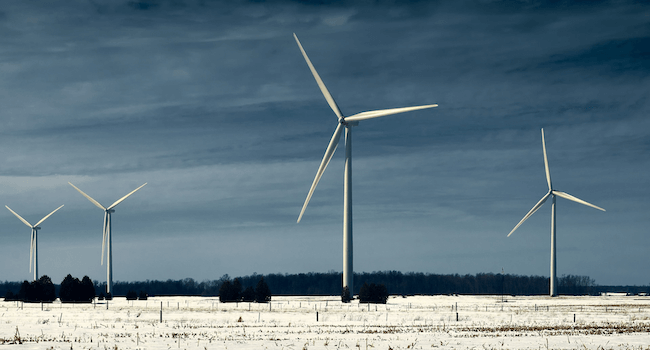
If we truly wanted to become energy independent, we would focus on the most cost-effective and efficient energy: renewable energy from wind, solar, geothermal and energy storage. We need a clean-powered, connected electricity gridthat facilitates interprovincial transmission. That would give us independence not only from the U.S. but from the multinational oil companies that seek only to enrich their owners, executives and shareholders.

 jmn
jmn