Repair and Wear

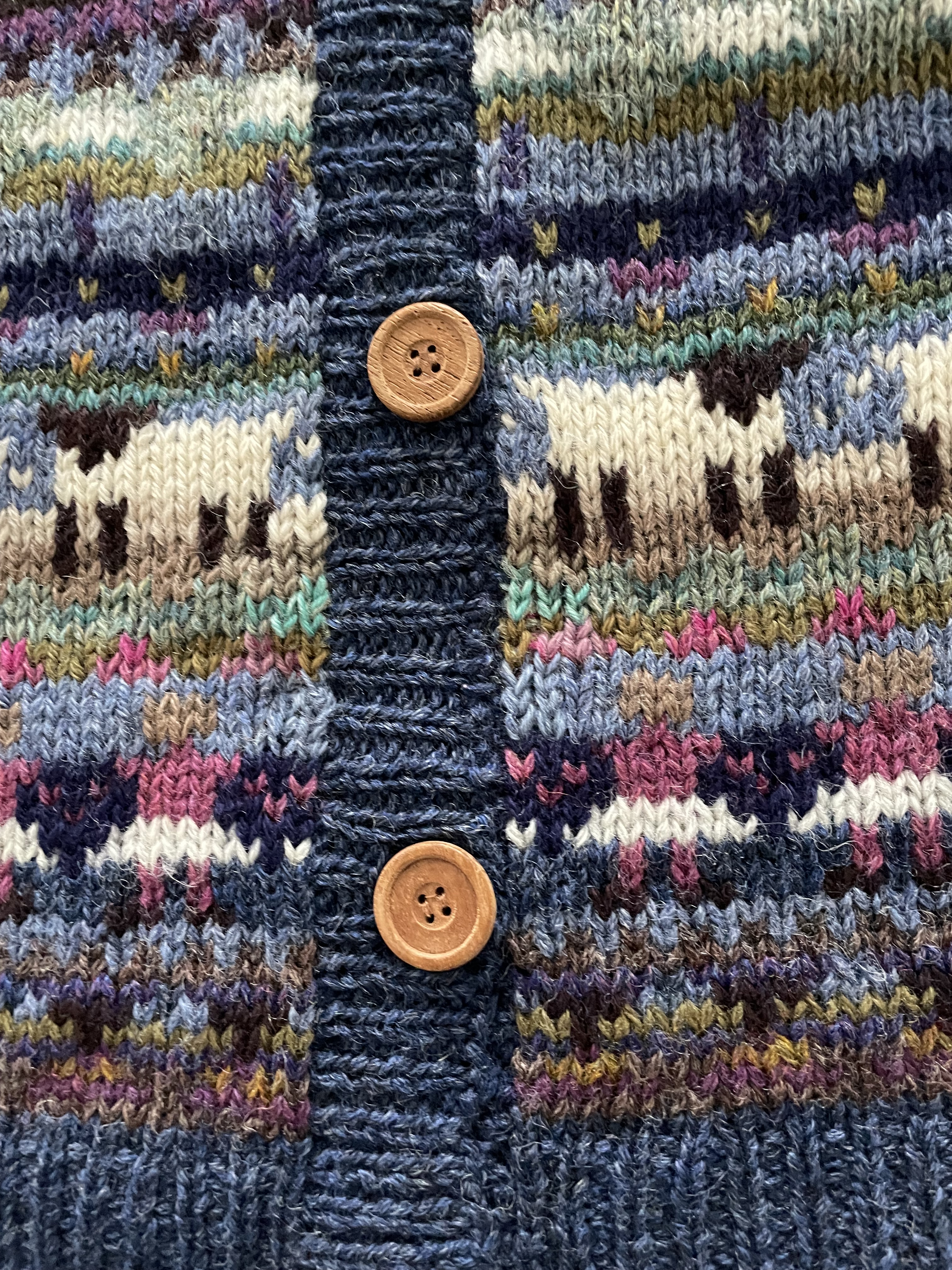
I have no idea how long I’ve had this wool sweater. I bought it from LLBean at least 40 years ago! It’s warm, versatile, comfortable to wear. It hasn’t shown signs of wear until recently when I discovered I had worn through the left elbow, so I repaired it. At the time, I didn’t notice any other wear, so I put the sweater back into use. [BTW, I use the sweater as a pullover, so I stitched up the front binding shortly after I bought it so it wouldn’t pull between the buttons – it looks better that way.]

The other day I discovered the front binding (between the second and third button from the bottom) was seriously worn and ready to lose stitches! Just in that spot where my clothes rub against counter tops! Yesterday I mended it.

I though all I had to rework was the top binding, the edge of which was coming apart; but once I’d done that fix, I saw the damage was more extensive – both front panels were thin extending about 1 1/2″ from the midline. I dug out sock yarn leftovers in colours as close as I could get to match the existing yarn and got to work with some Swiss darning.

Not a bad job, if I say so myself. Look closely at the repair and you can see where I did the reinforcing stitches, but from a distance you can’t see anything was wrong.

Knowing how to repair knitwear is a good skill to have in your repertoire. Flora Collinwood-Norris does a brilliant job of darning (and Swiss darning) to restore knit garments to a wearable state. She has written books, and gives online classes. I have neither the books, nor taken classes, but I can see from the photos on her website how this work is done. I’m nowhere as skilled as she is at rebuilding a worn patch in a knit garment, but this repair is definitely acceptable and will extend the life of my sweater for quite a while (until the next wear spot shows up and I’ll fix that, too).

Take a look at Collinwood-Norris’ repair work. It’s worth knowing how to fix knit garments (socks, included).

The Repair

Land’s End Sweater

I collect sweaters. I’ve been collecting for more than 50 years. I wear them, even when they’re no longer quite in style. I reluctantly discard them when they become too worn.

This Land’s End sweater I bought at least 40 years ago. A Fair Isle double knit that’s been done very cleverly with no more than two colours per row although the colour layout seems a lot more complex. This sweater was machine knit – the carrying of the yarn on the back is very even (except where my fingers or watch have got caught in the carry threads and pulled them). I’ve lovingly worn this sweater for a long time. I’ve reinforced the sleeve edges when they began to wear, otherwise it’s intact and warm.

Imagine my dismay the other day when I took off the sweater and discovered a LARGE hole in the left elbow! Why I hadn’t noticed the sleeve becoming threadbare I’ll never know but I missed it until a couple of stitches let go and what I had was a big hole.

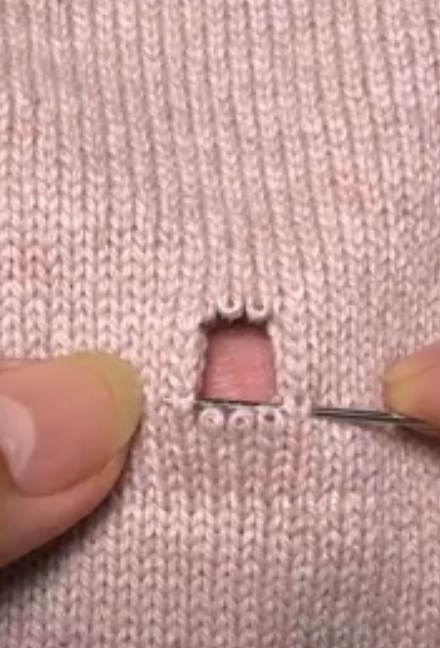
I remembered I’d seen a video a couple of weeks back, which I saved to Pinterest, on how to repair a hole in a knit which I thought was ingenious.

Knitting Repair (Click Here)

Although my hole was a lot larger, I decided to try the technique on my sweater. I’m not a knitter for nothing – I have a large yarn stash of many colours of sock yarn. I chose a medium blue fingering to close the holes then top-stitched the stitches with yarns as close to the original colours as I could get – that gave me a final patch close in weight to a double knitting yarn.

The Repair!

I didn’t think to take a picture of the hole before I started. I didn’t take a picture of the initial repair using the medium blue yarn. I don’t have pictures of the repair in progress. I just have this image of the completed repair!

The hole was six rows by nine stitches in size. It started just at the top of the sheep’s back up to the navy stripe, from the sheep’s head on the left to the head of the one on the right – a BIG hole.

When I was finished with the repair itself, I reinforced the white sheep’s body since the yarn there was considerably weakened. Then I wove in all the loose ends on the back. My yarn colour choices aren’t perfect but they close enough that nobody will ever notice!

I have to say I was pleased with myself.