Climate Change Has Caught Up With My Wardrobe!

I may not have written much but I’ve been making pants these past few weeks. Why, you might ask, with a closet full of summer and winter pants, I doubled down on making pants?

Well, the weather in Nova Scotia has been unending sunshine. We don’t get weather like this. The “normal” in NS is a day of sunshine sandwiched between two days of rain! If it’s one thing we can count on here is lots of rain, all summer long. Then September comes and we get our best weather into the middle/end of October. Sunny, if a bit cool, days wonderful for being outside. For six weeks, maybe seven, we get our best weather of the year.

Not this year. It rained for most of June, days on end, and then July came and the sun came out and it stayed. In fact the weather has been so dry it’s been considered a drought! Wells have gone dry. Activity in the woods has been banned. We’re conserving water because the water level in the watershed lakes is extremely low.

The outcome of all of this is, after Labour Day when that one “fall’ day would normally arrive and I’d change over to winter clothes, that day hasn’t yet happened. I realized I needed a couple pair of fall coloured, if somewhat light in weight, pants to wear in this shoulder season that we never have! Something a bit heavier than the summer cotton pants and lighter than my fall corduroy or denim pants/jeans.

In addition, Sally at Sew With Vision asked if I’d do a class on making a basic pair of pants. I’d agreed. So I dug out my Japanese Monpei instructions and took a look at them. Monpei are constructed using 4 rectangles based on hip measurement for width and from waist to a smidge above the floor for length.

To create a crotch, the traditional Monpei uses a gusset based on two crotch triangles. I wanted the crotch to be incorporated into the front and back of the pants. So I decided to draft a pattern first.

I started by drawing two rectangles – one for the front, one for the back. I marked the vertical centre line (to use as the grain line), and drew in the horizontal crotch depth (including ease and seam allowances at waist and crotch).

I shaped the crotch using the measurements suggested for the gusset and drew the appropriate triangle to the front and the back along one side at the crotch depth. (In the Monpei instructions, the gusset triangles are cut from the top edge of the rectangle and repositioned at the appropriate depth along one side – the centre front/back seam.

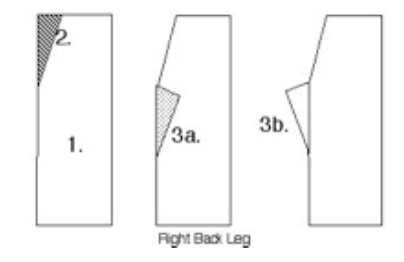
In my drafting the centre front edge remained straight (because I need to be able to pull the pants over my hips and my waist and hip measurements are almost the same). I used a French curve both front and back to round out the crotch shape.

Then I shortened the centre front crotch length by 1″ and rounded the “waist” with the French curve, because my front crotch length is shorter in the front than the back.

I drafted pieces for a pocket to be placed on top and incorporated into the waistband and side seam (pants without pockets are useless!), and a pocket facing. Finally I created waistband facings.

Because the Monpei gives me a rather nicely fitting pair of pants I decided to go ahead with the basic design without comparing my drafting to any of the several pull on pants patterns in my pattern stash.

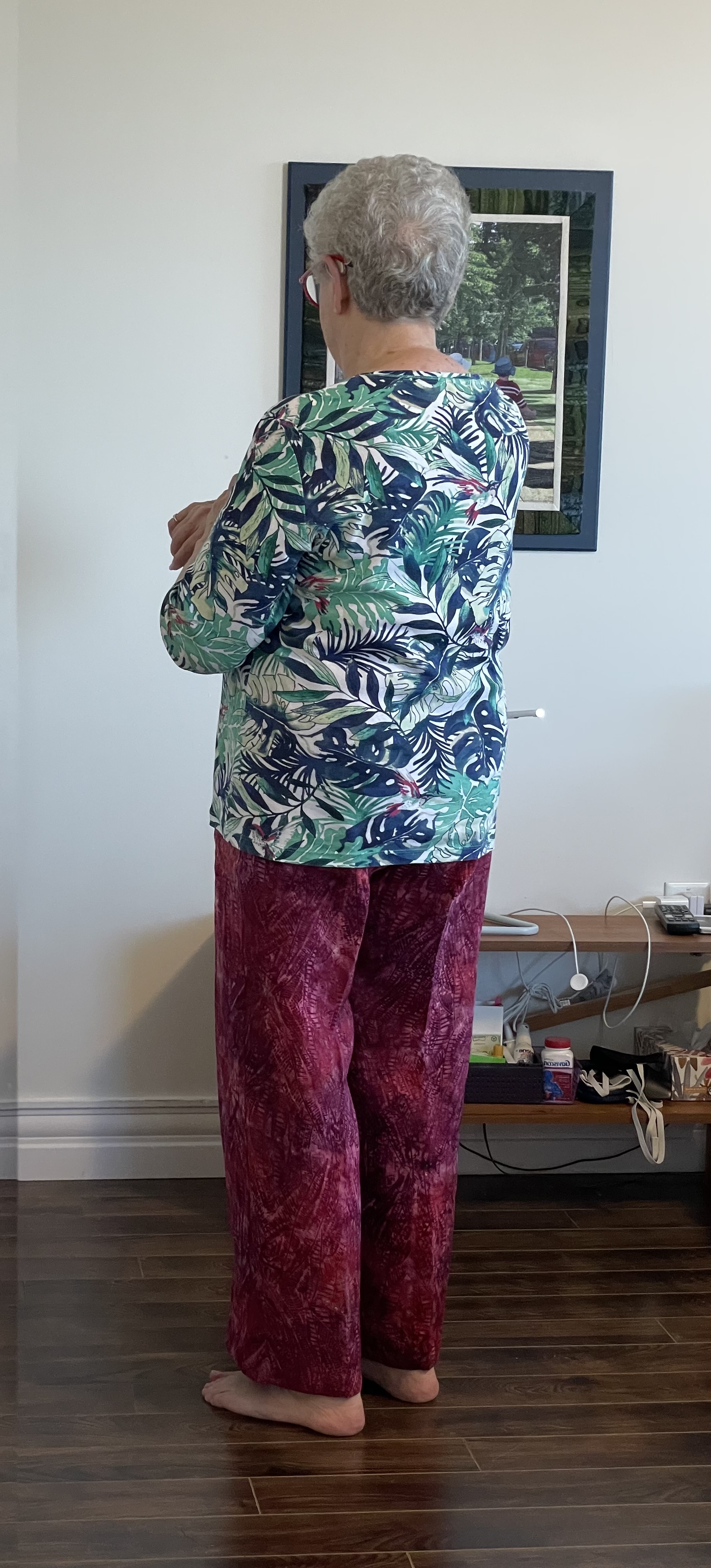
Using a Polyester/rayon knit fabric, I ended up with these:

Although you can’t see them, the front pockets are there.

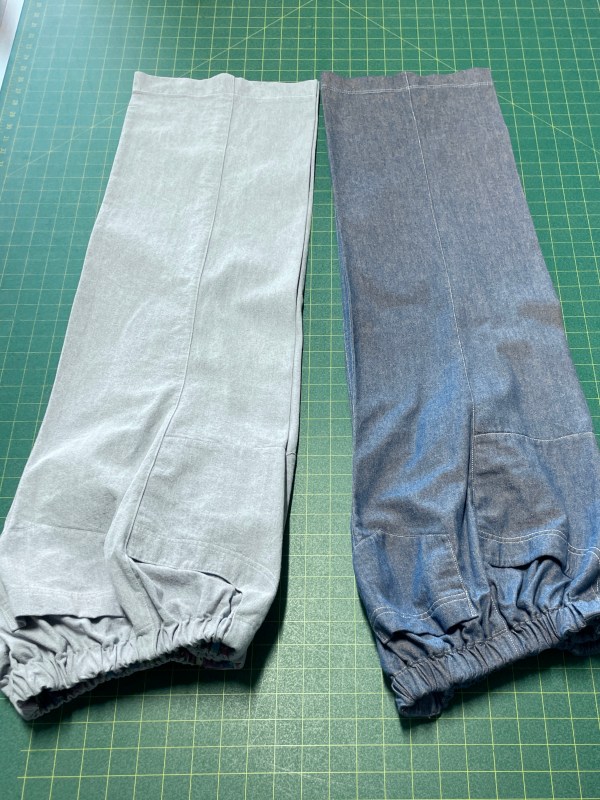
I made two pair of denim pants using the same basic construction but added a fish-eye dart down the centre back and shaped the side seam to narrow the legs a bit. I also added a back pocket to conceal the top of the fish-eye dart.
Then I tackled pants for Sally!

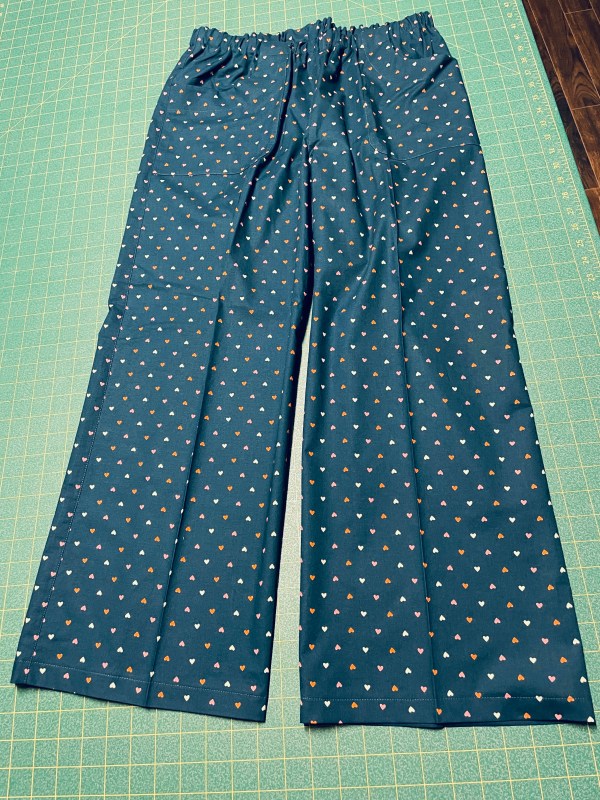
First I made a muslin from the Monpei pattern I drafted using Sally’s measurements (no pockets – although I added the waistband facing elastic, and hemmed the legs so I could gauge the fit). The crotch depth worked well, but the legs were a bit short. Next I made the pants for Sally adjusting the leg length and adding pockets.

The plan is to display the Monpei/pants in the shop so people have an idea of what they’d be making when they registered for the class. (I have a hunch Sally is intending to wear them!)

So I’ve been sewing, just not writing about it.

The Latest Iteration

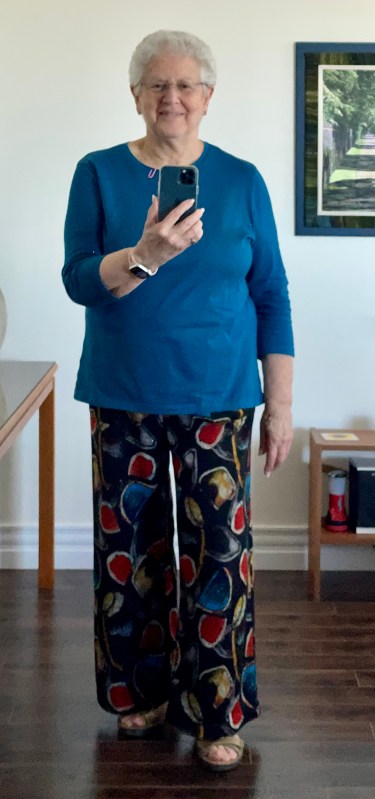
Here is the latest pants iteration – pull-on pants in a rayon batik I bought in Bali in 2014!

I redrafted the pattern again – adding 1/2″ to each side seam (front and back) which has given me a bit more room to sit down in. The crotch is also a bit wider in the back and extends closer to the knee which gives me slightly more fullness on the inner thigh which is helping the fabric fall straight from my bum and the inseam hang correctly.

I had intended to create a fly front on these pants but this fabric is soft and drapey so I folded the fly addition back and cut along the centre seam to make a straight front seam. I did want to shape the sides a bit but the waist on pull-on pants has to be as wide as the hips, so an elastic waist it is.

I made more work for myself with these pants – I basted the four panels together so I could try them on and assess the fit. I set up the waistband, then fit the pants to the waistband and it seemed I was probably close to the fit I wanted. Then I took apart the side seams so I could properly add the front and back pockets to the flat panels, basted them back together, and finally serged everything – in the order I would normally use for constructing pants. Just took longer.

Next time I’m not going to need to do the basting – this pattern is pretty close. For winter pants I am going to want the back to be shaped under the bum somewhat so the back dart will return, as will a fly front opening (which will allow me to taper the sides at the top).

I have to say, after all these years chasing a pattern and strategies for making pants that fit – I think starting with the straight monpei rectangles, building in the crotch triangles, adding a waistband, has got me closer than anything I’ve done before. I no longer have a “shapely” body – I’m straight, and flat, and dumpy! The peasant pants, based on two rectangles, gives me pant shapes on the grain of the fabric, with enough fabric where I need it and that hang straight from the fullness of my bum (given what little of it that I have).

I’ve actually learned more about making pants, particularly pants for myself, from this series of experiments, than I have for the past 30 years. I’ve drafted a pant sloper in the past, but the part that was missing, that I didn’t see, was pants are based on two rectangles based on a hip measurement and garment length from waist to hem (with seam allowances and hem added)! By adding a crotch based on the crotch depth measurement to one side of the rectangle, you get the curved shape around the hips, bum, and between the legs you need. You can add further shaping, if necessary, by removing fabric from beneath the bum with a dart down the back of the leg. You can remove fabric from the centre back and the top of the side seams if you have to to accommodate a curvy body shape. But you start with your hip measurement and crotch depth, which sets you up to draft the rectangular shapes that are the basis of the garment! Didn’t know that before.

My next attempt will be in corduroy (which has a small amount of stretch) – for fall.

Monpei – Revisited

The Start Of A Drafted Pattern

I decided to take the Monpei idea further and create a “pants” pattern from it – two rectangles – one each for the leg front and leg back. Instead of the triangular gusset I grafted the crotch triangles onto the rectangles (10 1/2″ x 40″), curved the crotch additions using a French curve, raised the centre back by 1″, took the centre back in by 1 1/4″. I also added “jeans” pockets. The waist I finished with a facing and elastic at the top.

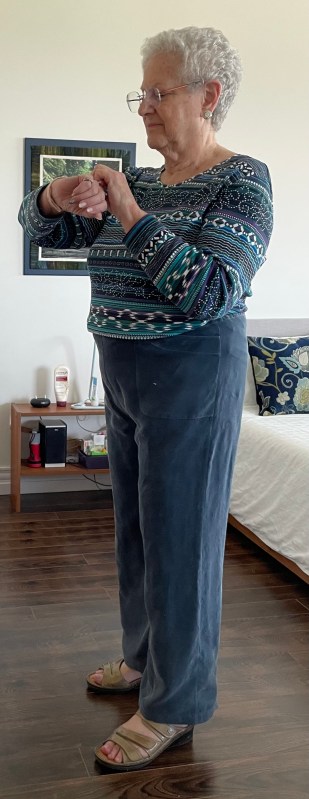
At some point in the past I had bought this Sandwashed Cupro Blend fabric online from Blackbird Fabrics.

Cupro is a ‘regenerated cellulose’ fabric made from cotton waste. It is made using the teeny tiny silky cotton fibres, known as linter, that stick out of the cottonseed and are too small to spin. The linter is dissolved into a cuprammonium solution, which is a mixture of copper and ammonium, dropped into caustic soda, then spun into fibre. Much like Tencel and Modal, cupro is a plant-based material that is chemically processed to produce the resulting fabric.

Cupro is said to have all the positive qualities of silk: it’s silky-smooth and drapes just like the luxurious material. 

https://goodonyou.eco/what-is-cupro-fabric/
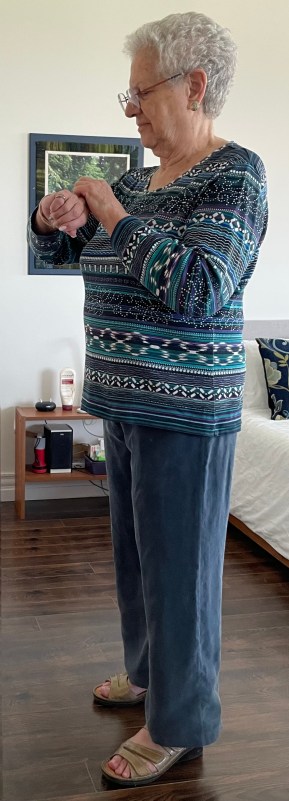
Top Tucked In

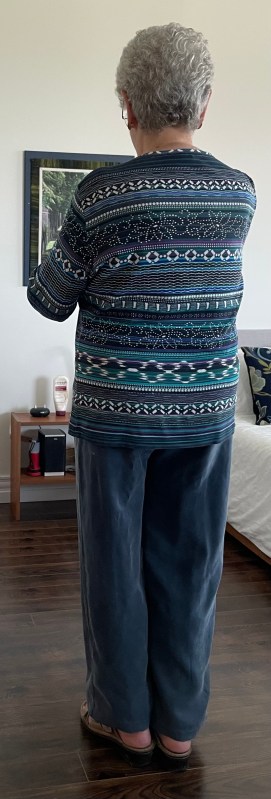
Not the most flattering photo but I wanted to show more of the top of the pants and how they fit – I tucked in the t-Shirt. The pants fit rather well both front and back.

The finished pants hang/drape quite well – no pulling at the front crotch, the side seam is straight, the back hangs nicely from the bum. I purposely hadn’t pressed the centre front/centre back to allow the drapey fabric to fall where it wanted. However, it turns out there is absolutely no give to the cupro fabric so when I sat in the pants they pulled tightly across my lap and wrinkled a lot.

This is, after all, just another experiment – I’ve ended up with a wearable muslin (although I can only wear the pants one day then they have to be washed – pressing alone doesn’t eliminate the wrinkles).

So how do I change the pattern to reduce that amount of wrinkling? Obviously by adding a bit of fabric across the front. That’s what I plan on doing next – I will add 3/4″ to the body portion of each side seam, along with a fly front as well as shaping the side seams so the top fits without elastic (although I may still want/need elastic in the back).

I’ve already pulled from my stash a piece of rayon I bought in Bali in 2014. It’s another drapey fabric which should result in a comfortable loose-ish garment. What I’m aiming to accomplish is a reasonable fit so I can make corduroy and wool (yes I have several gorgeous lengths of flannel I bought at Britex in San Francisco in 2015!) pants for winter.

On to the next experiment.