Striped Leggings with Top

img_8252

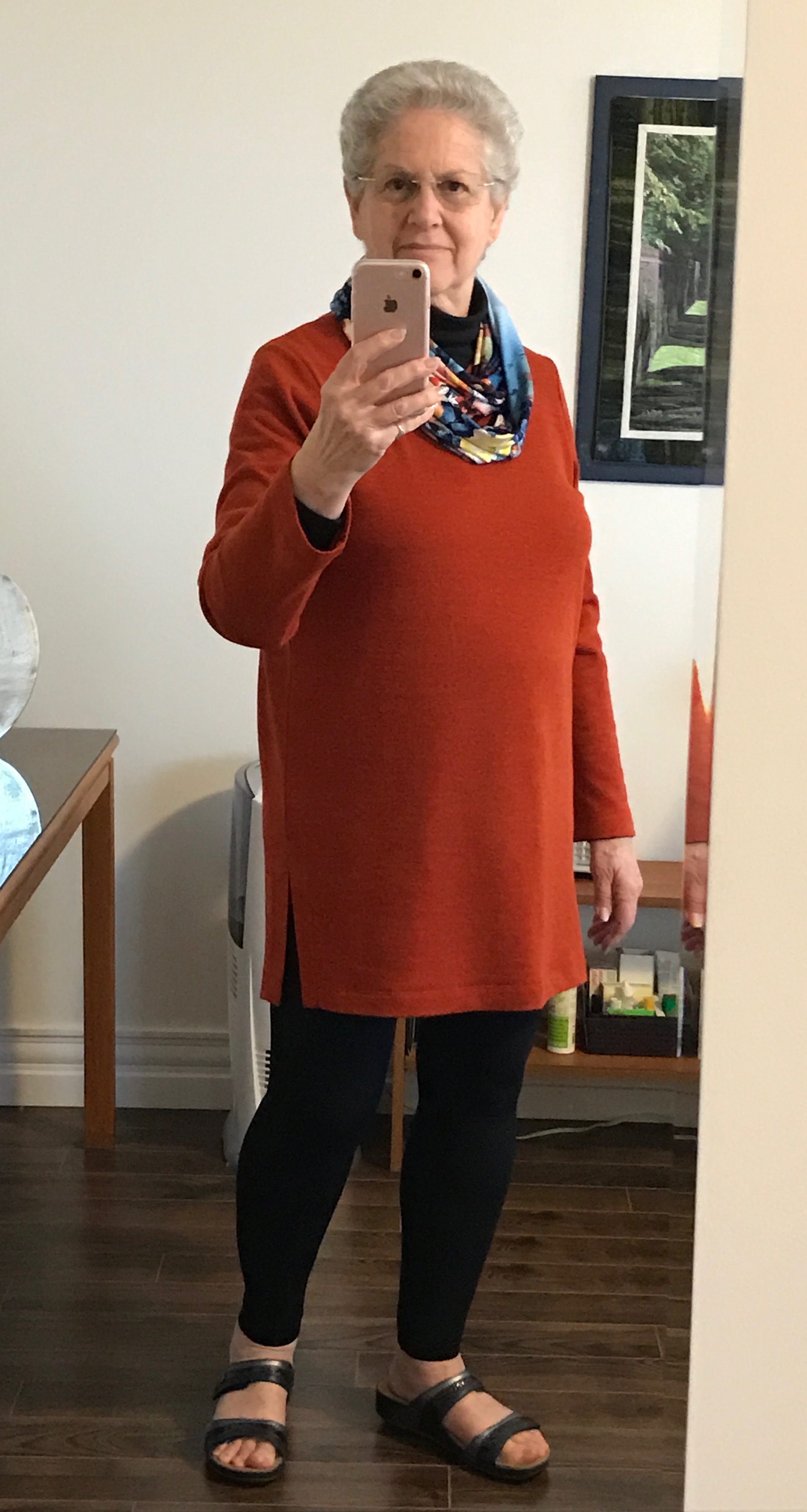
OK, here are the wacky striped leggings and the black knit tunic I just finished to go with them! Not too bad. This top is a bit shorter and somewhat more flowing than the previous tunics. The small embroidered bag is to hold my phone – no pockets in the leggings or the tunic (the fabric is too stretchy to use a pocket to hold my phone – the small purse is colourful and works well).

I’m even going to wear the outfit out to dinner with a couple of friends this evening!

And that’s it for garment sewing right now. Back to finish the wall piece I began a couple of months ago and I’m thinking about a modern quilt of some sort.

Needle Books

Needle Books

Needle Books

On Friday afternoon I knit with a group of women – this Friday we will be celebrating birthdays for four of us, mine among them. There was one birthday on December 25; mine was today – January 2. There’s another on Thursday and a fourth on Friday. So we’ll likely have some wine (a couple of the women are involved in wine making) and some nibbles to celebrate.

I wanted to make a small something to give the others – I keep a small “needle” book beside each sewing machine with a variety of hand sewing needles in it – I like shortish large eye embroidery needles (rather than small eye sharps) for sewing. I also have a couple of “self threading” needles (which are handy for tucking in end threads when I’m machine quilting), as well I keep a couple of used machine needle for those situations where I want to carefully pick out a seam – the machine needle is just that bit larger and stronger than a hand needle for the job.

[I just looked up a hand sewing “needle guide” – John James makes fine quality hand sewing needles of all types and sizes – turns out my preferred hand sewing needle is a size 7-8 “embroidery” (sharp with a large eye to accommodate embroidery floss), rather than a comparable “sharp” which has a small eye which I find difficult to thread. Darners also have a large eye but I find them too long and too thick to be comfortable to work with. I also keep some “easy threading/calyx eye” needles – these are self-threading needles which are threaded by pushing the thread through an opening at the top of the needle rather than through the eye.]

So I whipped up three needle books and have outfitted them with a few straight pins (with glass heads – the iron doesn’t melt the bead head), three quilting pins (I don’t have any safety pins on hand – just curved quilting pins), four different needles (embroidery and sharps), a calyx eye, and a blunt tapestry/cross stitch. I also included one used machine needle. I’ve closed the book using a quilting clip.

I’m sure the gals all have places where they stick their sewing needles but I’m betting none of them has a needle book. A small gift that I’m sure will be useful for these women who knit/sew.

I also keep a “machine needle” book at each machine – for those needles that haven’t had much use – the problem is keeping track of what kind of needle and its size. The machine needle book solves that problem for me. So if I need a slightly used needle for a small job that’s where I head first. If I know I’m going to use the needle for an entire project, it’s a new needle each time.

Machine Needle Book

Machine Needle Book

And in case you wondered – because I do a LOT of machine sewing I have a complete selection of machine needles for each different job!

img_8243

Machine Needle Collection

Knit Tunic

img_8237

As you can see, I’m  not exactly a “leggings” person. However, everybody seems to be wearing them so I thought I’d give them a try. I bought a funky black and white pair during the summer in Lunenburg. I have yet to find something to wear with them! I’ve tried printed fabrics, and solids, but the prints just don’t work with the stripes. I made both a black and navy pair from some lovely stretch knit I bought from Distinctive Sewing Supplies, they both fit fine but same problem – nothing to wear with them that looks reasonable.

Last week, I bought a couple of pieces of solid colour knit fabric, hoping if I made a couple of tunic tops they’d work with the leggings – forget that, the black and white stripes come above my knee in the front (really, I can’t publish a photo) and so even this sedate solid rust colour tunic does not look great. Here it is with black leggings. The tunic turned out fine, but, really, it doesn’t make me into a leggings person. The dark teal tunic – exactly like this one, same length – doesn’t look any better. Wearable around the house but for going out anywhere – not too sure about that. I just don’t have the shape for leggings. Probably shouldn’t wear them…

Seat Belt Covers

img_8224

Seat Belt Covers

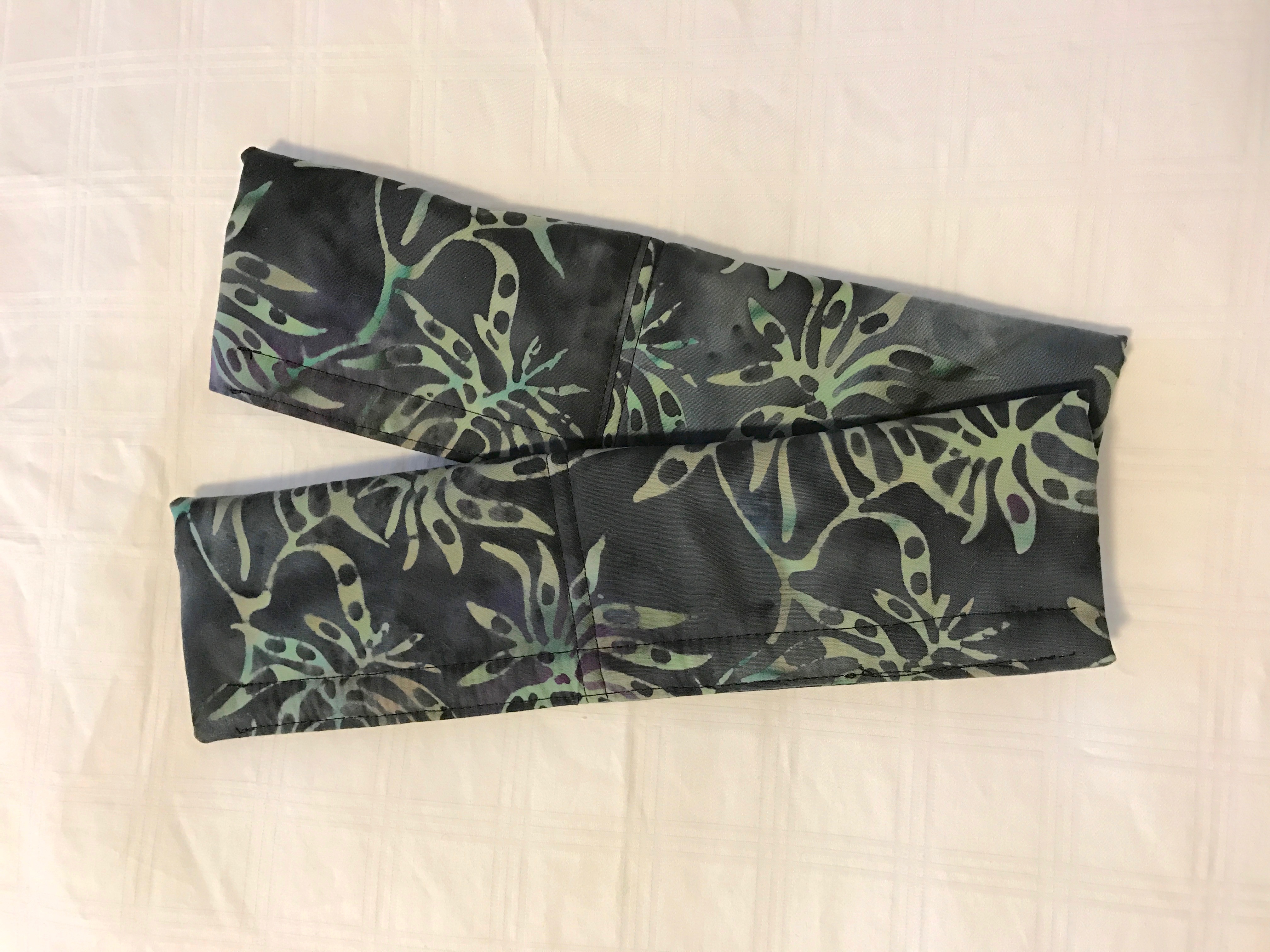
Just finished two sets of seat belt covers. I’ve been meaning to make myself a new set. The impetus was a request from a friend who has a pacemaker and finds the seat belts in his car uncomfortable. I made him a set shortly after he’d had the pacemaker implanted. They’ve worn out. So I’d put a note on my calendar to make him a new set today. I made a set for myself as well.

Materials for one seat belt cover: a piece of fabric 24″ x 7.5″, a double cut of batting 11″ x 6″, 1 piece of hooks velcro 3/8″ x 10.5″, one piece of loops velcro 3/8″ x 10.5″.

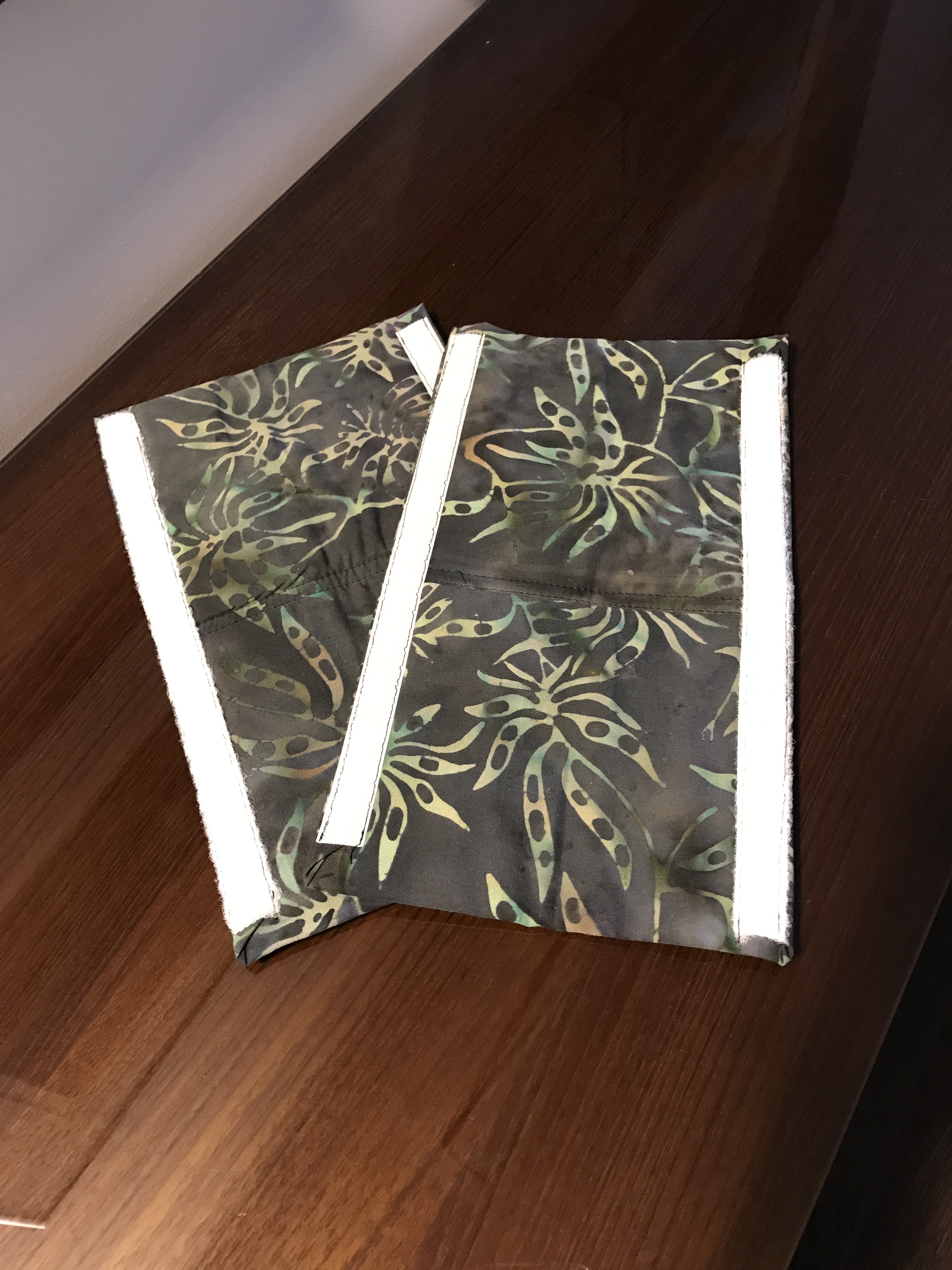
Construction: I lay the batting in the middle of the fabric, fold down one long end over the batting, fold up the second long end to overlap the first (I try to use the selvage on one end – that means I don’t have to worry about folding under or fraying – if you don’t have a selvage, fold under the raw edge of the top fabric before stitching). Stitch close to the edge, then a second row of stitching 3/16″ away from the first. Next press the seat belt cover, turn in the side edges (folding in the end corners), press. Finally, careful lay one of the velcro pieces along the folded edge (over the folded-in fabric), stitch as close to the velcro edge as you can, then along the inner edge of the velcro. Add the second strip of velcro to the other side making sure both pieces of velcro are on the same side of the cover. Fold seat belt cover in half using velcro to close it. The cover will just slip over the seat belt – I use them with the folded edge to my neck, open/velcro edge away from me.

img_8225

Inside of Seat Belt Covers

They’re great for short people who find seat belts uncomfortable, particularly in the summer when I’m not wearing a heavy coat. I still use them during the winter as well. Just convenient to have them in the car. I also have one on the passenger side. They’re particularly useful for children using booster seats who also find seat belts cut their necks.

My original pair came as a gift from Hawaii at least 30 years ago. I’ve continued making them as gifts and for myself ever since. The fabric doesn’t have to colourful, a closely woven batik works well – batik has quite a bit of body which makes the seat belt cover a bit stiffer and the fabric doesn’t wear as quickly as a softer cotton.

Bendy Bag…

Bendy Bag

Bendy Bag

I know, I said I was finished making bags but there was just one more I wanted to try – Lazy Girl’s Bendy Bag. I found images of it while looking for something to make for Hillary and played around with paper folding and almost got it figured out on my own – what I missed were the cut corners which you fold and seam straight across at the zipper tab end to get the blunt end at the front of the bag. I gave up, rather than mess around further and bought the instructions. I was right about how to get the diagonal seam and the zipper application. I had to try one this morning so I could put this bag making to rest!

There I’m done (really). The last bag for a while. Now, I can see each triangular piece I cut from my rectangle on each side to get the diagonal seams on this bag are large enough to make a pod… I’ll save them for another time.

More Variations On A Theme

img_8214

I was curious to see if I could apply the half-zipper technique to my standard zippered bag construction – that meant figuring out a way to have the seams concealed between outer layer and lining. Turns out to be quite easy.

Instead of cutting two sides 6″ x 8″ I cut one piece 6″ x 16″ – I sewed the zipper to one long edge, added lining. Here’s the crucial difference – I didn’t top stitch the zipper, instead I steam pressed the zipper making sure both lining and outside were well pressed away from zipper edge. That allowed me to add the slide, fold the bag in half, separate the lining from the outside, sew the remaining side seam (from lining to outside with little tab inserted near the zipper) making sure zipper protruded on the lining side as I sewed. Next I made sure to open the zipper. Finally, I stitched the outside bottom, turned bag right side out pulling lining beyond the zipper, folded lining bottom seam allowance under and top stitched the lining bottom, pushed lining back inside bag, pressed.

I had a zippered bag with a “loop” zipper, and concealed seams.

I made six from four fat quarters which I had just bought so now I know exactly what my materials cost:

The fabric to make six 6″ x 8″ bags cost me $12; batting – I used large pieces leftover from a quilt (batting costs $26/m so say I used 1/16 m ) – $1.65, thread (can’t calculate), zipper (I buy zipper tape and slides from The Zipper Lady @ $36 for six yards (that includes exchange as well as shipping and handling), $10 for 40 slides (25¢/slide) – I get two bags from 1/2 yard so zipper costs me  $10.50/six bags (a bit less than if I’d bought zippers individually at the fabric store). Total for the materials: $25.65 for six bags = $4.27/bag. Labour: It took me 2 hr to make six bags – time per bag, ~20 min (that’s pressing the fabric, cutting fabric and zippers, sewing it all together, pressing again). At $20/h labour works out to $6.65/bag. Total costs: $4.27 + $6.65 = $10.92. Profit – 20% of costs = $2.19. Total cost of one 6″ x 8″ bag: $13.12!

People tell me I should sell them at the craft market – I’d be selling the bags at a loss if I charged $10/bag!

So even a small zippered bag is a gift of love.

That’s it for bag-making for now!

Variations On A Theme

img_8212

Experiments

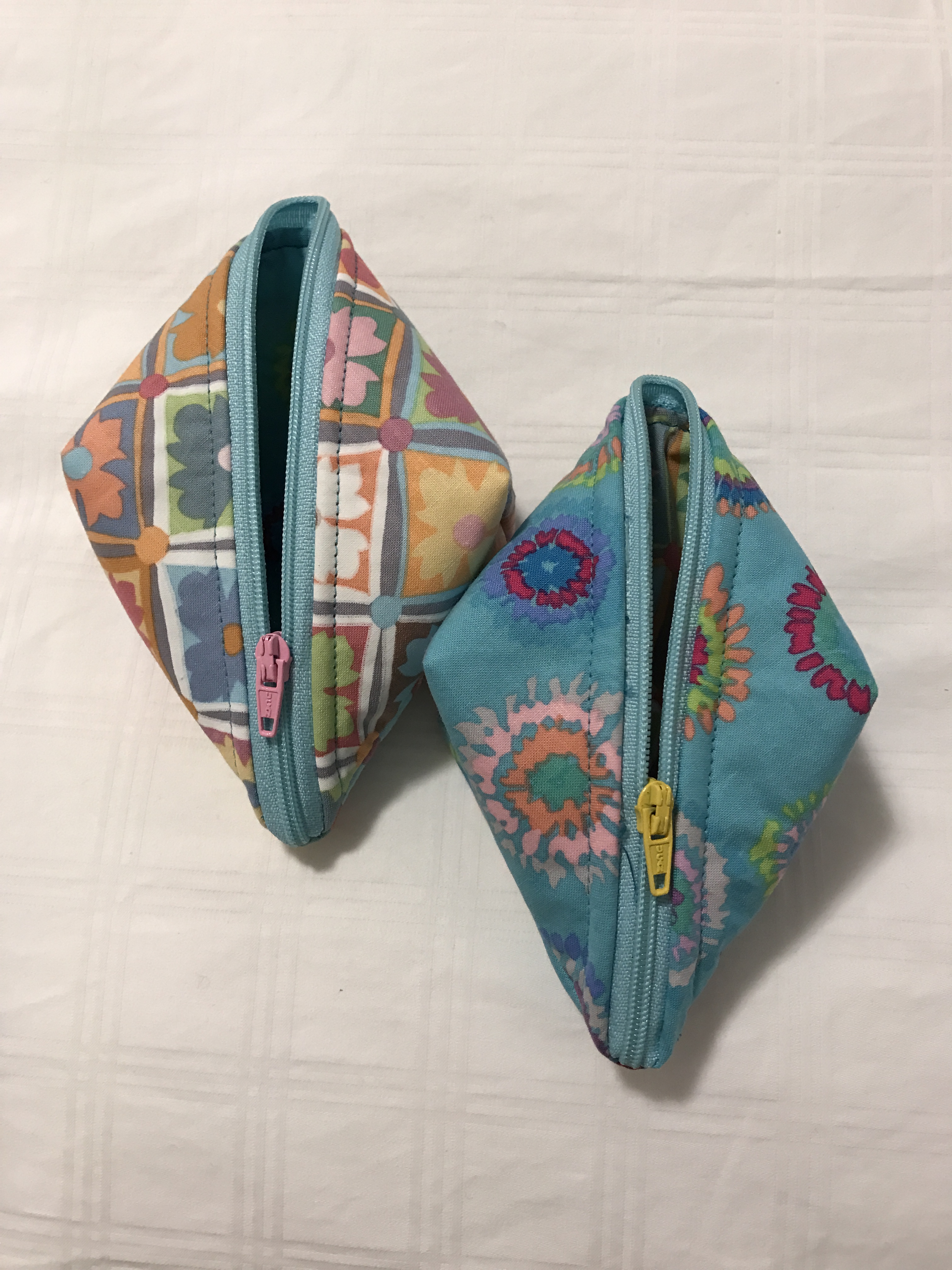
It’s not a big stretch from a “sweetpea pod” to a “pyramid pod” – the pyramid is based on a similar idea – instead of sewing the two side seams in the same direction as I would for a flat bag, you sew one side seam (closed zipper end) with the zipper in the middle and the second (the open end) with the zipper at one end. I made this pyramid pod (on the left) with a double zipper tape but I still have to experiment to figure out how to construct it with a single zipper tape (the way I did the sweetpea pods).

The two bags on the right were sewn with a single zipper tape. To use this technique (with the zipper top stitched) I had to finished the seams within the bag, rather than concealed by the lining. However, if I don’t top stitch the zipper, it should be possible to make the bag with concealed seams – have to try that next.

Pods

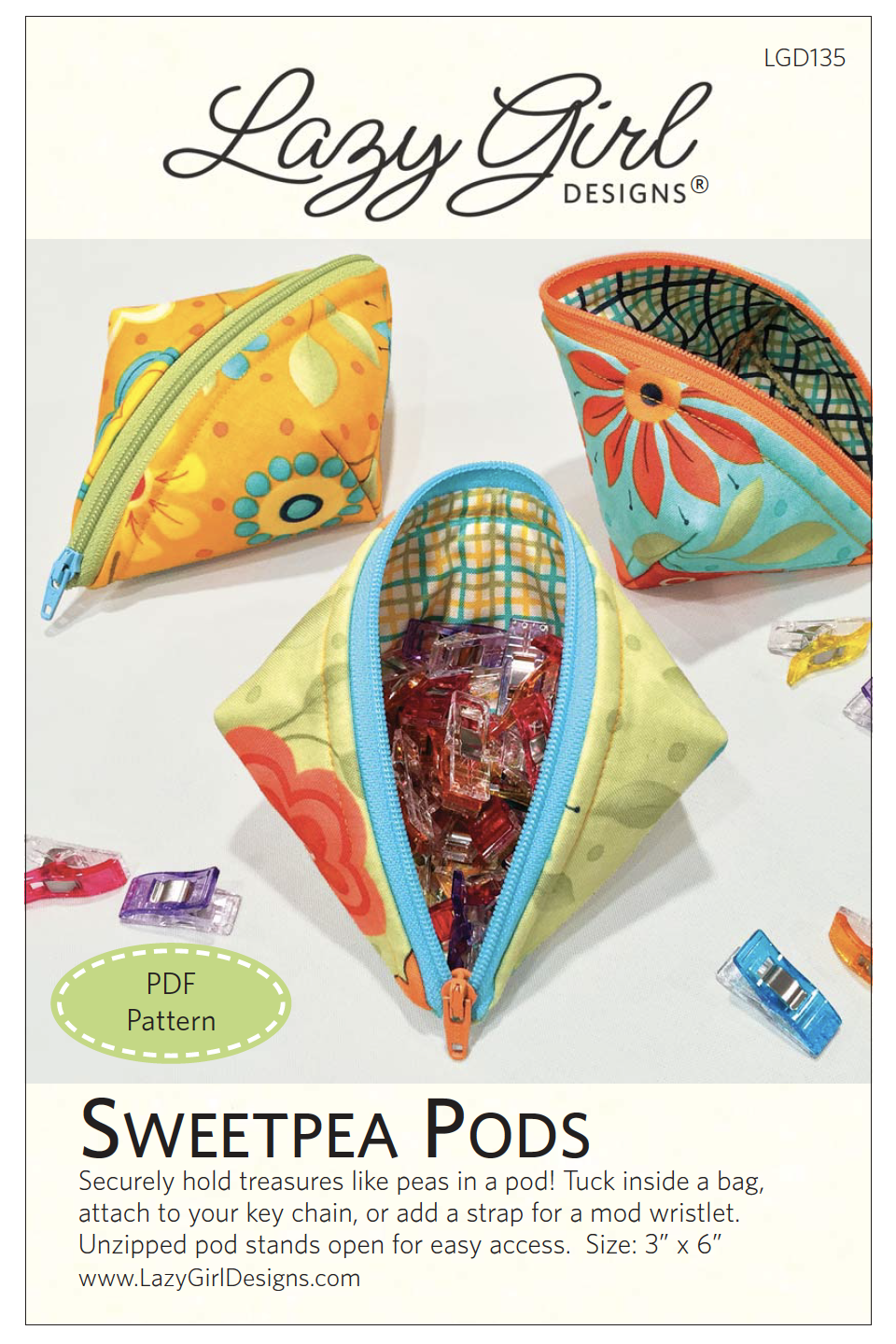
Very early this morning (couldn’t get back to sleep), I was looking online for ideas for a Christmas gift for a fourteen year old girl. Last year I knit her a scarf, year before I made a small shoulder bag. I needed something for Christmas day to take to dinner at her grandmother’s house. I came across this picture of Lazy Girl Designs “Sweetpea Pods.” I tracked it down to a Craftsy pattern:

pod

What caught my attention was the way the zipper was attached – a longish zipper is separated and one half is applied to the zipper edge and the slide is then attached to either end to create a zipper that closes from half of a zipper tape. Clever idea!

Given I didn’t have time to puzzle out how the pods were constructed, I did something I rarely do – I actually bought the pattern at 7:00 am this morning, downloaded it, then proceeded to try making one.

My first attempt was a disaster – in large part because I didn’t fuse the outer fabric to the batting – each time I tried sewing the side seams I kept missing the outer fabric on one side. My pod ended up lop sided and quite a bit smaller than intended.

I persevered. My second pod at least looked somewhat like the pods in the pattern picture, but I still needed to refine my sewing.

Pods 3 & 4, however, turned out just fine!

img_8210

Tomorrow I have to buy some velvet ribbon and hair elastics to put in the pods so I can wrap them as a gift.

This zipper idea is one I need to try on one of my usual zippered bags – it could be a neat way of zipping them up!

Sleeping On It…

img_8207

Partially quilted light areas

Never ceases to amaze me how my brain keeps working while I sleep and when I wake I have a solution to the problem I walked away from (temporarily). I trust my sleeping brain implicitly – it always comes through; there’s always a solution the next day. That was how I worked when I was writing – stop when I got to a place where I wasn’t sure how to proceed – next day, ideas were just there! Always! Same with the quilting – walk away from a decision point, come back next day and there’s a way to work things out.

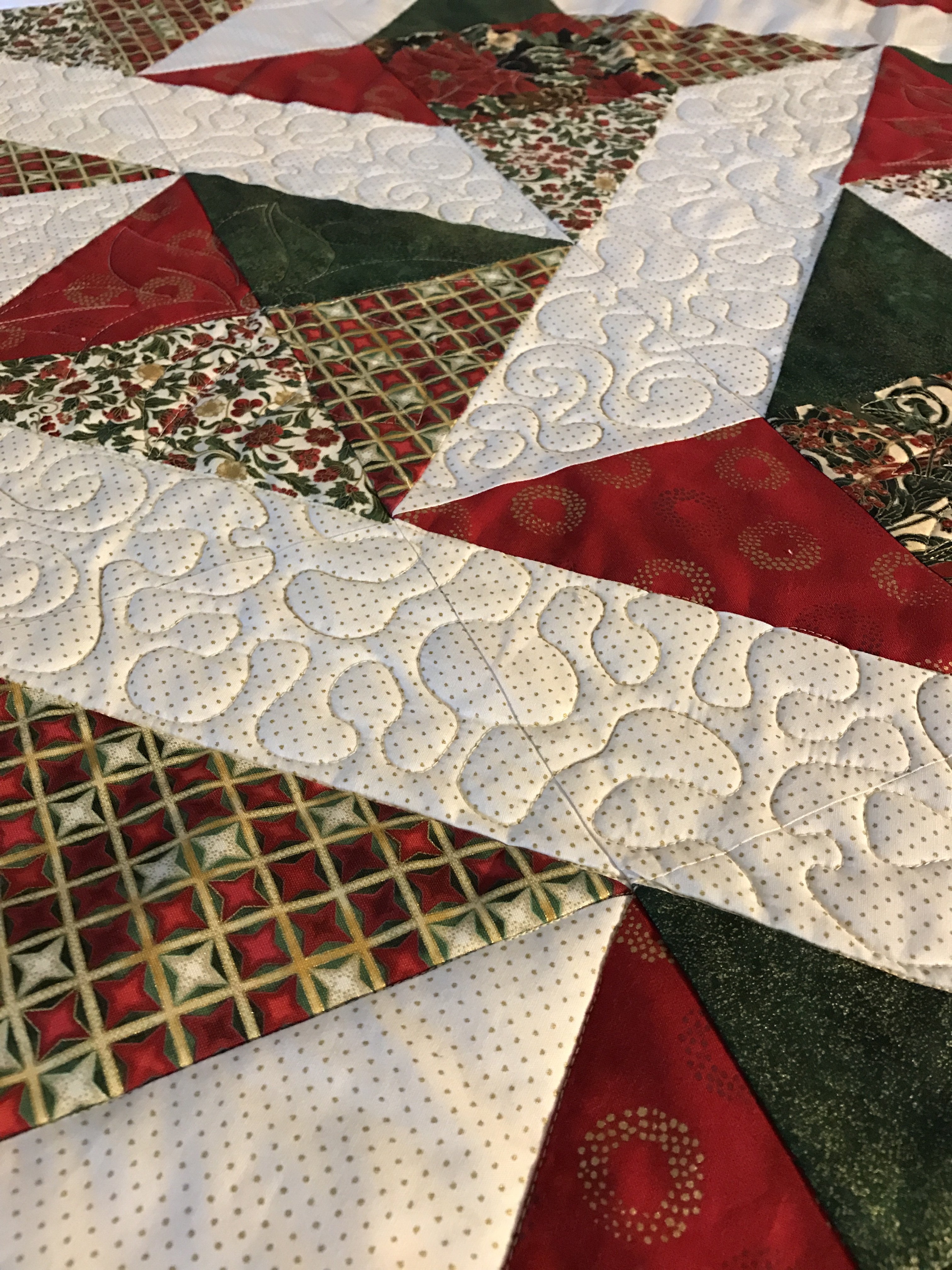
Last night the problem I needed to solve was how to quilt the light diagonal spaces in the quilt because the fabric expanse was too big (4″ x 20″) to lay flat – I needed to fill the space with something. I thought about just straight line quilting but that seemed too boring. I woke this morning thinking about stippling and knew how to set that up. I traced the light diagonal shape onto paper, sketched in some stippling, scanned the drawing, opened the image in Photoshop and scaled it to the right size, saved the image, imported it as background into my TruEmbroidery Create software and created a design based on my sketch (had to do some adjusting to balance the fill). I did a test run to see  how the stippling worked out – it was perfect! Just the right size for the space.

So far, I’ve quilted in eight of the spaces – I have four large ones, four light triangles and eight smaller diagonal pieces to go – that’s three different embroideries, in all, to fill all the different shaped light areas. I’ll probably work at this some more this afternoon, and it will still take at least another day, if not two, to complete the fill work.

Cost of table topper?

Overhead: $0 – I won’t cost the electricity to run the machines, the iron, the lighting in the studio, rent for the studio space.

Supplies: $100 – the backing fabric alone cost me $40 (cotton fabric these days is ~ $20/m) – then there’s the four half metres of red/green printed fabrics, plus the metre of dotted cream fabric – so $100 is an estimate, my materials may have cost a bit more and I’m not counting in thread or machine needles.

Batting: $30 – batting is $26/m plus tax – the cotton needle punched batting I buy is 90″ wide so I needed a metre.

Labour: $20/hr – I’m a skilled artisan, my time is worth more than minimum wage! My education consulting hourly rate used to be anywhere from $100 – $200/hr, my web design hourly rate is $50/hr. I should be charging the same kind of rate for the sewing/quilting but let’s go with $20.

I will have put in at least 15 hours (probably more over 7-8 days) to make this Christmas table topper so labour = $300.

Total cost for the topper were I selling it: $430.

However, the topper is a gift for a long-time friend; it’s a labour of love.

Christmas Table Topper

img_8206

Table Topper

I’ve worked on this project all day – started quite early piecing all the small blocks together. Then I discovered I hadn’t bought enough backing fabric so I had to go out (just as the storm was starting) to pick up 2.1 m of backing fabric to be able to cover the length (81″) in one piece.

I’ve done about half of the stitching in the ditch. I got bored, so I set up an embroidery design to quilt the eight small squares and the “diamonds” in the centre. That’s now done. I’ve stitched around the outer edge 2″ from the edge to establish a border. I chose not to bind the project, instead, again I did a pillow case finish with the back.

Because the edges of all the blocks are cut on the bias, I’m having trouble getting every section of the topper to lay flat – it’s most obvious in the light diagonal sections – the way to solve that, of course, is to embroider/quilt each section and I may actually do that tomorrow. It isn’t quite as simple as it sounds because each of the long light diagonals is 17″ – I don’t have a hoop large enough to do that. so each of those sections would have to be done as two embroideries. Hooping each of those areas, however, would stretch the fabric flat and the stitching would hold the fullness in place so the topper would look flatter. I’m going to sleep on it!

Finished dimensions: 35″ x 81″ (to fit a 34″ x 80″ table with both extensions open).