Peru Oct. 18 2105

It’ll be a short entry this evening, not because I have little to say about our trip from Lima to Paracus, but because The wi-fi connection is weak and likely won’t support picture upload.

What I hadn’t realized before we set out on the drive south today was the Pacific coastal plane of Peru is desert! No rain, extensive sand hills all along the coast.
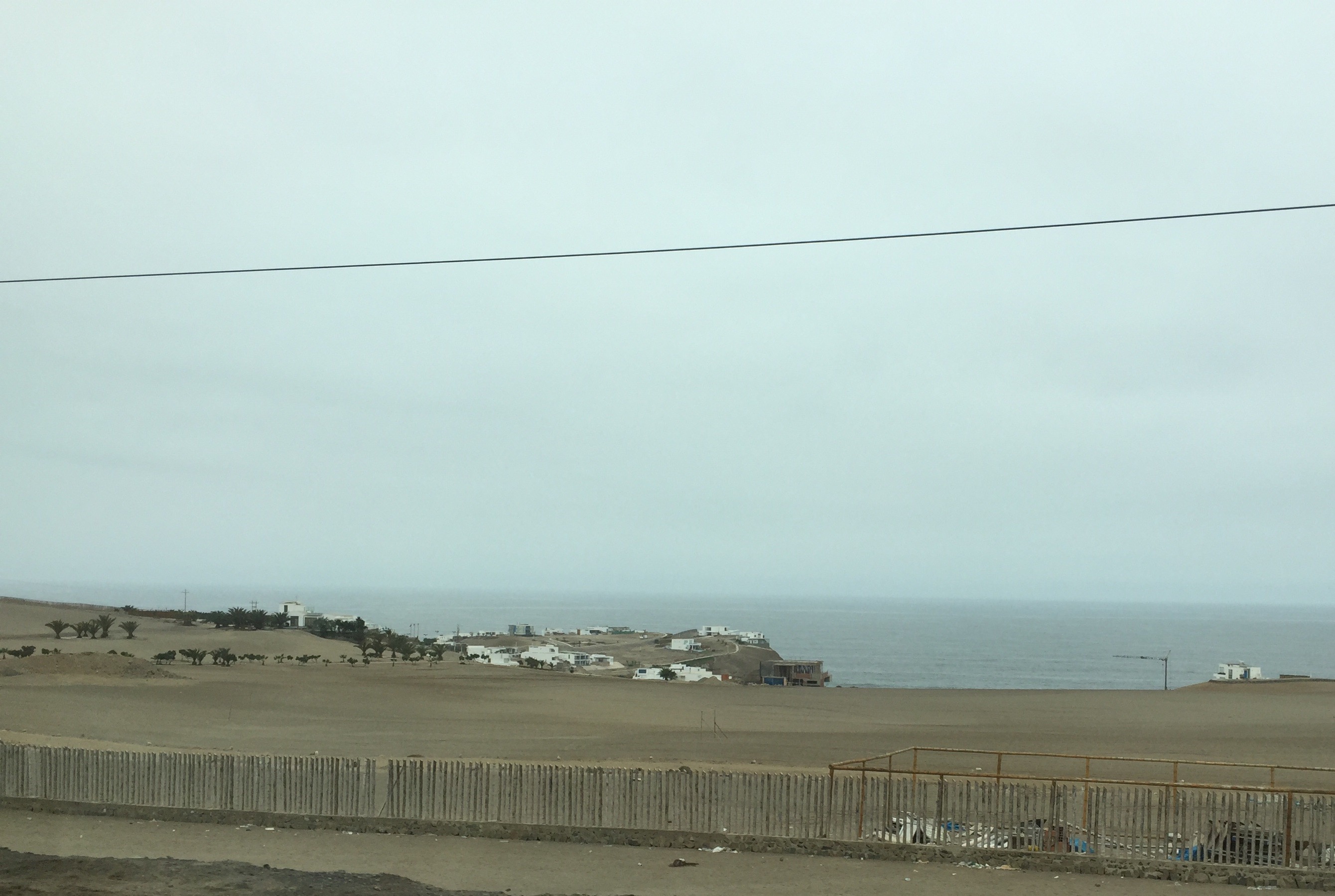
It’s a barren, poor landscape dotted with communities of squatters in partially built dwellings and small “resort” settlements. We’d travelled more than an hour south before seeing any green and that only due to extensive irrigation (and I think the water comes from aquifers as well as from the Andes).

We saw maise, pumpkin fields in bloom, strawberries and several other crops being grown in this rich but otherwise waterless soil.

Our first stop was Chincha to visit a basket weaver. On our way to his workshop we encountered a religious parade replete with a shrine being shouldered by teams of young and old men in purple robes with white rope neck ties supported by a marching band.
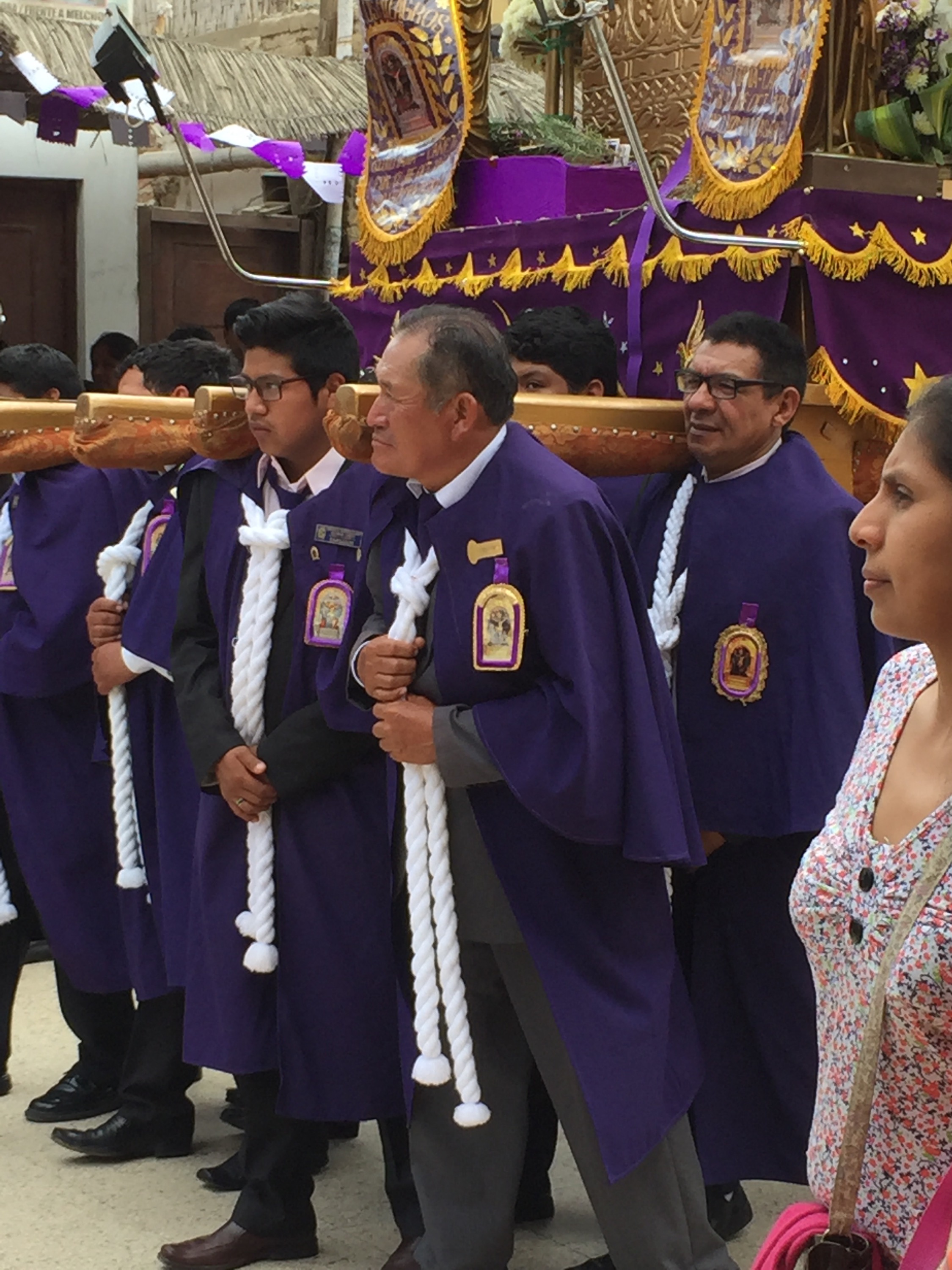
The band played for a couple of minutes as the men slowly moved the shrine a short distance down the street through the throng of people; then they lowered the shrine to permit people to approach the Saint for a blessing. Then the band resumed, the shrine hoisted aloft and the slow march moved the contingent a little further along. It was clear it would take a while for the shrine to reach whatever was its final destination. We watched for a short while then went around the corner to the basket weaver’s workshop.
 
The artisan took us through his process for dying the reeds – first yellow, then pale orange, stronger orange, red, and last magenta. After each successive batch of reeds was placed in the boiling dye vat, stirred like spaghetti and lifted out, he added a bit more aniline dye to the dye mixture before adding the next bundle of reeds. It wasn’t long before he had an array of strongly coloured reeds he could use for the baskets.

Next he demonstrated the actual basket weaving process.

He started by taking each reed and tying it to the “loom” – two long boards, each filled with small closely packed nails, first one on the upper board, second on the lower board. Before tying each reed, he passed alternating reeds through an improvised bar of “heddles” made from wool loops – one through, the next outside that loop, until all reeds were attached.

Then he wove a single weft reed to hold the warp reeds together where he wanted to begin the base of the basket, inserted a metal rod above that line, attached a harness to the bar and strapped it to the back of his seat in order to be able to use his body to apply tension to the warp and to be able to use the heddles to separate the warp reeds. He quickly inserted a bundle of four reeds, pushed it tightly against the tension bar, shifted the position of the heddles to alternate the position of the warp reeds, added another bundle of four weft reeds, again pushing that bundle tightly against the previous one – the whole process was a great improvisation of a fibre weaving loom! It didn’t take too many passes before he had completed his basket bottom.

He weaves baskets in a variety of shapes and sizes and weaving patterns. As with all craft production, he doesn’t really earn much for his time. Although you might think his prices high you have to realize it probably took him a full day to make a medium size basket. It’s a family business so he’s not the only weaver, but even with four or more people weaving, the time it takes to create these beautiful colourful baskets is substantial.

Our next stop was the San Jose Hacienda for a lavish, delicious buffet lunch of traditional Peruvian dishes, followed by some live musicians performing traditional Peruvian music.
The Hacienda was originally a cotton plantation using slave labour. This huge homestead is today a destination for up-scale gatherings able to provide accommodation and meals for good size groups.

After lunch we continued down the coast to Paracas where we are spending the night before heading into the Andes tomorrow.

It was early enough when we got to the Hotel Condor (on the beach) that we were able to walk the beach boardwalk – where we discovered the first lavish homes we have seen in Peru. Obviously seasonal homes, currently unoccupied since it’s spring, but very well kept up.
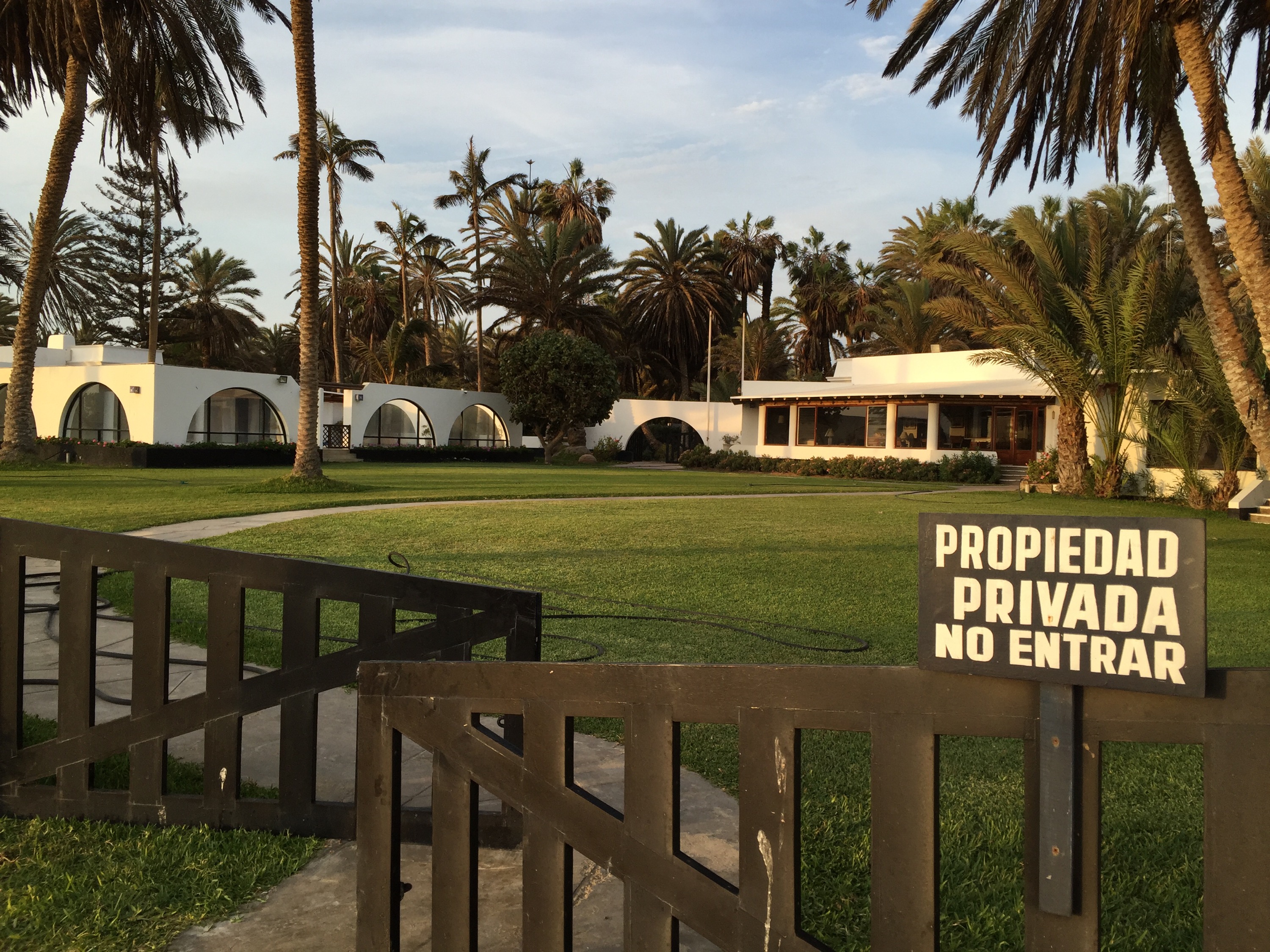
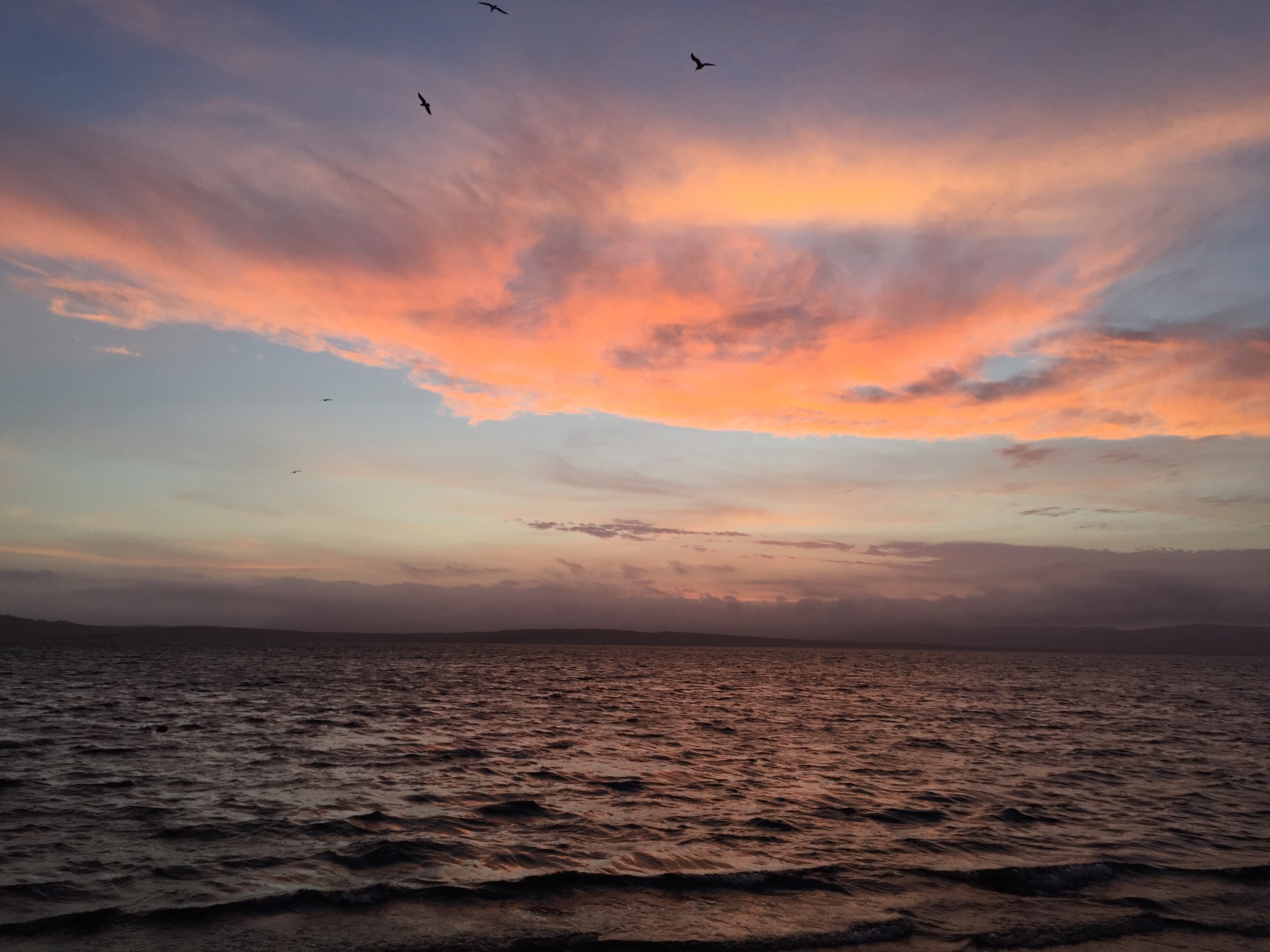
Our walk ended at sunset, when we turned around to head back to our hotel, a light bite to eat and off to bed.

An early rise again tomorrow morning – it’s another lengthy drive up into the mountains to Ayacucho.
Peru Oct. 17 2015

A second day in Lima. Sab (whom I met just yesterday morning) has taken on the role of “tour director”. I figure it’s my responsibility to arrive at the primary destination-after that I don’t want to make decisions. I suppose that makes me a passive tourist but it means I am happy to tag along and see the parts of the world others have chosen to visit. Sab, an experienced traveler has done much research and had prepared an itinerary that I was more than happy to adopt.

Sab had listed four things she wished to do/see today. First was a visit to a woman who brokers between international customers and weavers/embroiderers from many regions of Peru. She does broker alpaca items, but she specializes in 100% Pima cotton weavings that were simply gorgeous. Beautiful, soft, subtle shawls, scarves, table runners, cushion covers all handsomly woven in lovely colors-the craftsmanship outstanding.

As I am writing I realize I forgot to take pictures of the goods on display in her home showroom (a lovely apartment, BTW). How dumb was that! All I have is this picture of the shawl I bought which doesn’t do justice to the weaving.

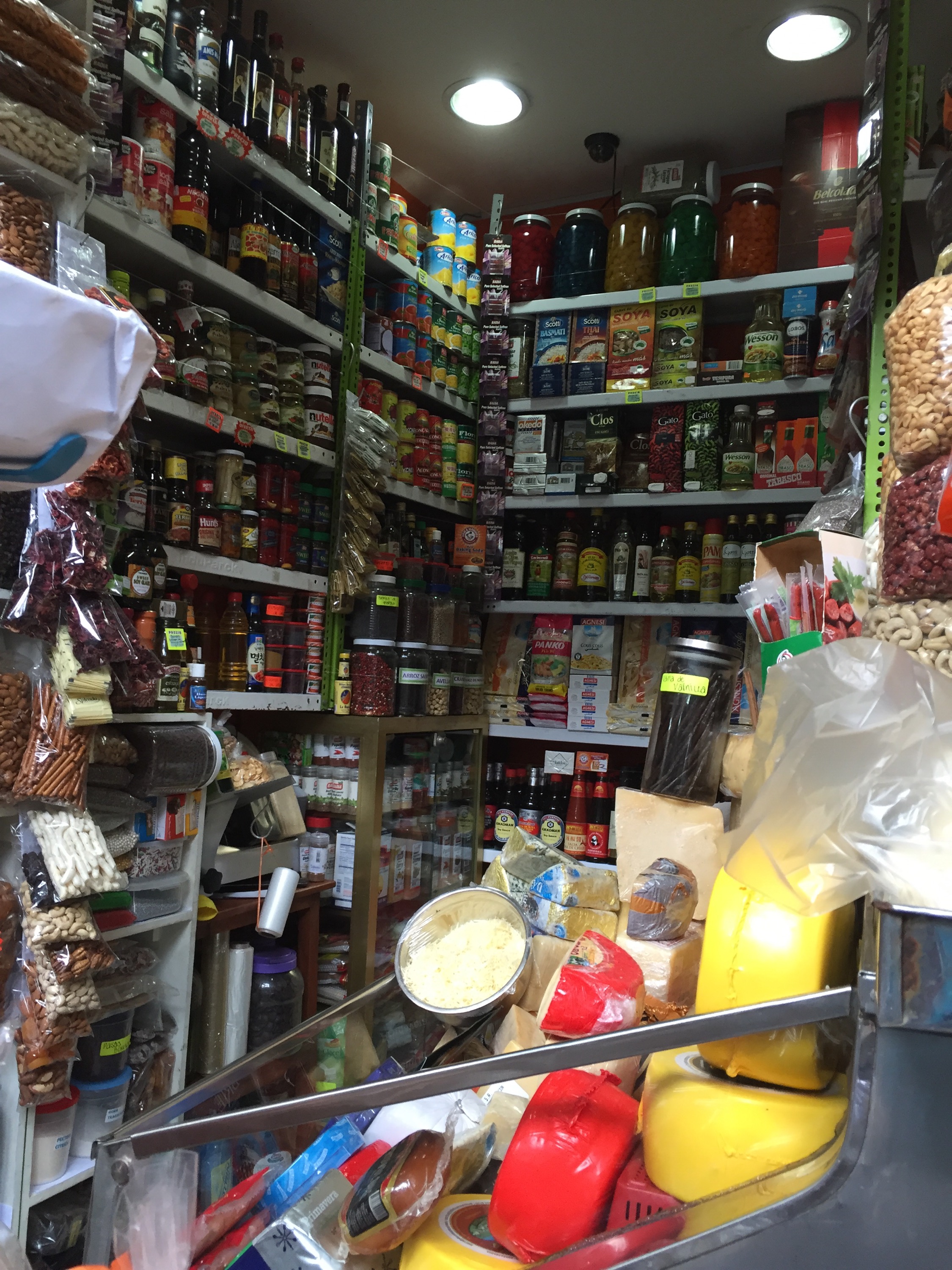
Our second stop was for lunch in a central part of Lima after finding Park Kennedy, which we’d come to see, mostly under construction. From there we walked several blocks to a main Market in search of nuts and dried fruit for snacks during the next two days of travel.


I have many more photos from the market, but my internet connection isn’t allowing me to upload them right now, so I’ll move on.

Our final stop was a large labyrinthine shop showcasing Peruvian crafts people of all persuasions, each set of items displayed in its own small room.


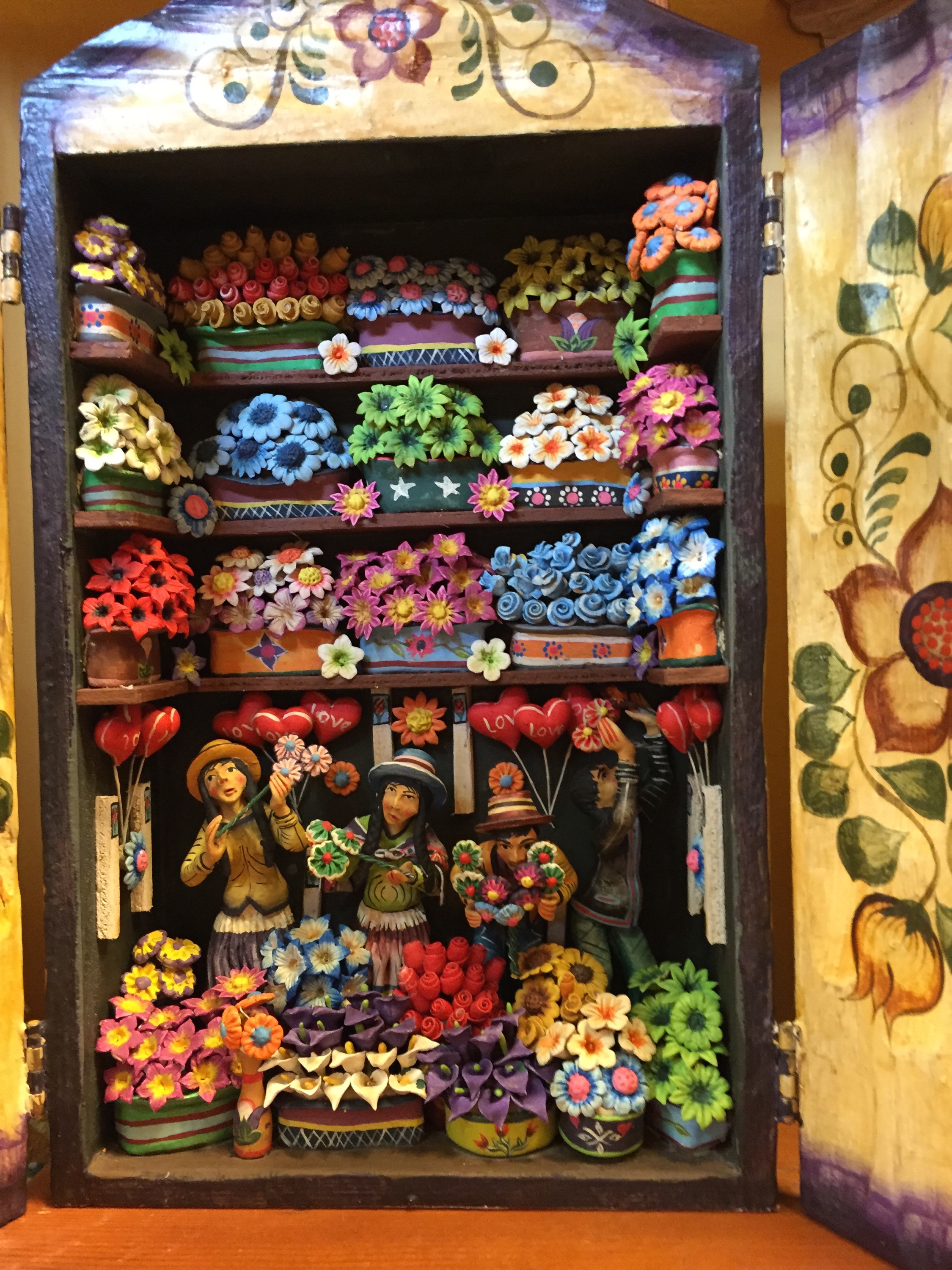
Were I twenty years younger I’d have bought this plate below, but these days I’m divesting so the photo is all I’ve taken away with me.

The most interesting objects were four foot tall sculptures of boys we found in the indoor cafe “garden”.

Tired, we headed back to Larcomar Shopping Centre for one last fast walk through, mainly to pick up a couple of bottles of water to take on our upcoming journey – then a walk back home.

Tomorrow begins with breakfast at 6:00am and departure at 7:00 for our journey by van south along the coast to Paracas for an overnight stay, before carrying on to Ayacucho on Monday.

Peru – Oct. 16, 2015

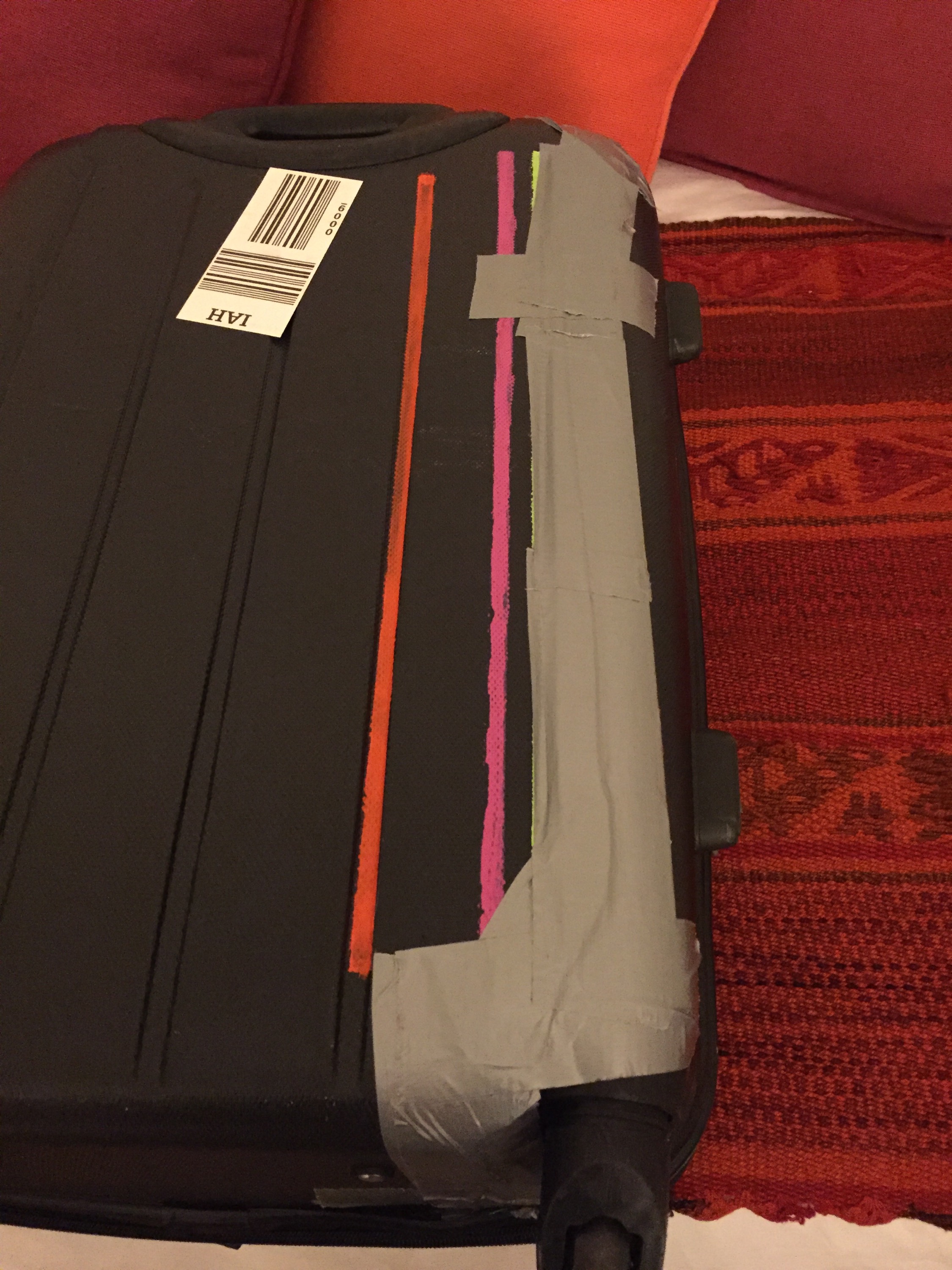
I landed in Lima at 11:30 last night. Immigration was reasonably fast (in spite of the large number of people to process), but my luggage took forever – in part I think because United (remember Dave Carroll’s great video “United Breaks Guitars“) destroyed my hard sided checked bag! I was only able to get out of the airport because I really had packed a roll of duct tape! There was a tear from the top to the bottom on one side of the bag – so while at the United counter setting a claim in motion, I dug out my duct tape and wrapped the suitcase a couple of times to make sure I could get as far as the reception area where I was actually met by a driver holding a sign with my name.

My first day in Peru started with breakfast where I met up with Sab from Munich. She and I had been corresponding and had planned to spend the day visiting historic Miraflores and then the Museo Larco to see treasures from ancient Peru.

Casa Inca, our hotel is just a few steps from the Pacific Ocean:

We took the walk along the top of the cliff until we reached Larcomar, a large upscale shopping centre really just around the corner from our pensione. Expensive, international brand stores. We walked about for a short while then left. Next we hailed a cab to take us to central Miraflores. We hadn’t gone far when the driver pulled over and said traffic was too heavy and he put us out! Fortunately we were able to hail another, more accommodating driver who took us to the Plaza Mayor (the historic center of Lima).

Several large ornate churches are located there as well as the Presidental Palace (guarded by high iron fences and a police detail).
 

Lots of shops for tourists, the colourful goods machine made using synthetic materials but interesting to browse.

We looked around for maybe an hour then took another cab to Museo Larko – first stop lunch in the restaurant there. We decided to order a selection of appetizers and weren’t disappointed. The food was beautifully presented and delicious.

Then a visit to the Museo itself starting with the collection of early Peruvian erotic pottery – several rooms of interesting, detailed, explicit renderings of all aspects of sexuality as functional objects.

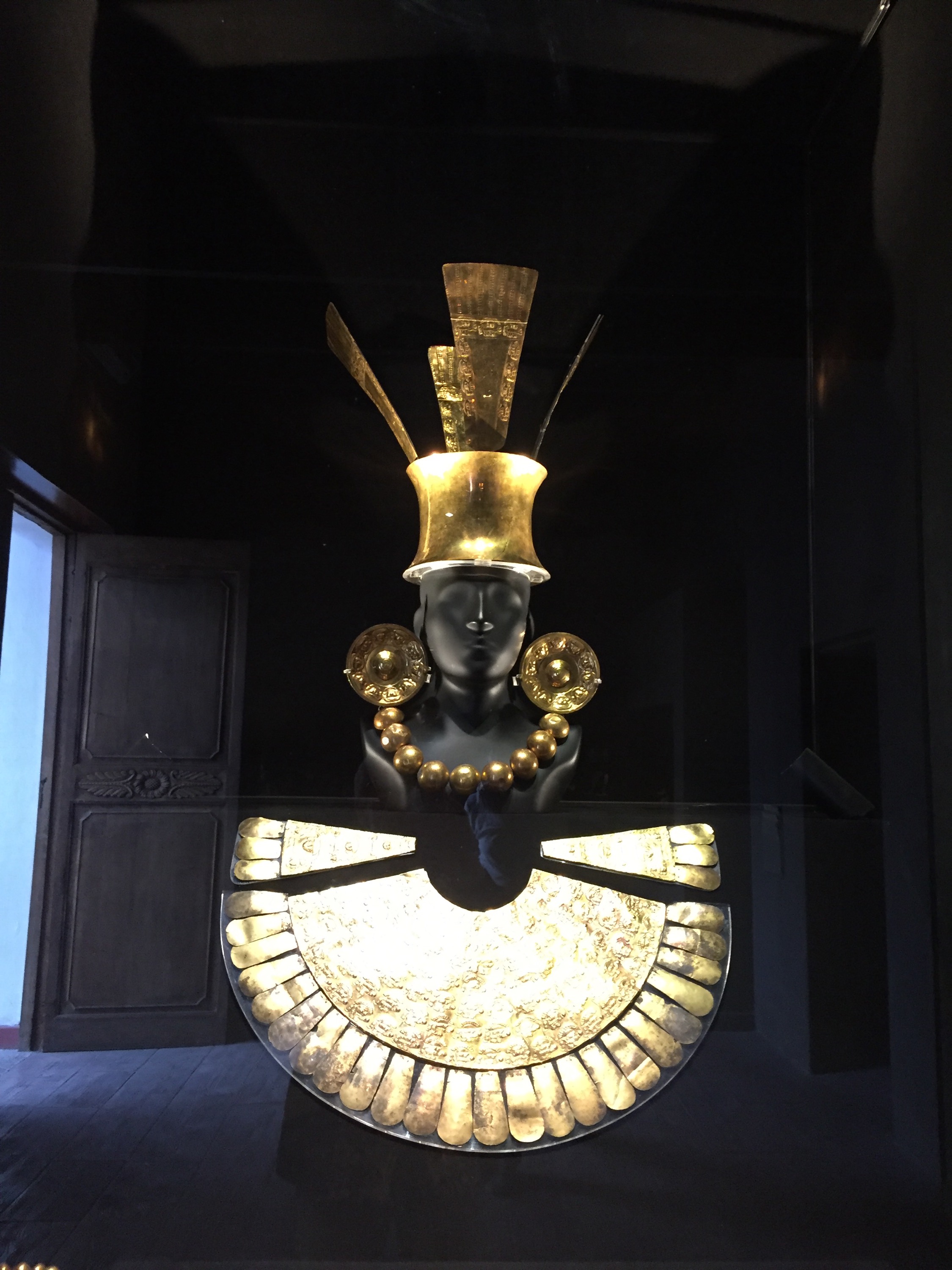
Next stop the permanent pottery, textile, silver and gold body ornaments and jewelry collections. All amazing artifacts like this burial set.
It was now past 5:00, we were tired so we got another cab (cabs by the way are amazingly cheap in Lima – these long distance trips costing us between $9-$12) and returned home.

It’s now about 8:30pm – I’m worn out so off to bed. Sab and I are planning a visit to another part of Lima tomorrow and I need to be rested to be able to keep up with her.

Peru Begun

My alarm was set for 2:00 am – the cab was coming to take me to the airport at 3:00. We departed Halifax on time. A change of planes in Toronto, and now I’m sitting in the Houston Airport with another two hours before we leave for Lima.

IMG_5780

The airport is quiet – it’s mid afternoon. I’ve been reading an Inspector Banks novel, some New Yorker articles, watching TED videos – loved the one of Benjamin Zander on the transformative power of classical music (search for it on ted.com).

This adventure has begun. I’ll do my best to journal the experience for you.

More tomorrow.

Kitchen Renovation

If you’ve ever had a kitchen renovation done you know what Andrea is living through!

A wall taken down, a patio door repositioned, new cupboards and appliances, and a much larger island installed – except at the moment only half of the old double kitchen sink is hooked up, the new counter tops still a couple of weeks away so there’s nowhere to lay stuff.

The hardest job – finding the “right” place to put all the kitchen STUFF you boxed up before the renovation began.

Yesterday we went to Kent to pick up a 4 x 8 piece of plywood for a temporary cover for the island – finally a place to lay things. This is the second go at finding the best place for dishes – they were in a corner cupboard before and while the dishwasher isn’t yet hooked up, Andrea thinks above the dishwasher is a more convenient location for glasses and dishes.

The kitchen is slowly coming together – in the last two days Charles has painted the ceiling (one coat), and put the bathroom and closet doors back up. There’s still work needed on the deck – a day’s work perhaps. The hardwood floor in the family room still needs to be selected (the plant that makes the flooring is closed for the next two weeks for summer holidays), ordered, delivered, and installed. The walls need painting, mouldings restored, new light fixtures put up, and the last of the electrical outlets hooked up and the kitchen will be done.

I think I need to book a return flight to see the finished kitchen – sometime in November?

The “Ugly Stick”

Have you ever heard of an ugly stick? I hadn’t until Andrea opened a closet door in her basement and hauled theirs out.


Wikipedia describes an ugly stick as follows:

The instrument’s main body is a mop or broom handle cut to approximately four feet. An old rubber boot is attached to the bottom and a cymbal attached at the very top. At strategic intervals along the length of the shaft, nails affixed with bottle caps, felt tins and other noise makers can be nailed into the shaft.

In other words it’s a one person percussion section! This one had an apple juice can affixed to the top as the “cymbal”, the obligatory boot with mop and beer bottle caps, and a piece of foam part way down covered with masking tape. A notched broomstick as bow creates yet another percussion accompaniment.

She and Charles both play guitars and sing for their own entertainment as well as for friends. So adding in an ugly stick was just a natural extension of a long-standing Newfoundland tradition. This stick (which Charles built 25 years or more ago) has travelled with them to many location across Canada.

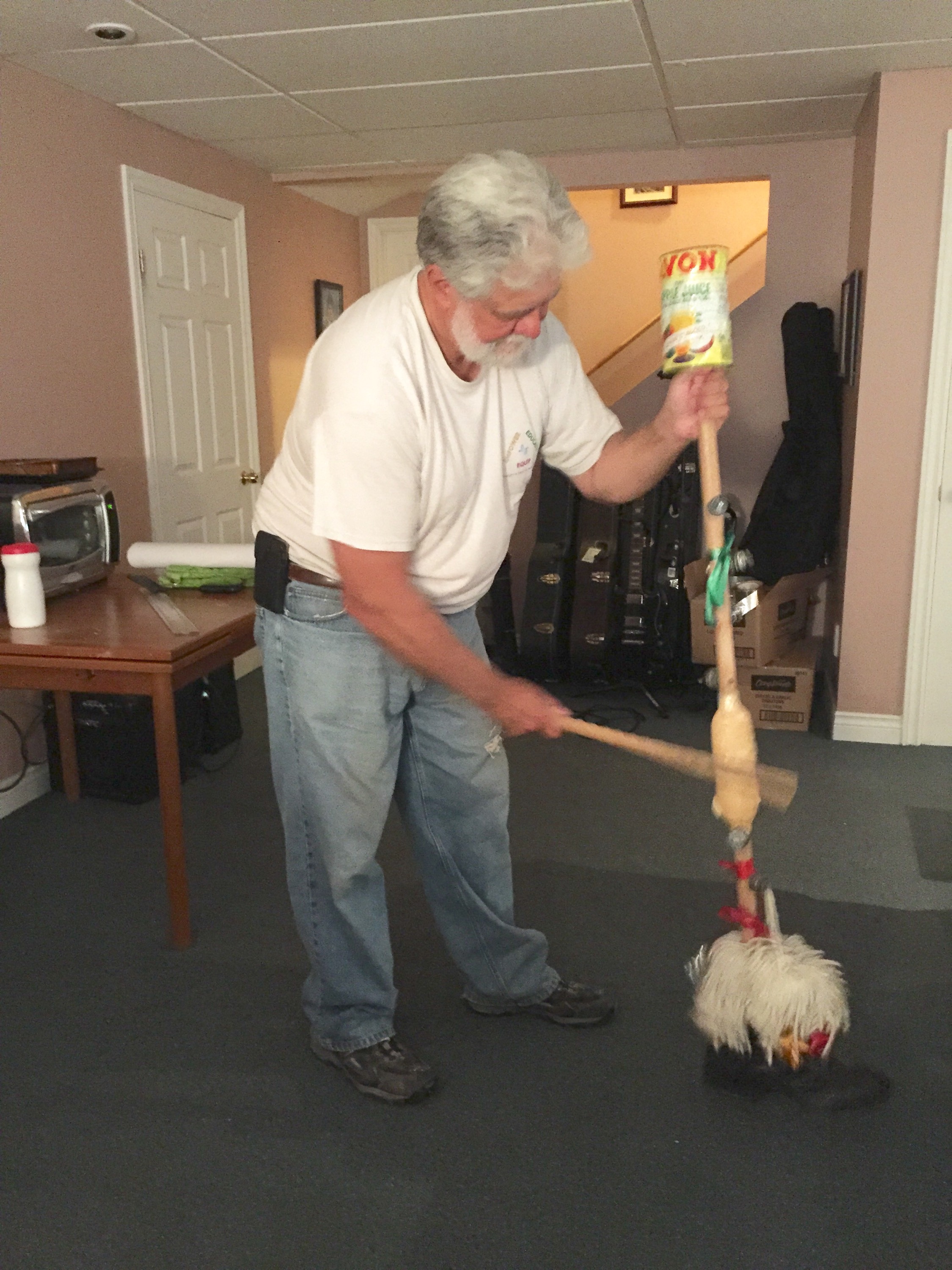
Charles played it for me:


I tried playing it! The bloody thing is damned heavy – you are raising the stick and beating the boot on the floor, at the same time drawing the bow across the stick (making the bottle caps jungle like a tambourine), and hitting the juice can (cymbal) for emphasis all in time to the music. It is hard work.

You can see how an ugly stick livens up a good party!

Biker


Andrea and Charles are bikers. Charles spent a good part of the day today trying out his new bike in anticipation of a two week bike trip he’s planning with friends to mainland Canada and into the US northeast.

When he got back from his local jaunt this afternoon Charles asked if I was interested in a ride. Why not! Andrea outfitted me with jacket, gloves, and helmet and off the three of us went, Andrea on her bike, Charles and I on his, avoiding supper time traffic by sticking to roads in the neighbourhood.

Several things I discovered – you have very little view as passenger. Although the passenger seat is a bit higher than the driver’s, I’m too short to see much straight ahead. Also, if you’re older and have any hint of hip degeneration (which fortunately I don’t have), the passenger position with hips well turned out could be quite painful. I didn’t experience any discomfort but I know I’d be more than a little stiff after an hour or so.

Still I enjoyed the ride. All part of my Newfoundland experience.

Logy Bay

  
OK – I watched whales from the ocean-facing hillside on the headland beyond Trinity, encountered moose on the highway in the vicinity of Clarenville. Finally an iceberg in the distance at Logy Bay.

The iceberg was reflecting a bright sunshine when we arrived at the bay, but before I could get my phone out of my pocket and walk nearer the water’s edge, a passing cloud cast its shadow. That iceberg was a long way out…

Quidi Vidi

Said “Kitti – Viddi” – The harbour is an old fishing village within the precincts of St. John’s. Still an active fishing community (if small), with quite a bit of recent housing construction on the hillside and a busy pub at the waters edge.


The harbour itself is long and narrow and once inside boats are sheltered from the ocean swells.

The early evening sun gave the harbour a golden glow. And what’s a Newfoundland harbour without dorys!