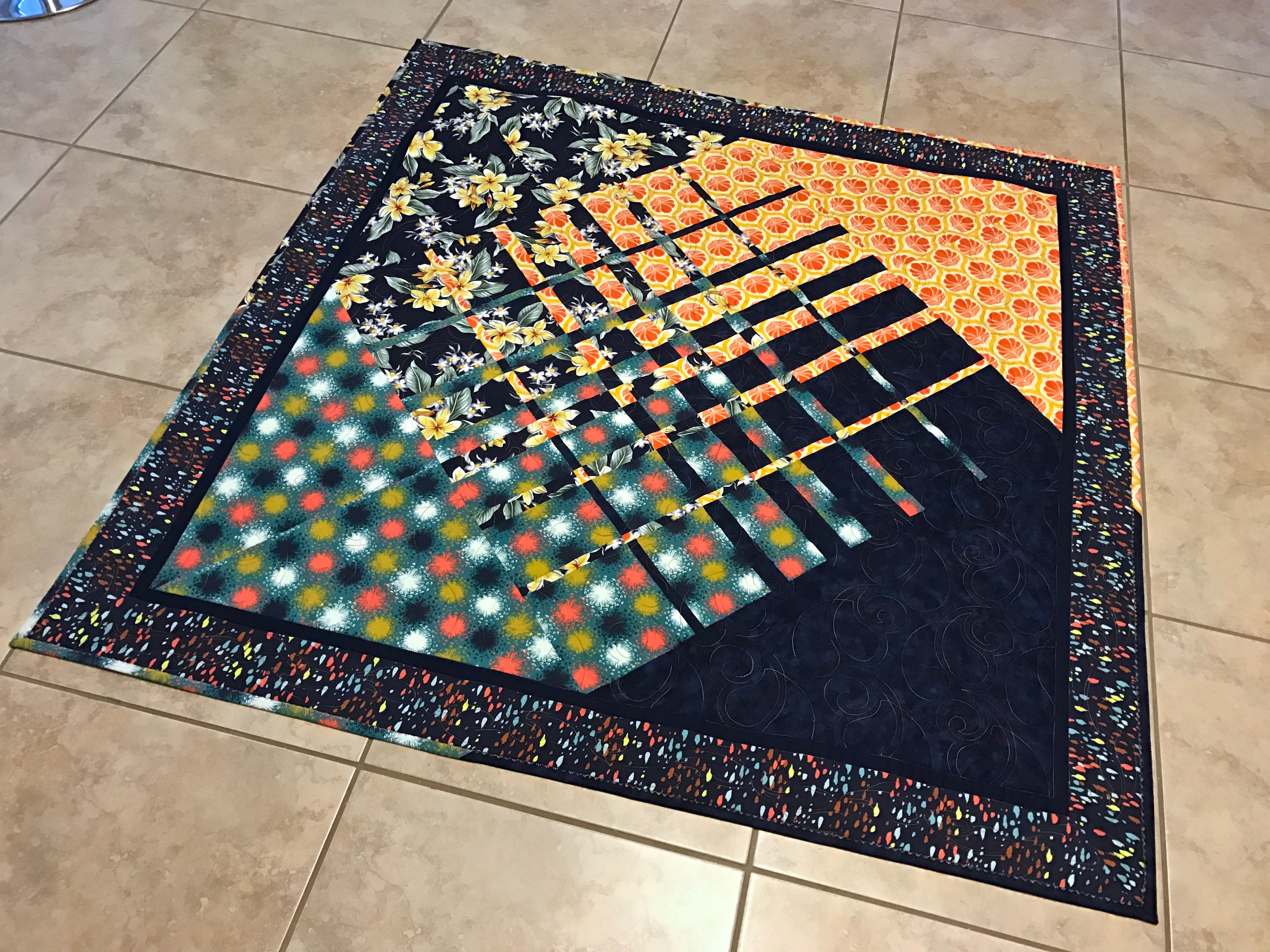
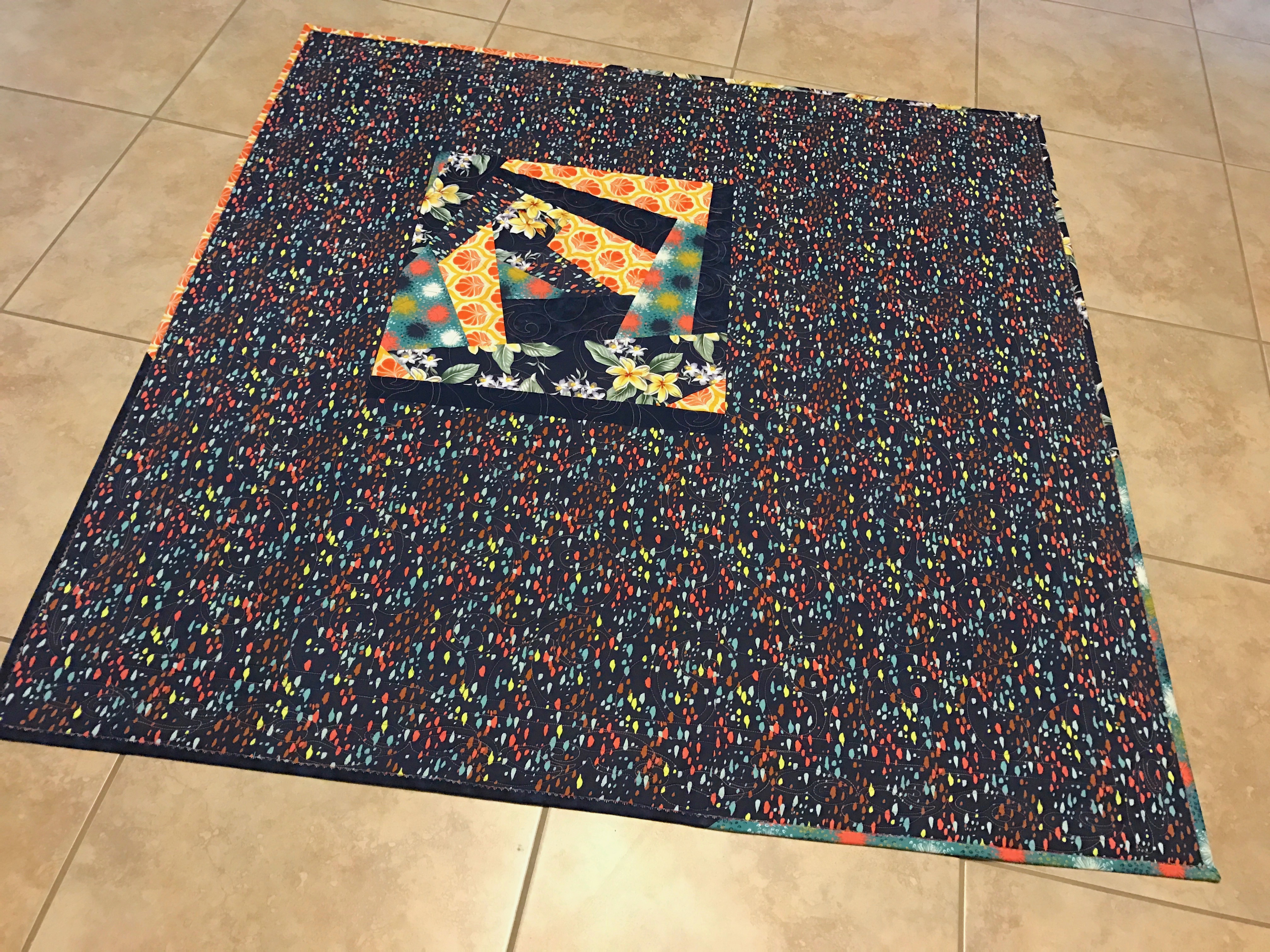
“Double Vision” Quilt

A while back I purchased and downloaded a quilting book by Louisa L. Smith: “Double Vision Quilts“. She makes interesting quilts by “layering” – using raw edge appliqué on structured pieced backgrounds to create an illusion of shapes such as curves without having to do curved piecing which is an advanced sewing skill!

double-vision-book

Her quilts are all quite lovely – beautiful colours, interesting ideas. The one that caught my eye was a quilt she calls “Circular Anomaly” – the quilt has a pieced under layer which shades from black to white (bottom to top and from left to right). The top appliqué layer uses dark red to a golden orange from top to bottom – starting with “X” shaped pieces at the top in dark red on the light under colours to the golden orange on the darkest colours beneath. The finished quilt is intended, I’m guessing by its size, to be a wall hanging.
anomolyI liked the idea but wanted to make a full sized lap quilt so I increased the number of background blocks as well as the block size – my finished panel ended up at 41″ X “54” – which means I will also want to add a border of some sort to make the quilt 47″ X 60″.

I considered other colour combinations: blues for the background with green appliqué elements or green background with purple-blue appliqué, but in the end I decided I really liked the colour combination Smith used so to start the project I scoured my fabric stash (scraps, largish pieces, fat quarters, other quilting fabrics) pulling out all the black-grey-whites I had. There were quite a few although not quite enough for the  under panel so I bought 6 more 1/4m fabric pieces in greys. I had a lot of reds – from very dark to golden orange; I’ve gone with what I have:

img_9653

Fabric for “circles”


I cut out one hundred twenty (I needed 108 but wanted to have extras so I could control the colour flow) 5″ squares from the black-grey-white fabrics and assembled the 9 x 12 base layer:

img_9010

Background layer

Next I had to figure out what size “X” and “circle” elements I’d need and how many (I’m not following Smith’s directions, right? So I had to calculate this for myself). I began with Smith’s templates but upsized them by screen-capturing the two elements, then printing them at 115% which, in the end, gave me the size I was after.
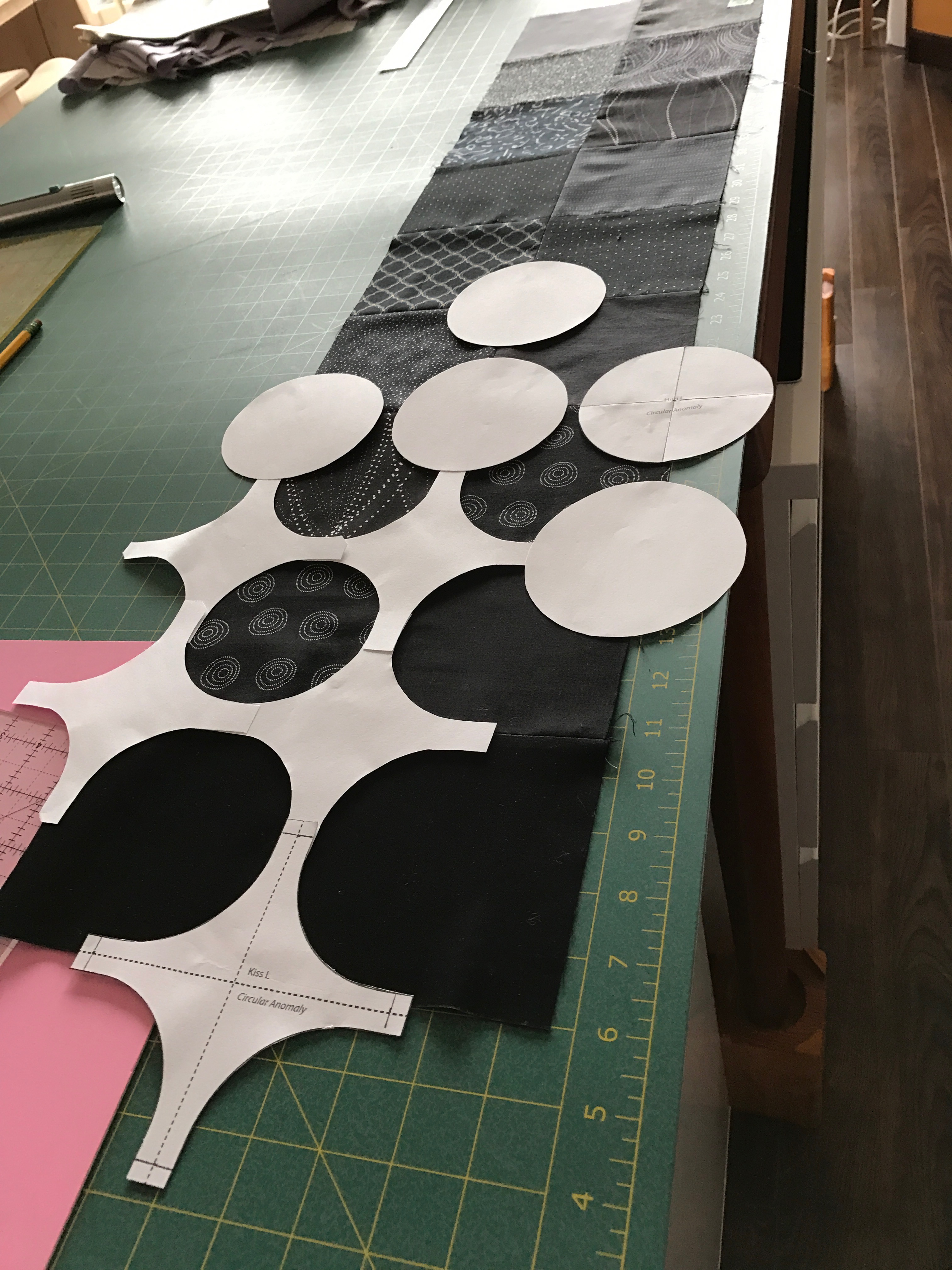
img_6170I decided a finished circle of 4″ would work; the “X” ended up with a 2.5″ arm length from the center to allow a bit of overlap.

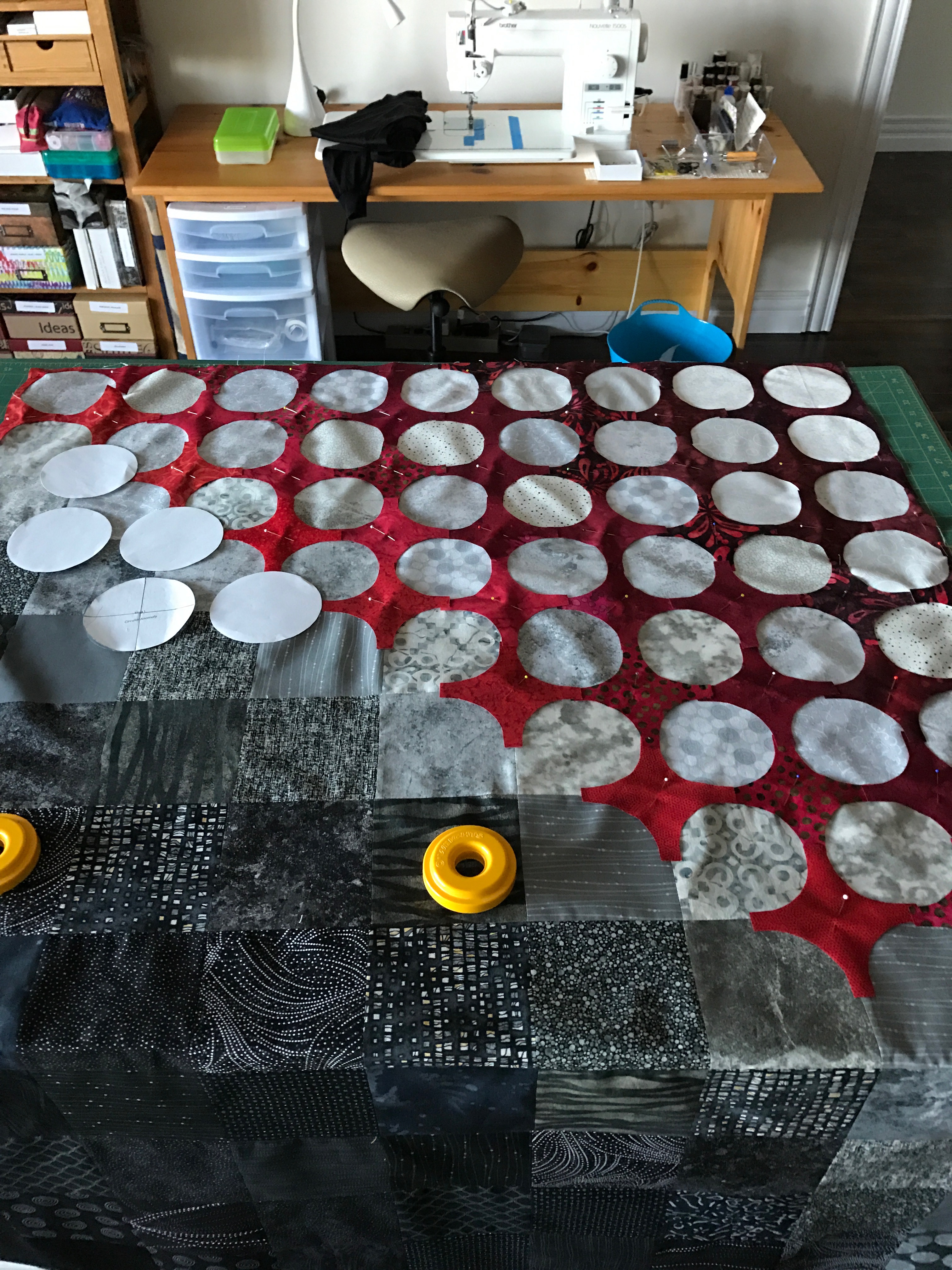
I cut 4 1/2″ strips of “Wonder Under” – Pellon’s 805 light weight fusible paper backed iron-on adhesive, drew the circles and “X”s on the paper side of the strips, then fused the strips to the back of the red fabrics. So far, I have carefully cut out the “X”s and pinned them to the background being careful with the colour gradient from dark in the right top corner to medium red along the diagonal :
img_6161

“X’s pinned in place

Next step: carefully fuse the X-shaped pieces to the background before creating and cutting out the circles. I’m aiming for asymmetry here, so there will be more circles than “X” pieces. Once all the pieces are fused in place I will need to edge stitch them to the background. To do that I’m intending to cut my batting and apply and pin it beneath the background to bypass the interfacing step. The batting will provide enough stability (the cotton sticks to it nicely) that I should be able to control the stitching process. I’m planning to use a small blanket stitch rather than satin stitch which I think will be heavier than I want (Smith did use a satin stitch in her quilt).

Once the top stitching is done, have to think about some kind of quilting to hold the top-batting-backing together. The design does call out for some kind of stitching within the circles and the “X” pieces rather than an all-over quilting design but I haven’t yet figured out how to do that – I want to try hooping the quilt as 9″ blocks (4 background squares at a time) and embroider within the circles and “X”s. I will have to see what single-run design I can come up with to fill the positive and negative spaces in an interesting way.

More later as I progress further.


More Bags

It started out wanting to make a new bag for my iPad. I did a couple (the two on the right – one pieced, the second crazy quilt appliqué) before the one I have decided to keep.

I made the two smaller bags from leftovers from the other two bags.

img_5348

More Bags

I seem to be drawn to blues at the moment although the next quilt idea is based on black/white and an array of red/orange/golden.

I still have to finish the “hitoe” I started about a month ago – it’s sitting on my cutting table so I can get back to it tomorrow.

And then I really should make another dozen mid-size bags to have in my bag stash – for gifts….

Case For New iPad

Got a new iPad last week.

Needed a case for it.

Dug out some scraps; cut batting to the right size (including seam allowances); laid scraps on the batting – pinned them lightly in place then fancy stitched along the edges. Made two sides.

“Top” of Bag

Second Side

Cut out lining. Stitched zipper along one long side, added lining, then sewed sides, and bottom (remembering to open zipper before stitching outside bottom! If you forget to do that the bag is unopenable.)

A basic bag takes less than 15 minutes. This one took nearly 2 hours what with deciding how to place the scraps and doing all the fancy stitching.

Replacing Zipper Pulls…

I told you about making zippers for the small wallet using the “make-a-zipper” tape. I described running out of zipper pulls and improvising with the pulls from the old, original wallet.

Well, I ordered some more make-a-zipper tape (5 1/2″ yds with 12 pulls – nowhere near enough pulls) and some extra pulls from Nancy’s Notions. The stuff arrived today, so I opened the bag of pulls and realized I had no idea how to get them on the tape!

I googled “attaching zipper pulls to a zipper tape” and found a wonderful source: “The Zipper Lady“. She sells zippers and has a collection of videos about all kinds of zipper related issues, among them replacing the pull. Her instructions are very clear, and they worked – I was able to add a bunch of pulls to my zipper tape (the navy ones) without a lot of fuss.

img_0084

The secret is to put the zipper pull on from the front end, after opening the end of the zipper tape, cutting one side about 1/2″ shorter (the right side if you’re right handed, the left side if you’re left handed – who knew!), feeding the front of the zipper onto the longer tape until it’s about 1/2″ from the end, then feeding the shorter end into the pull until you hear a click (and meet resistance). Now the secret is to fold the two tapes back and hold in one hand then wiggle the pull until it closes the zipper – it really works easily.

img_2180

Now I need to order a bunch of assorted pulls from her so I can use the leftover tape I have – it’s great on all size bags. Oh, and by the way I do believe this size zipper is a standard #3 coil! Her best video is this one: https://www.youtube.com/watch?v=BZ8srHfJ-aM. Watch it!

Fibonacci #1 – Completed

I spent the afternoon finishing the Fibonacci Quilt. Last evening as I was nearing the end I was thinking about the binding – my first inclination was to bind it using the solid Kona dark blue but decided that wouldn’t add anything of interest to the quilt. I dug out what was left of the original fabrics, realized I had more than enough to cut two 2 1/2″ width-of-fabric strips from each. My idea was to extend the triangular corners into the binding, carrying the diagonal lines past the border. It took quite a bit of pinning and fitting to align those diagonals but in the end they worked – the most obvious of the matches is the yellow diagonal on the right, but they’re all done that way.

This could be considered a “medallion” quilt – the center block element (in this instance offset as a diamond) is constructed from the Fibonacci series of fabric strips, surrounded by large triangular panels of the individual fabrics, set off within a narrow navy sashing and finished with a contrasting border!

Quilt Top

Quilt Top

I edge-to-edge quilted the inner panel – I had worked out the dimensions of the embroidery to fit within the navy sashing. My calculations were close enough that eight rows filled the panel end to end without having to fudge the spacing between rows. It’d hard to tell from the quilting detail below that the rows actually overlap – that is, there were spaces in each row filled by elements in the next row. This is usually how long arm quilting designs are created – rows of nested scrolls. It’s much more difficult to plan out when I’m quilting in the hoop on my embroidery machine because while I’m quilting in rows, each row consists in this case of 4 1/2 repeats each of which has to be precisely connected to the adjacent stitch out for the rows to work! The inner sashing was stitched in the ditch; the outer border was quilted using a modified version of the main quilting motif.

This is the most intricate quilting I’ve attempted and it worked out very well. The new embroidery machine and the larger sewing table definitely helped. It was also nice to be able to do the hooping of the fabric on the cutting table rather than on my knees on the floor!

img_8056

Quilting Detail

For the back I used leftover scraps from the original fabrics assembled randomly in a crazy quilt array. The block is quite large pieced into the backing fabric.

img_8057

Quilt Back

I’ve named this quilt Fibonacci #1. There are, in fact, many different ways of using this number series to construct a quilt. I have to let the ideas percolate for now but there will be more quilts based on the number series…

New Sewing Machine

Last week I upgraded my embroidery machine – a totally impulsive decision. My Pfaff Creative Sensation was about 5 years old (no longer offered by Pfaff and  quite substantially depreciated since the new Creative Sensation Pro II was released within the last couple of months). My local Pfaff dealer was offering a good trade-in on my old machine so I decided to make the swap.

The differences between the two machines are subtle – the Pro II embroiders noticeably faster, there are a couple of new fancy stitches, the workings are all just a bit more stable than my original machine. The trade up made some sense since all my embroidery hoops work on this machine as do all the feet in my large collection of sewing machine feet.

img_8051

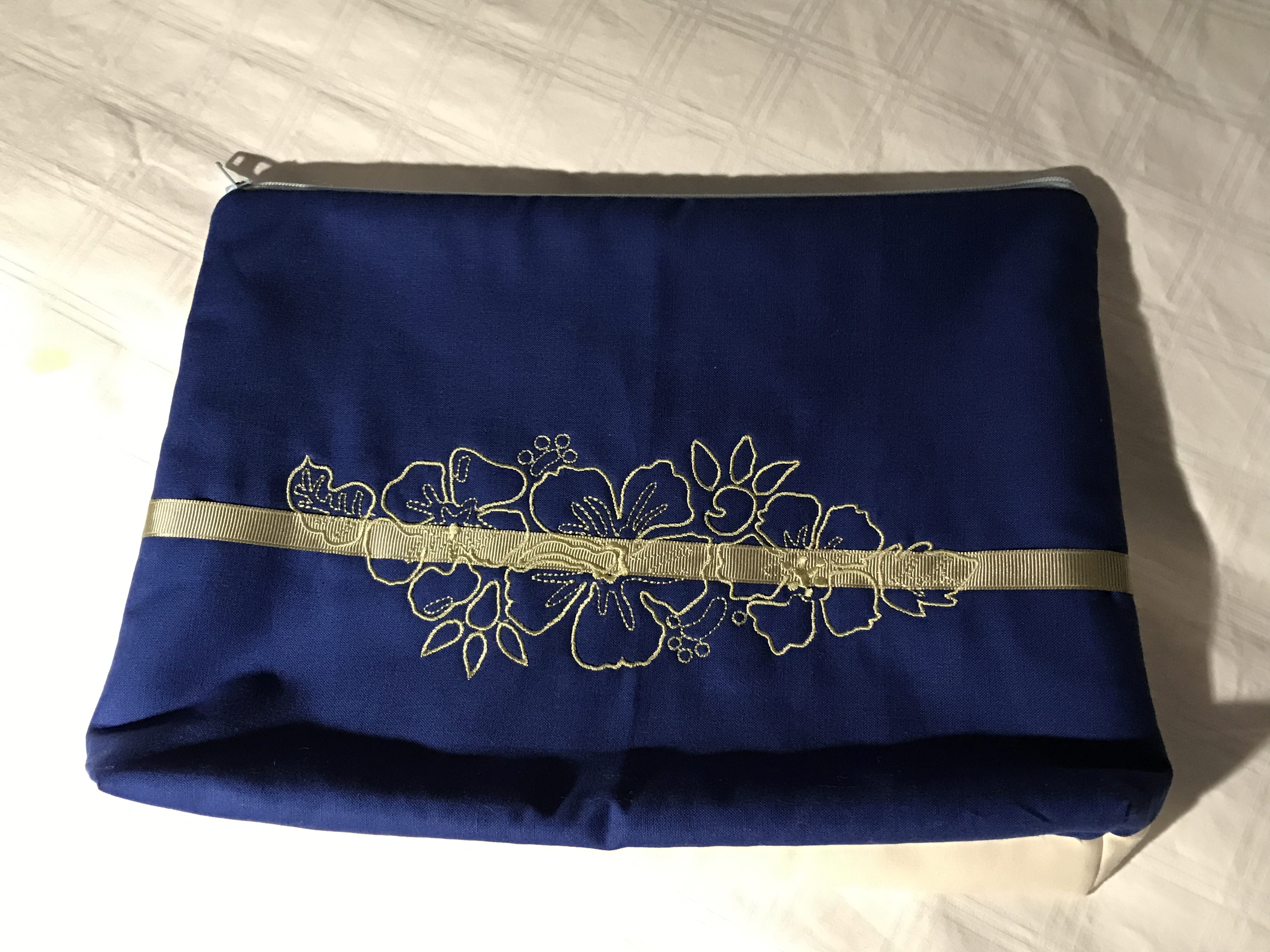
Front of zippered bag

So I took the machine home, unpacked it, and decided to give it run by making a zippered bag for storing the foot pedal and cord when I need to transport the machine. I loaded one of the embroidery designs included on the machine, picked out some rayon embroidery thread and stitched out the design. Did a nice job and this was where I could see the increase in embroidery speed. The stitches were properly embedded in the fabric layers without my having to make any tension adjustment (which I often had to do on the old machine). No thread breakage – always a good sign.

One of the few hoops I don’t have is a “texture” hoop – one which lets me add ribbons and other trim to the surface of the fabric before stitching out an embroidery. Instead, I took a piece of grosgrain ribbon, lightly glued it along the middle of my fabric, hooped the fabric and stitched out the embroidery. Worked fine!

img_8053

Back of zippered bag

I added a zipper, a lining, and stitched up the bag. Didn’t take long. Then I played around for a while testing out various stitches on a scrap of fabric.

These days, however, I primarily use my embroidery machine for quilting. Once my quilt top and quilt back are pieced and sewn (I actually prefer my straight stitch quilting machine for that), and the quilt sandwich pinned, I do the final quilting by hooping the pinned quilt segment by segment (easiest is when the top is actually constructed from blocks; more demanding is hooping from edge to edge – which is the job I just finished today on my Fibonacci quilt (I’ve quilted half of the border; I’ll complete that job tomorrow, then add the binding and label)).

The Pro II runs more quietly and smoothly than the original Creative Sensation. I can see I will turn to it for more than just quilting.

The new machine is now sitting proudly on my new sewing table which is deeper and a bit longer than the previous table (on which is sitting my straight stitch quilter) – making the whole business of quilting with the embroidery machine much easier (much less drag on the embroidery unit since the weight and expanse of the quilt is distributed over a much larger surface).

I can see I’m gonna be happy having upgraded the embroidery machine.

This ‘n That…

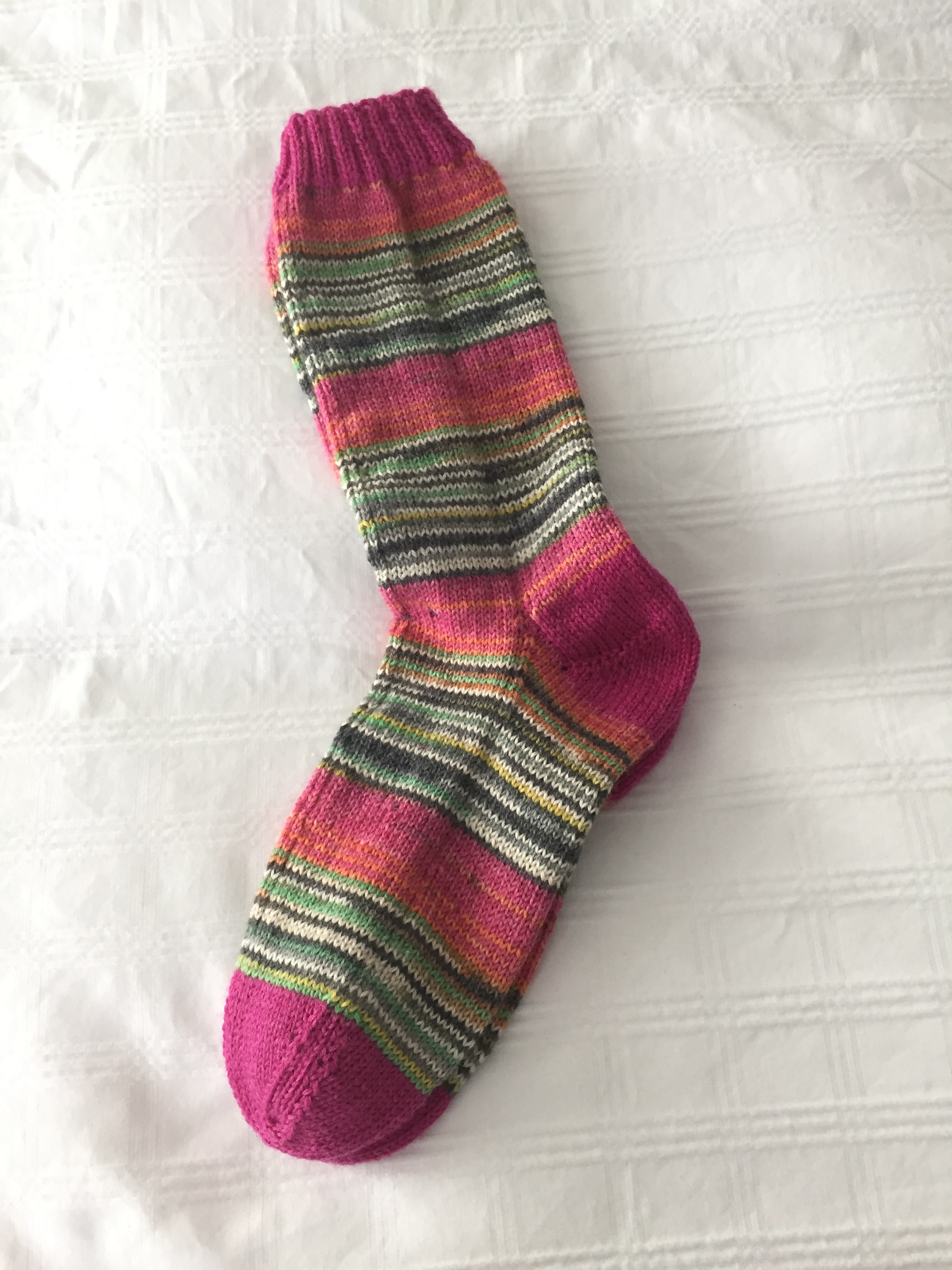
I’ve been working away at stuff – got another pair of socks finished:

img_8036

My sister Barb was visiting from Toronto on Sunday and she went home with one of the pairs of socks in my stash. This pair will take their place. The others will be Christmas gifts, quite likely.


Yesterday, the zipper on my small “wallet” separated at the back end. It’s a small zippered pouch I made maybe four-five years ago – small enough to fit in a jacket pocket but large enough (with enough zippered pockets) to hold just about everything I want to carry with me: a few credit cards, a couple of loyalty cards, a bit of cash, some change, and a spare key (along with a pocket screwdriver). Here’s a second one I made at that time – discovered when I’d finished sewing that it was for a left-handed person!

img_8041

The zippers open the wrong way and if you hold the pouch to open them with your right hand, then all the pockets are upside down! I use it to hold my driver licence and car permit in the large compartment but not much else. I needed a pouch that was right-handed.

img_8038

The one I made today is a tiny bit wider and longer but the zippers open on the right side and the pockets are right way up when you open them.

I used some royal blue rip-stop scraps I had kicking around from my days of kite making. I had a some turquoise/lime green grosgrain tape, and some lime green zipper tape (without pulls) left over from a roll of make-a-zipper tape I’d bought from Nancy’s Notions years ago:

13138128

I’d used all the pulls that come with the tape – so I removed the pulls from the zippers on the original pouch – with some tugging, managed to install them on the green tape (which is why one pull is pink!).

Project took a couple of hours – the rip-stop is slippery and I had to pin as I went along to be sure the sections of the pouch would be aligned – slowed the sewing process down. I should actually make a pattern for this project – I’m sure other people would be interested.


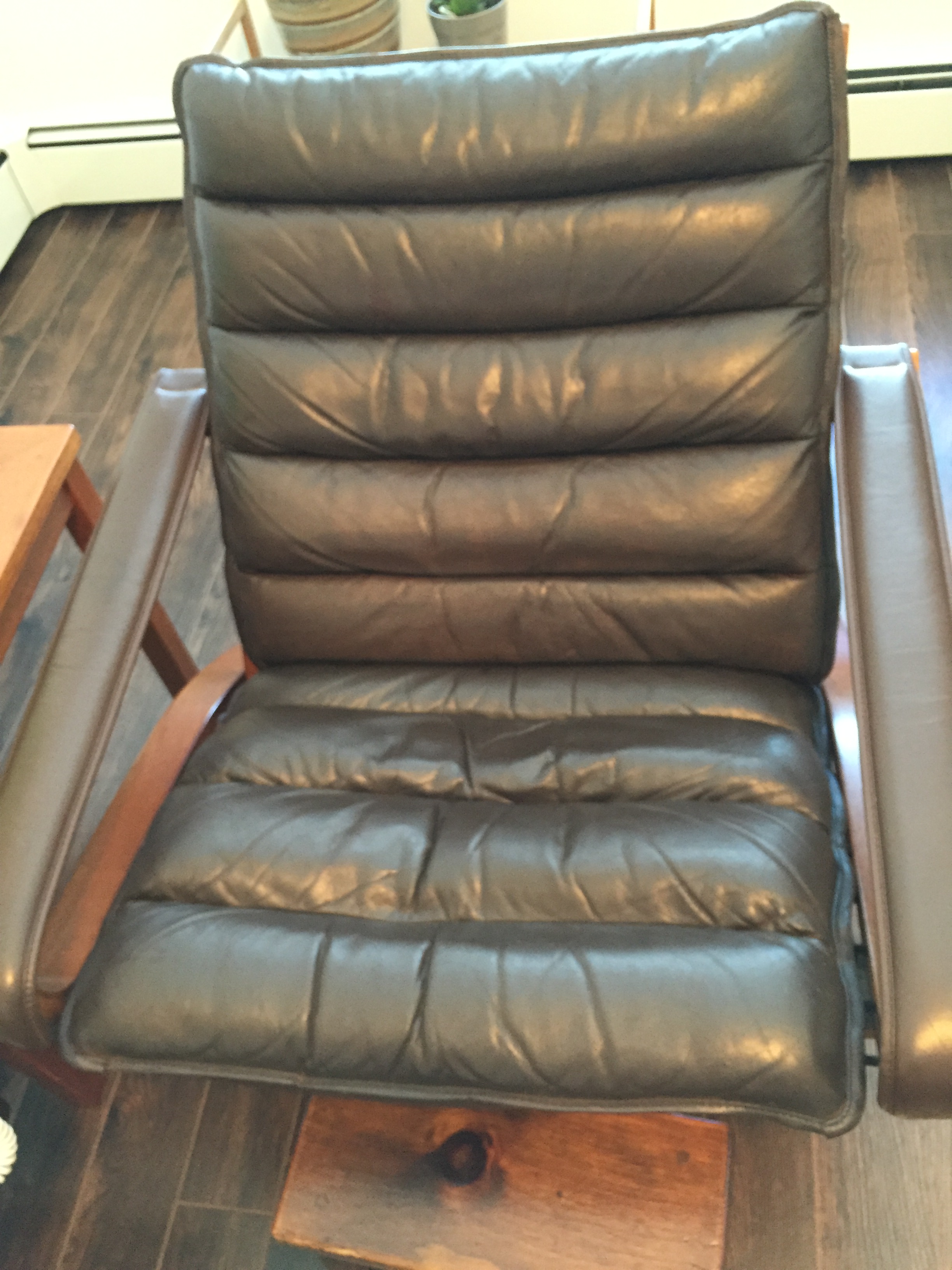
This morning a jar of Rustins Leather Re-Colouring Balm arrived in the mail from England. I’ve had a dark brown leather chair for over 40 years. About 20 years ago I had the cushions restuffed but I was never able to find a product to refinish the leather itself. With this move I decided to see if I could find something to renew the leather on the cushions. I came across this Rustins Recolouring Leather Balm:

leather-balm

I ordered a jar in dark brown. I’ve just used it and it’s wonderful! I thought to myself as I started applying it to the chair cushions I should take a “before” picture – I didn’t. But here’s an “after”:

img_8042

All the white wear marks are gone. The balm soaked in quickly – there wasn’t much excess to wipe off. The best part is it’s not going to come off on clothing when someone sits in the chair! It didn’t take long to apply, wait for 5 minutes, then wipe off (the wipe off cloth didn’t pick up much colour at all). I’ll apply a second coat tomorrow just to catch the few uncoloured spots that I’m noticing now. I can’t believe how much better this chair looks.

So now to get organized to quilt that latest quilt. The sandwich is pinned together. I’ve set up an embroidery design to quilt it edge-to-edge. Gotta try out the embroidery on some scrap fabric to make sure of the dimensions so my edge-to-edge quilting will align properly.


Convergence Quilt #1 – Top Completed

img_8034

So here is the top completed. The original convergence block is the center of the quilt, with triangles matching one of the predominant colours on each side. Those triangles were difficult – in the end, I laid the sewn convergence block on the floor, laid paper under one side, then drew a triangle – the base of the triangle was the length of the block side, 45° angles to form what is an isosceles triangle! Where the two sides met created the apex of the triangle (which I made sure was a 90° angle). (I remembered to add seam allowances to each side of the triangle.)

I didn’t have enough fabric left to create the triangles in a single piece although overall there was enough fabric – if I made two smaller right angled triangles, stitched them together on what would become the diagonal of the overall block. Then I had enough width to accommodate the edge of the convergence block.

Once the triangles were attached, I added a 3/4″ sashing piece for stability – the sides of the triangles on the outer edge were all on the bias and needed to have something attached that would retain the overall shape. I cut the sashing on the length of fabric (since I had just enough length of the Kona solid I used). Then added a 4 1/4″ border from a fifth fabric that I’d bought as part of the set with the other four fabrics.

Now I have a 54″ square top. I need to think about what to do with the second side (back). I bought another 1/2 m. of each fabric, as well as 2 1/2 m of the dots fabric for the back. Flying geese? Half square triangles? Strips? Crazy quilt? Lots of possibilities. I’ll wake up with something in mind, I’m sure. That’s how these things seem to work themselves out for me.

Convergence Quilt #1

Yesterday I drove to Parrsboro to retrieve my quilts from the Art Lab Exhibit. No sales – wasn’t expecting any. Lots of nice comments in the guest book, though.

When we were hanging the quilts three weeks ago, Michael asked me if I’d ever tried a quilt using the Fibonacci Sequence of numbers (0, 1, 1, 2, 3, 5, 8, 13, 21…). I never have but I googled Fibonacci Quilts and found a gazillion examples!

Turns out that modern quilters began playing with this idea quite some time ago. One of the earlier quilters to explore intersecting graduated, spliced fabrics in two directions was Ricky Tims. He used a slightly different sequence of numbers but the effect is similar. His book: Ricky Tims Convergence Quilts offers a variety of ways to play with this idea.

cover-rickytims

Book Cover

c2

Example from the book

Quilts called out to me today. I put the shirt/jacket to one side (I have to take the back princess seams apart and reduce the fullness of the side back panel to smooth out the fit of the back of the garment – I’ll get back to it likely tomorrow because once I solve the back fit problem the assembly of the garment will go very quickly!).

I went to my fabric stash and chose four complementary fabrics – two with strong patterns, two more muted. I had 1/2 m of each fabric – I cut 20″ blocks from each, pressed and starched them. Lined them up, trimmed them, sewed two together, folded them right sides together, then cut the following strips from each pair: 1″, 1.5″ 2″, 3″, 4.5″, and 7.25″ (that used up most of the width of the fabrics).

I interleaved the strips, then stitched each set together giving me two graduated panels. Here they are with the strips assembled in one direction:

img_8012

The second step is to cut the panels again, with the fabric rotated 90°. I laid the two pieced fabrics right sides together, strips horizontal, then cut vertical strips again, using the same dimensions, then interleaved them once more. This produces a single panel with the four colour blocks converging into one another:

img_8017

My “convergence” panel #1

My finished panel is 34″ x 34″ – now I need to do something with borders to extend the quilt top so I have a lap size quilt (~ 45″ x 60″). That means asymmetrical border elements so I end up with a top that is longer than wide. I’m thinking I might want to use this panel on point, making the strips diagonals… something like this example below – I’d want to offset the panel somewhat more than this one so I could then add more asymmetrical borders to the enlarged square. 

diagonal

Convergence block on point…

I’ll work on this some more tomorrow. Tims calls these “mystery quilts” – he’s right! It’s hard to anticipate how the spliced, interleaved fabrics will look. I’m happy with this first attempt – I’ll want to play with it some more using strong coloured fabrics with more muted patterns to see how that might turn out. I can see I might be engaged in this cutting, sewing, cutting, sewing for quite a while – there’s lots to learn here…