It’s All About Pink – III

Here’s the quilt top assembled:

Quilt Top With Borders

I like how the pale narrow inner border finishes off the pieced centre. I was just lucky with the outer border – not many fabrics to choose from and at first I passed over this one, but in fact the “golden” shade within this pink brings out all the tones in the top.

Next…. Now I have to piece a 14″ strip for the backing – this top has finished at 54″ wide. For the back fabric panel I need another 14″-16″ to allow enough excess width to assemble the sandwich.

It’s All About Pink – II

I’ve just finished stitching the quilt blocks together into a 7 x 9 array. There was a lot of moving blocks around as they sat on the floor trying to get the colour, shape, fabric distribution worked out. I can live with how the quilt top has turned out. Some of the blocks come from Tula Pink’s 100 Modern Quilt Blocks; most are blocks I just made up from scraps, or from blocks I found on Pinterest. The distribution of light/medium/dark fabrics works out reasonably well – I’m happy with it.

It’s All About Pink – Blocks Stitched in 7 x 9 Array

Now comes the next difficult decision – how to border this array. I’m thinking it wants a narrow light sashing (probably 1″ wide) with a wide medium outer border, but maybe I want to piece the outer border in some way. I need to do a bit of searching to see what I might come up with….

In the meantime this is kinda what I have in mind:

Auditioning border fabric


It’s All About Pink

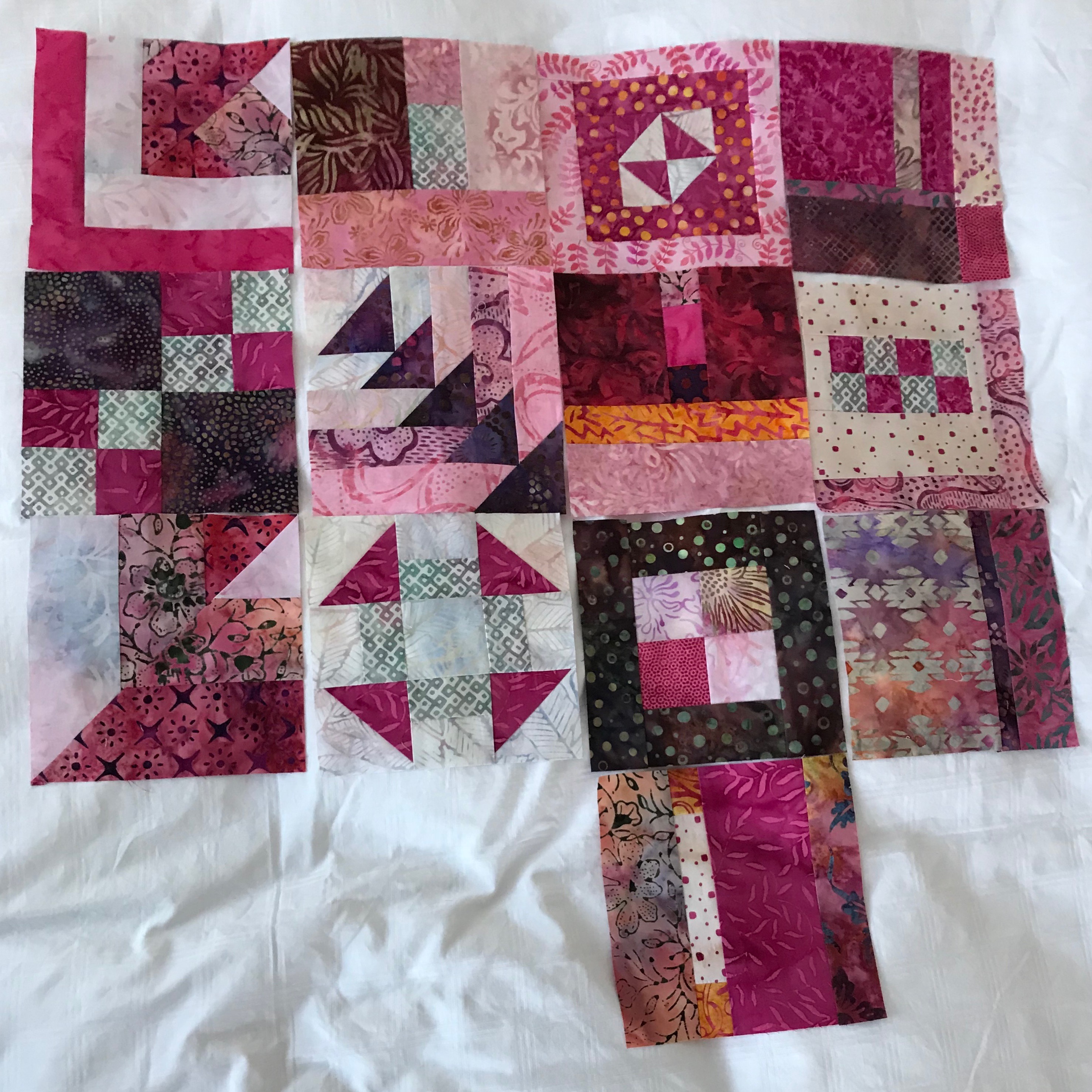
Just finished the 63rd block. Laid them out – first pass – to get an idea of what the whole would look like.

63 Blocks

Not bad, there’s a LOT to look at here, although one block has to be revised – I didn’t see the swastika until I looked at this image. I’ll make a replacement. I also need to array all of the blocks on the floor and walk around them for a while to make sure I’m happy with the layout – colour, shapes all reasonably distributed.

And then the big challenge – there’s not a lot of light pink batik available here in town so once I get these blocks assembled into a 7 x 9 array, I will have to go shopping for a couple of fabrics to border, back and bind the quilt. There’s nothing in my backing stash that goes with pink.

Overall, I am please with how the impact of the layout is “pink” – that was what I was aiming for. A lot of improvising has gone into this block collection – I didn’t have measurements for most of these blocks, while I worked a bit with graph paper, most of the time I started with an element and built around it. In effect each block represents a “sample” – the sort of thing I’d do to work out the dimensions of a block before using it in a quilt. Here, the sample is my end product.

Blocks 30-43

I’m up to block 43! Just 20 to go (at least for the quilt top – I’ll probably work on more for the back – a dozen or so…)

Blocks 30-43

What’s going on here is a lot of improvisation – some “standard” blocks accompanied by a lot of using up scraps to end up with 6 1/2″ x 6 1/2″ blocks.

The challenge is having enough light pink batik – I’ve got lots of mid-range fabrics and enough dark. I’m running short of the lighter values and without the light the blocks aren’t going to work. I may have to resort to a few printed fabrics – I’ve used just two so far and am trying not to use more but I may be forced to.

The Scrap Collection

This is what my cutting table is looking like at the moment. I’ll clear it up (actually throwing out pieces that are too small or narrow to be useful) when I get back from some errands.

A Study In Pink

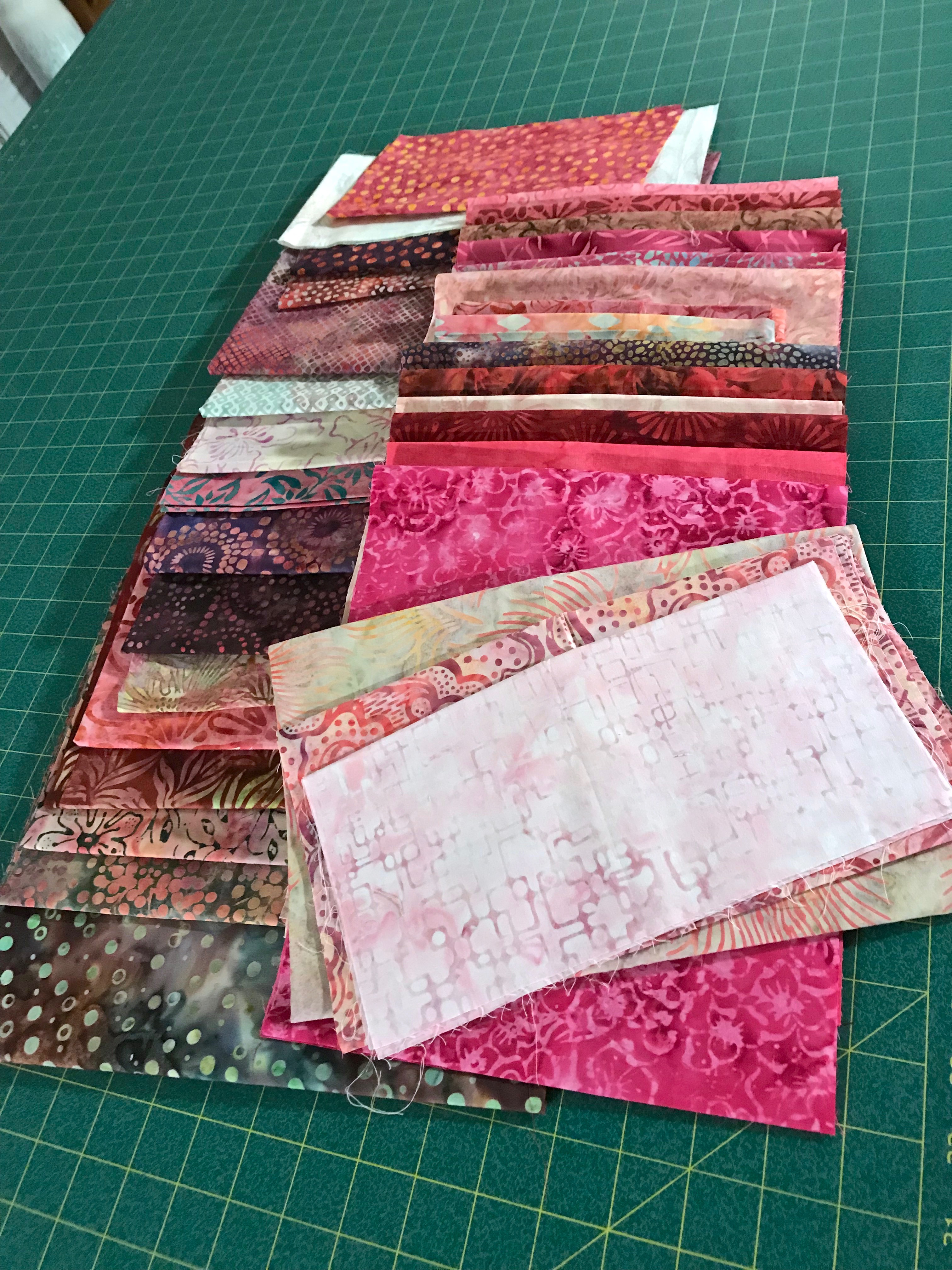
Last quilt finished – I need to think about the next one. I just went through my batik collections and found a scrap bag (twelve 9″ strips) with “pinks.” Next I browsed the piles of individual batik cuts and came up with many more that could work with those original twelve.

Study In Pink

I still need a few more light pink fabrics – I’ll shop for them tomorrow. I also need to see what I have in daylight to get a better idea about which fabrics blend well and which should be pulled.

What am I thinking about doing with these?

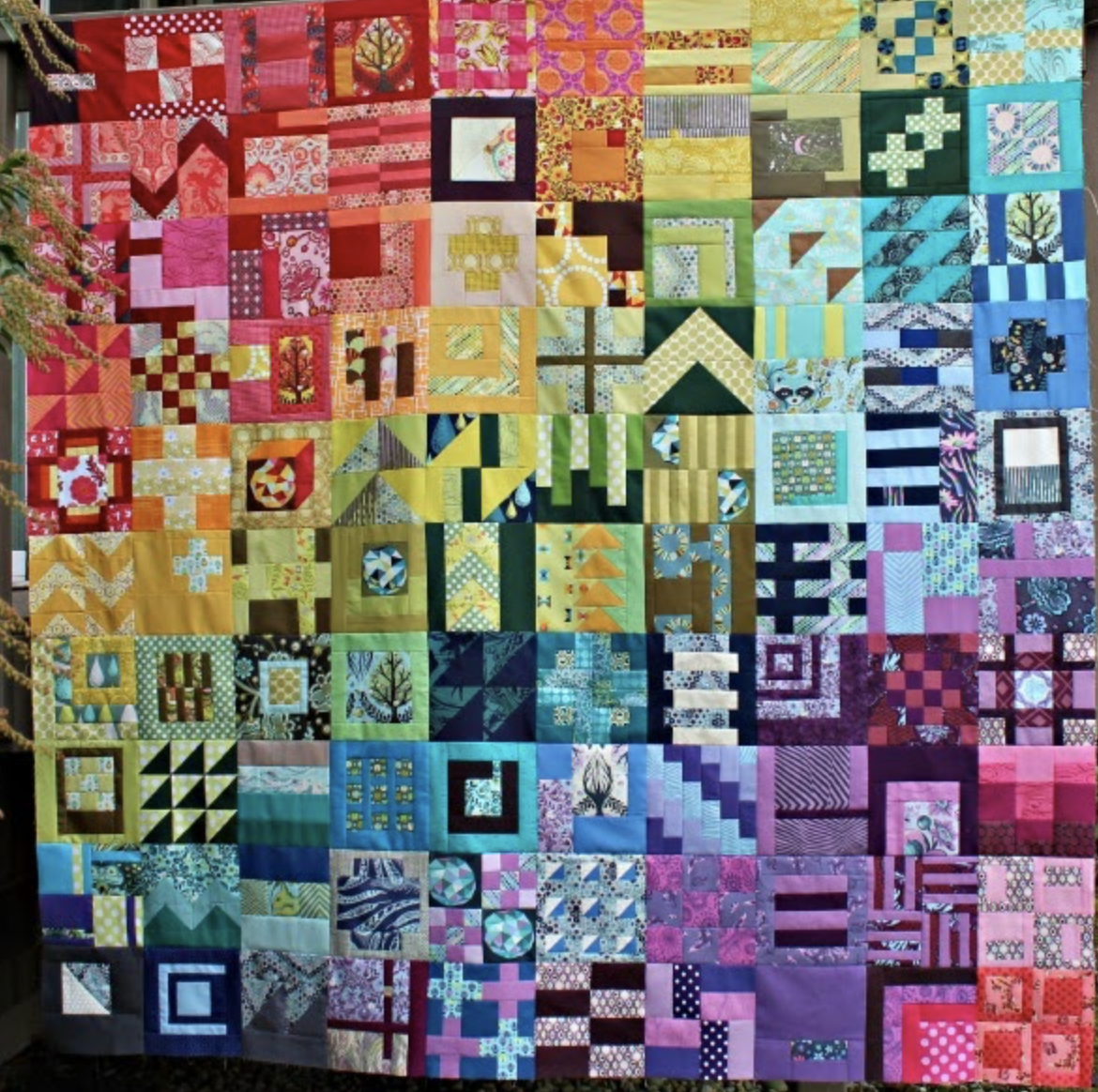
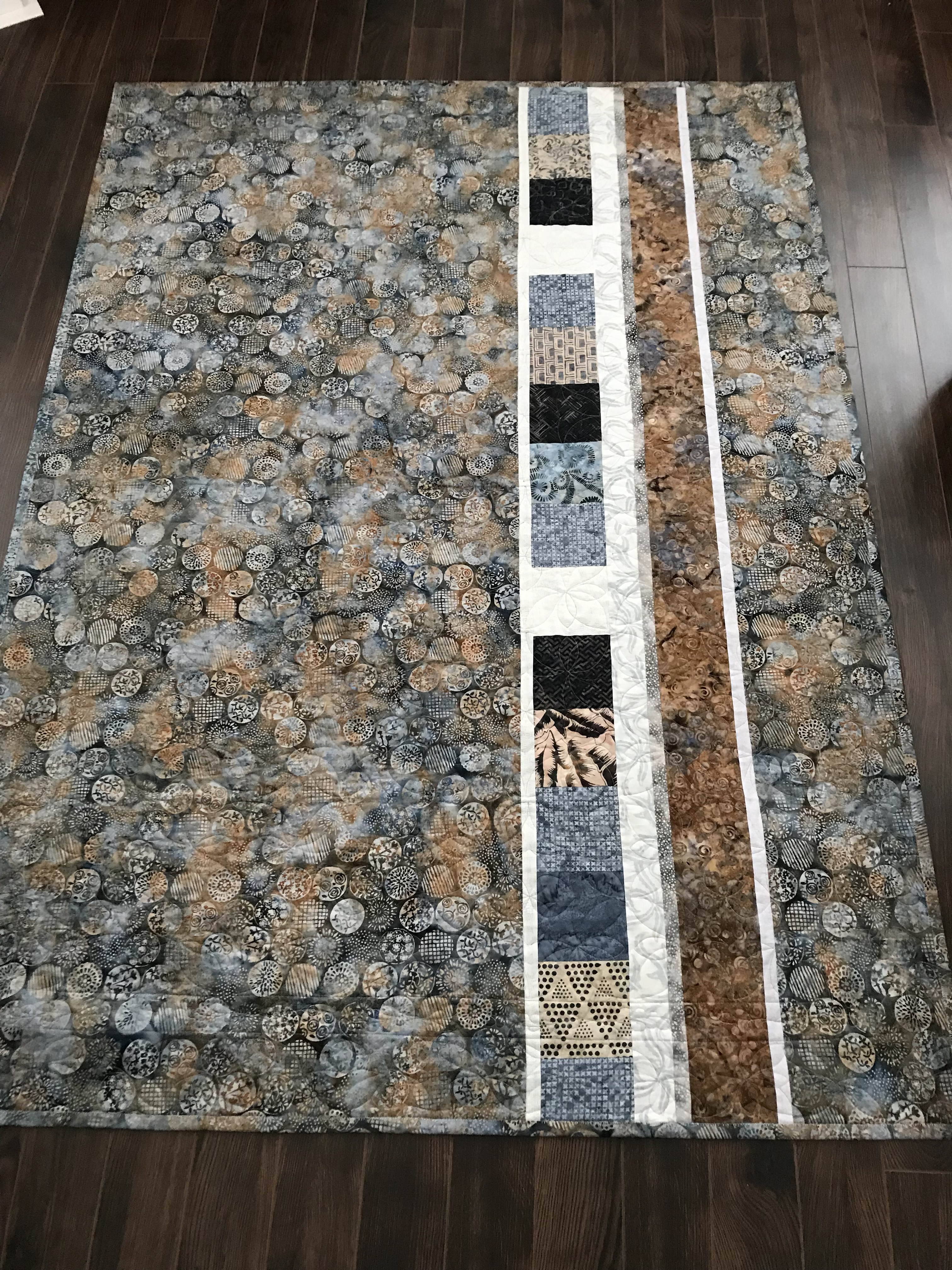
Well, there’s Tula Pink’s “City Sampler” – a quilt constructed from a collection of 100 “sampler” blocks. Here’s one from Pinterest in grey/brown tones:another in a rainbow of colour

(It’s a popular quilt — there are tons of images to be found), that suggest a way for me to think about my collection of pinks.

Tula Pink’s quilt consists of 100 different blocks – I don’t intend following her directions or making the blocks she suggests, although there are a number there that might get pieced as I go along. My plan is to start creating 6 1/2″ (maybe 7″) blocks, each unique, with the fabrics I have collected above — crosses, rectangles, half-square triangles, flying geese, log cabin, bordered squares… until I accumulate 63 blocks. That will give me a 7 x 9 array which, with borders, will give me a good lap-size quilt.

So, first a quest to find 2-4 more light pink batiks, then begin constructing blocks….

Lots to look forward to.

Sewing Tools Organizer – Finished

Here it is – just completed. A tiny bit wider than the original tools organizer but I was reluctant to make it narrower since I wasn’t sure how much width I was going to lose when I added in the zipper sides. Big-ish isn’t a problem, too small would have been.

So you can see the welted zipper opening on the front. What isn’t obvious is my name in the lower right – I chose the wrong colour embroidery thread! Instead of the lime green I should have used a golden orange (up close you can see the name, it just doesn’t hit you in the face).

New Exterior Case

The pattern (which I linked to yesterday – scroll down the blog entry) was helpful for dimensions and some overall construction suggestions, but because I wanted elements between outer and inner fabrics I couldn’t quilt the pieces and had to carefully think my way through construction. Not having the outer and lining fabrics on the sides not quilted was a bonus – it helped with zipper installation because I could apply the zipper to the outer fabric, then add the lining enclosing the zipper seams.

Applying the binding was a slow process – having to stitch through anywhere from 8-12 layers of fabric meant I needed to take my time although the machine handled the job perfectly well (with a new sharp universal 90 needle). In the end, I’m happy with how the binding turned out.

Here’s the interior:

Interior With Tool Pages From Original Organizer

The point of this project was to create a new case for the tools organizer – the original “pages” of pockets were fine – they just needed a new cover. Since the pattern has directions for making these pages, I may actually attempt one more – the cover is loose enough to accommodate another. What isn’t visible are the two pockets on the inside of the organizer covers – one zippered, one closed with some velcro.

Although I suspect many of the sewing ladies at Sew With Vision would be interested in making an organizer for themselves I have a feeling the sewing around these small round corners to apply binding is more difficult than many of them would be willing to attempt. I’ll take my organizer into the shop to show it off and ask what that the staff think.

Don’t know what’s next.

Layer Cake Quilt – Finished

Finished this morning! I quilted both the narrow inner border and wider outer border over the weekend. That left the binding for today.

After my water aerobic class I pieced the binding fabric – six 2 1/2″ strips, joined end to end. Attached the binding to the back, then folded it over the front and stitched it in place using a decorative stitch.

Quilt Top

I used the same fabric I used on the back for the binding – it blended with the many grey and beige fabrics in the pieced quilt top quite nicely. The back was completed by splicing a single width of fabric and inserting a strip constructed from leftover squares from the top, and some strips of the background fabric and from the inner border. Simple, but turned out fine.

Quilt Back

Now onto a project I’ve been meaning to take on for a while. I have a Pfaff sewing tools carry case that came with one of my previous embroidery machines – I’ve had it for years. It’s reached the point where the outer case is falling apart – the binding has worn through on all the edges. So while the inner “pages” with zippered see-through vinyl compartments are still fine, it’s time make a new outer case.

I came across a pattern for a sewing tools organizer like the one I have.

Pattern for Sewing Tools Organizer

I bought some bright batik for the outside and a muted blue for the lining. I’ve spent the evening doing the prep work – I’m not exactly following instructions – I’ve added a welted zippered pocket to the front of the case, as well as a pocket on the inside of the front, and another zippered pocket on the inside of the back. The instructions recommend quilting the outside and lining fabrics but in order to put the zippered pockets into the outside and inside of the case that wouldn’t work. So instead, I’ve used a rather stiff fusible interfacing on the back of the outside fabric and a layer of quilt batting with the lining. When it comes to sewing the elements together I will have eight layers of fabric to stitch but it looks as if my new Pfaff Creative Icon will be up to the task – I will just sew more slowly than I normally would.


Layer Cake Quilt II

Just finished the central panel of the Layer Cake Quilt. I had two challenges with this quilt – the number of small pieces (408) and making the fabric I had on hand go as far as made sense in the context of this quilt design. Total number of fabric pieces in this 4 x 6 quilt – 600! Given the fiddlely work with the 1 1/2″ white squares I’m surprised that my points work as well as they do! Not 100% perfect, but close enough that when the final quilt is quilted the slight imperfections are not going to be noticeable.

Center Panel

Now I need borders. I want to introduce a contrasting colour. I have some 4 1/2″ batik strips that bring out the rusty/beige colours in the central panel,  but I think a wide border in that fabric will be too strong – I’m thinking a 1/2″ – 3/4″ border will be enough (the question is whether to piece the strip in or to create a narrow flange). The outside wide border will be the white Zen Chic fabric used in the panel itself. My problem is that I have, at the moment, just four 4 1/2″ strips of that fabric! My local shop has none left! I’ve ordered some from the Fat Quarter Shop online (they had what I needed, my other usual sources didn’t) but the fabric hasn’t yet arrived. So I’m on hold for the moment.

I guess I can fill in the waiting time by going through my fabric stash and pulling out something for my next quilt….

Sailboats In The Fog – II

I finally finished Sailboats In The Morning Fog – in time for the Tuesday class this past week. That involved the thread painting on the boats and their reflections in the water,and a bit of movement in the water on the right side of the harbour. Next I added a matte done in white muslin, followed with a dark grey piping, and finally a wide border/frame. I tried several different fabrics, some quite muted but in the end went with this one which brought out the greys of the reflections as well as the wooden insides of the boats. I used the two remaining strips of border fabric to create a hidden binding.

Sailboats

At class the gals all got their work close to finished (except for the hand sewing which they were going to do at home).

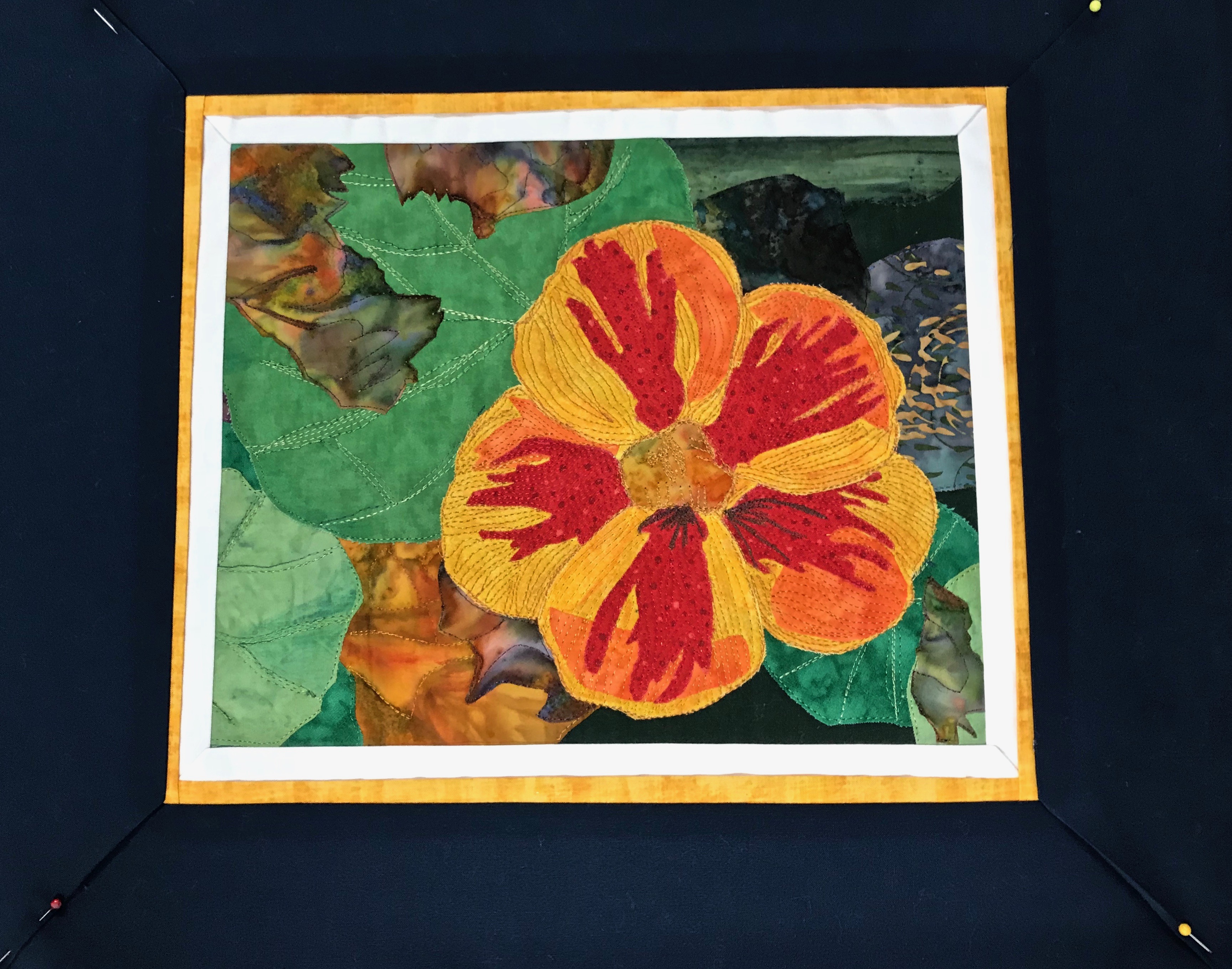
Linda had done the thread painting on her Nasturtium before she came. On Tuesday she added the white inner border, the yellow flange, and then the outer navy border. She added a hidden binding in the navy fabric she used for the outer border.

Nasturtium

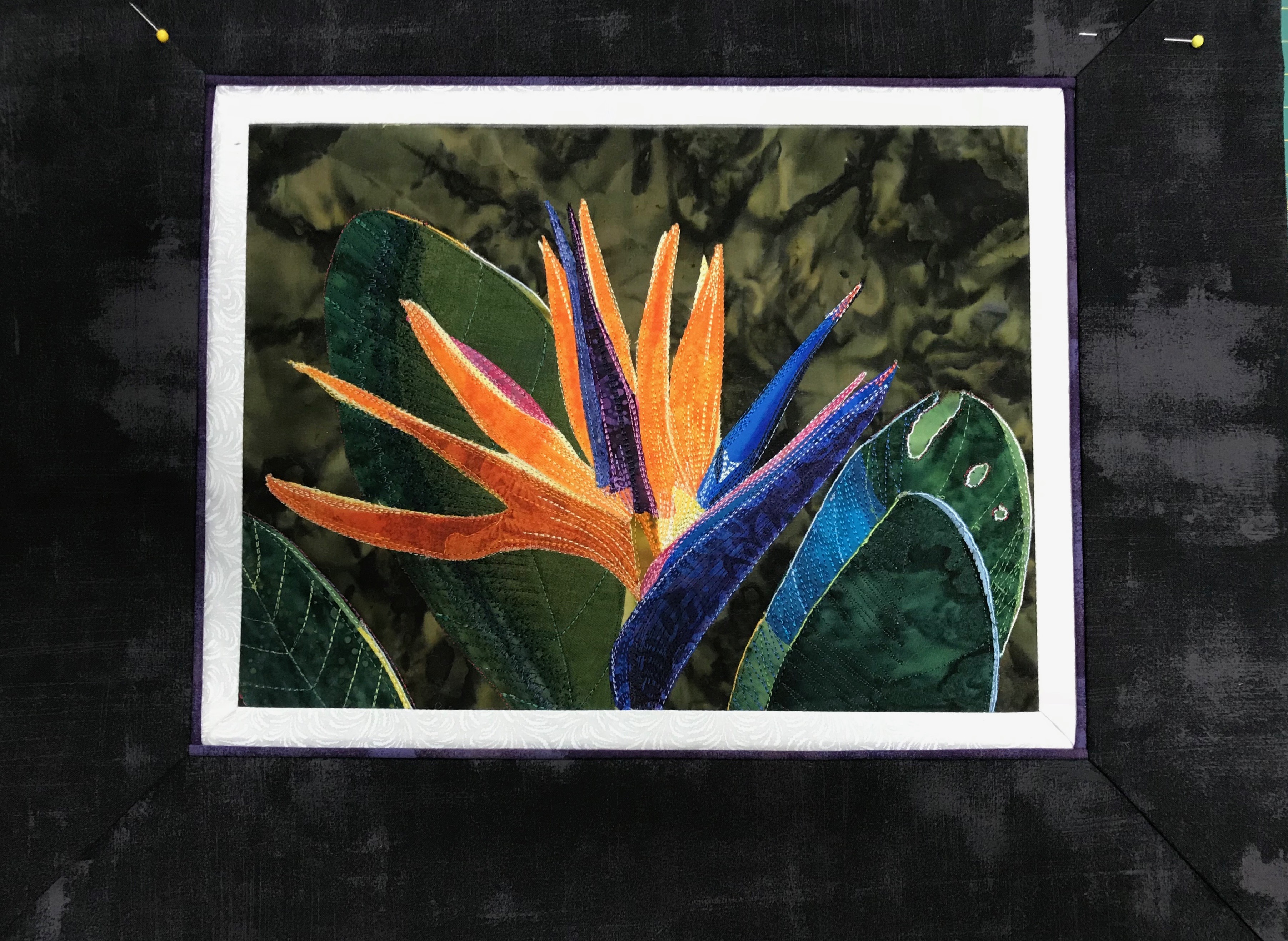
Deb’s Bird of Paradise also turned out beautifully. Although nearly invisible, the purple piping does pick up the purples within the flower and hinted at in the foliage.

Bird Of Paradise

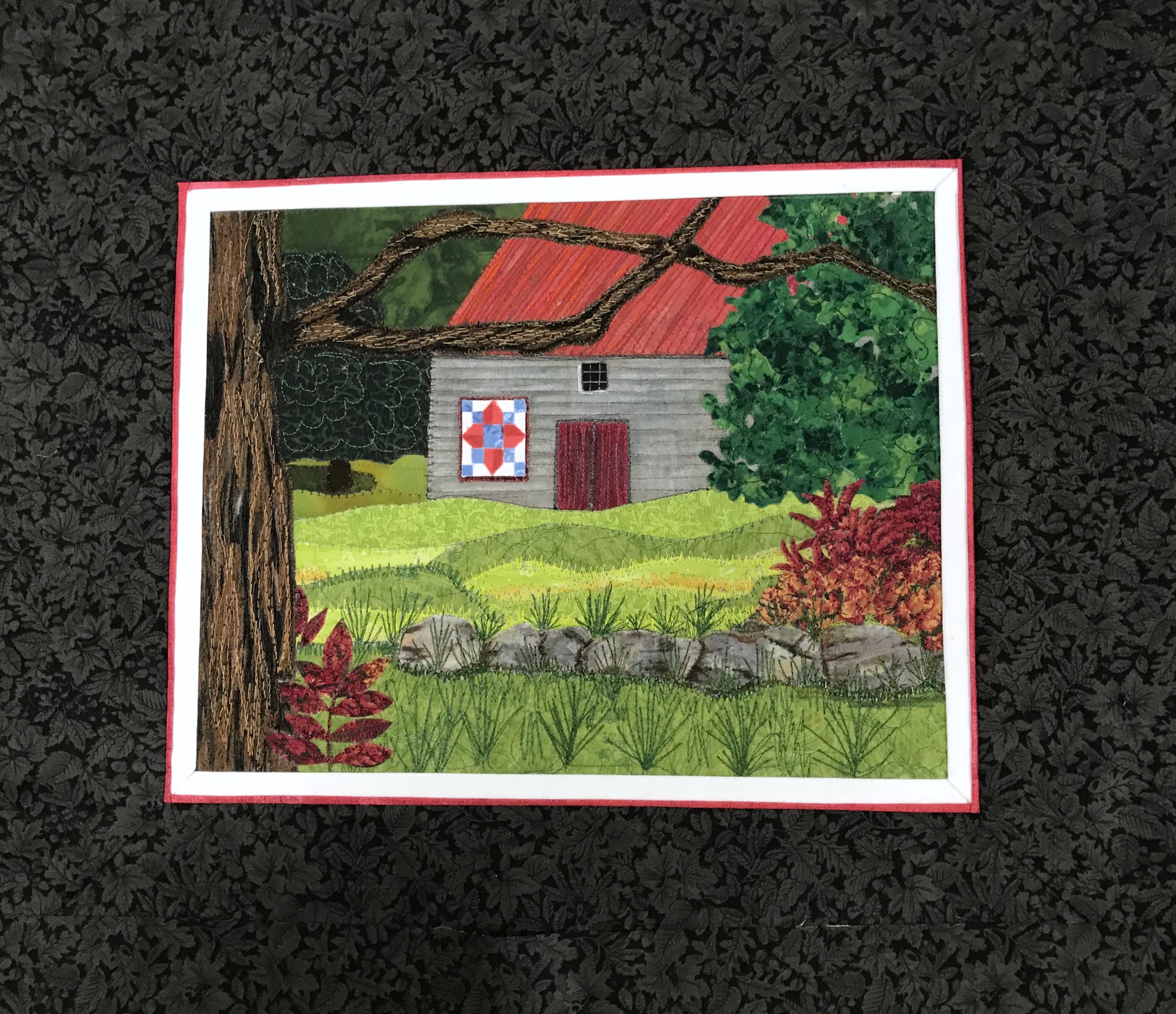
Pam did a lovely job on her wall piece Barn With Quilt – the thread painting, appliqué work on the tree on the left, created a very tactile bark.

Barn With Quilt

Faye’s Fall Walk captures the feel of a cool Nova Scotia fall day. The background was pieced and thread painted, the two figures were printed on fabric and applied to the scene. The red piping draws attention to the woman’s red jacket.

Fall Walk

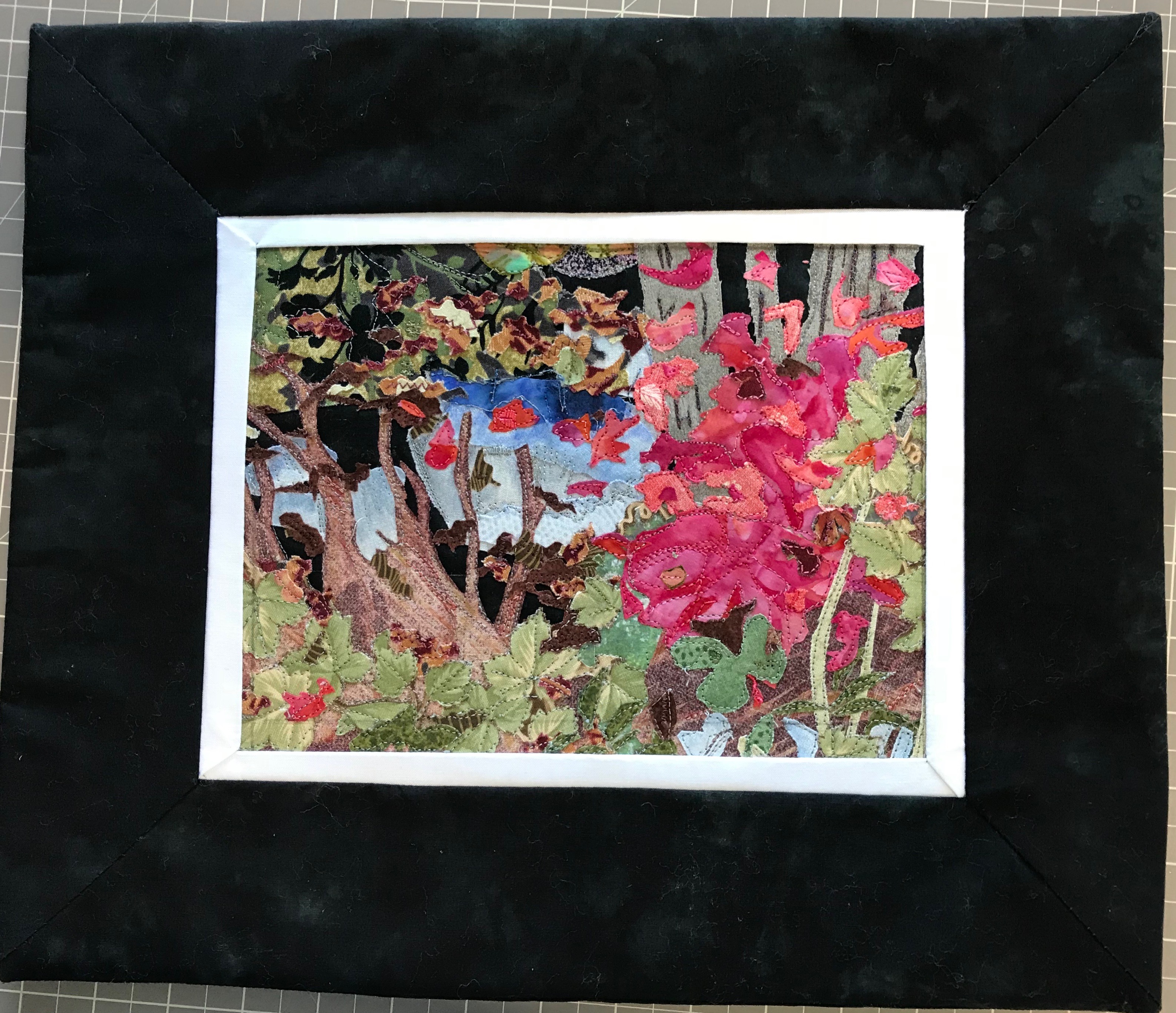
Linda’s A Fall Day In The Woods brings the vivid fall foliage to life. Her framing of the scene strengthens the texture of the fall colours.

A Fall Day In The Woods

The gals were (as was I) delighted with their work. I wanted them to get the finishing touches on their art pieces in class. We didn’t quite make it, but the remaining hand work was going to be no barrier to them completing their projects.

Quilt Backs

Yesterday, Melanie McNeil (Catbird Quilt Studio) posted a piece on pieced quilt backs.

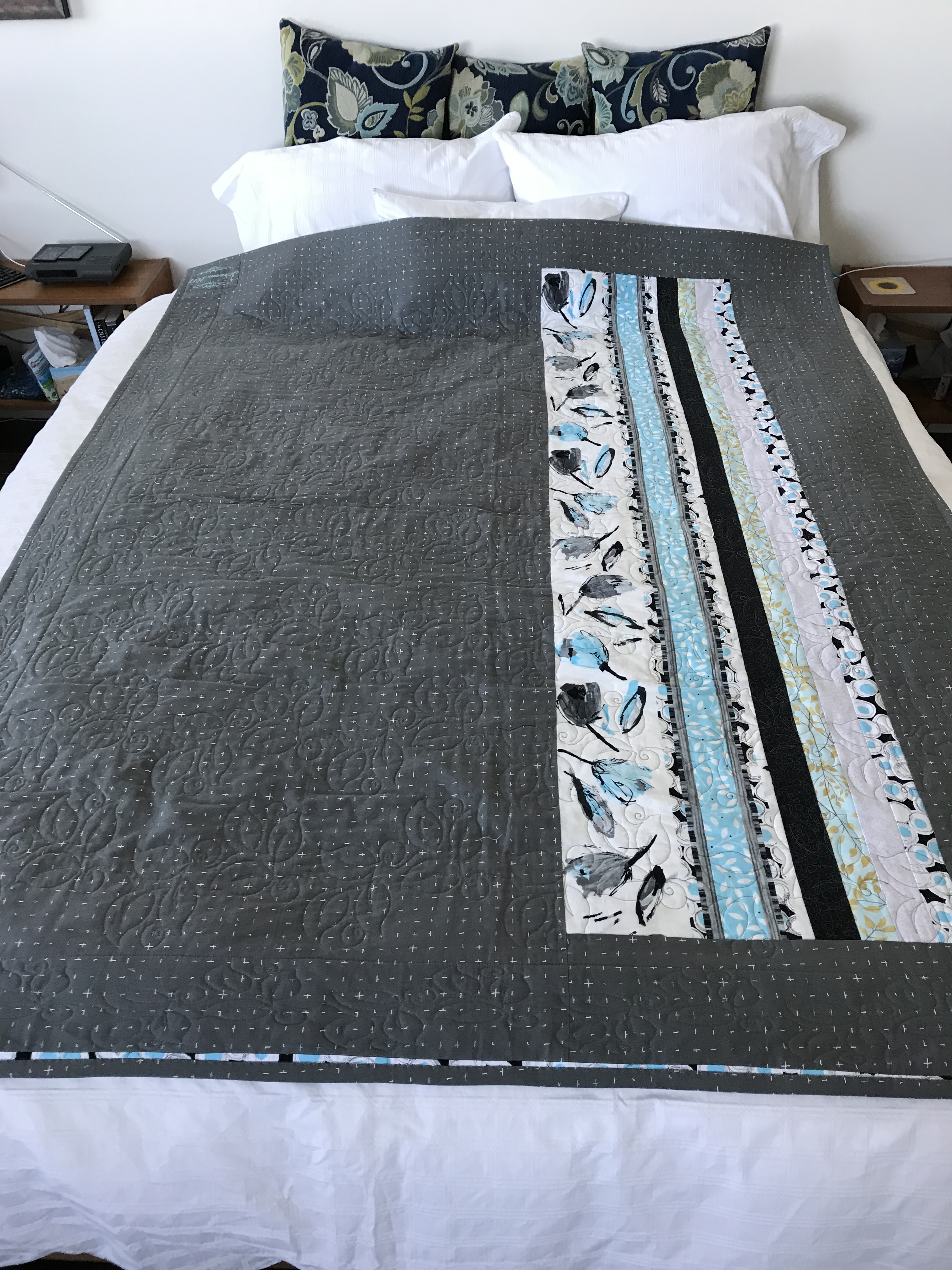
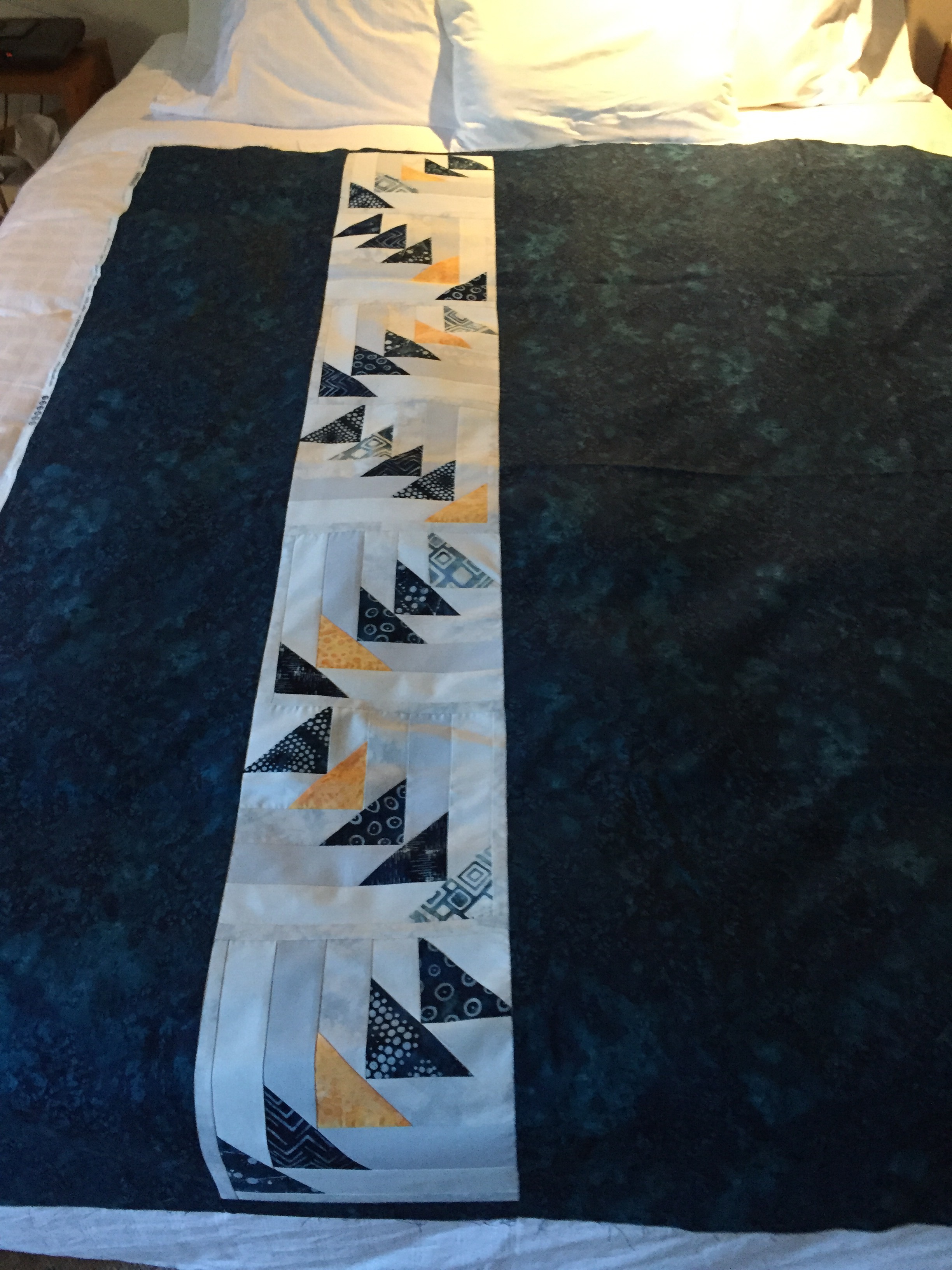
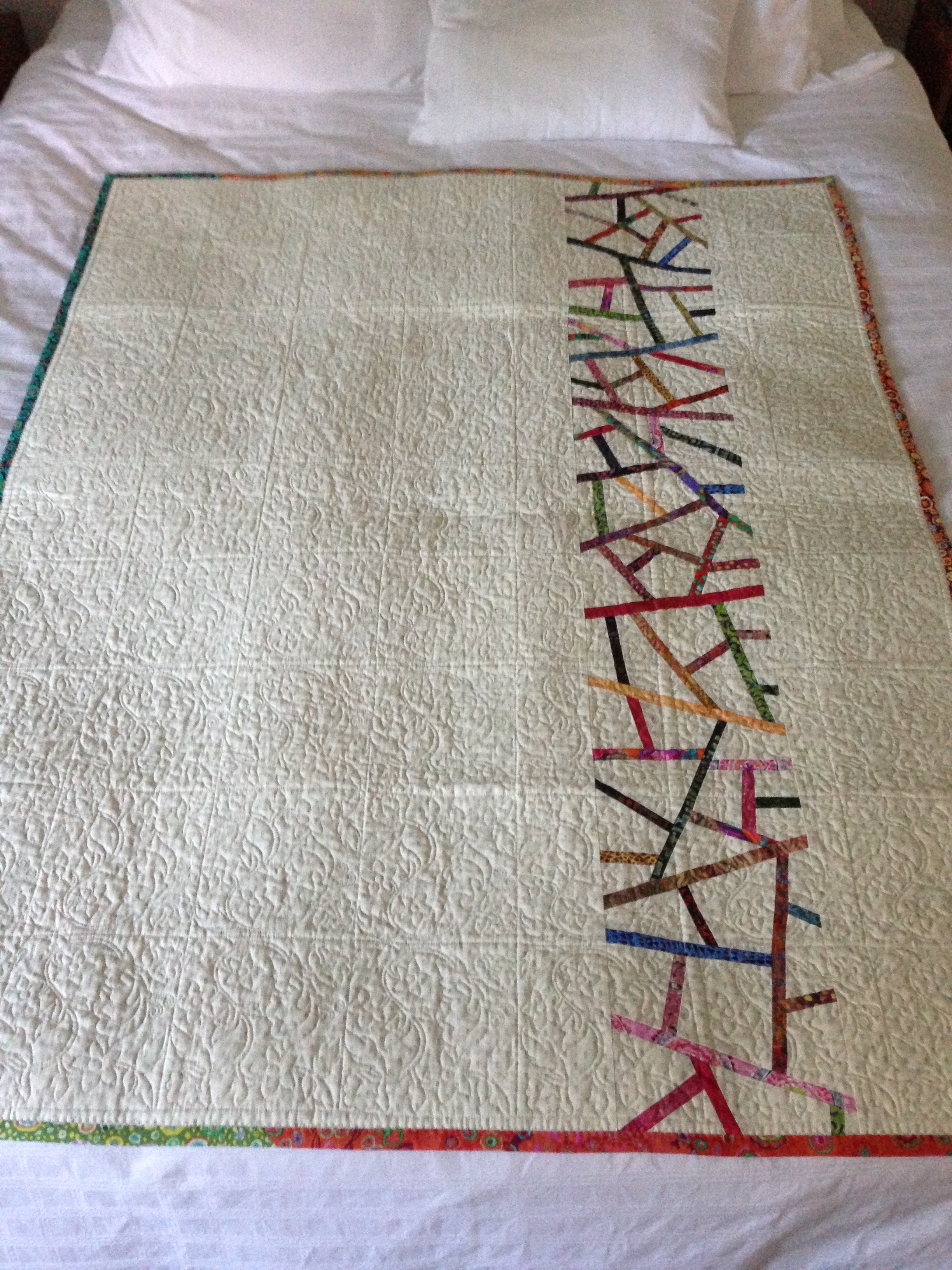
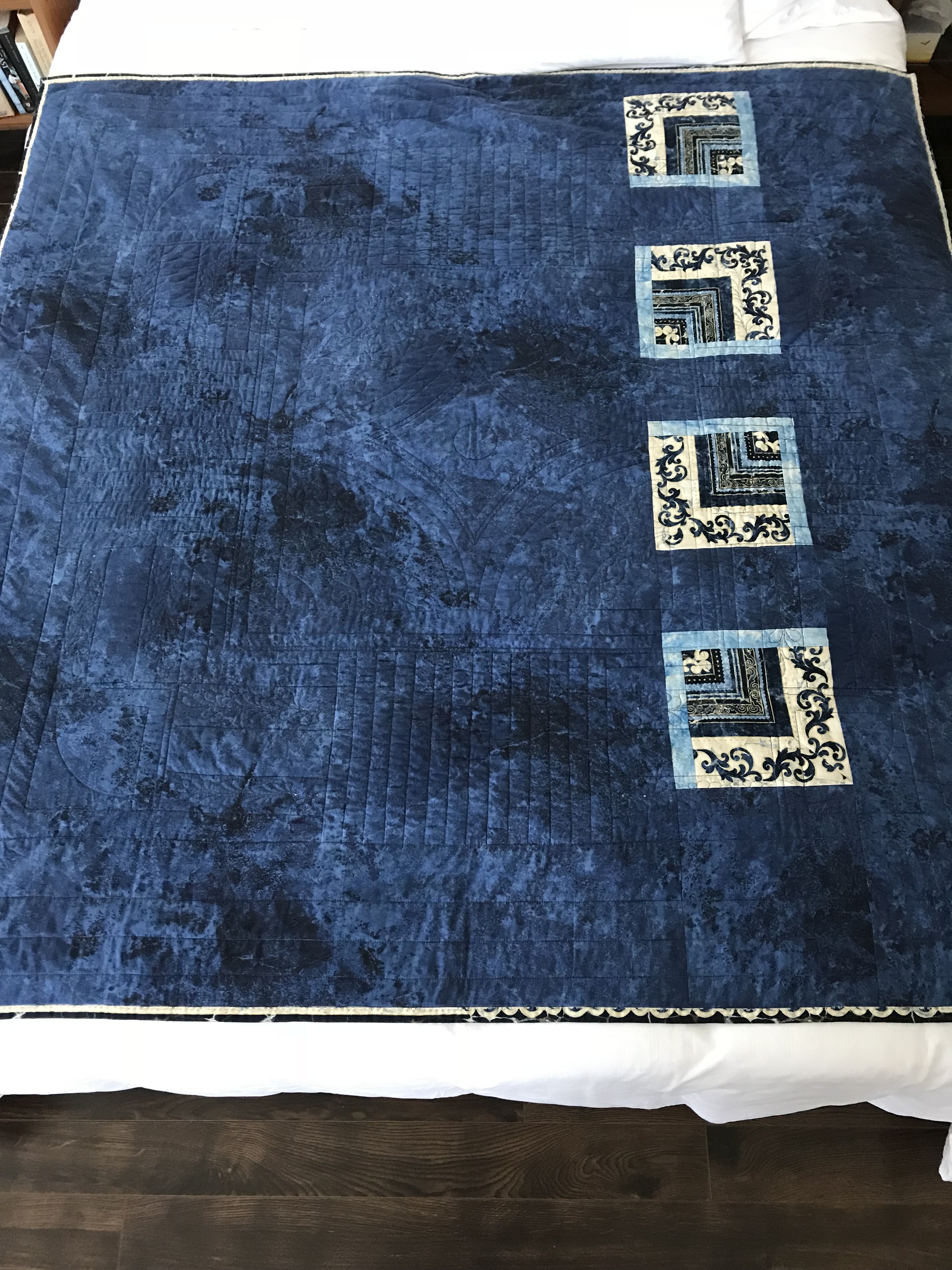
That got me thinking about the piecing I do for quilt backs. She says she prefers a solid back (her quilts are bed size) – I prefer the adventure of piecing (I generally make lap quilts). The challenge for me is to get away with a single length of quilt backing fabric and filling in the width with leftovers from the top, retaining something from the character of the top but at the same time creating a new piecing. Most of my back piecing involves a wide strip, although occasionally I’ll do a block of some sort surrounded by backing fabric – it depends on just how much backing fabric I actually have to work with!

Here are some quilt backs:

#1 – This is the latest quilt (Improv Quilt) – a strip/block because my strip wasn’t long enough and I fortunately had just enough backing fabric to border the strip converting it to a block.
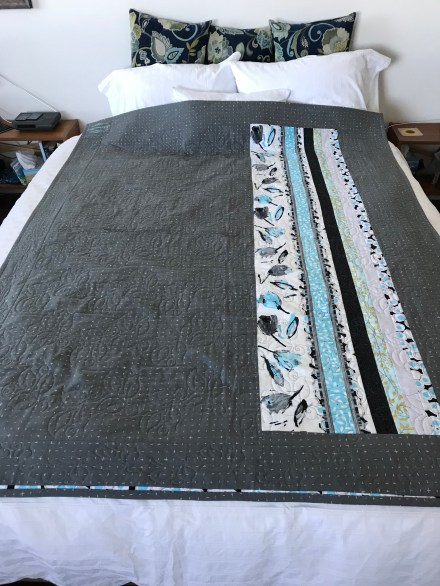
Improv Quilt – Back

#2 –  An opportunity to try some flying geese. The original blocks were all in shades of indigo but I decided to insert one gold triangle in each and it made a huge difference to the strip.

#3 – From the red/black/white strips quilt. The quilt top looks like three Venetian blinds with a red background. The grey backing reflects the fabrics used in the piecing from the top, with the red accents.

#4 – This back was for the Starburst Quilt: I had no fabric leftover from the quilt top so I decided to use  other indigo fabrics highlighted with the turquoise and green elements.
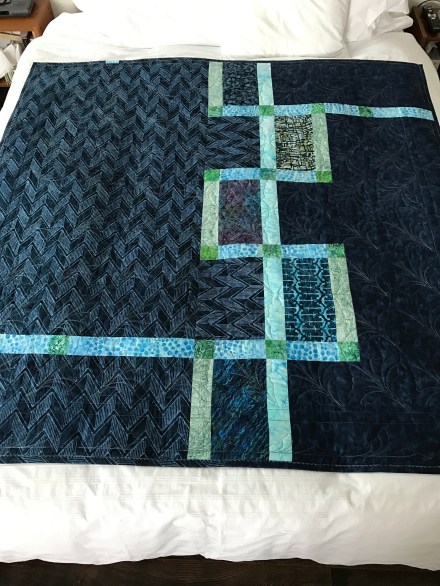
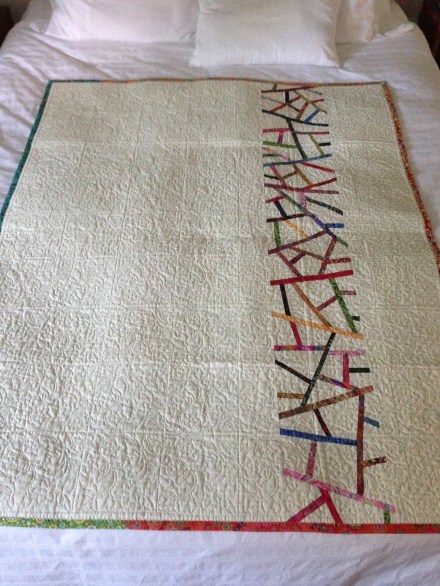
#5 – The inspiration for this quilt back came from a quilt by Weeks Ringle – it backs the Pick-Up-Sticks Quilt:
#6 – This is the back of the Medallion Quilt: I had just enough of the border fabric leftover to create these four mitred blocks. I decided to rotate them rather than keep them all facing the same direction. Spaced them out, offset top to bottom, with backing fabric because I had a lot of it.
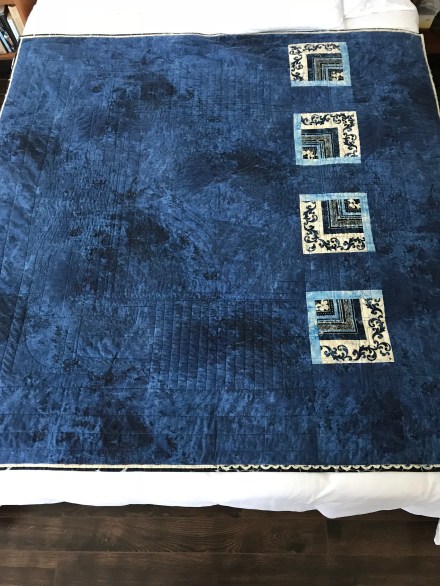
Quilt Back

#7 – This back is from the Grey-Yellow Quilt: I had a lot of half-square triangles left over from the front. I decided to array them as a spiral. The panel is offset top/bottom, and left/right. My quilts are all modern quilts – they need asymmetry to look “right”.

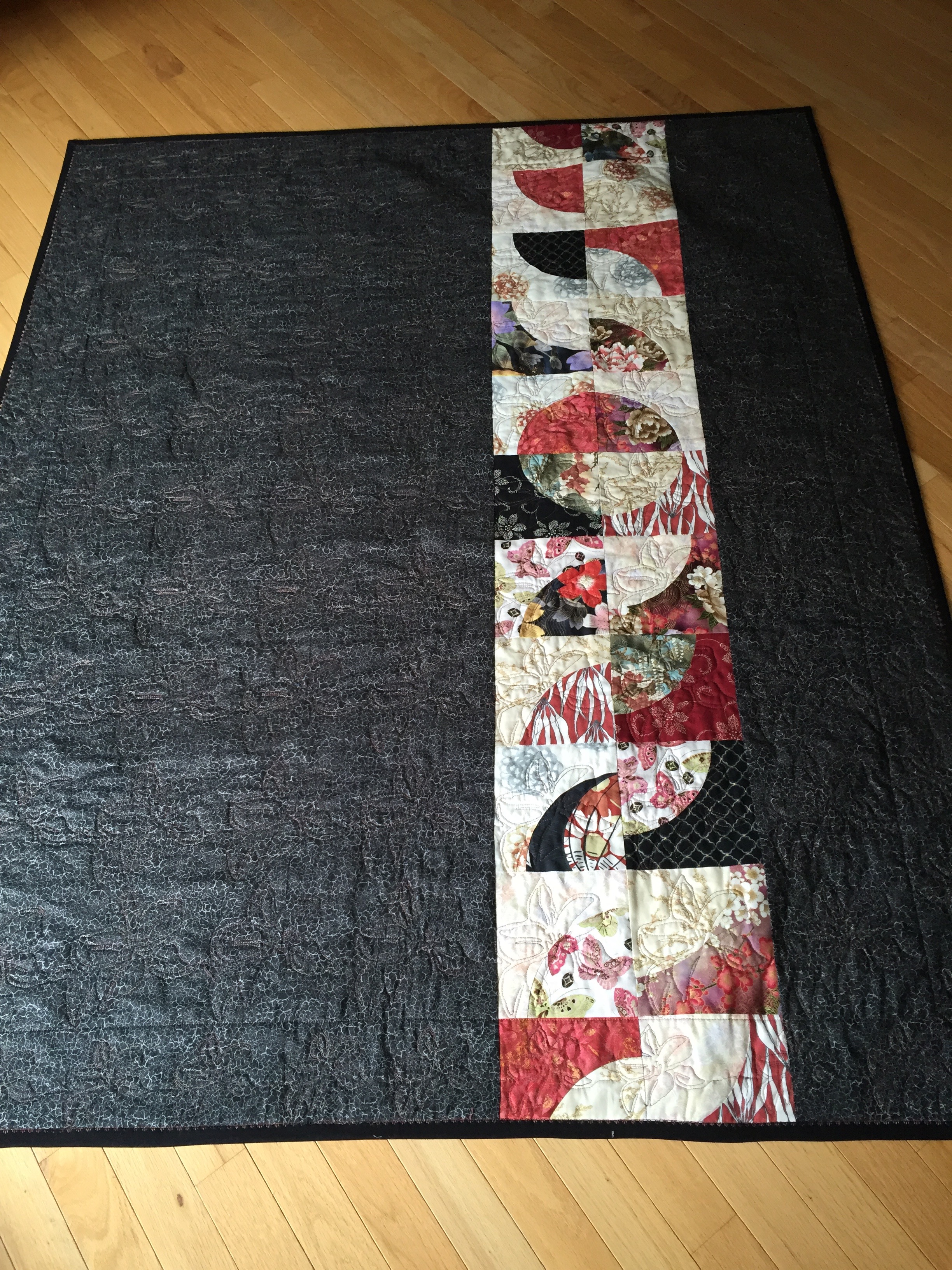
#8 – This back is from Improvisation #6 – Asian fabrics, drunkard’s path quilt. I had several slightly smaller blocks left over. I decided to do a more conventional drunkard’s path layout with single complete circle near the top of the strip.

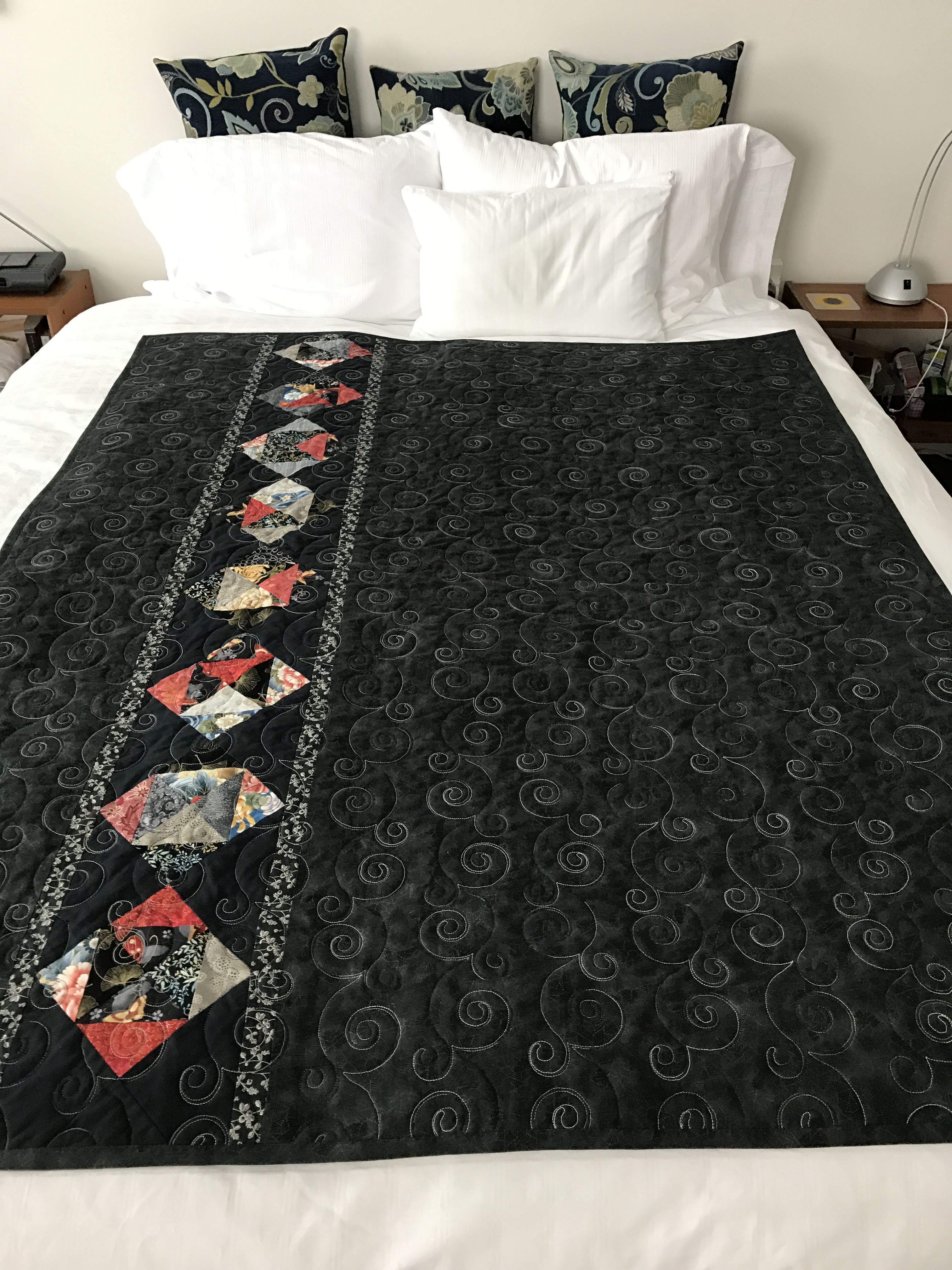
#9 – The back of the Asian Strips Quilt: I did the piecing of the on-point squares, added the filler and realized I still needed border/sashing to offset the insert strip from the backing fabric.
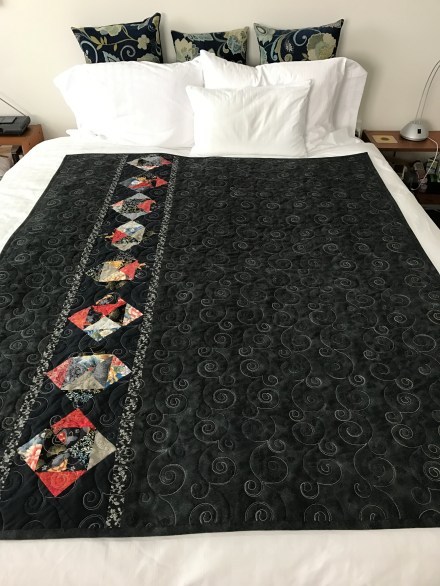

Obviously I have many more quilt backs I could showcase here, but these are enough to illustrate how I see a quilt back. All of my quilts are “double” quilts – they can be used either side – for me, that’s part of the challenge/adventure of improvisational quilt making.