Blushing Peonies III

I’ve just completed 2/3 of the assembling of the Blushing Peonies quilt top and I can see I’m not going to be happy with the asymmetrical position of the middle large block!

I wanted to offset it from dead centre but it’s going to annoy me if I go any further and don’t reposition it so that it’s balanced in relation to the other two large blocks. (I wish I could think of another way to create asymmetry in this quilt top, other than the random placement of the 2, 4, & 8″ blocks, but I can’t. I tried eliminating the 4″ horizontal row between the top and middle sections and didn’t like how that looked. Pushing the middle block to the left as I have today feels unbalanced as well. So I guess I will have to go with a symmetrical placement of the three 16″ blocks and live with it. Those large blocks definitely stand out and draw your attention – they need to be in an aligned diagonal.)

Blushing Peonies – 2/3 assembled

So first thing tomorrow I will open sections of the pieced middle so I can move the large block over 4″ to center it in the panel. Then I’ll piece the top 1/3 – that will go fairly quickly once I have the elements in the middle 1/3 moved around.

Blushing Peonies – II

I’ve just finished laying out the elements for the quilt top – sort of. The area adjacent the top left large block has been pieced – the rest is on the floor waiting to be stitched. I need to walk around this layout more – I need another 4″ row (at the moment sitting, partially filled in, at the bottom of the photo) which will be inserted horizontally between the bottom two large panels but that’s going to want moving those panels laterally some more. And then I want to look at the photo to see where there are clashes I don’t like. It’s all too busy right now to make final decisions.

Quilt Top Laid Out – Sort of

Nevertheless, I’ll keep stitching elements together in small sections that I can keep moving around until I’m satisfied with the arrangement. Need to cut a few more 2.5″ blocks to finish that 4″ row.

I’ll do that tomorrow. It’s over to the US Open Tennis this afternoon.

2, 4, 8, 16 Quilt

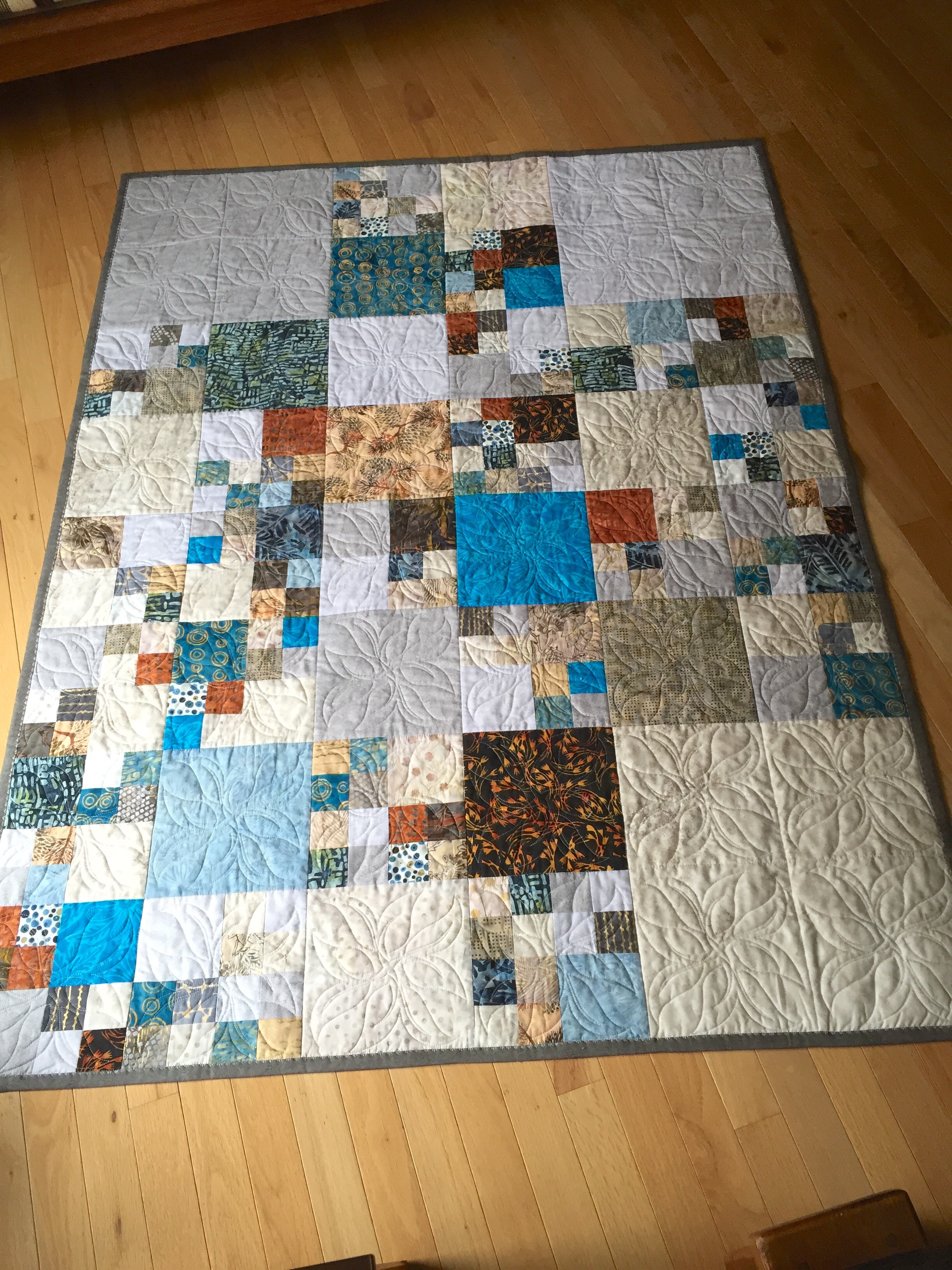
Some time ago I did a quilt based on 2.5, 4.5, 8.5, and 16.5″ blocks. What I was after in that quilt was to establish a pleasing colour flow using blocks of these varying, but proportional sizes.

Lap Quilt 2,4,8,16

Sometime this past year I purchased pieces of the Moda “Blushing Peonies” fabric. My shop didn’t have all in the collection (and many I wouldn’t have wanted to use, anyway) so I went hunting for complementary fabrics. I ended up with 14.

I wanted to do something similar with the Blushing Peonies showcasing the large print with beautiful flowers and fill in with the complementary fabrics in the smaller sizes.

Here’s where I have so far:

2, 4, 8, 16 Bushing Peonies

Unlike the original quilt, I don’t want the large peony blocks in the corners, but indented. The large, framed panel will finish at 16″. To fill in around it, I developed 4″ rows of 2″ and 4″ blocks to fill in below and on one side of the large block that will be in the lower right corner. I also want a 4″ row between this block and the next one which will be offset closer to the center. That means assembling more blocks that will create that row and a combination of 8″, 4″ and 2″ blocks to fill in above this first block and the offset second one.

Cut Fabrics

This is an improvisation – I should have enough blocks cut to assemble a quilt top. I’ve done enough for today. I’ll work on this quilt top again tomorrow.

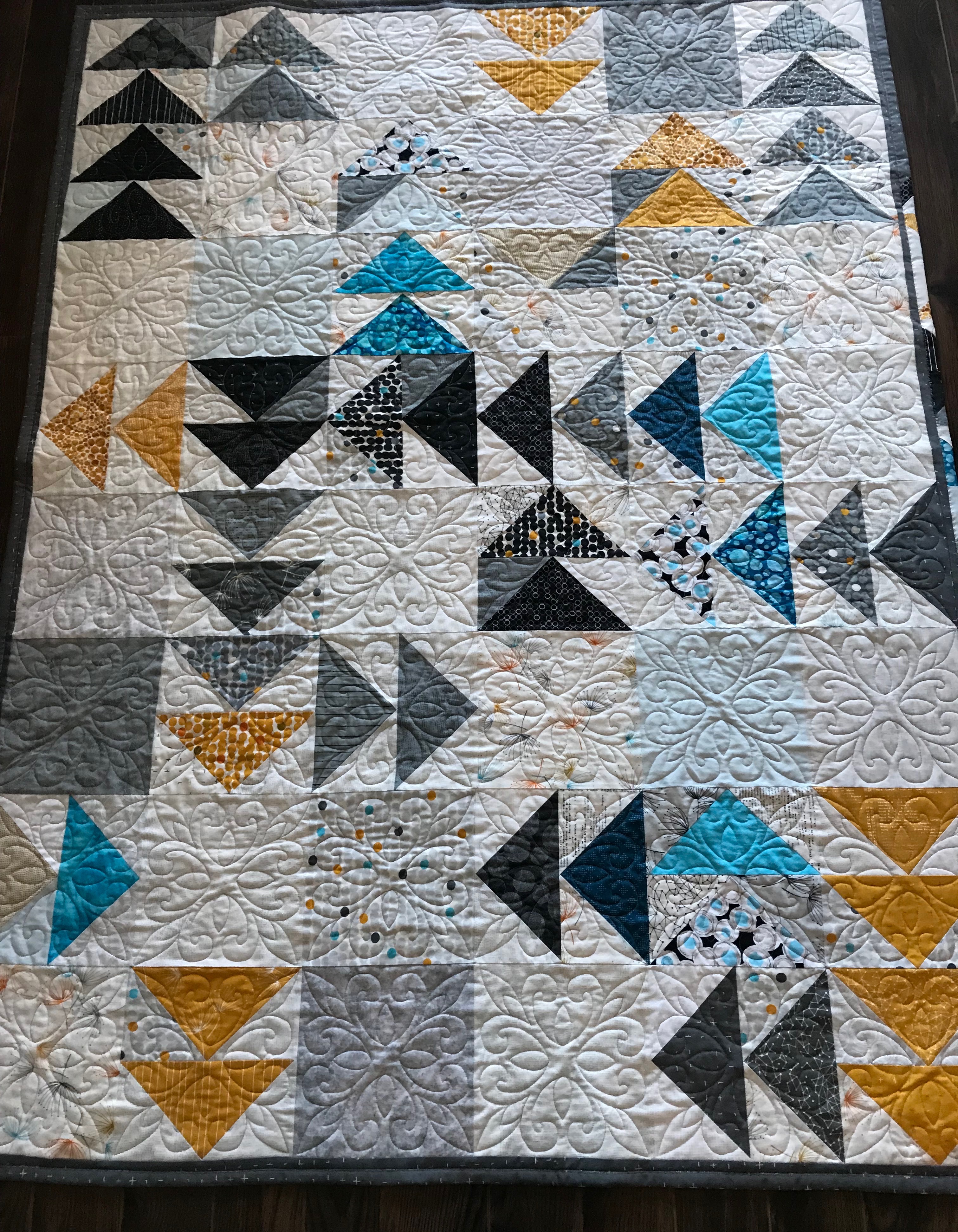
Wandering Geese Quilt – Finished

Just finished quilting and stitching the binding on this “Wandering Geese” quilt. I’m happy with how it has turned out. My decision to use a narrow dark border was a good one – the points of the triangles are intact and not hidden beneath the binding.

The back has more piecing than I usually do, but I had so many half-square triangles as a result of the way I constructed the flying geese I thought I should use as many as I could.

Just need to hand stitch the label on the back.

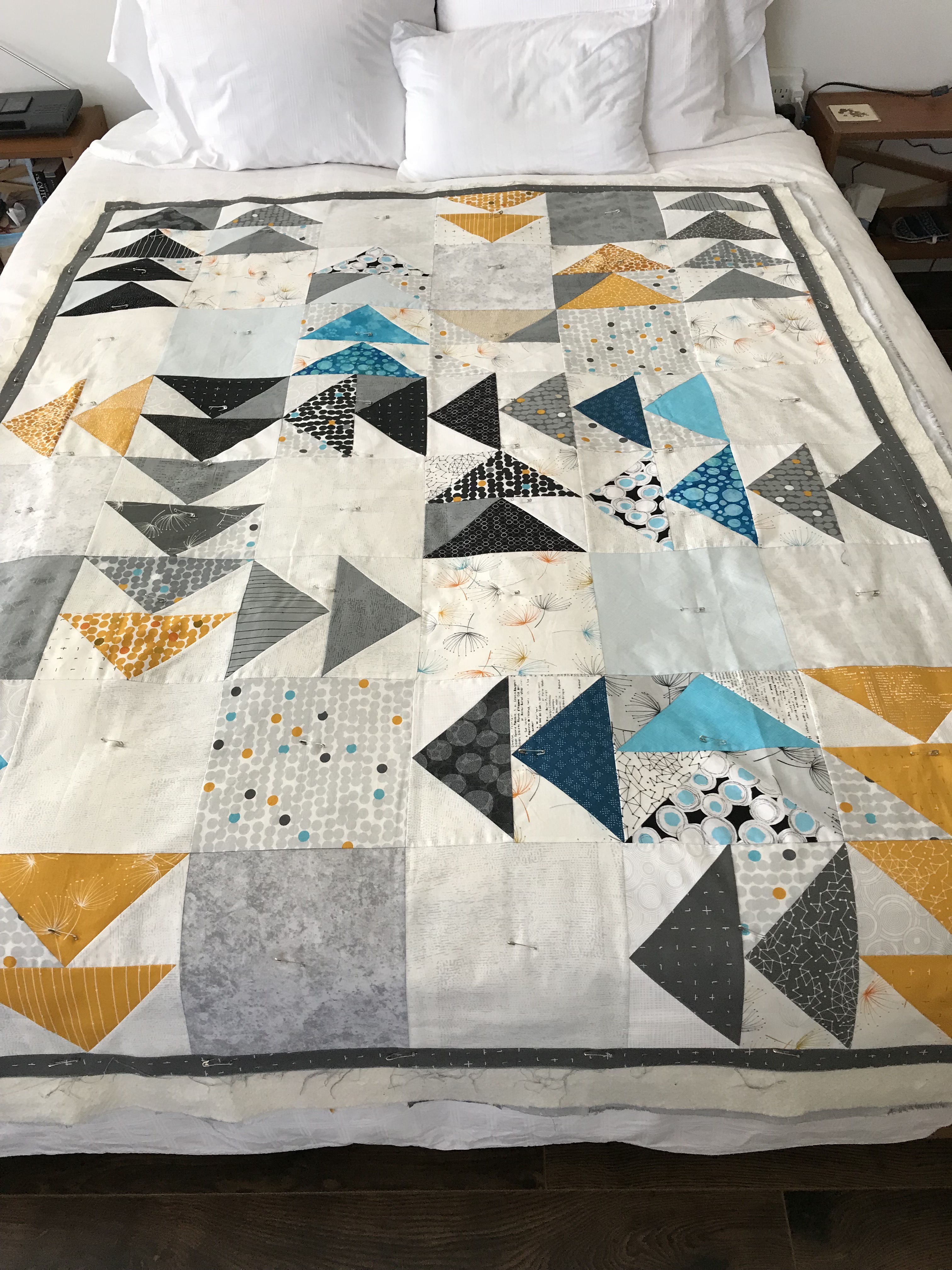
Wandering Geese Quilt

Just finished pinning this quilt together. The quilt started with a “Jolly Bar” of “Fragile” fabrics by Zen Chic (Moda). Turns out this 5″ x 10″ size is practically useless. In order to construct flying geese I had to trim down the size, and trim away triangles from the corners – a wasteful way of doing this quilt block. However, I saved the triangles and created half-square triangles from the remains and used about half of them on the back.

Quilt Top

The original collection of fabrics had hints of turquoise in several of the colour ways but no predominantly turquoise fabrics. I decided to add several to brighten the overall appearance of the finished quilt. I had enough turquoise fabrics in my stash (dark and light) that I didn’t have to go looking for more. I also added in some light fabric since I didn’t have enough lights from the jolly bar to complete the flying geese blocks. I’m pleased with the modern layout and the overall feel of the top.

The quilt is pinned ready for quilting. I’ve set up an 8″x8″ embroidery design which will fill each block and give me an overall quilting that should work reasonably well with the flying geese. Just trying to decide what colour thread to use for the machine quilting.

Quilt Back

I plan on binding the quilt with the dark grey I’ve used on the back, with a small amount of contrast inserted in one side.

An Adaptation of “Twisted Geese”

Several months ago I bought a “Jolly Bar” of Moda Fabrics (Zen Chic – “Fragile”) – that’s fabric cut into 5″ x 10″ rectangles containing one (sometimes two) strips of the collection’s fabrics. I realized the half-squares were too large for a lap quilt, and the rectangular shape required a wasteful method of creating flying geese. Nevertheless, I decided to go ahead but I needed more fabric. I added some turquoise (which is hinted at in the printed fabric collection but not used as a background colour in any). There were also nowhere near enough light coloured rectangles to construct the flying geese so I went through my fabrics to find white, pale grey, & pale turquoise cuts.

Because I wanted to end up with a lap quilt size, I scaled down the darker rectangles – 4.5″ x 8.5″ (for the “geese” portion), trimmed the remaining light ones to 9″ then cut them in half for  4.5″ squares to construct the flying geese – 48 rectangles / 96 squares.

My Adaptation of Zen Chic’s “Twisted Geese”

The quilt top in the Zen Chic version of “Twisted Geese” also uses solid blocks – once I’d finished assembling the flying geese (forty-eight in all) I added eighteen 8.5″ x 8.5″ squares from some fabrics in my stash (a few of which were yardage from the Zen Chic “Fragile” collection I bought a couple of months ago) to complete the arrangement.

So here is my tentative layout – definitely a non-traditional distribution for a flying geese array.

I plan to use the 4″ equilateral triangle off-cuts to create half-square triangles for the back – I have 96 already cut and laying in pairs – it’s just a matter of sewing them together along the bottom edge (being careful not to stretch the fabric).

Tomorrow I will sew the forty-eight blocks together. I am planning on a 1″ narrow border to extend the quilt top just enough so the binding won’t disrupt the side points of the geese.

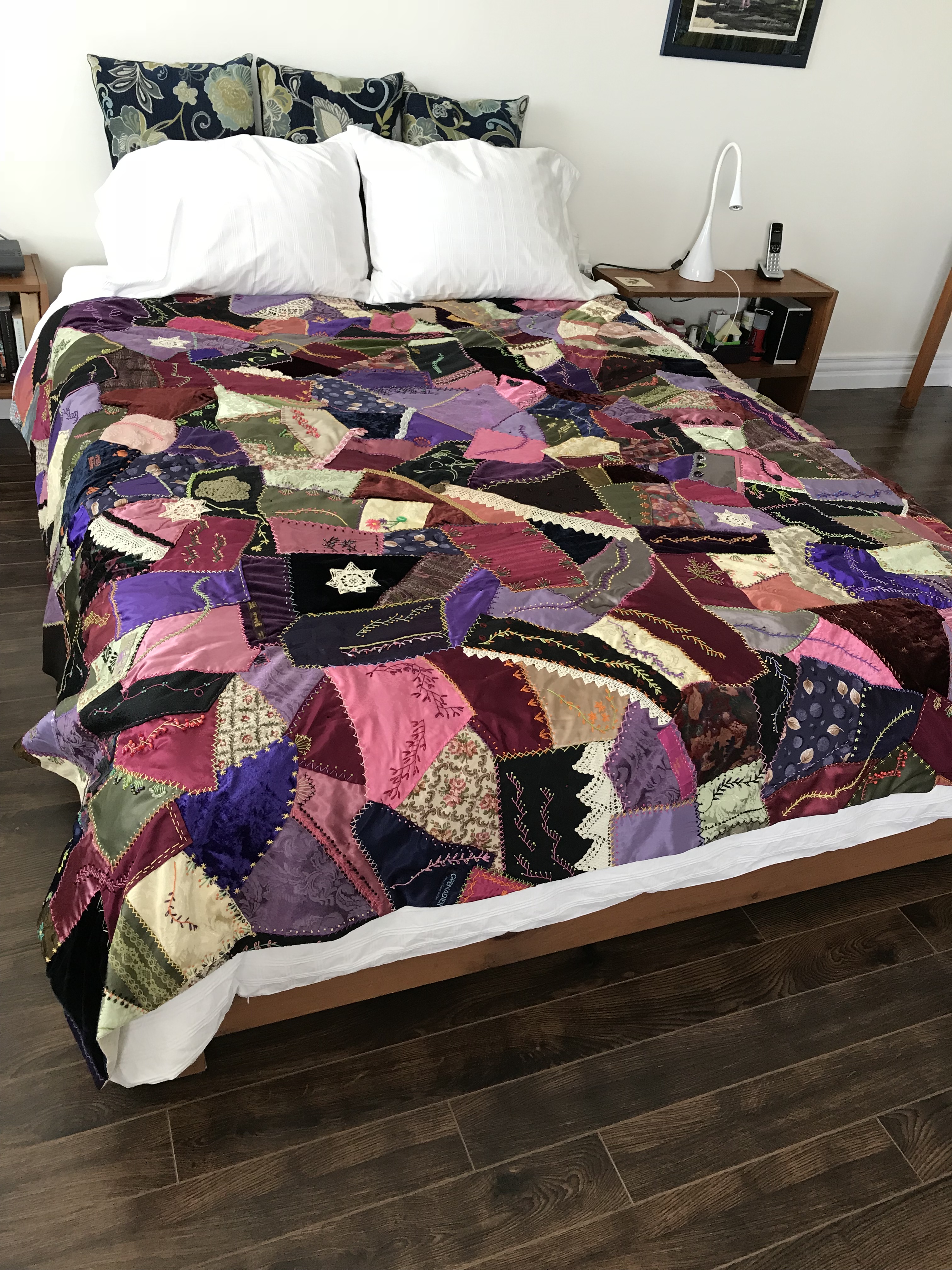
Crazy Quilt – Finished

When in Parrsboro last August (2017) I stopped off to visit my friend Ruth. She’d been working on this crazy quilt (heavily embroidered, with beads and buttons). She had a large surface completed, but there were still corners and spaces at the sides that needed additional fabric as well as embroidery. She’d lost interest and the quilt was in a bag at the back of a closet in an unused room. I persuaded her to get it out. I offered to take it home, complete the top, and back the quilt for her. But I had a lot of other quilting, sewing, knitting I wanted to get done and didn’t get around to it for months.

During the winter I took it out of my closet. I assessed what needed to be done, trimmed the top to a reasonable queen size and put the quilt back in the bag – not hidden in a closet now, but in plain sight along with another project I had agreed to do for a friend. I walked past it every day but didn’t get to it until I’d finished all the work I wanted to get done for Parrsboro this year, and finished hemming the multiple skirts on a prom dress which had been hanging around for the past six months (the prom was a year ago, the dress was now just a wardrobe addition so no urgency about completing it).

Five days ago I pulled out the crazy quilt and said to myself “This is it”. My goal was to get it completed in time to take it to Parrsboro when I go on July 28 to hang the show.

Ruth’s Crazy Quilt – Finished!

I added fabric to the bare spots, quilted the edges on my embroidery machine, set up backing fabric (which I’d bought last week), took the whole thing to the Friday knitting group to help me pin back to front. I laid out the backing fabric on the large table surface in our common room (I’d pressed the backing to remove folds and creases then trimmed it to the approximate size of the top), placed the crazy quilt top face down on the backing. Collectively we pulled the backing taut, smoothed out the quilt top, and pinned the edges.

Yesterday, I stitched around the outside (leaving an opening to turn the quilt right-side out), then pinned top to back and began to tie the two together using a variegated sock yarn. A big tedious job.

I’ve just finished all the tying – the knots are on the back (the ties are barely noticeable on the quilt top which was my intention). I’ve even added a label.

It’s done! I’ve put Ruth’s quilt with my quilts and wall art headed to Parrsboro. I’m not going to call ahead to let Ruth know her crazy quilt is coming home. If she’s not at home when I get there, I know the front door will be open and I will lay it on her sofa. She’ll know where it came from. It will be a nice surprise for her and I’m glad finally to get it out of my house.

That’s it for projects I’ve taken on for other people. Now back to quilting for myself.


First of the Abstract Wall Art Pieces Completed

Fern 4

I finished this piece yesterday, including the hand sewing – the border corners, the opening at the bottom where I turned the piece inside-out, the sleeve for hanging on the back.

At first I wasn’t sure I liked how it turned out, but the more I looked at it (and the unfinished panels on the cutting table) the more it grew on me. The raw silk piping brings closure to the pieced panel and the border fabric definitely declares that the piece is pink.

I’ve done the prep work on the other four panels – I’ve created and trimmed the piping, cut batting strips to fuse to the border edges so I can enlarge the panel (that’s because I trimmed the panel thinking I would only apply the backing with a hidden binding), cut backing muslin, and chosen border fabric for each. Hope to get to them later this afternoon.


Bamboo Quilt – Finished!

I started this quilt at the beginning of March. I had no idea how long it would take or how many decisions I’d have to make as I assembled the blocks, fit them together, planned the back, figured out how to quilt it….

I finished it this morning (with two weeks away from the work while I was in Italy) so working time on the quilt – about five weeks.

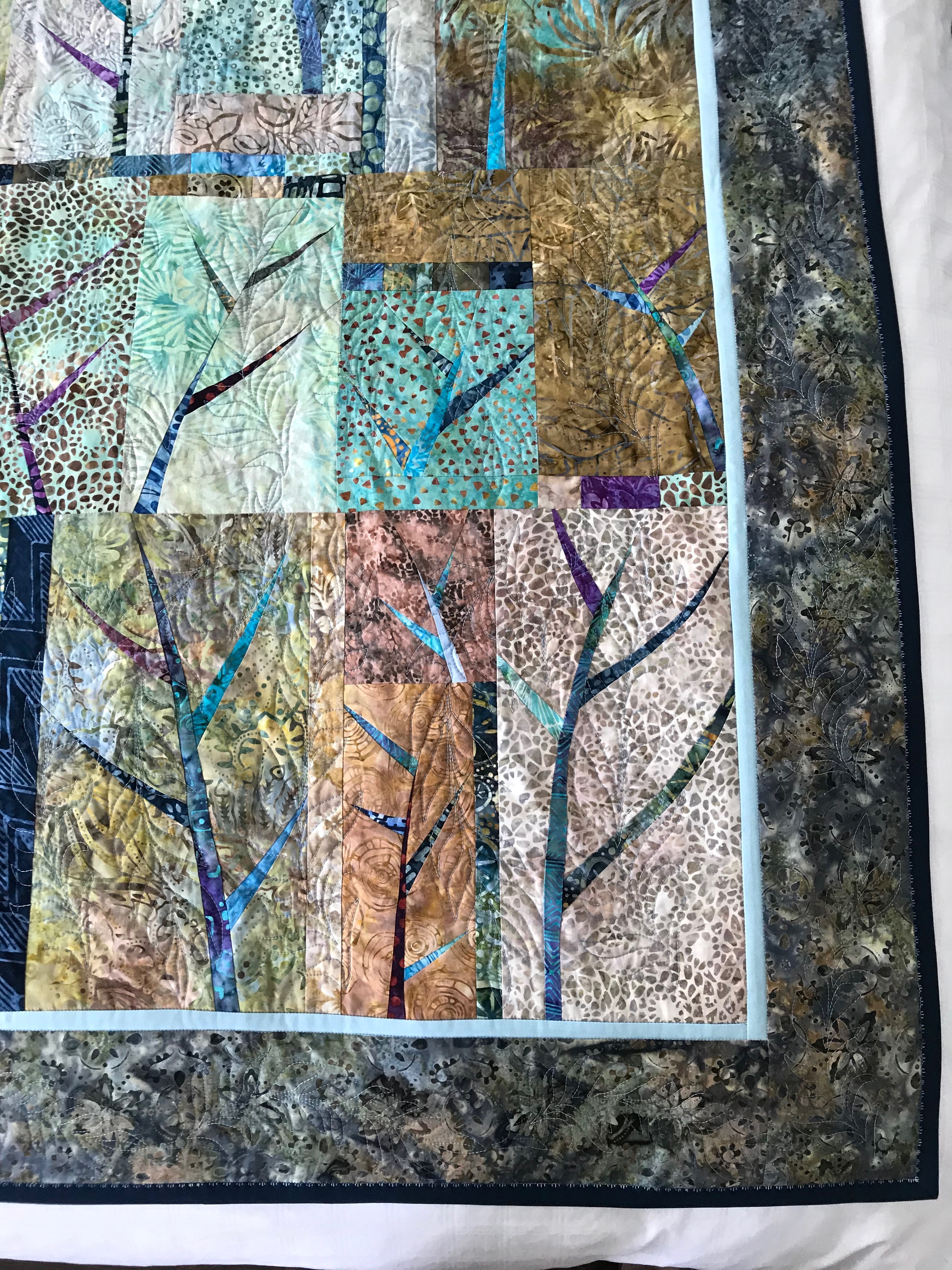
Quilt Top

Standing back from it now, I think the decision to use the light turquoise Kona cotton narrow inner border was the right one – it brings out the blues of the inserts which create the stems and leaves of the bamboo. I also like the choice of the border fabric which makes the inner panel stand out and at the same time echoes the hues of the panel just a bit darker.

Quilt Top – Detail

My plan when I started thinking about the quilting was to create some kind of single run embroidery design to fit my 360 x 260 hoop – I set up a double design to run bottom to top on the right, then repeated top to bottom on the left. The design stitched out well but my spacing when doing the hooping wasn’t close enough and I was left with quite a few spaces that still needed quilting. The solution was to create three more designs, narrower and shorter, to drop into those spaces. I wasn’t sure I liked how the quilting was turning out but now it’s done the space is filled pretty evenly. The border quilting turned out as I wanted it to. I’m happier with the quilt than I thought I was going to be!

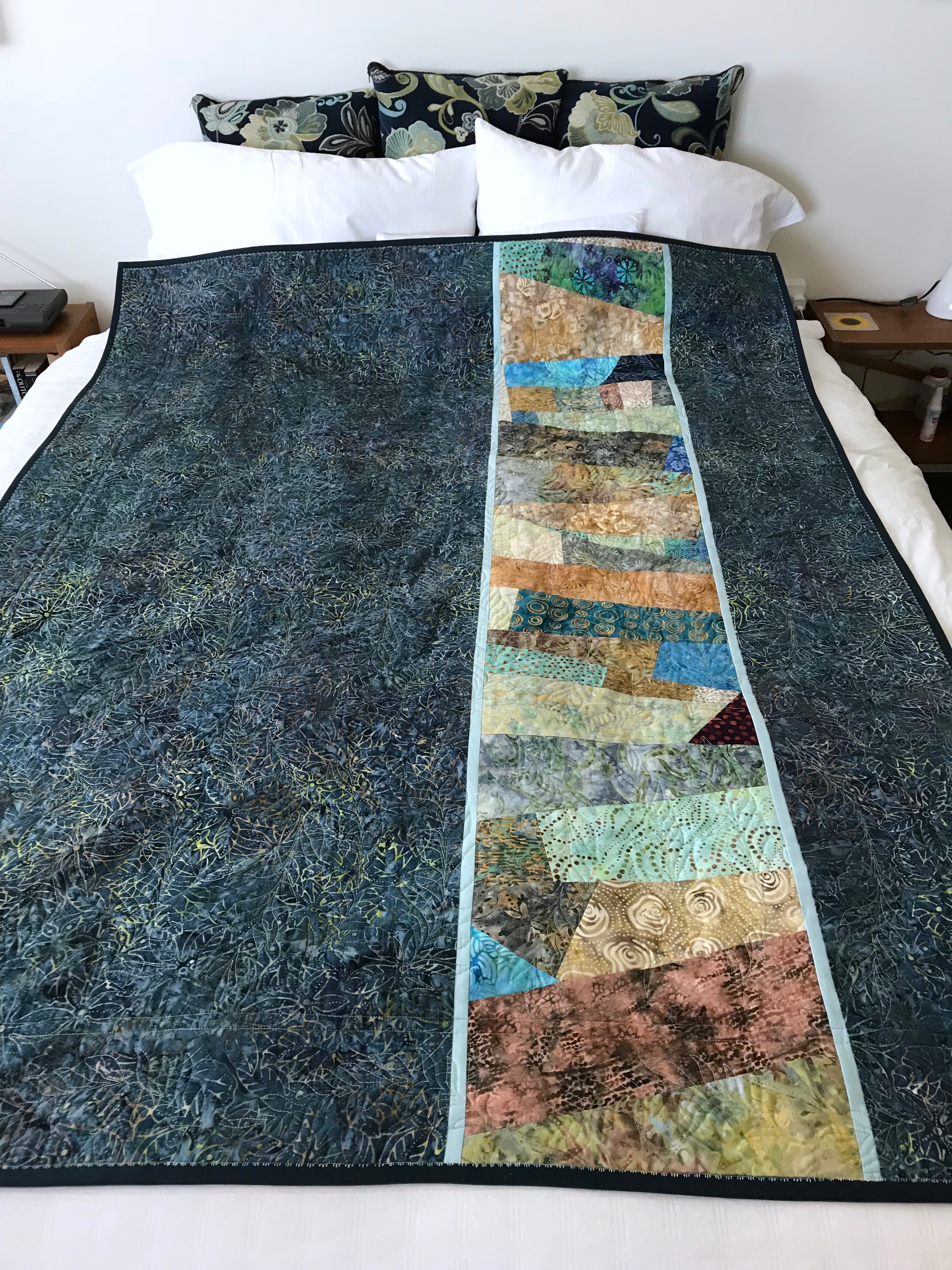
Quilt Back

The back strip is a wide (13″) strip more or less crazy quilt pieced using bits left over from the top fabrics. It carries over the colour feeling from the front.

Binding – dark blue solid Kona cotton.

Binding A Quilt

A couple of days ago Melanie McNeil described in her blog how she was binding her latest quilt – “For this particular quilt, I chose to finish the binding by machine rather than by hand.”… I wrote her that I always machine finish the binding (for a host of reasons I won’t go into here), except I use a decorative stitch with variegated thread when I attach the binding on the front.

Let me back up here a bit: many quilters machine stitch the binding to the front of the quilt, then blind stitch the turned binding on the back by hand. However, if you’re going to machine stitch the turned binding edge, then you have to sew the binding to the back of the quilt, turn the binding under on the front (I pin the turned binding, then lightly press it), then machine stitch to secure it to the front.

I’m assuming you already know how to apply a quilt binding. If you don’t, Melanie has very clear instructions with videos, etc. explaining and showing you how to bind a quilt. What I’m offering here, is an alternative for the final stitching to secure the binding to the top of the quilt.

Graduated Stitch – Edited

Here’s a stitched binding on one of my quilts (notice the diagonal fabric join in the binding). What I want you to observe is the stitching I’ve used to attach the binding to the top of the quilt – a stitch that stitches adjacent the edge of the binding and incorporates jump stitches to the right and back which permanently attach the binding edge to the quilt (remember, the binding is already machine sewn to the back using a standard 2.5mm straight stitch – Melanie prefers a longer 3.0mm stitch).

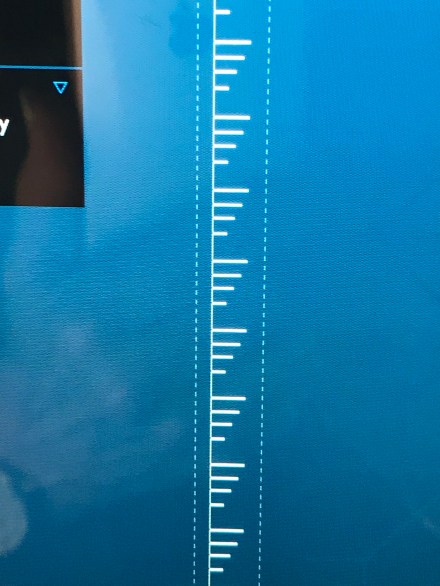
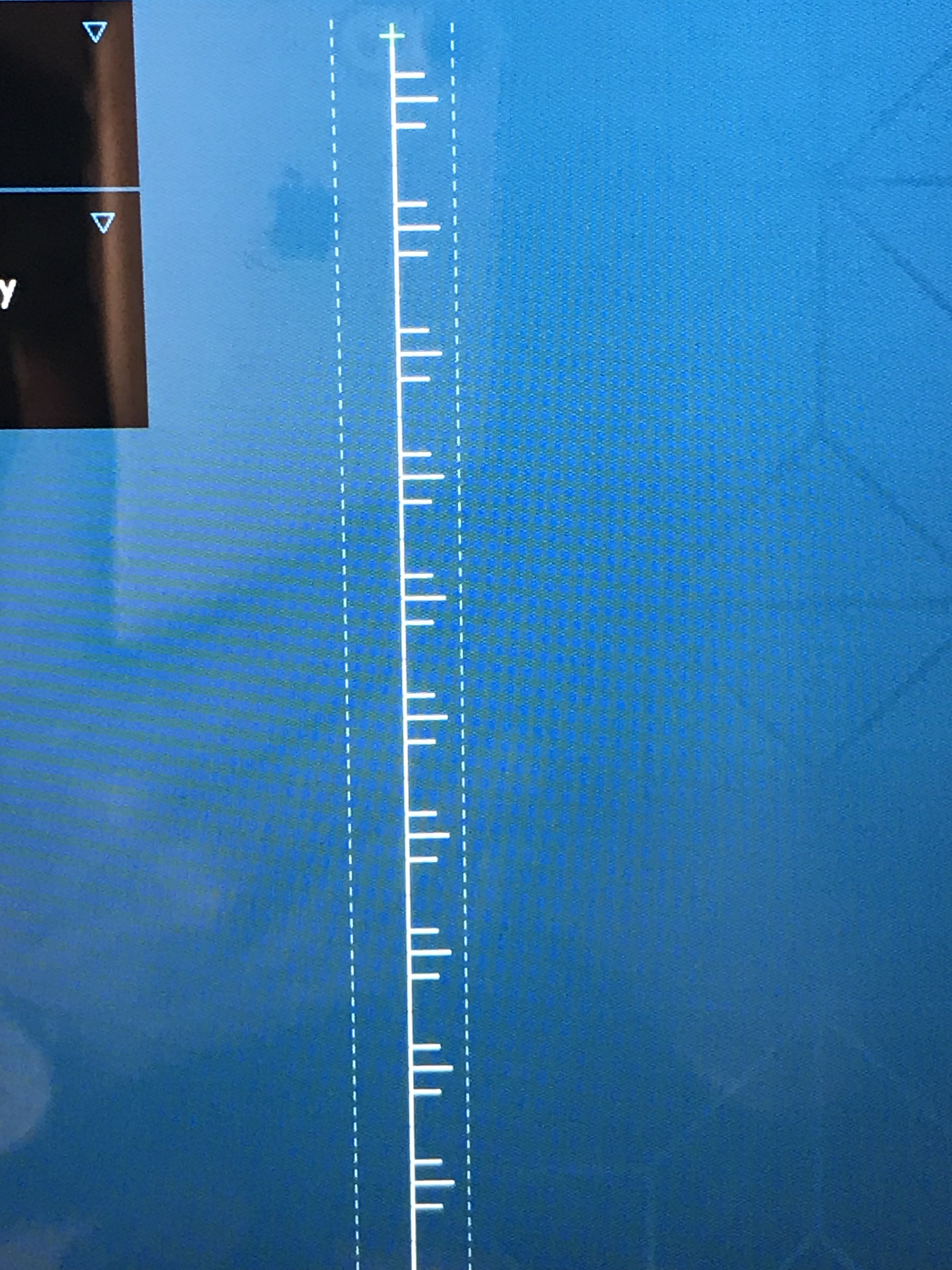
This is what the stitch looks like on my machine screen:

Double Graduated Stitch – Edited

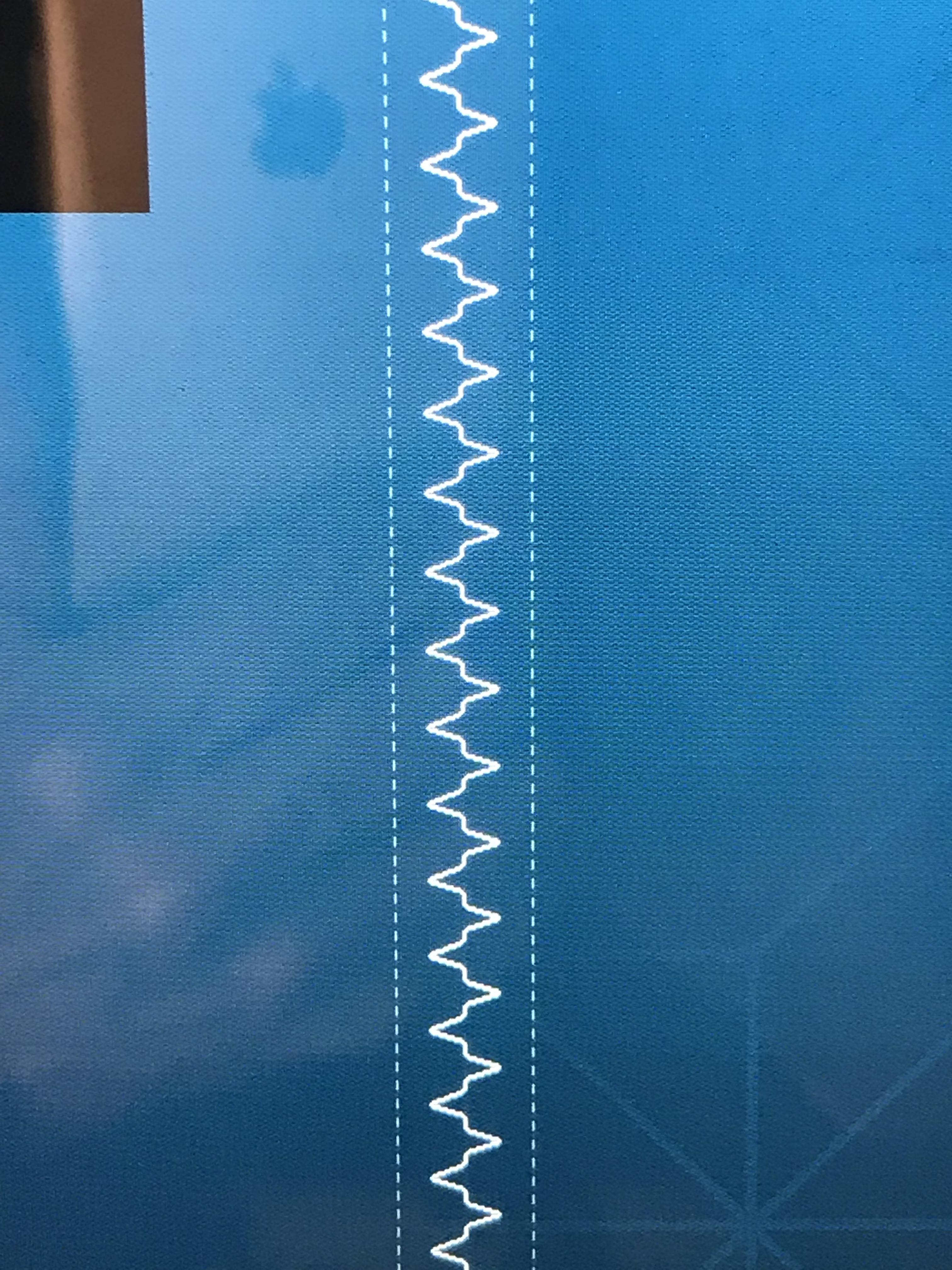
This is my modification of a more complex built-in stitch on my embroidery machine. Here’s the original stitch:

Double Graduated Stitch

I wanted the stitching down the centre to be just to the side of the binding with the cross-over stitches just securing the binding so I used the stitch editor built into my embroidery machine to get rid of the stitches on the left and keep just two forward stitches between the grouping of stitches to the right. It attaches the binding securely and I’m not having to worry about whether I’m getting my straight stitch a consistent needle width from the binding edge. (The decorative stitch also is forgiving on the back of the quilt if it doesn’t align perfectly with the binding edge.)

Here’s another decorative stitch I use frequently:

Honeycomb Stitch – Edited

Below is the “honeycomb” stitch on my machine – I’ve reduced the width quite a bit, and extended the length so the stitch doesn’t extend very far on either side from the binding edge on the quilt front.
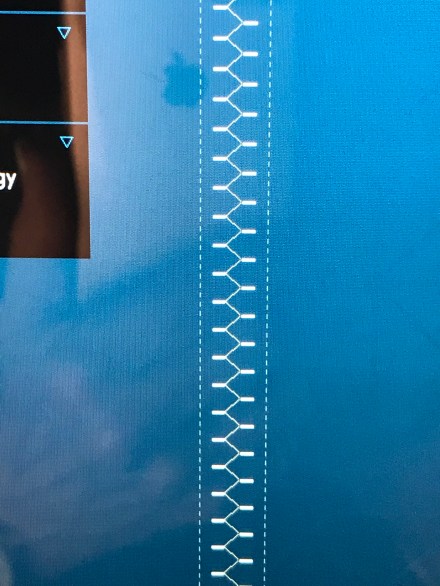
Honeycomb Stitch

Here are two other decorative stitches that could work:

Graduated Stitch

My point is it doesn’t take long to machine stitch a binding to the front of a quilt with a decorative stitch and it’s visually a lot more forgiving than trying to stitch the binding with a straight stitch!