Thread Painting

I started thread painting the bark cloth cutout flowers and leaves the other day. It goes surprisingly quickly and yet it seems to take a lot of time. The first thing I did was stitch the edges of the fused cutout using a modified blanket stitch (w: 1.5mm) with a smoke coloured monofilament thread in the needle (a white rayon embroidery thread in the bobbin). As I’m thread painting, I’m stitching over the cutout edges with embroidery thread to obscure the loose warp/weft threads that are peeking out.

One leaf is done, parts of the larger leaf begun and the dark thread on the anthurium has been stitched – lots more to go. Next will be the brighter green elements on the larger leaf and the “grey” elements will be some shades of bright green, not sure what precisely, yet.

Thread Painting The Bark Cloth Flowers & Leaves

I’m using the embroidery thread doubled – two close shades – both threads through the single needle eye. It’s working well, I’m not having any tension difficulty. I’m not trying to cover the fabric with stitching – just enough to provide some texture and sheen.

Here’s where my collection of fine permanent markers is proving handy – I filled in the grey on the dark leaf with a bright green which livens up the whole. I will do the same on the larger leaf.

Thread Painting – Detail

This piece is a test run for the larger one with the natural raw silk background. The graceful movement of the printed design is making the thread painting straightforward – the flowing lines are easy to replicate, even though I have both the feed dogs and the Pfaff IDT engaged! (I’m doing that to maintain a consistent stitch length – I don’t come close to an even stitch length with free motion sewing). Using the needle down position, the presser foot lifts a wee bit when I stop which allows me to freely manoeuvre the fabric as I sew. So the long flowing lines are happening without difficulty.

Time to get back to work on the larger leaf.

Second Leaf – Finished

This is the second leaf stitched and tinted using the permanent markers – much more lively colour than original “grey”.

Next – the anthurium.


New Wall Art Underway…

This morning I finally stopped procrastinating on the wall art – I found myself starting on two unexpected projects. Yesterday I was going through fabric in my stash looking for fabric for the Federer piece and came across some Hawaiian bark cloth with large floral patterns which I thought could be turned into an interesting raw-edge appliqué piece on a raw natural silk background fabric:

Raw Edge Appliqué using Hawaiian Bark Cloth Floral Cut-outs

I cut the fabric in thirds, isolating one repeat of the pattern, fused Heat ‘N Bond Featherlite fusible web to the back of the fabric, fussy cut the flower/leaves elements, then fused them to a panel of natural raw silk (backed with Warm ‘n Natural quilt batting).

Now I need to go through my embroidery threads and pick out colours to use for securing and thread painting the raw-edge fabric elements.

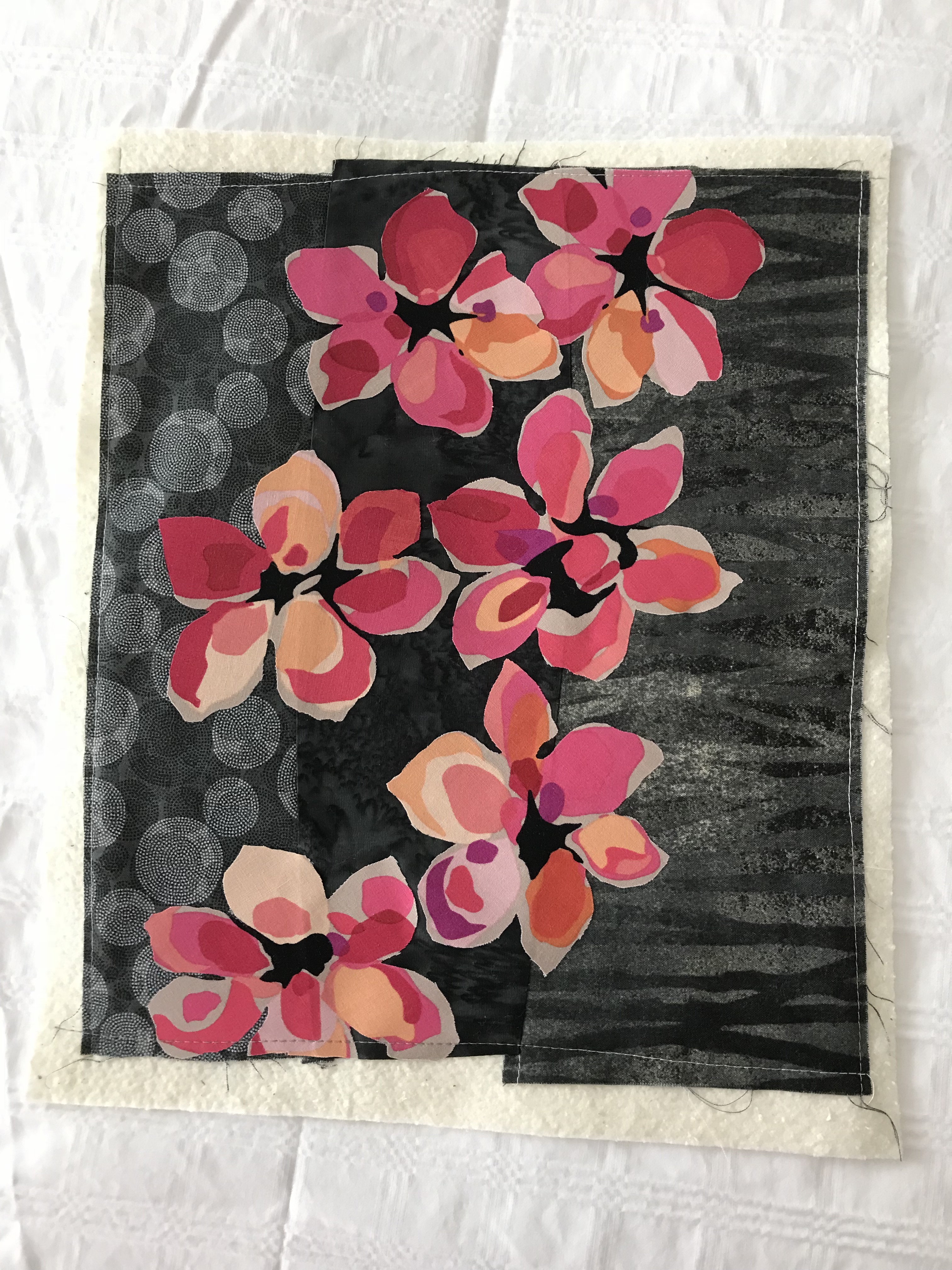
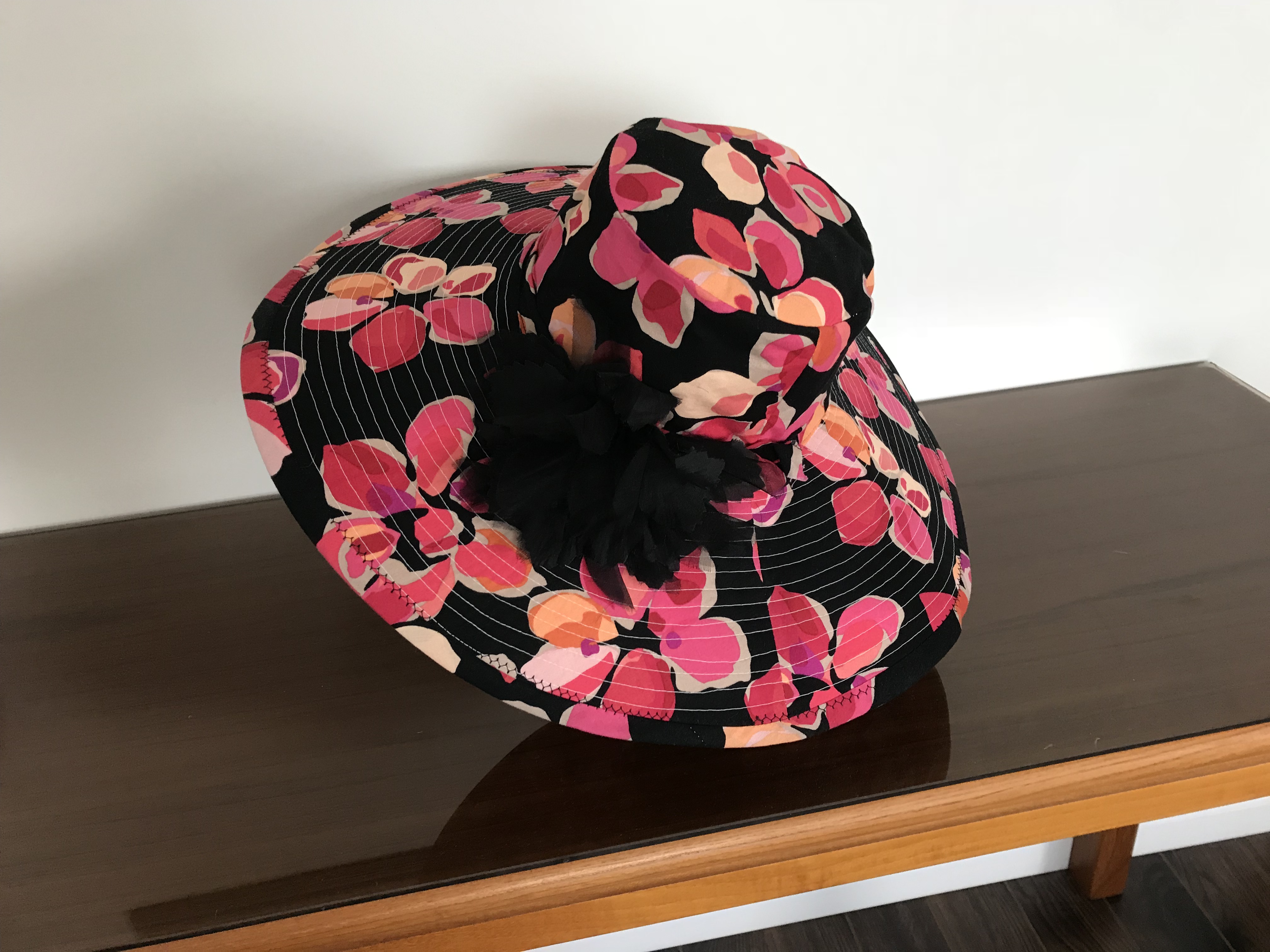
I also got a second piece underway – I had a small leftover scrap of a modern floral which I’d used years ago to make a wide-brimmed summer hat. I thought the cut out flowers, placed randomly on a pieced background, would be an interesting vehicle for thread painting – I started that this afternoon. This piece will finish around 10″ x 12″ – it’s a test run to see where this idea can take me.

Raw Edge Appliqué – Modern Flowers on Pieced Background

So I’ve got two pieces to work on and maybe I’ll make some progress by the end of the weekend!

Wide-brim Summer Hat

[Here are instructions for making this wide-brim hat, if you’re interested.]

Foggy Morning – I

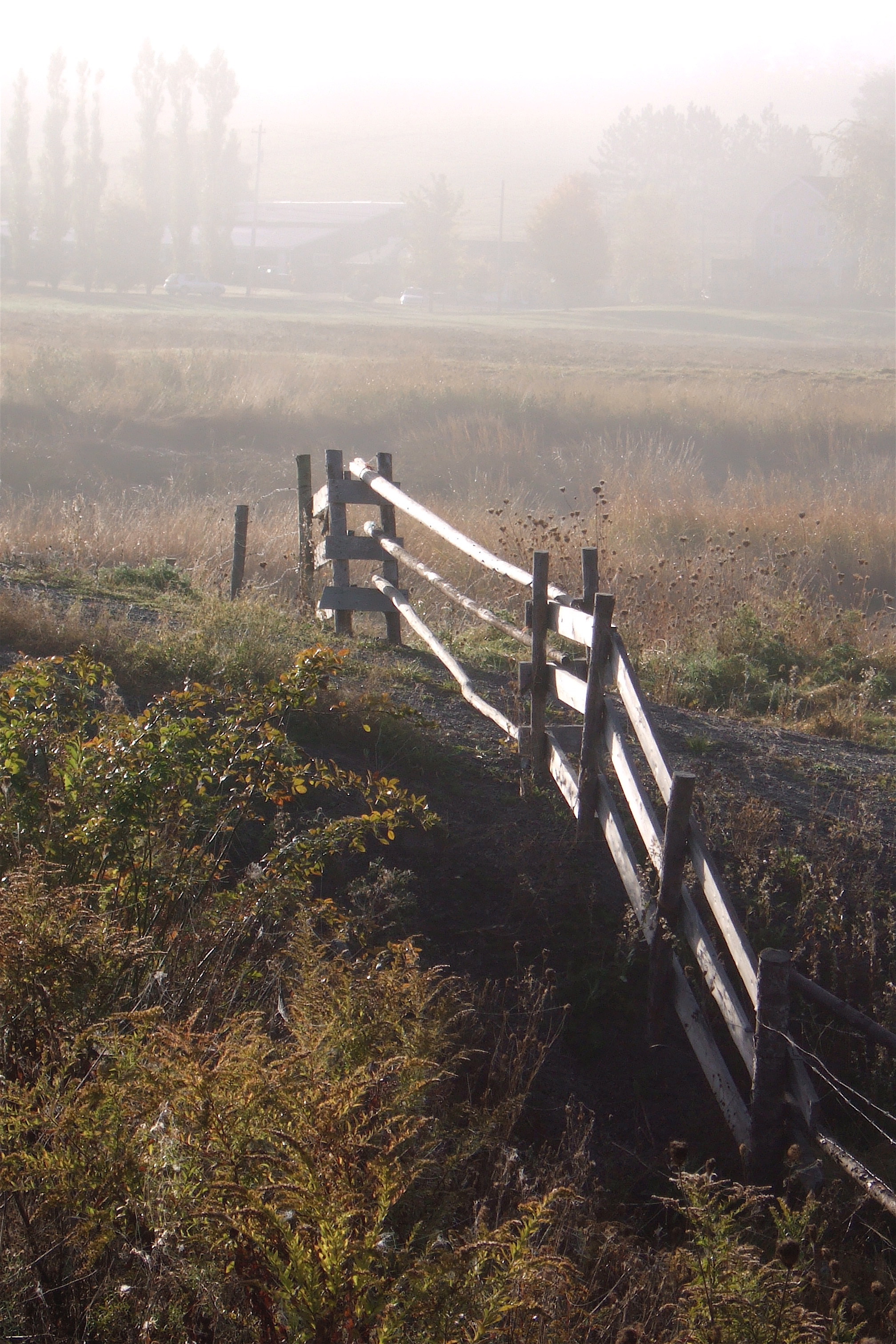
I was on a photo-taking adventure near Canning NS, on a foggy October morning in 2006, with David Lacey, a NS landscape artist. Near the beginning of our backroad trip we spotted an old fence at the edge of a field. The sun was still low and the ground fog hadn’t yet completely burned off. Standing where I was, the sunlight on the fence created a sharp contrast to the morning fog hovering over the farm buildings in the distance.

Foggy Morning – Photo

This was one of the photos I’d set aside as a possible subject for a textile art piece. The challenge is creating the “fog” – it seemed to me I could capture the faded texture of the foggy distance with a layer of silk organza over an underlying image  of the farm buildings and trees printed on fabric.

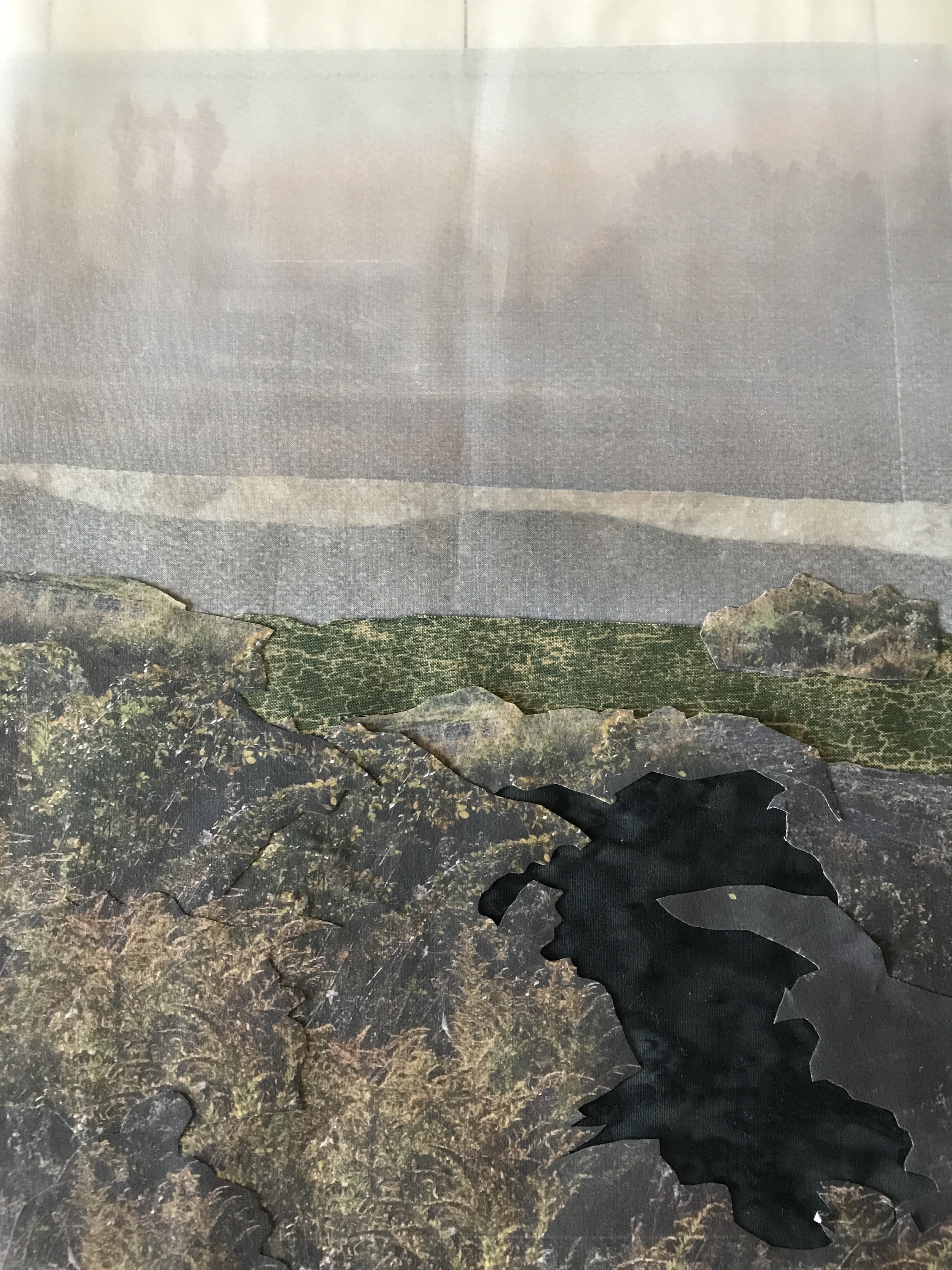
First, I enlarged and printed the top half of the photo on fabric and added a fusible backing. Next I’ve added layers of printed fabric to the middle ground which is still somewhat obscured by the fog. I will do quite a bit of thread painting in this middle ground to increase the detail although it will be covered with organza.

The foreground, consists of pieces cut from the photo printed on fabric which will be thread painted to bring out the detail. The shadow of the ditch is created using an underlay of black batik. Now that I compare the photo and my pieces of fabric (not yet fused in place, thank goodness) I can see I’ve missed the cow path which is integral to the image. So I will have to go back to my fabric stash to find a dark grey something to set that up….

Foggy Morning – In Progress I

Here is the fence, the focal point of the piece, tentatively in place –  I can see I will need to do a lot of thread work where the fabric meets the organza in order to marry the foreground and the middle ground better.

Foggy Morning – In Progress II

However, I’m happy with the start – I’m beginning to see how to construct this piece.

First Swim – Revisited

It turns out my efforts to represent the shading of the child’s body with layers of differently colored fabric was misconstrued and interpreted as “clothes” by the majority of people who viewed the piece. Very few spontaneously saw him as naked. This was because the contrast between the lights and darks was too great – an artifact of the limited pallet of flesh-toned shades of fabric I was able to assemble.

Original Piece

So I darkened the ligher elements with crayon and wax pastels and stabilized the shading using a hot iron which melts the applied surface wax into the fabric. Now the child is seen as naked.

Child Darkened

I’m much happier with how people are responding.

First Swim – Completed

Here it is – just done:

First Swim

It always amazes me how much finish work goes into one of these pieces – inner border, wide mitred outer border, backing, hidden binding, hanging sleeve. And a lot of it is hand sewing – I’m getting better at hand sewing, but it’s still awkward; I’m having trouble pulling the needle through with my thumb and first finger, especially if I’m trying to get through multiple layers of fabric!

Now to put the art quilting aside for a while and on to making pants.

First Swim

I did a bit of thread painting on the background of this piece yesterday during the Art Quilt Class – I wanted to demonstrate how I double up the rayon thread and use both in a single needle, how I stitch the raw edges using a very narrow blanket stitch, how I freely sew flow lines in the background.

First Swim

Today, I finished up the background by adding a bit more dark fabric to the water and doing quite a lot of stitching for detail (the thread actually becomes lighter the farther from the foreground it is). As well I did some dense stitching along the water edge to suggest foam. I left the darker edge of wet sand clear of stitching because that sand is always packed densely while it’s still wet. The stitching in the sand is intentionally more random to hint at the irregular detail from many footprints.

For the moment Charlie is still a piece of paper. Tomorrow I’m going to work on creating him from 4-6 layers of flesh-toned fabrics from very l light on his right shoulder to very dark at his bum and the backs of his lower legs.

I added my signature while I was working at the machine rather than struggle to add it later. I do the embroidery using the metal hoop which allows me to just place the art piece flat and hold it in place with magnets instead of trying to force it into a double pieced hoop – much easier to position the fabric.

I’m still not sure whether I’ll border this piece or not or whether I’ll use a hidden binding – I’ll see how I feel when the child is assembled and added. Finished dimensions will be approximately 12″ x 10″.

First Swim with Child

OK, so I didn’t wait until tomorrow – I pieced the child this evening. Didn’t turn out badly at all. Now to edge stitch all the pieces – slowly and carefully.

Dots – Completed

Dots – Completed

Having given the piece a name, I realized the majority of the fabrics I used to construct the piece had dots in them! So to take the idea further, I appliquéd more dots of various sizes to add further detail to the piece, and stitched around the outside edge with rayon embroidery thread using a narrow blanket stitch. Although difficult to see, the 1/4″ binding is also a dotted fabric. Finished size: 12.5″ x 17″.

This Week’s Work

Tuesday is fast approaching and I’m trying to get the last demonstration pieces sorted out for the art/landscape class.

Taking the idea of the “Portrait” piece – assembled from a range of cutouts of skin-tone printed fabrics, I decided to see what I can create based on this “At The Beach” photo:

At The Beach

One of the “secrets” of successful textile art (whether primarily appliqué or thread  painting or a combination of both) is simplicity. The point isn’t to reproduce the detail of the photo but to abstract/simplify it enough that you have a clear background and a subject. In this case, I’m removing dad and the other people and the land on the opposite side of the lake. I just want the nude child and his tentative steps toward to the water:

At The Beach II

So far, I’ve laid down layers of beach sand, set up the water’s edge, and covered the top of the background with fabric for the water. I’m place holding the child with a paper cutout on which I’ve marked the colour blocks – I think I can create him with bits of five fabrics representing the gradations of colour on his body.

The next step is to do a LOT of thread painting to bring out the texture of the sand and to represent the wind on the water. Then I’ll work on putting the child together – I’ve already added fusible web to the back of my flesh-toned fabrics so once I have set up the template pieces, I’ll cut them out and fuse them together.

Finished dimensions of “At The Beach” will be 12″ x 9″ with a hidden binding and no borders/framing.

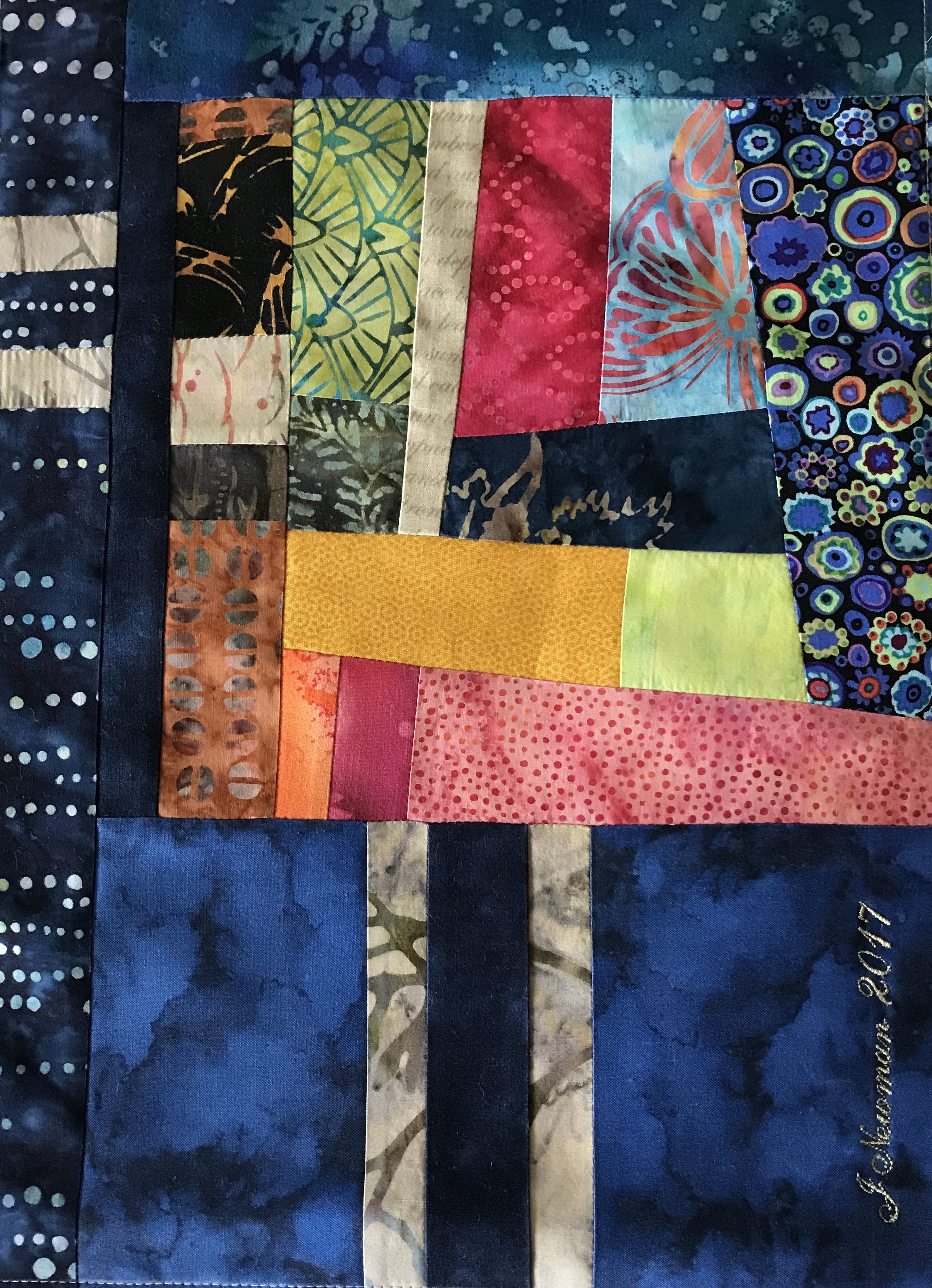
Another sample I wanted to create was a “modern art” piece of the kind Melody Johnson does:

Banana Boulevard

Her pieces are often small (12″ x 12″), constructed from geometric shapes cut from either solids or hand painted fabric – pieced and appliquéd, usually with a hidden binding.

I just wanted to illustrate the technique – since I don’t use much in the way of solids I decided to dig out whatever prints/batiks I had in my “strips” box. This is what I came up with:

Dots

I still have to quilt the piece – I’m thinking I’ll quilt this starting with stitching in the ditch, then add more straight lines of stitching to fill the space; I’ll see once I’ve done the stitching along the seam lines.

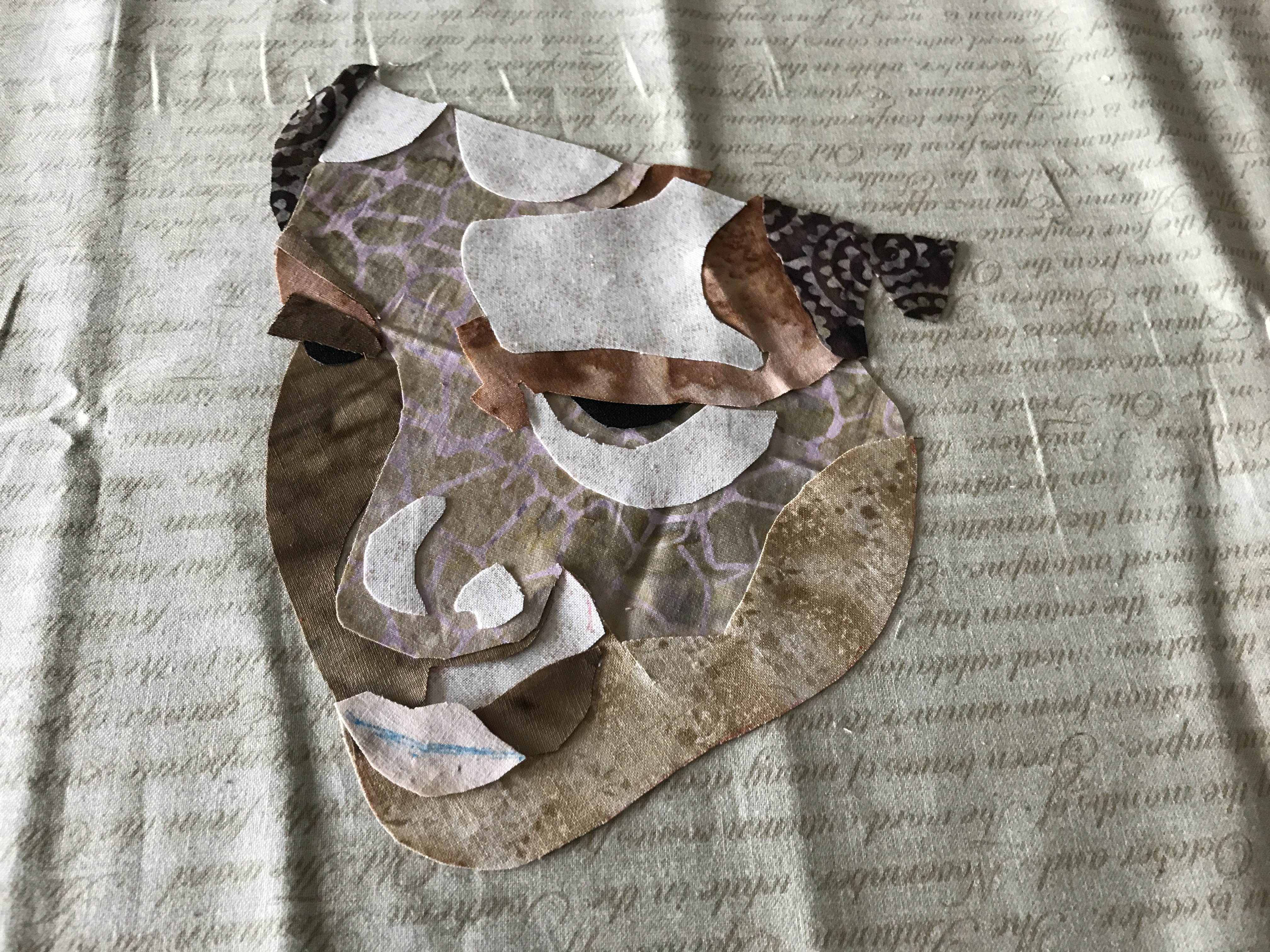
Portrait

Another demonstration: a pieced portrait.

I started with an image of a face, printed it in black and white, outlined the colour boundaries, pulled all the beige tone fabrics from the stash I could find (large pieces and scraps), created templates for the large areas using baking parchment paper, cut them out, then created templates for the smaller areas, and cut those out.

What I didn’t do here, but should have, was to apply fusible web to the fabric before cutting it – instead, I’ll use a glue stick to adhere the cut out pieces to the background.

I was mainly playing around to see if what I ended up with resembled a face in any way and it does. Once I’ve glued the pieces down, I’ll probably do a bit of edge stitching to hold the thing together.

Peony

With the Peony, I’m playing around with Danny Amazonas’ fused appliqué technique – a collage of small pieces of fabric fused on top of one another to create depth and detail for both the background and the main subject.

I began by preparing 20″ x 26″ pieces of muslin and batting and sewing them together along the 9″ x 12″ dimensions in the center of the quilt – this marked my outside boundary. Then I pencilled in the approximate location for the focal element – the peony. That gives me an inner boundary for the background appliqué collage.

Backing Prepared

One of the things I’ve learned from looking carefully at Amazonas’ textile art is the background is livelier when there’s visible small pattern elements in the fabrics. The overall effect is a shaded dark support for the focus element which sets up the contrast for the finished art work.

I cut pieces from the fabrics I’d collected and auditioned them to see how I might establish a colour flow within the background.

Auditioning Fabrics For The Background

I applied “wonder-under,” a paperbacked fusible web to my complementary and contrasting pieces of background fabric. Then I cut small pieces from each and arranged them filling the space from outer to inner boundary.

Background Fused In Place

At this point, the background looks lighter in overall tone than it will once the light fabrics are added in the center to create the very pale pink flower. If the background still seems too light when the peony is added, I will apply a wash using acrylic paint to tone down the brighter colours.

As far as I can tell, Amazonas doesn’t sew on top of his constructions. My plan is to do the same in this demonstration piece. However, when it’s assembled I may feel it wants more detail and add some thread painting. I’ll have to see how it turns out.

That’s it for today.