Thread Painting

I started thread painting the bark cloth cutout flowers and leaves the other day. It goes surprisingly quickly and yet it seems to take a lot of time. The first thing I did was stitch the edges of the fused cutout using a modified blanket stitch (w: 1.5mm) with a smoke coloured monofilament thread in the needle (a white rayon embroidery thread in the bobbin). As I’m thread painting, I’m stitching over the cutout edges with embroidery thread to obscure the loose warp/weft threads that are peeking out.

One leaf is done, parts of the larger leaf begun and the dark thread on the anthurium has been stitched – lots more to go. Next will be the brighter green elements on the larger leaf and the “grey” elements will be some shades of bright green, not sure what precisely, yet.

Thread Painting The Bark Cloth Flowers & Leaves

I’m using the embroidery thread doubled – two close shades – both threads through the single needle eye. It’s working well, I’m not having any tension difficulty. I’m not trying to cover the fabric with stitching – just enough to provide some texture and sheen.

Here’s where my collection of fine permanent markers is proving handy – I filled in the grey on the dark leaf with a bright green which livens up the whole. I will do the same on the larger leaf.

Thread Painting – Detail

This piece is a test run for the larger one with the natural raw silk background. The graceful movement of the printed design is making the thread painting straightforward – the flowing lines are easy to replicate, even though I have both the feed dogs and the Pfaff IDT engaged! (I’m doing that to maintain a consistent stitch length – I don’t come close to an even stitch length with free motion sewing). Using the needle down position, the presser foot lifts a wee bit when I stop which allows me to freely manoeuvre the fabric as I sew. So the long flowing lines are happening without difficulty.

Time to get back to work on the larger leaf.

Second Leaf – Finished

This is the second leaf stitched and tinted using the permanent markers – much more lively colour than original “grey”.

Next – the anthurium.
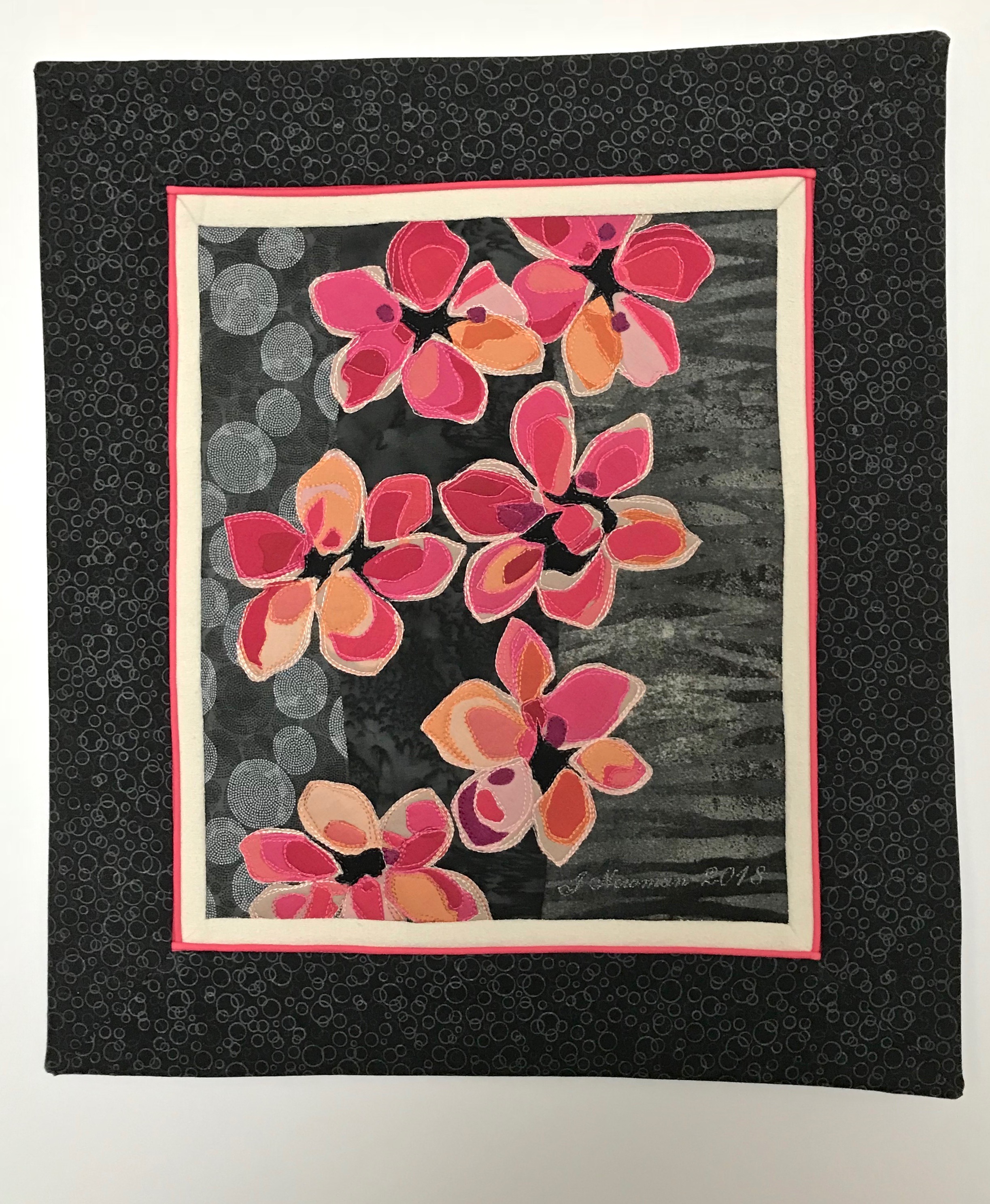
 

Pink Flowers – Finished

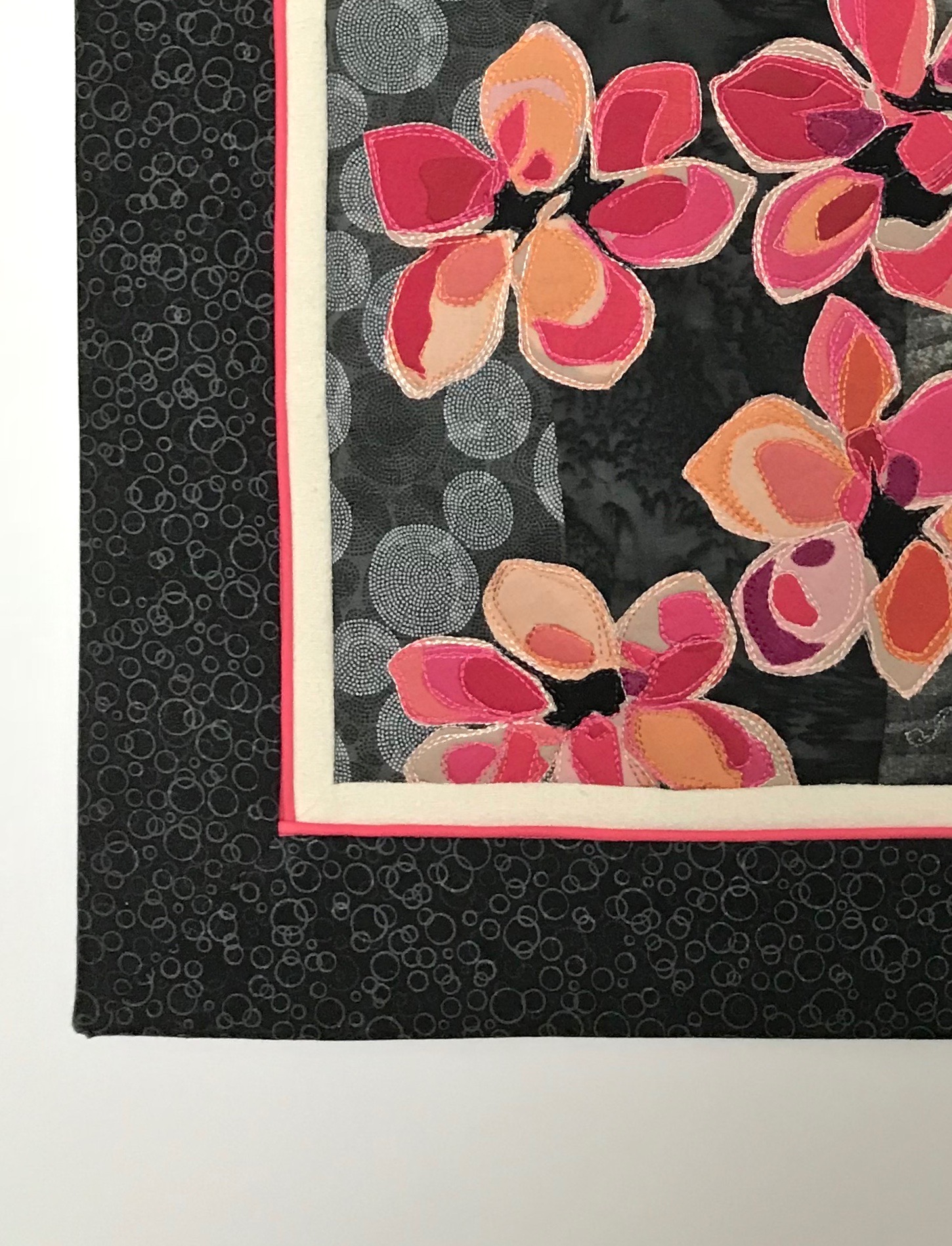
I just put the finishing touches on this wall art piece – Pink Flowers. In the photo it looks a bit out of kilter, but I that’s an artifact of where I was standing when I took the photo – the piece is 15.5″ wide x 18″ in height.

Pink Flowers

I did quite a lot of stitching using rayon embroidery thread – two colours at a time through the one eye of the machine needle which gives a tiny bit of depth to the colour of the stitches. I elected not to stitch in the background – mainly because I had no idea what sort of design would have augmented the piece rather than detract from the flowers. The piping is there to heighten the colours in the flowers, and the printed border/frame extends the “texture” of the background.

Stitching Detail

Now on the next one using the fussy-cut flowers from the bark cloth. The fabric colours are somewhat subdued – I’m planning on using strong bright shades of rayon embroidery thread for the thread painting.

New Wall Art Underway…

This morning I finally stopped procrastinating on the wall art – I found myself starting on two unexpected projects. Yesterday I was going through fabric in my stash looking for fabric for the Federer piece and came across some Hawaiian bark cloth with large floral patterns which I thought could be turned into an interesting raw-edge appliqué piece on a raw natural silk background fabric:

Raw Edge Appliqué using Hawaiian Bark Cloth Floral Cut-outs

I cut the fabric in thirds, isolating one repeat of the pattern, fused Heat ‘N Bond Featherlite fusible web to the back of the fabric, fussy cut the flower/leaves elements, then fused them to a panel of natural raw silk (backed with Warm ‘n Natural quilt batting).

Now I need to go through my embroidery threads and pick out colours to use for securing and thread painting the raw-edge fabric elements.

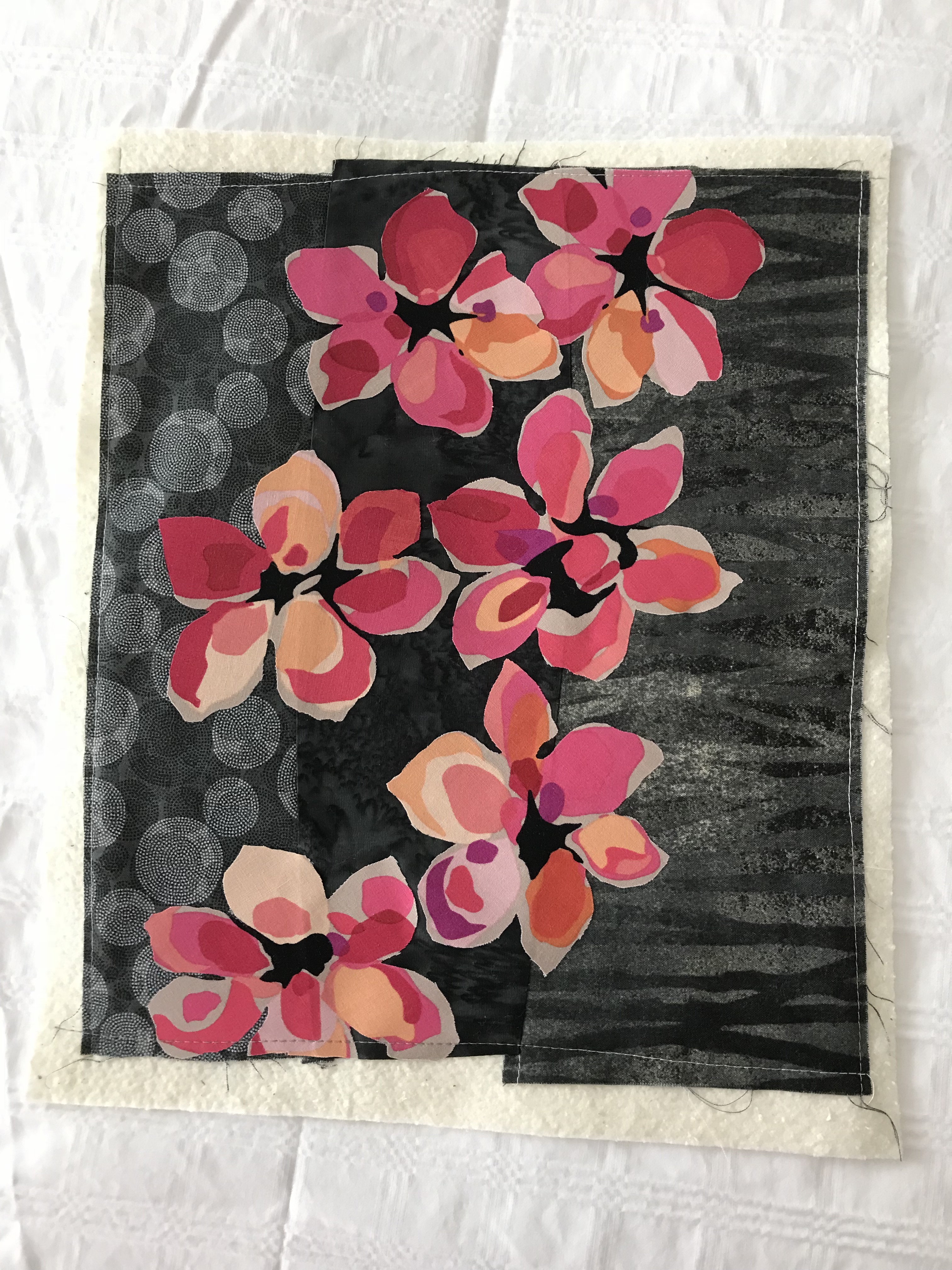
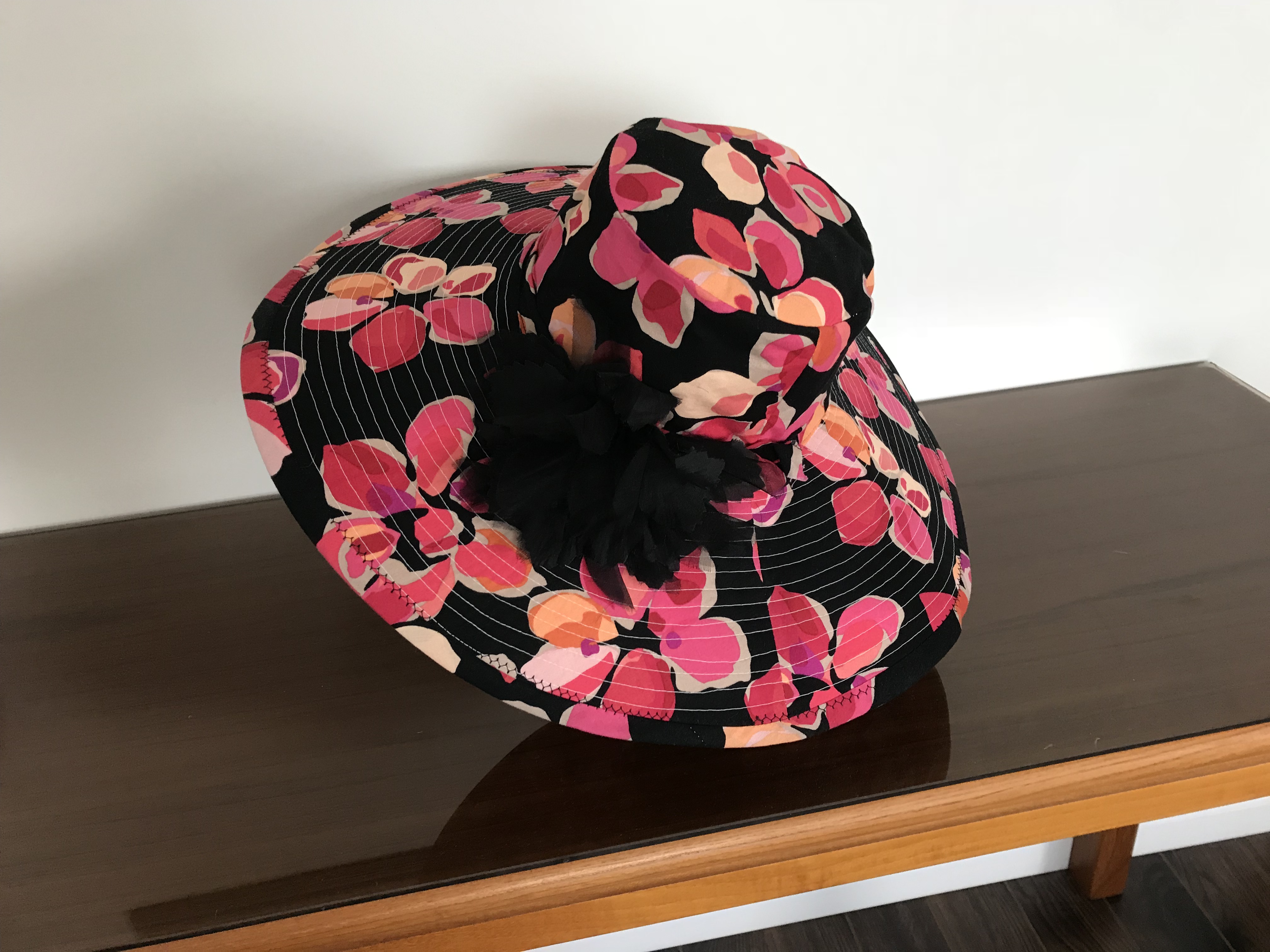
I also got a second piece underway – I had a small leftover scrap of a modern floral which I’d used years ago to make a wide-brimmed summer hat. I thought the cut out flowers, placed randomly on a pieced background, would be an interesting vehicle for thread painting – I started that this afternoon. This piece will finish around 10″ x 12″ – it’s a test run to see where this idea can take me.

Raw Edge Appliqué – Modern Flowers on Pieced Background

So I’ve got two pieces to work on and maybe I’ll make some progress by the end of the weekend!

Wide-brim Summer Hat

[Here are instructions for making this wide-brim hat, if you’re interested.]

An Aside – A Simple Lined Grab Bag

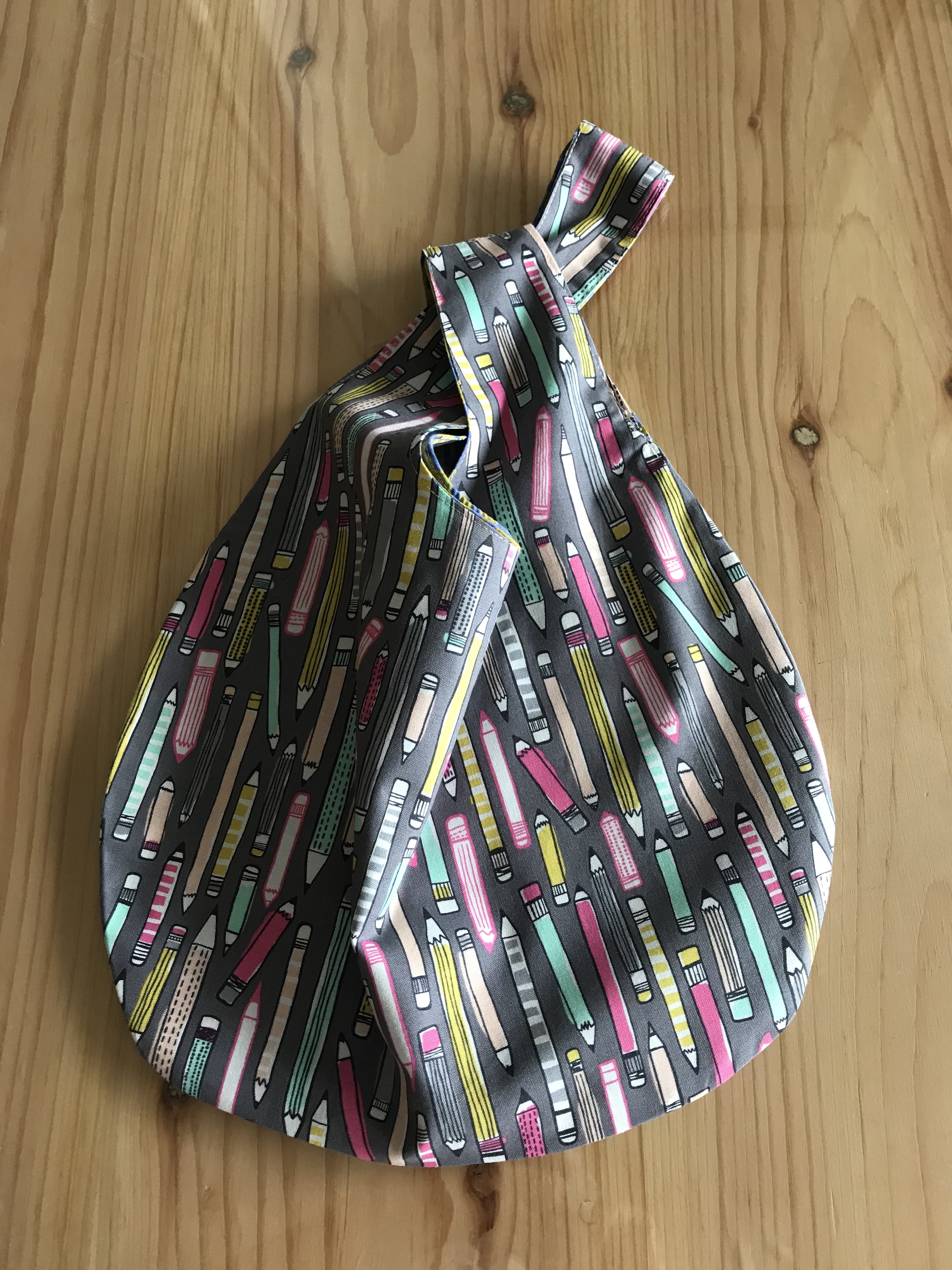
A couple of days ago I happened across mention of a smallish fabric grab bag. Not sure why I bothered to read the piece but I did. I downloaded the template, printed it, cut it out, and thought it might be worth a try. I’m on the lookout for something to make as a small Christmas gift for the gals in the knitting group – this bag was worth putting in my ideas collection.

Simple Lined Grab Bag

Since I try sewing/making something every day this was an easy/fast half-hour project. I hadn’t kept the instructions so actually constructing the double-layer bag took longer than it should have and this first (maybe only) bag is not as neatly finished as it might have been but I thought construction was obvious – it wasn’t quite, there are a couple of twists and turns, but in the end I rectified my mistakes and completed the bag.

So here is my grab bag. It’s a good size for carrying a small knitting or hand sewing project. The problem with it as a mass produced gift is that it’s on the expensive side – in it’s simplest version (just two layers of fabric) it uses half a metre of each fabric (with useable scraps left over). Unless you happen on a good fabric sale I’d be making a sizeable investment were I to make, say, twenty of them given the cost of good cotton fabric these days. However, if you’re looking for something quick to make to give as a small gift you might find this grab bag worth your attention.

BTW: I left out the batting and didn’t bother with the inner pockets – just the bare grab bag.

Lace – Crochet & Tulle

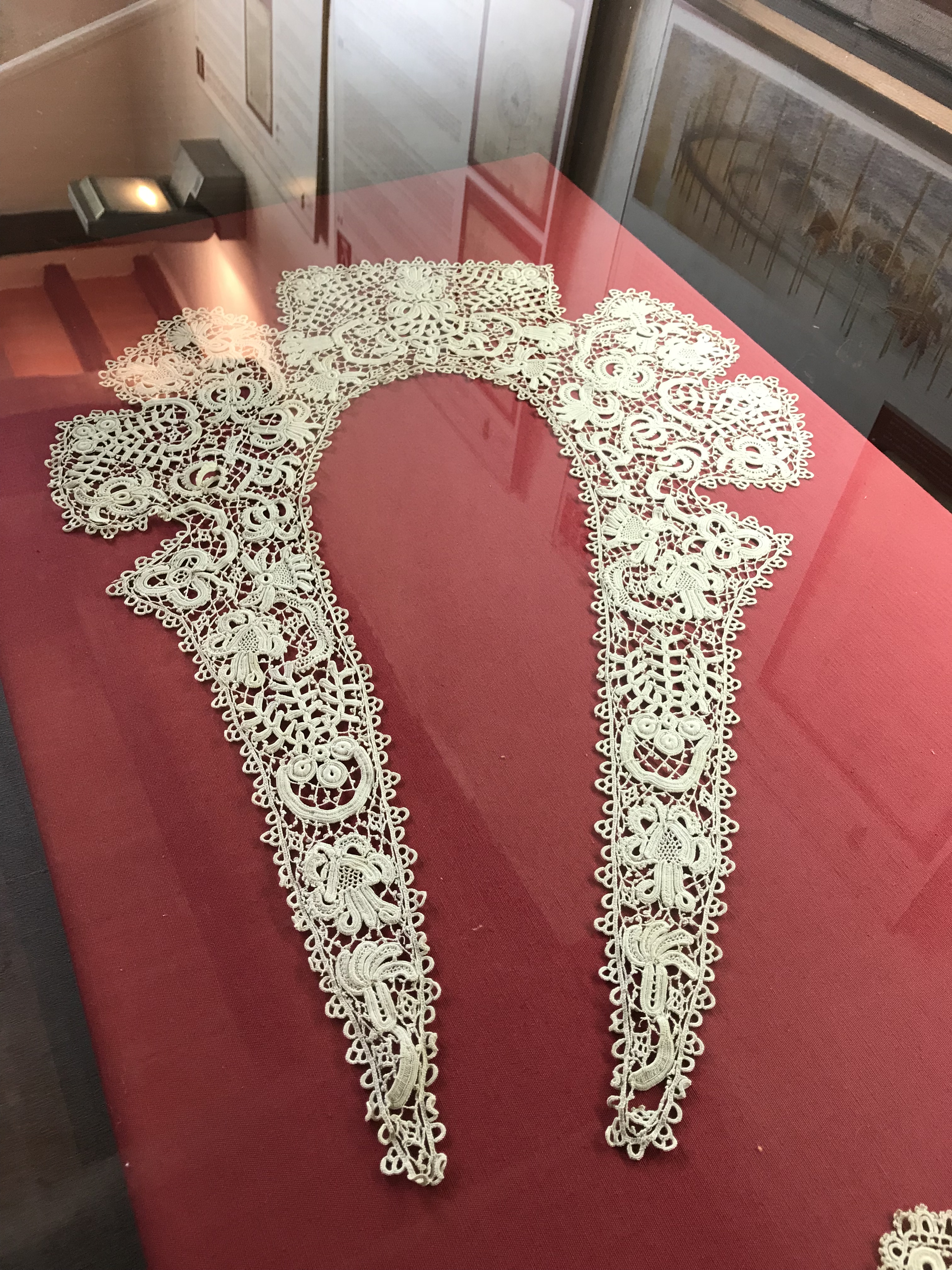
Today’s highlight was our visits to Tuomo and Panicale to see two very different sorts of lace. Unfortunately we didn’t get to see any of the (mostly elderly) women at work but we did get to meet one crochet lace maker and I was able to buy two small pieces which I intent to frame.

Crochet Lace Table Runner

Crochet Lace Collar

The hand work is simply magnificent – done with extremely fine crochet cotton and very fine steel hook. My maternal grandmother and her sister Rose both did crochet, but their work was not nearly so fine or elaborate. I crochet, too, but I’ve never tried such intricate work. I looked at it for quite a while.

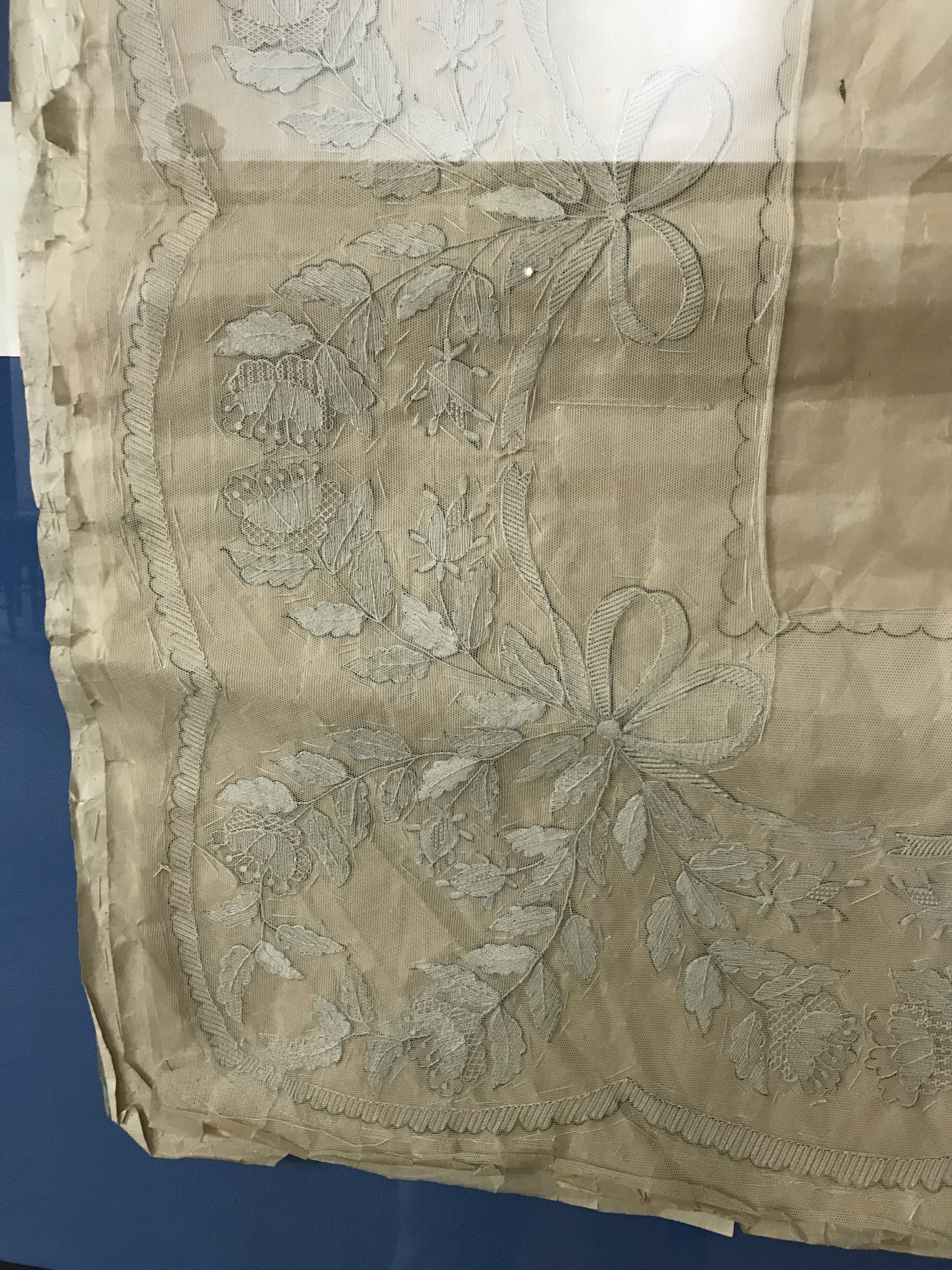
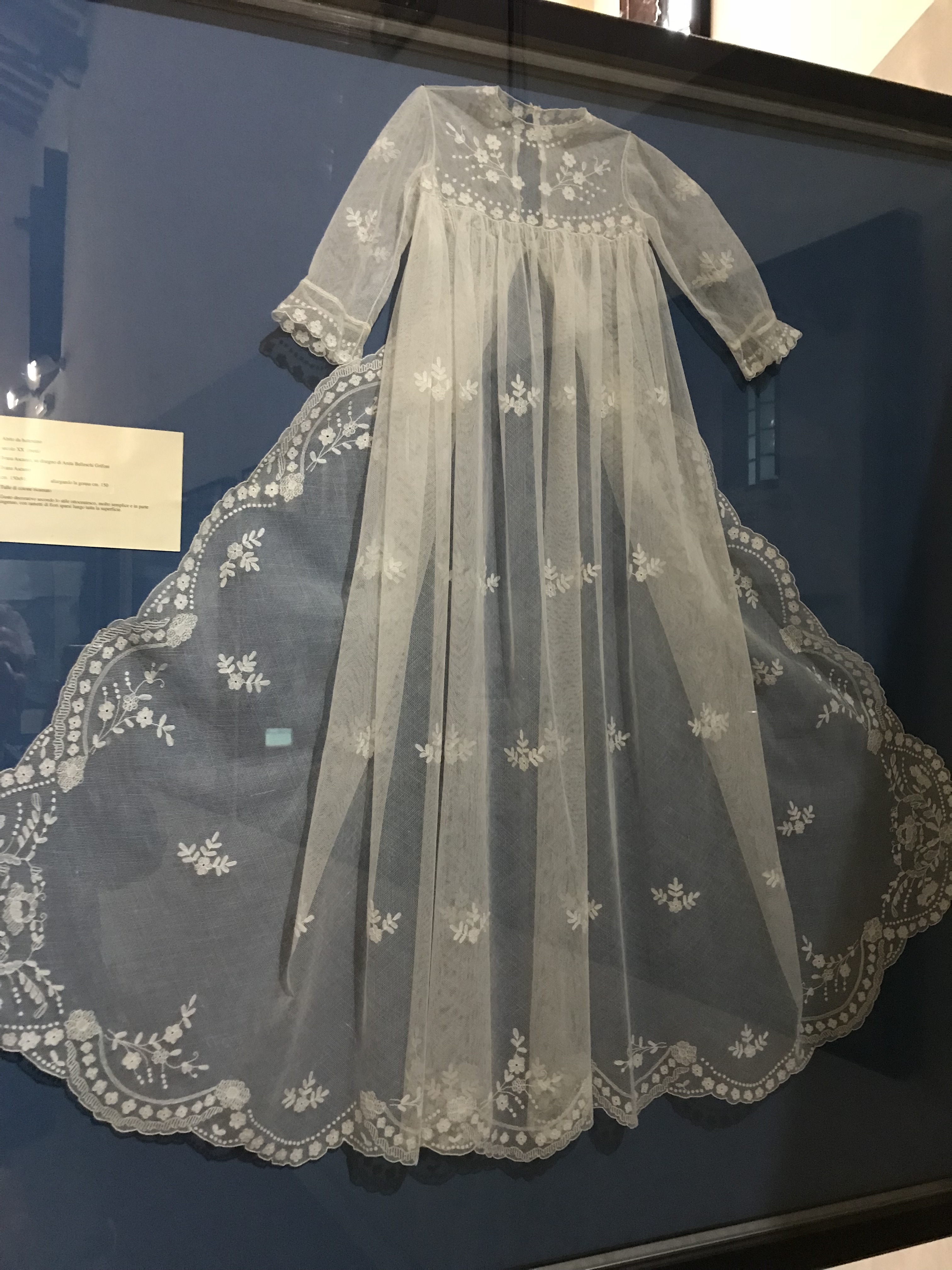
The second type of lace is sewn with needle and fine thread through tulle.

Information On How The Lace Is Made

The Lace With Paper Template Beneath

Tulle Lace Christening Gown

[Note: Wi-Fi here is intermittent so I’ve learned to publish as I go.]

My maternal grandmother and her sister Rose both did beautiful crochet work but with a much heavier thread. I, too, crochet well but usually with wool. I will have to try some fine cotton to see if I can manage something this delicate – I imagine it could take years of practice!

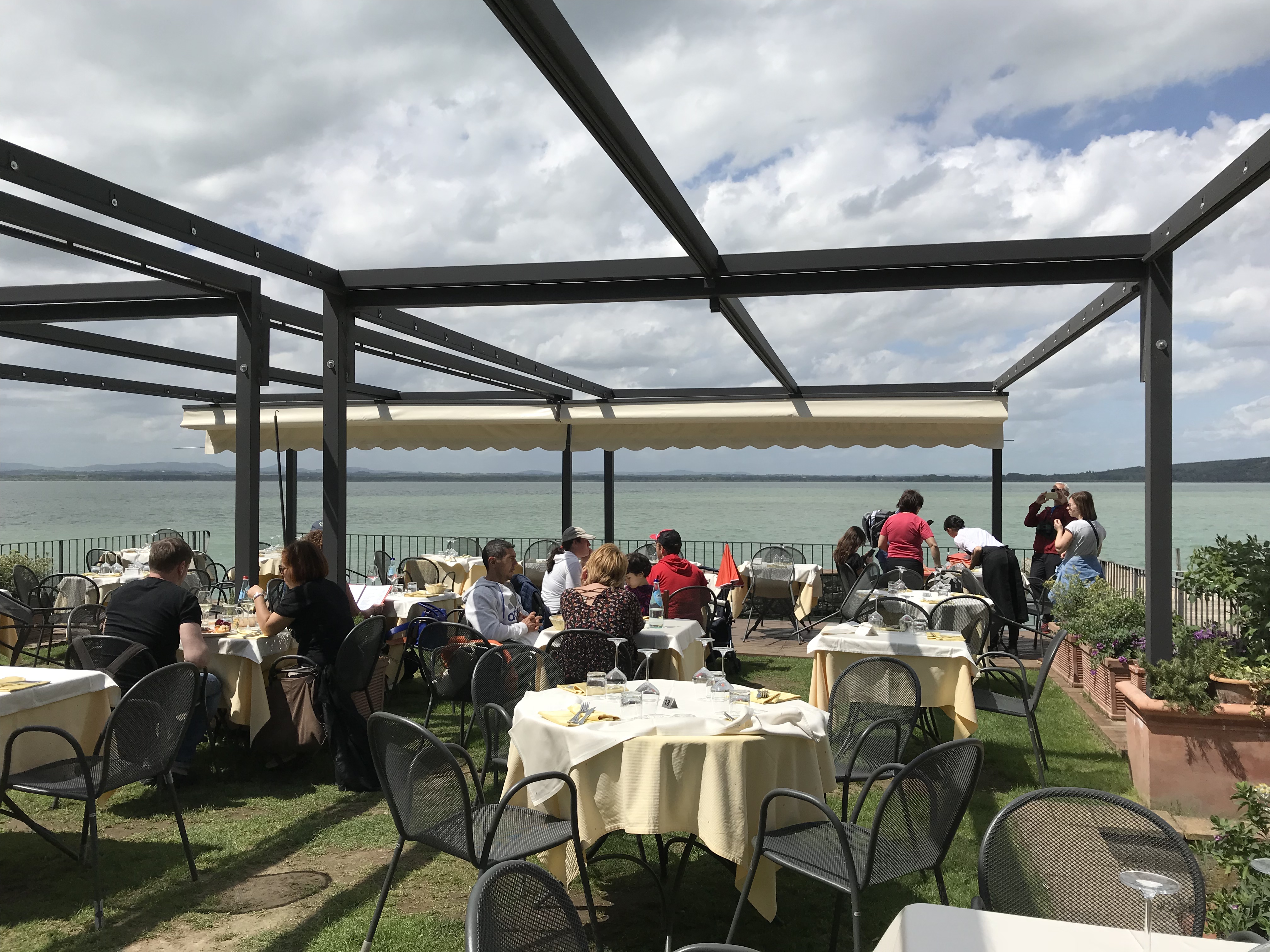
And then the lunch.

Restaurant On The Lake Shore

I’ll promised myself I would eat sensibly today so while the others ordered full course meals, I ate some of the antipasto, and ordered a salad. I tasted the meat and fish meals – a forkful but that was it. The food, again, was delicious. Even with the meagre lunch I ate my evening meal consisted of half a pear. I could face no more food.


More Florence

Sheila and I decided to return to the Piazza Del Duomo again, via Bus route 22, but this time we wandered toward the river through the galleria and leather market.

The Galleria

The Leather Market

The leather goods were sumptuous – I couldn’t resist a pair of bright turquoise lined leather gloves. Sheila was drawn to the handbags.

After browsing through the leather stuff we headed toward the Uffizi. It was one in the afternoon and the Piazza was packed with people (and pigeons).

Piazza Near The Uffizi

There was no point in attempting to enter the Uffizi, the lineups snaked the length of the building. Instead we strolled toward the Fiume Arno and the Ponte Vecchio.

Il Ponte Vecchio

It was interesting to see a heavily armed presence guarding the route:

The Military Presence

The two soldiers in an armoured truck on one side, two young soldiers with assault weapons across the road from it. A determined van driver however could have mowed down many pedestrians before being stopped, the moving crowds were so dense.

Lots of interesting shops on the side streets:

A Glass Shop

I loved the array of colours and shapes on display in this one. Don’t know where the glass was made (quite likely in Venice).

After a number of hours strolling in the sunshine we headed back to a bus stop and back home. We ended the afternoon with some gelato from a shop near our B&B Hotel.

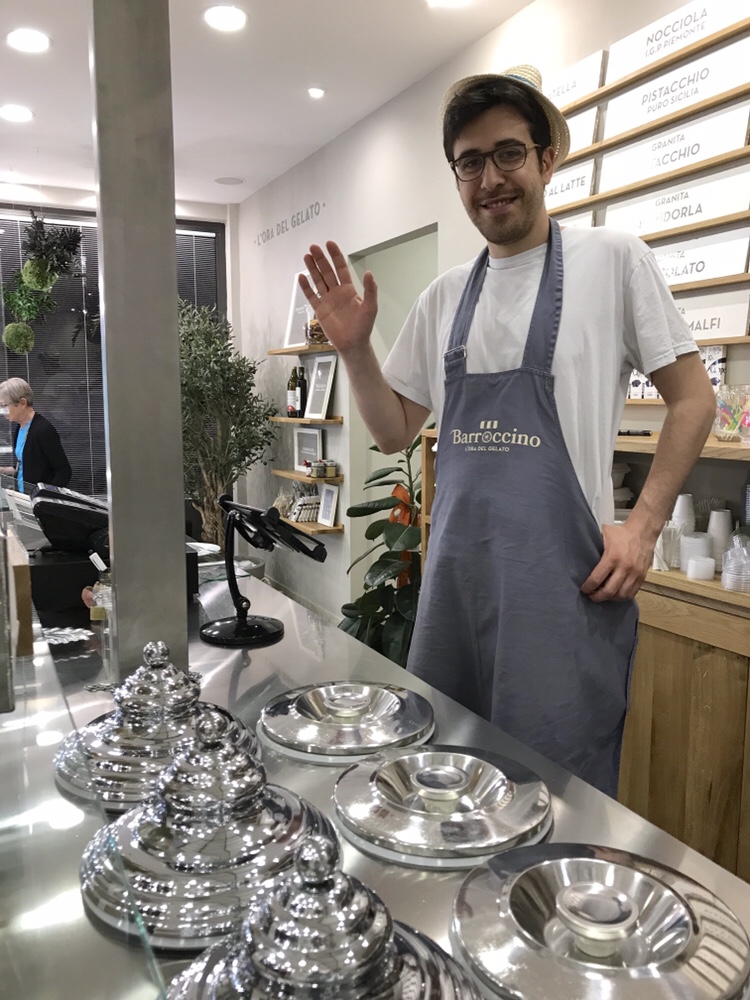
At Gelateria Barroccino

This young man (didn’t get his name) makes wonderful gelato – many flavours, different ones each day. I’ve tried straccitella, nutella, and today cioccolatto.

We ended the day by having dinner with the other women in the group, including Linda who has organized the trip. Tomorrow we head out to Umbria and the alpaca farm, a long winding trip planned to take most of the day. Looking forward to whatever comes next.

Navy Twill Pants

I’m heading to Italy in a week. Two days ago I tried on all my summer weight pants – they ended up in two piles – a small pile of those I could zip up comfortably and a much larger one of pants I’ll have to modify in order to button the waistbands. My navy pants were in the “not wearable” pile.

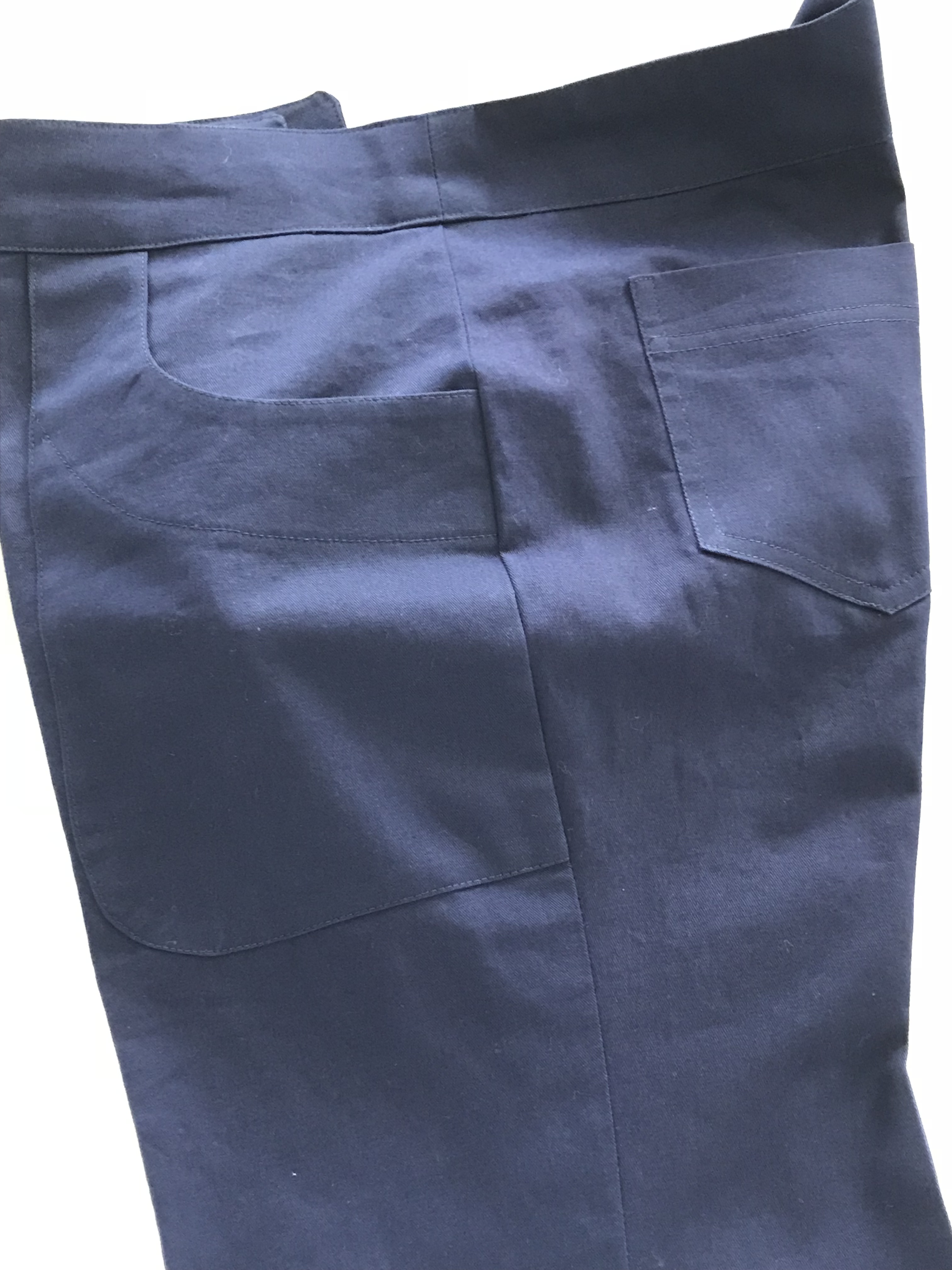
Navy Cotton Twill Pants

So I made a new pair. I knew I’d probably have to make navy pants a couple of months ago so I dug out the navy twill I had in my stash, washed it, and put it aside to work on but didn’t get around to pants-making until yesterday. I used a modification of an old pattern for a culotte adding pockets and reshaping the legs to make a straight leg pant.

Cutting out, adding interfacing, setting up pockets, fly front are all straightforward. The problem with making pants (at least for me) is I have to make them up completely before I can try them on to determine if they actually fit. I cut this pair largish because there was absolutely no give in the width of this fabric and I didn’t want to make the pants too small to fit into. However, they turned out too big in the bum and through the legs. So I did what I’ve done before – put a shaped dart down the centre back of the leg to get rid of much of the fullness below my bum and to narrow the thigh.

The back pockets are typical jeans pockets. I decided not to do inner front pockets – instead I cut out a pocket shape, added a facing to the open edge, then turned under a 1/4″ seam allowance and top stitched the pockets in place on the fronts before they were attached to the back.

I made a couple of further adjustments to the fit today but now the pants are wearable.

Elastic Inserts

OK, so I’ve been procrastinating on the quilt! I’ve been feeling somewhat under the weather but that’s no excuse. I should be working on the quilt.

Yesterday, however, when I sat down to sew, wearing a pair of black corduroy pants I made many years ago (they are still in good condition and fit everywhere except in the waist!) I admitted I was uncomfortable. Over the last couple of years as I’ve grown shorter my waist has grown larger – and the waist in my pants has become tighter and tighter. I can still get the button done up, but the waist is just plain tight. Time to do something about it.

Years ago I came across a very useful article by Kathy Ruddy on how to create elastic inserts. So I took off the pants and got to work.

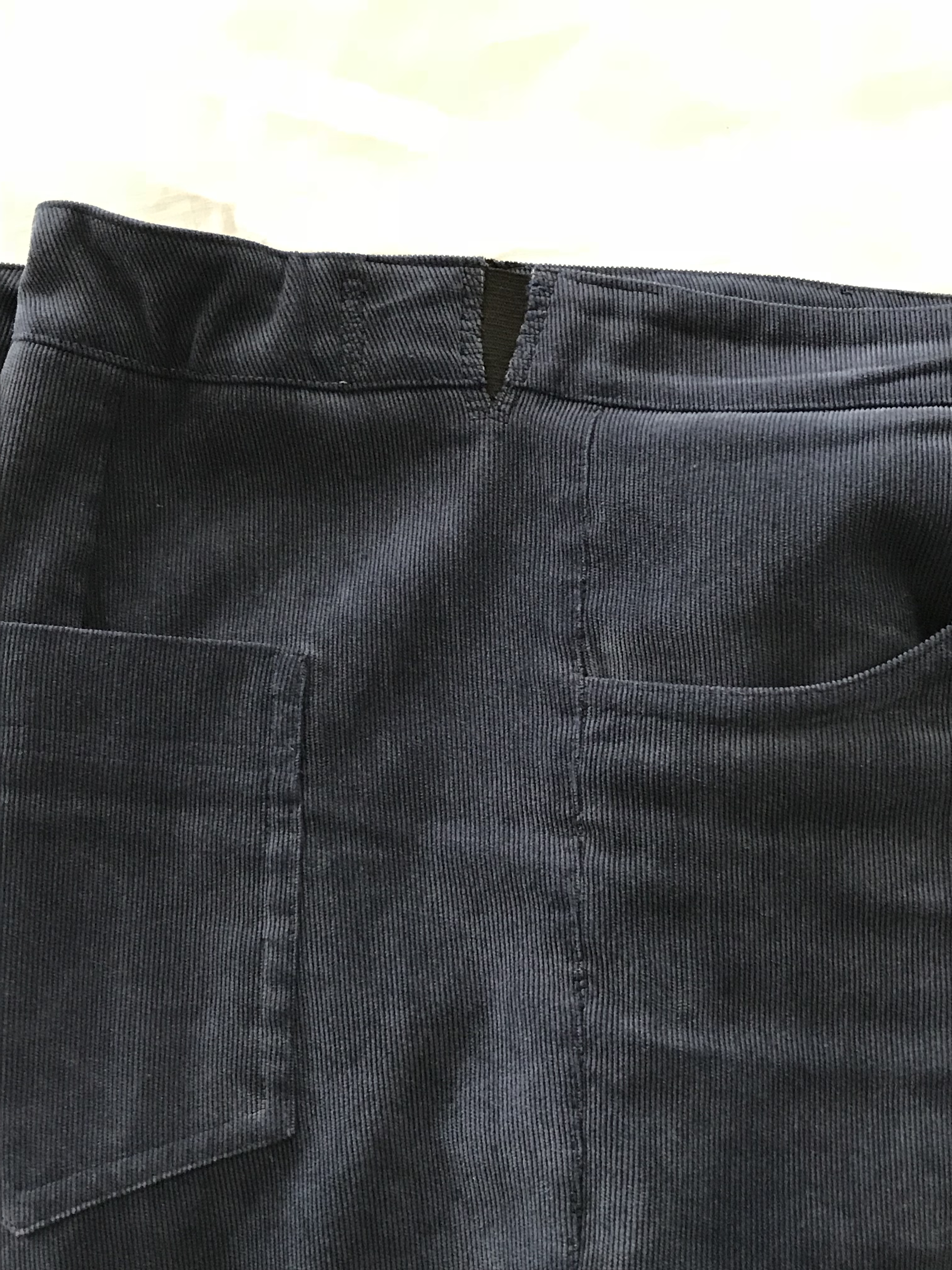
Elastic Inserts

The instructions are for creating elastic inserts while constructing pants. To do an elastic insert in existing pants here’s what I do.

  • Cut the waistband about an inch and a half from the side seam in the back – cutting just a tiny amount below the waistband itself (if you want to open the waist more than, say, an inch on each side then cut deeper into the top of the pants to allow you to spread the waistband further – depending on the depth of the cut you will need wider elastic, obviously – the widest (6″) I’ve been able to find comes from Kathy Ruddy).
  • Using 3″ wide elastic, cut wedges about 2 1/2″ across the top, 1 1/2″ at the bottom, serge the cut sides.
  • Position the top of the waistband against the top of one side of the elastic and stitch, then attach the waistband to the second side, leaving an opening in the elastic wide enough to be comfortable but not so wide as the make the waistband too loose.
  • With the top of the waistband and the elastic in place behind the opening, top stitch (I use a utility stitch because the cut edge is raw and I want to secure it) along both cut edges securing the pants fabric to the elastic.
  • I don’t worry about attaching the elastic on the inside of the pants.

The whole operation took me about 10 minutes. I put the pants back on and I could sit comfortably. So I gathered up the other four pairs of corduroy pants in my closet and did the same to them.

Now I can breath when I’m wearing these pants. Truth be told, I’m going to have to do the same thing to all of my jeans. They all still fit everywhere but in the waist and are more than wearable. No point in tossing them out – I just need to make the adjustment so I can wear them comfortably. And since I wear my sweaters or t-shirts out (not tucked in) my kluge doesn’t show!

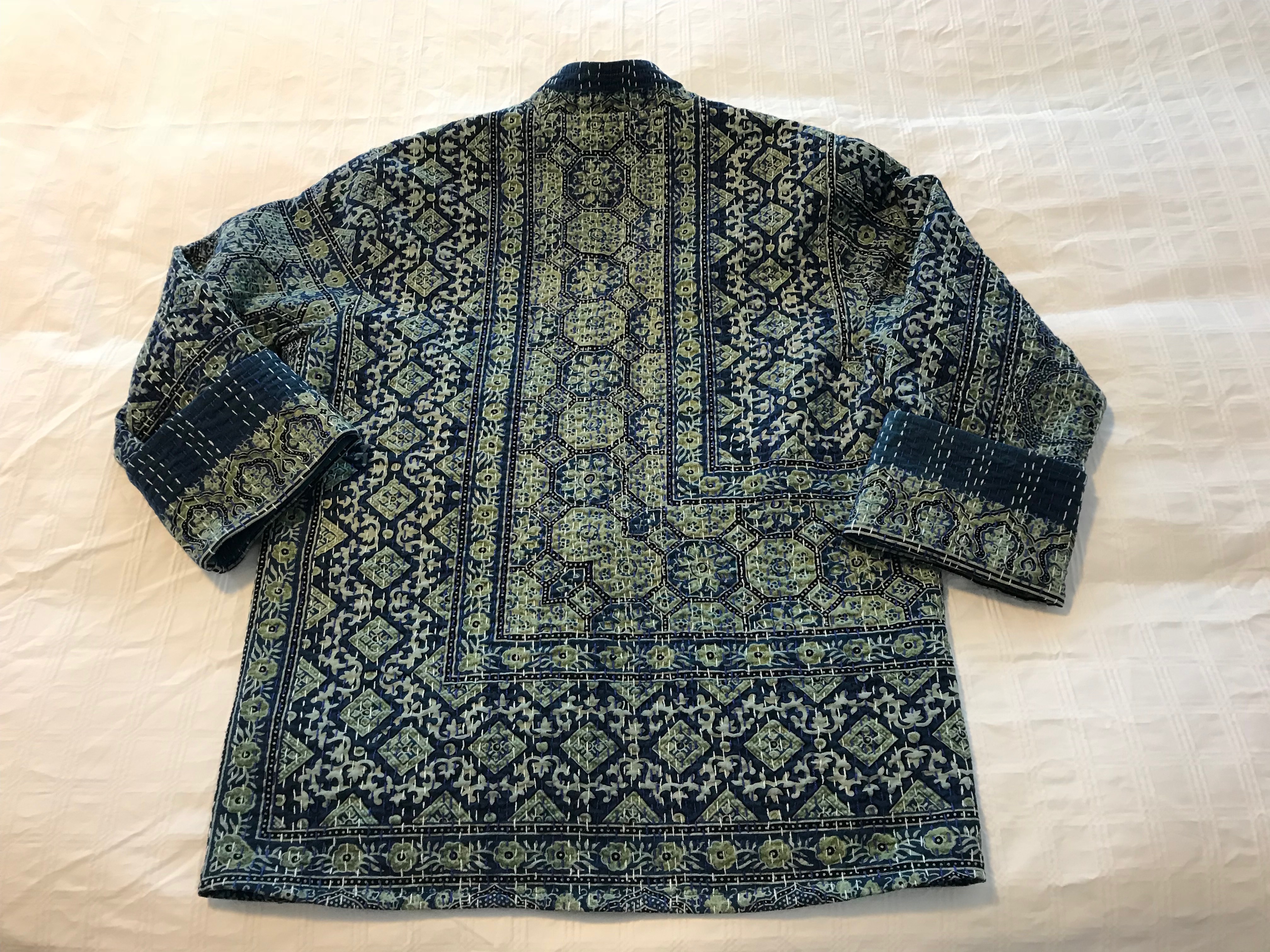
Kantha Jacket – Completed

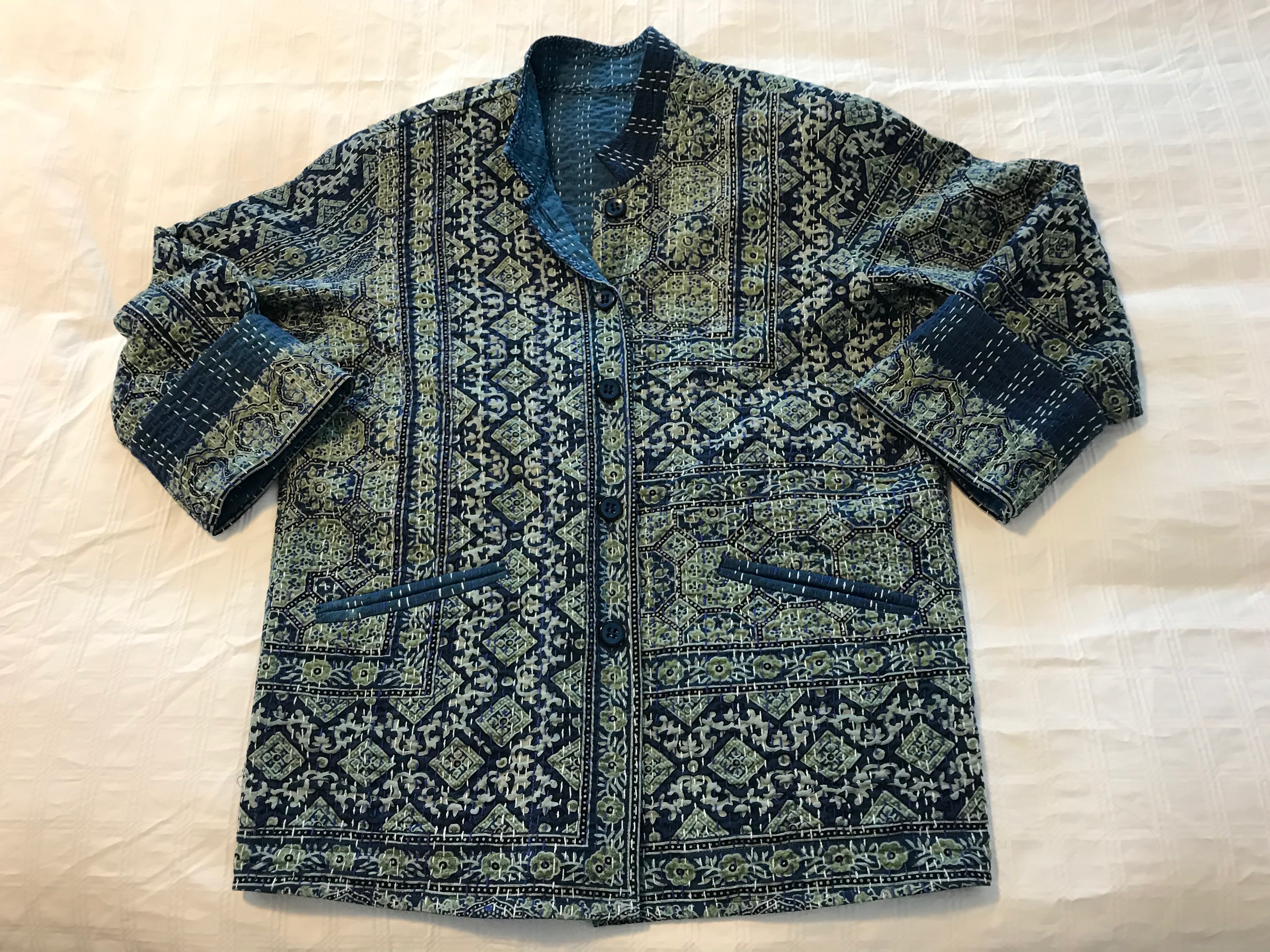
Just finished the jacket. Yesterday, I assembled the double-welt pockets, stitched the shoulders, added the collar, pinned in the sleeves. This morning, I sewed the sleeves in (bound the seams), stitched the sleeve underarm and jacket side seams (bound those seams), and finished with a hidden binding on the bottom edge.

The buttonholes took a bit of crafting – in the end I used a double thread (a black combined with an almost navy) to provide a bit of definition to the buttonholes so they show (a single thread wasn’t really visible). Last the buttons.

Kantha Jacket – Front

Then I tried the jacket on – it fit, but the sleeves were about an inch and a half too long. I removed the cuffs, shortened the sleeves and restitched the cuffs. The sleeves are now a little longer than 3/4 length – I can bring them down by lowering the cuff should I want to.

Here’s the jacket back:

Kantha Jacket – Back

I’m pleased with the result. It fits like the jacket I bought in San Francisco three years ago – a useful addition to my wardrobe.

Double Welt Pocket

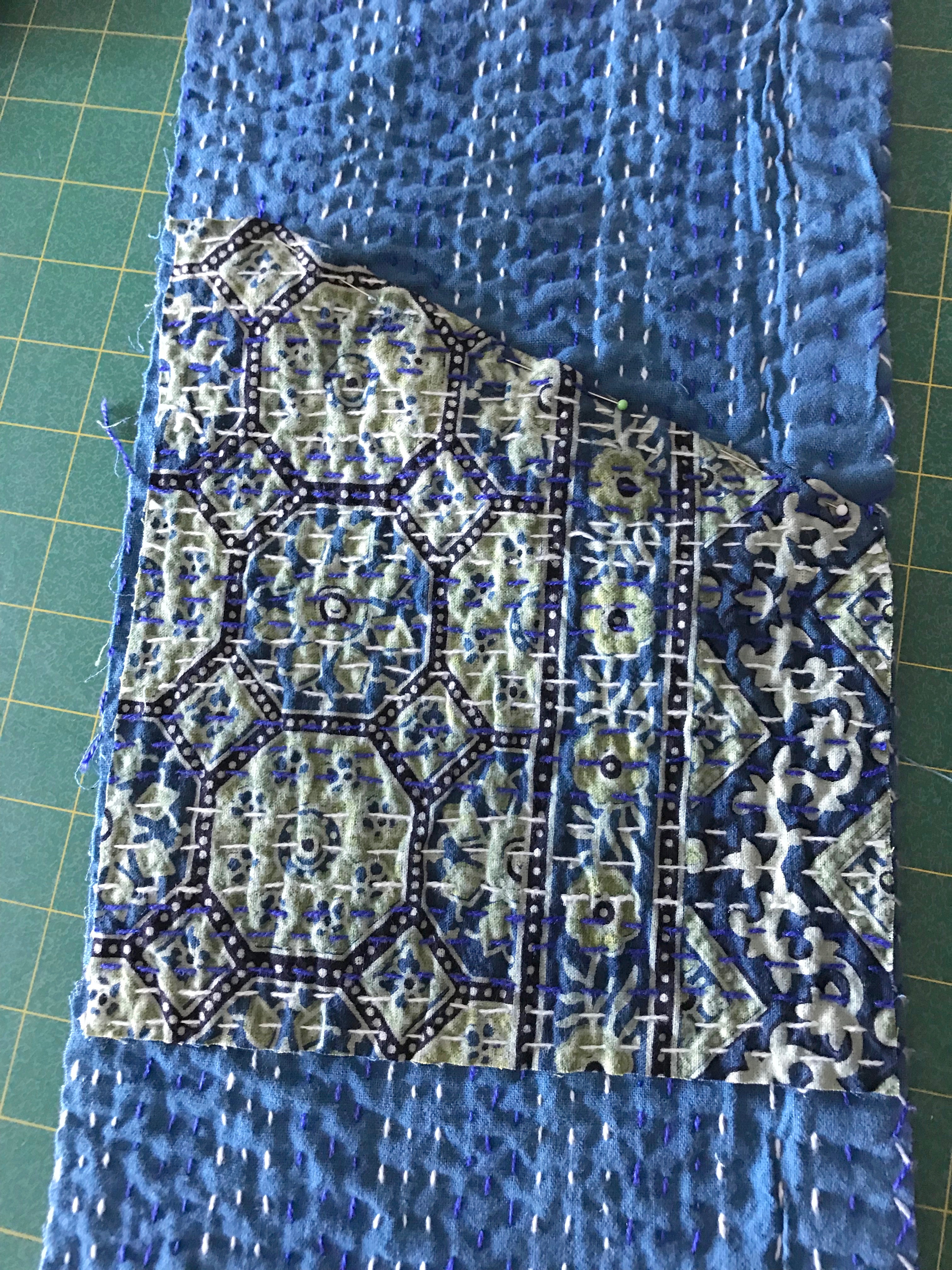
There are lots of ways of constructing a double-welt pocket. I never attempt one without first doing at least one test run! Here’s a sample I mocked up late yesterday.

I want the pocket opening to be on a slight diagonal rather than cutting straight across (this way I can make a wider opening in a shorter width distance). The 1/4″ welts are small but set up a stabilizing contrasting detail against the very busy fabric.

Double Welt – Front of Fabric

In this practice pocket I didn’t interface the welt fabric – I need to do that and I need to use a small (slightly stiff) interfacing on the jacket fabric itself so that the pocket opening is crisp and flat.

A normal double-welt pocket uses a pocket bag – but because I want to use patterned fabric on the inside as an accent to the solid of the reverse of the jacket fabric that won’t work – too much bulk. Instead, I’m going to cut out a single piece for the pocket, do a Hong Kong finish around the edges, attach it to the inside of the top welt fabric, then straight stitch the pocket piece to the front forming the pocket. In addition, I’m going to position the top of the pocket piece to match the angle of the double welt and align the pocket piece on the vertical.

Pocket on Back Side of Fabric

I used the dimensions suggested in Andrea Brown’s tutorial – begin with 7″ x 3″ welt pieces. But the resulting 5″ opening is a tiny bit too narrow. I want to end up with a  6″ opening which might actually bring the pocket to the side seam – or very close to it. But because the welts are small, that should look OK.

Now to add the pockets to the jacket front pieces – easier to do before they’re attached to the jacket than after the parts are sewn together.