Flared Tunic

Came across a pretty poly/viscose knit the other day at Fabricville. Thought it would make up into an attractive flared tunic top.

Flared Knit Tunic

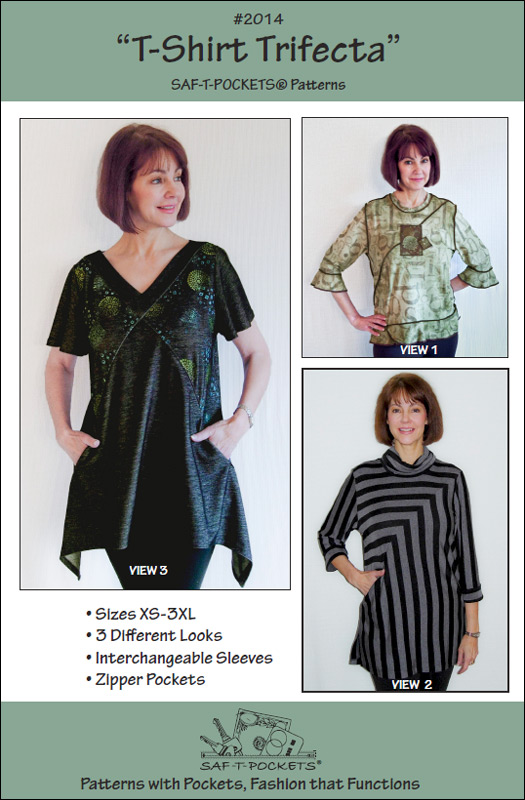
Very simple garment to make – a front, a back, sleeves and a band to finish the neck edge. It’s based on a Marsha McClintock pattern – “T-Shirt Trifecta”

Safe-T-Pockets Pattern

Marsha’s patterns are all about hidden pockets everywhere for travelling. I made up View 2 originally but subsequently attached the diagonal top piece to the bottom and made a single front piece which I later flared a bit more than the pattern since the couple of tunics I made up were just a bit snug through the bum. I sewed the flared single piece front tunic in a black sweater knit last year. It fit well over a pair of jeans.

I’m happy with this latest tunic top which is comfortable and colourful. No pockets, though. To put them in the side seams will drag down the sides once anything is put in them. Same with pockets on the front because the fabric is soft and stretchy. So I have to wear this garment with pants that have pockets so I can carry all the stuff I carry in my pockets!

PS – I bought three more lengths of this poly/viscose fabric (different prints) today ( a half-price sale). Just finished cutting them out. Intending to replace the solid tunic tops I made last year with a fabric that pills like crazy – it needs to be shaved after every wearing. This fabric didn’t pill when I wore the tunic yesterday.

New Clothes

You might think I’ve not been doing much sewing/knitting but I’ve been busy with additions to my wardrobe.

First, a boiled wool jacket using Marcie Tilton’s V8430 jacket:

Marcie Tilton V8430

The boiled wool came from Blackbird Fabrics in Vancouver. I bought the aubergine which I thought would make a warm addition to my wardrobe.

A simple pattern with just two fronts, a back and sleeves which went together easily and because it’s boiled wool I didn’t need to finish edges! In fact there’s a dart at the bottom of the sleeve which is stitched by abutting the two edges and zigzagging it closed – doesn’t show but gives shape to the lower sleeve. I’m still debating whether to do something similar in the middle of the back at the neckline – I’ve a slight rounding of my back at the neck and I think the jacket would fall better in the back were I to make that tweak.

I chose the pattern because I thought the soft folds for the lapels wasn’t something I usually wear and would look “new”.

New Jacket/Sweater and Corduroy Pants – Front

With a new jacket/sweater I thought dark purple cords a good choice – I whipped those up two days ago.

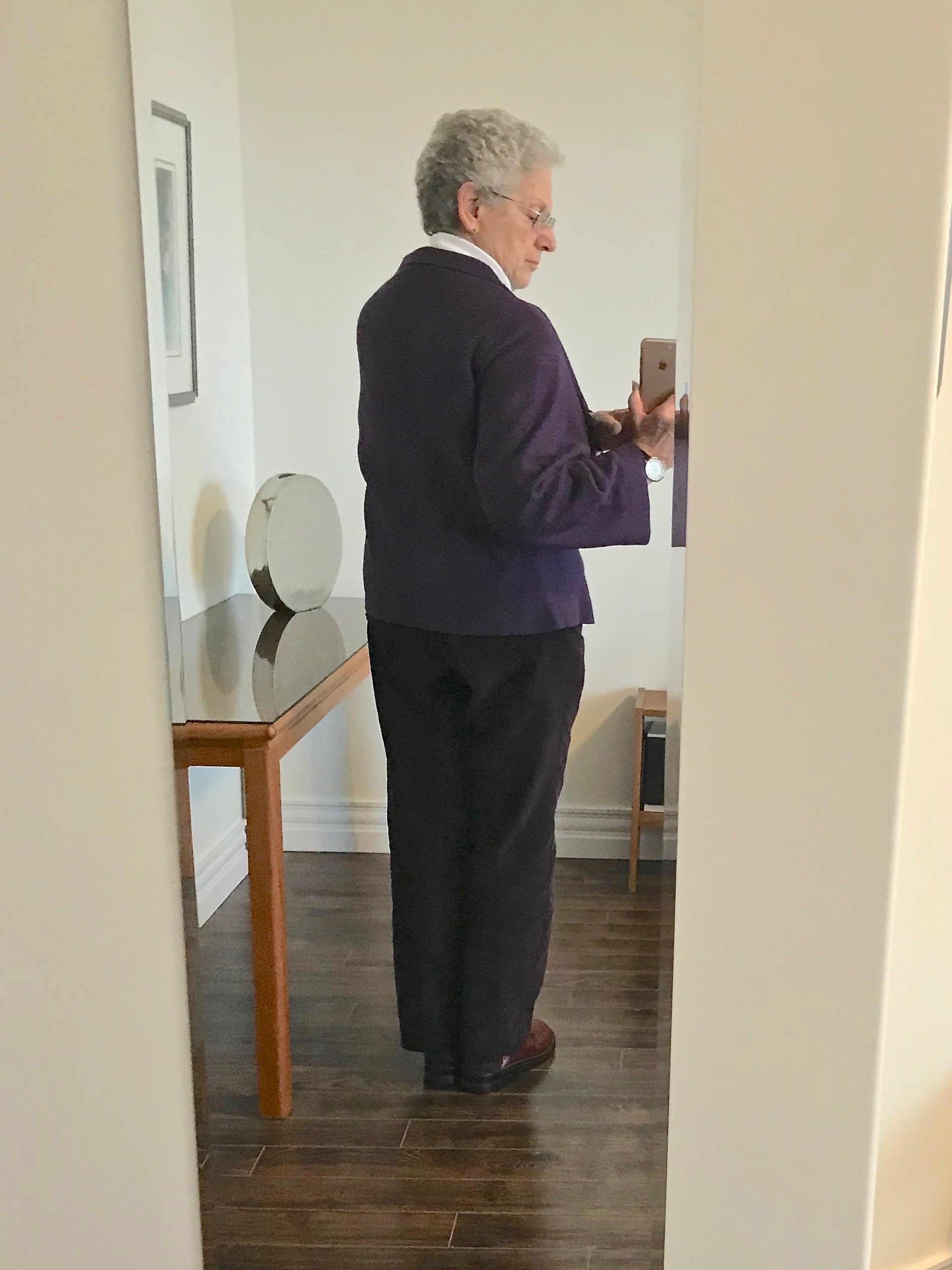
New Jacket/Sweater and Corduroy Pants – Back

Taking pictures myself is extremely difficult – to position the camera involves twisting which causes the pants to show a bit of pull. I had to take the side seams in after I’d finished them – I didn’t take them in as much as I possibly could because I was afraid I wouldn’t be able to sit. I’ll see how they are after I’ve washed them – the fabric was washed before I used it but it will shrink a bit more, I’m sure, with further washing.

I have three more lengths of corduroy to make pants – I’m intending to get to at least one of those this weekend.

Christmas Scarves

Follow my blog with Bloglovin

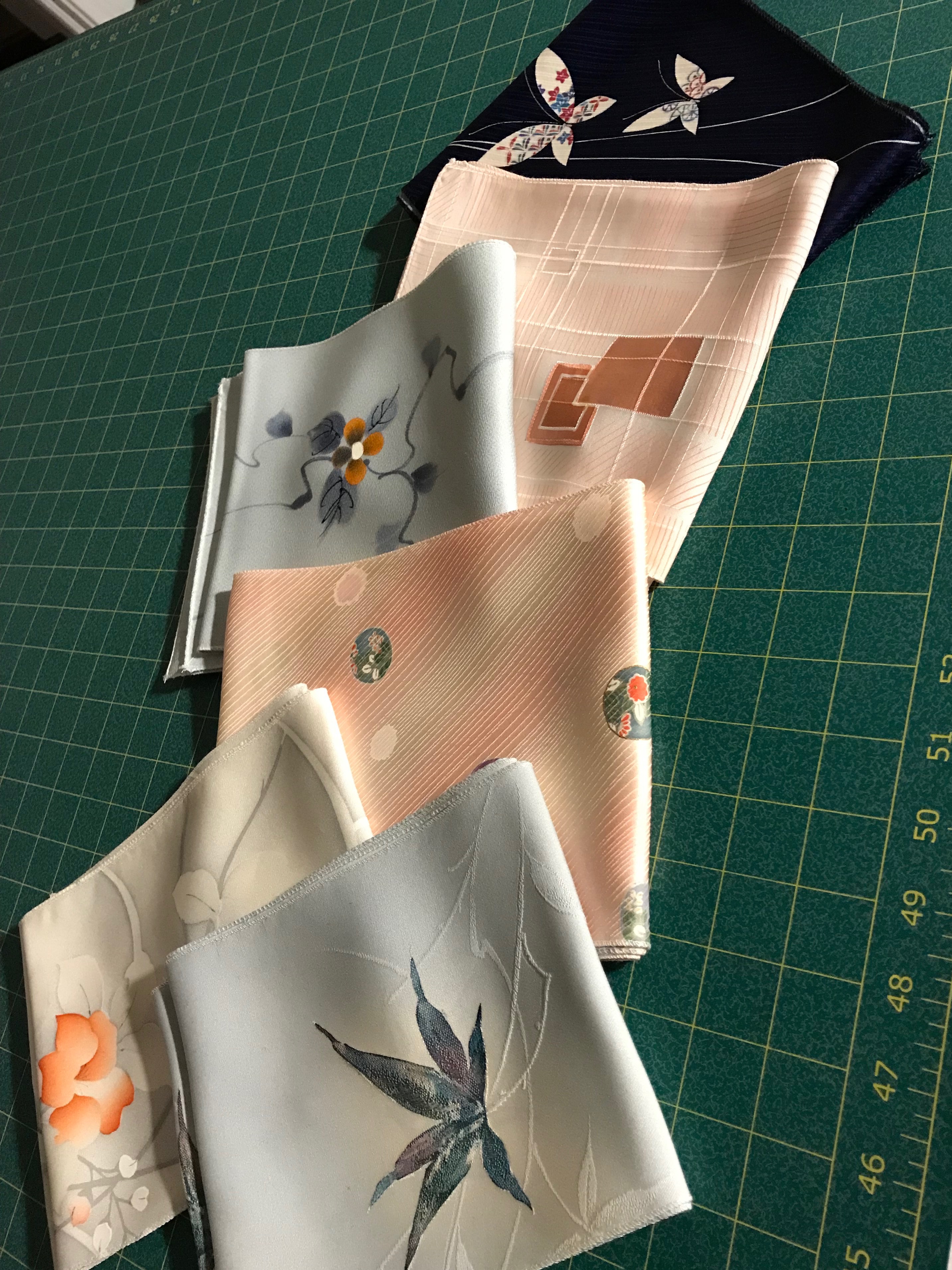
I know Christmas is still two months away but a couple of weeks ago I was thinking about a simple-to-make something for the knitting ladies and other friends. I was looking at Ann Williamson‘s blog – she does beautiful garments and accessories using kimono silk which she buys from Ichiroya in Japan. She had some lovely pieced scarves in her shop – I remembered the kimono silk fabric I bought a couple of years ago. I have nothing specific in mind for the fabric – a while ago I attempted a simple silk jacket but it didn’t turn out well and I tossed it. I decided to use some from each bolt to make silk scarves.

This project isn’t meant to create an expensive, elaborate gift like Ann’s scarves are – just something simple, yet useful. Last year it was shoe bags, the year before zippered bags. Two weeks ago I cut 5′ lengths from each bolt – kimono bolts are 14″ wide by 10-12 yards in length. I split each length down the centre to give me two 7″ scarves.

Yesterday I set up my serger to stitch a narrow rolled hem and got to work – I did ten scarves. Today I completed the second batch of ten.

Silk Scarves

The scarves are long enough to wrap around my neck twice and tie in a loose overhand knot in the front. The silk is soft and smooth and will be warm to fill the neck of a winter coat. I’m pleased with how they turned out.

My next step is to figure out how to make “envelopes” using parchment paper as wrapping for each scarf.

New Wall Art Underway…

This morning I finally stopped procrastinating on the wall art – I found myself starting on two unexpected projects. Yesterday I was going through fabric in my stash looking for fabric for the Federer piece and came across some Hawaiian bark cloth with large floral patterns which I thought could be turned into an interesting raw-edge appliqué piece on a raw natural silk background fabric:

Raw Edge Appliqué using Hawaiian Bark Cloth Floral Cut-outs

I cut the fabric in thirds, isolating one repeat of the pattern, fused Heat ‘N Bond Featherlite fusible web to the back of the fabric, fussy cut the flower/leaves elements, then fused them to a panel of natural raw silk (backed with Warm ‘n Natural quilt batting).

Now I need to go through my embroidery threads and pick out colours to use for securing and thread painting the raw-edge fabric elements.

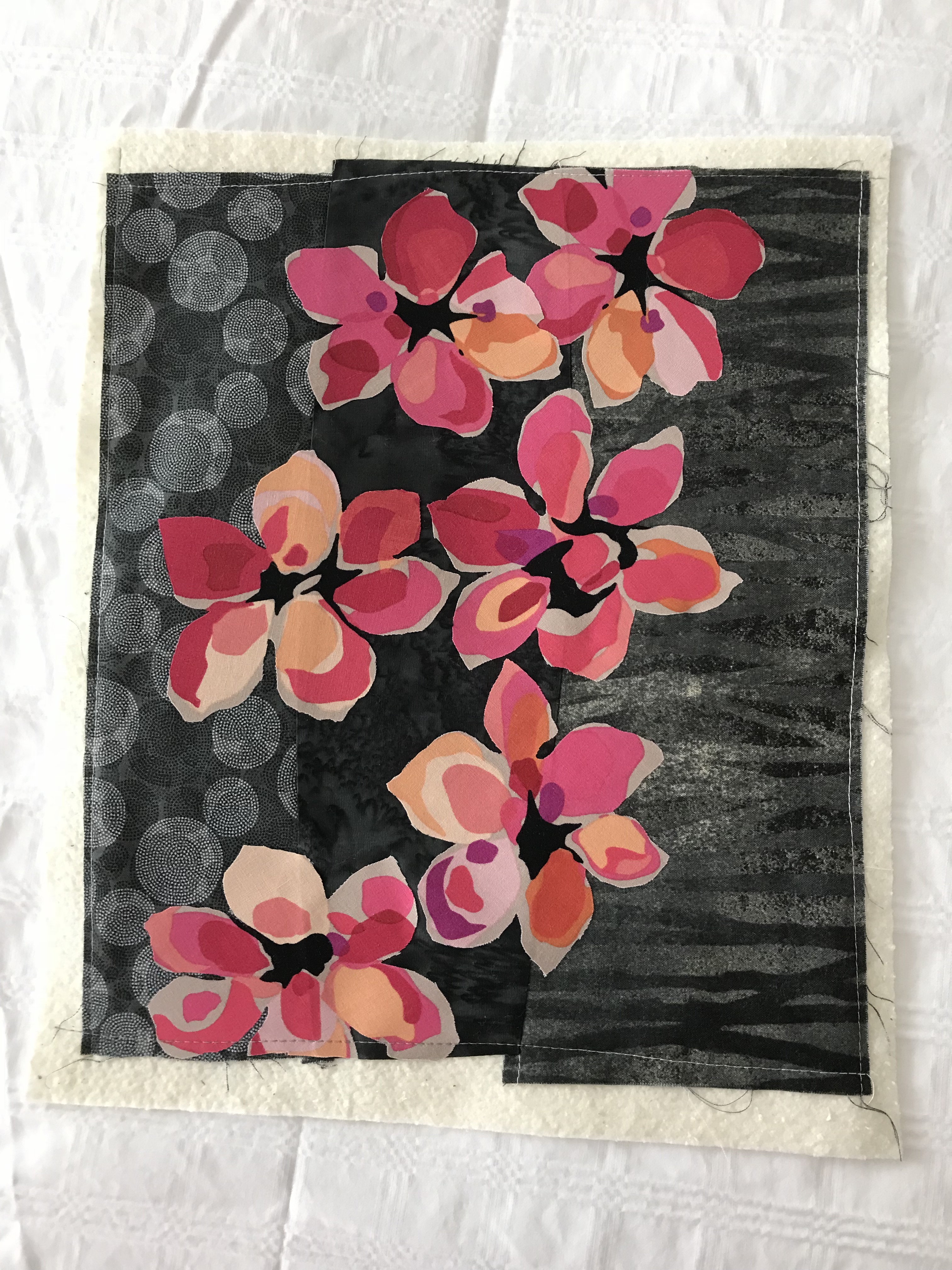
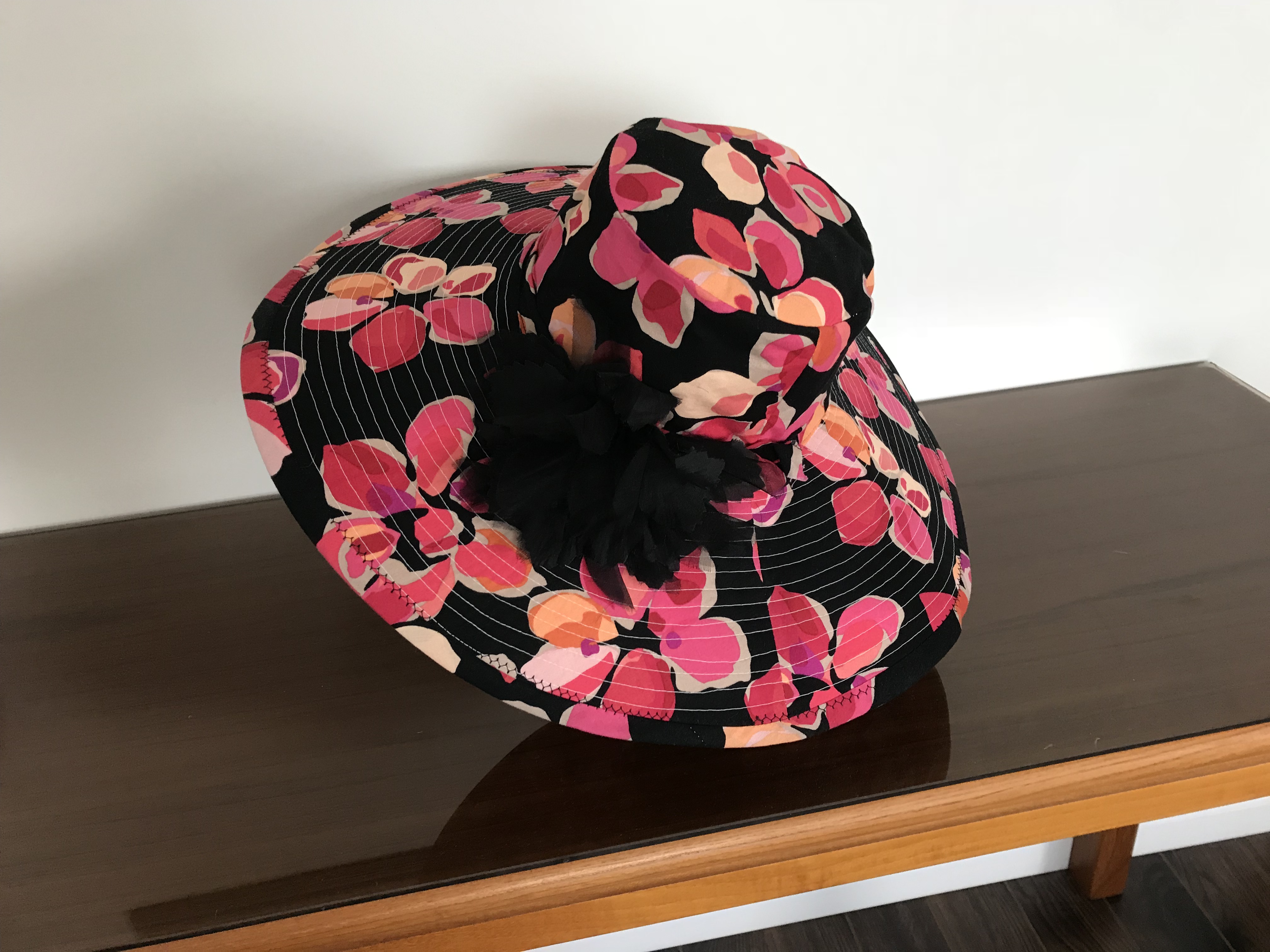
I also got a second piece underway – I had a small leftover scrap of a modern floral which I’d used years ago to make a wide-brimmed summer hat. I thought the cut out flowers, placed randomly on a pieced background, would be an interesting vehicle for thread painting – I started that this afternoon. This piece will finish around 10″ x 12″ – it’s a test run to see where this idea can take me.

Raw Edge Appliqué – Modern Flowers on Pieced Background

So I’ve got two pieces to work on and maybe I’ll make some progress by the end of the weekend!

Wide-brim Summer Hat

[Here are instructions for making this wide-brim hat, if you’re interested.]

An Aside – A Simple Lined Grab Bag

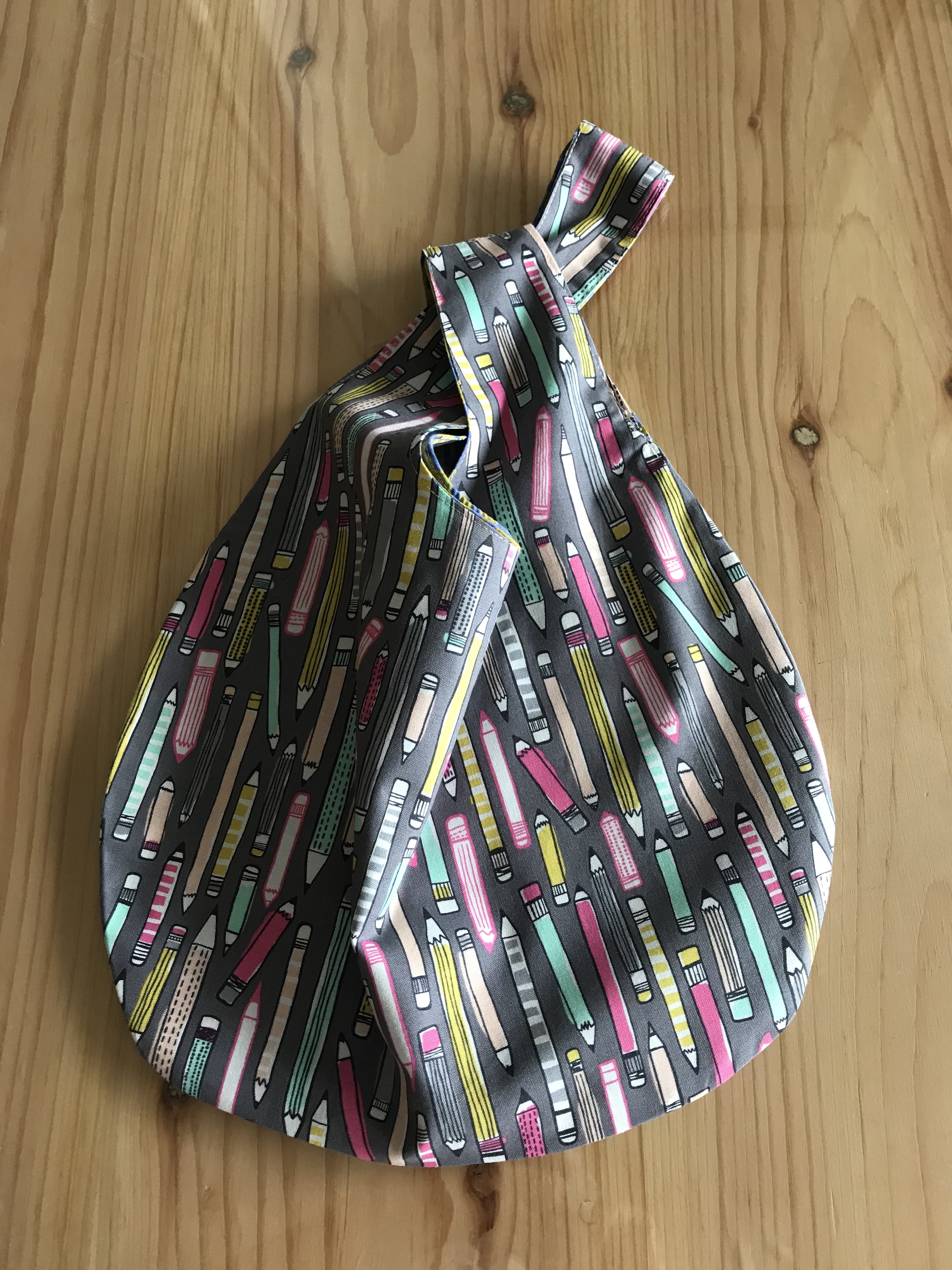
A couple of days ago I happened across mention of a smallish fabric grab bag. Not sure why I bothered to read the piece but I did. I downloaded the template, printed it, cut it out, and thought it might be worth a try. I’m on the lookout for something to make as a small Christmas gift for the gals in the knitting group – this bag was worth putting in my ideas collection.

Simple Lined Grab Bag

Since I try sewing/making something every day this was an easy/fast half-hour project. I hadn’t kept the instructions so actually constructing the double-layer bag took longer than it should have and this first (maybe only) bag is not as neatly finished as it might have been but I thought construction was obvious – it wasn’t quite, there are a couple of twists and turns, but in the end I rectified my mistakes and completed the bag.

So here is my grab bag. It’s a good size for carrying a small knitting or hand sewing project. The problem with it as a mass produced gift is that it’s on the expensive side – in it’s simplest version (just two layers of fabric) it uses half a metre of each fabric (with useable scraps left over). Unless you happen on a good fabric sale I’d be making a sizeable investment were I to make, say, twenty of them given the cost of good cotton fabric these days. However, if you’re looking for something quick to make to give as a small gift you might find this grab bag worth your attention.

BTW: I left out the batting and didn’t bother with the inner pockets – just the bare grab bag.

Navy Twill Pants

I’m heading to Italy in a week. Two days ago I tried on all my summer weight pants – they ended up in two piles – a small pile of those I could zip up comfortably and a much larger one of pants I’ll have to modify in order to button the waistbands. My navy pants were in the “not wearable” pile.

Navy Cotton Twill Pants

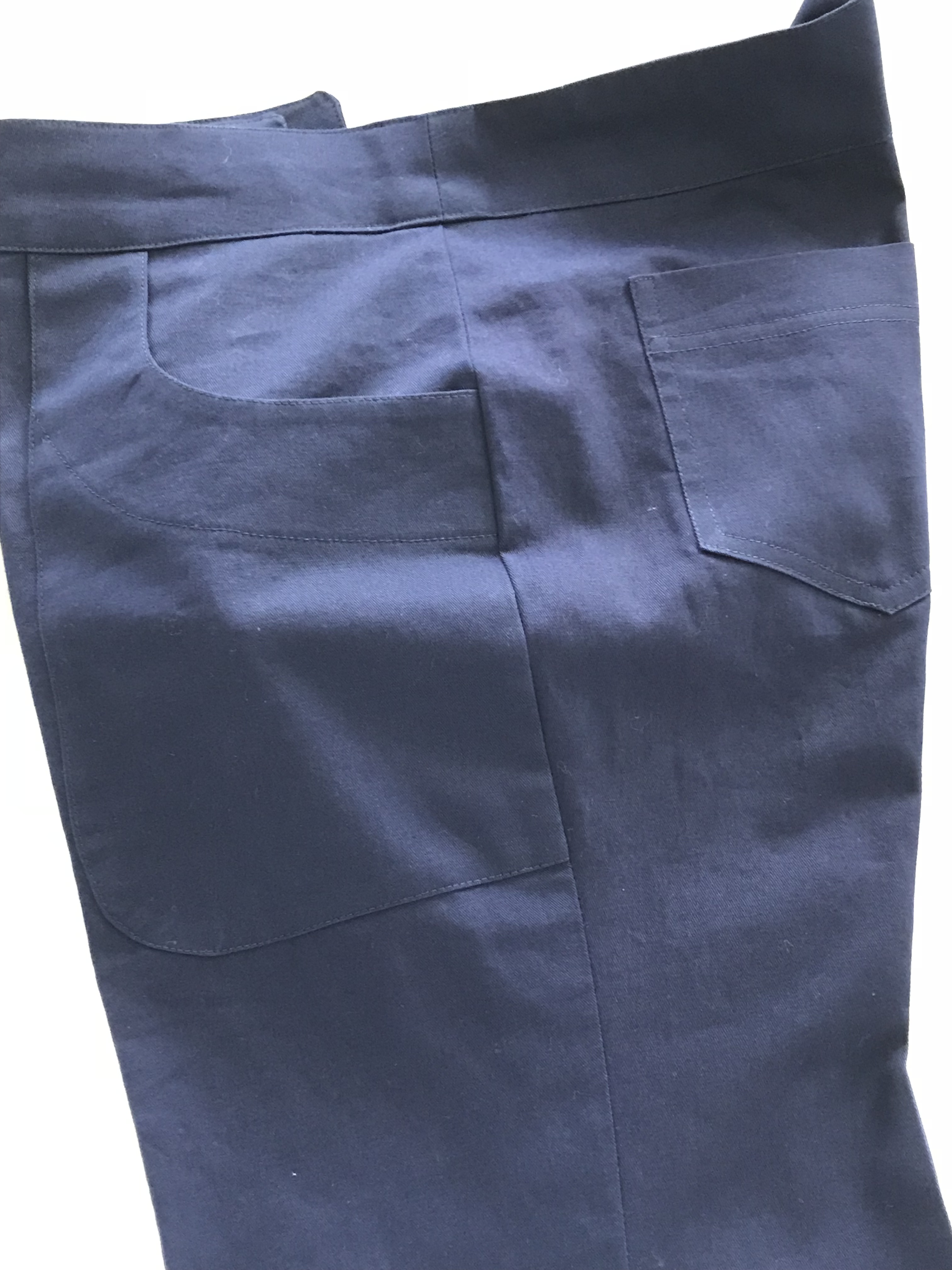
So I made a new pair. I knew I’d probably have to make navy pants a couple of months ago so I dug out the navy twill I had in my stash, washed it, and put it aside to work on but didn’t get around to pants-making until yesterday. I used a modification of an old pattern for a culotte adding pockets and reshaping the legs to make a straight leg pant.

Cutting out, adding interfacing, setting up pockets, fly front are all straightforward. The problem with making pants (at least for me) is I have to make them up completely before I can try them on to determine if they actually fit. I cut this pair largish because there was absolutely no give in the width of this fabric and I didn’t want to make the pants too small to fit into. However, they turned out too big in the bum and through the legs. So I did what I’ve done before – put a shaped dart down the centre back of the leg to get rid of much of the fullness below my bum and to narrow the thigh.

The back pockets are typical jeans pockets. I decided not to do inner front pockets – instead I cut out a pocket shape, added a facing to the open edge, then turned under a 1/4″ seam allowance and top stitched the pockets in place on the fronts before they were attached to the back.

I made a couple of further adjustments to the fit today but now the pants are wearable.

Kantha Jacket – Completed

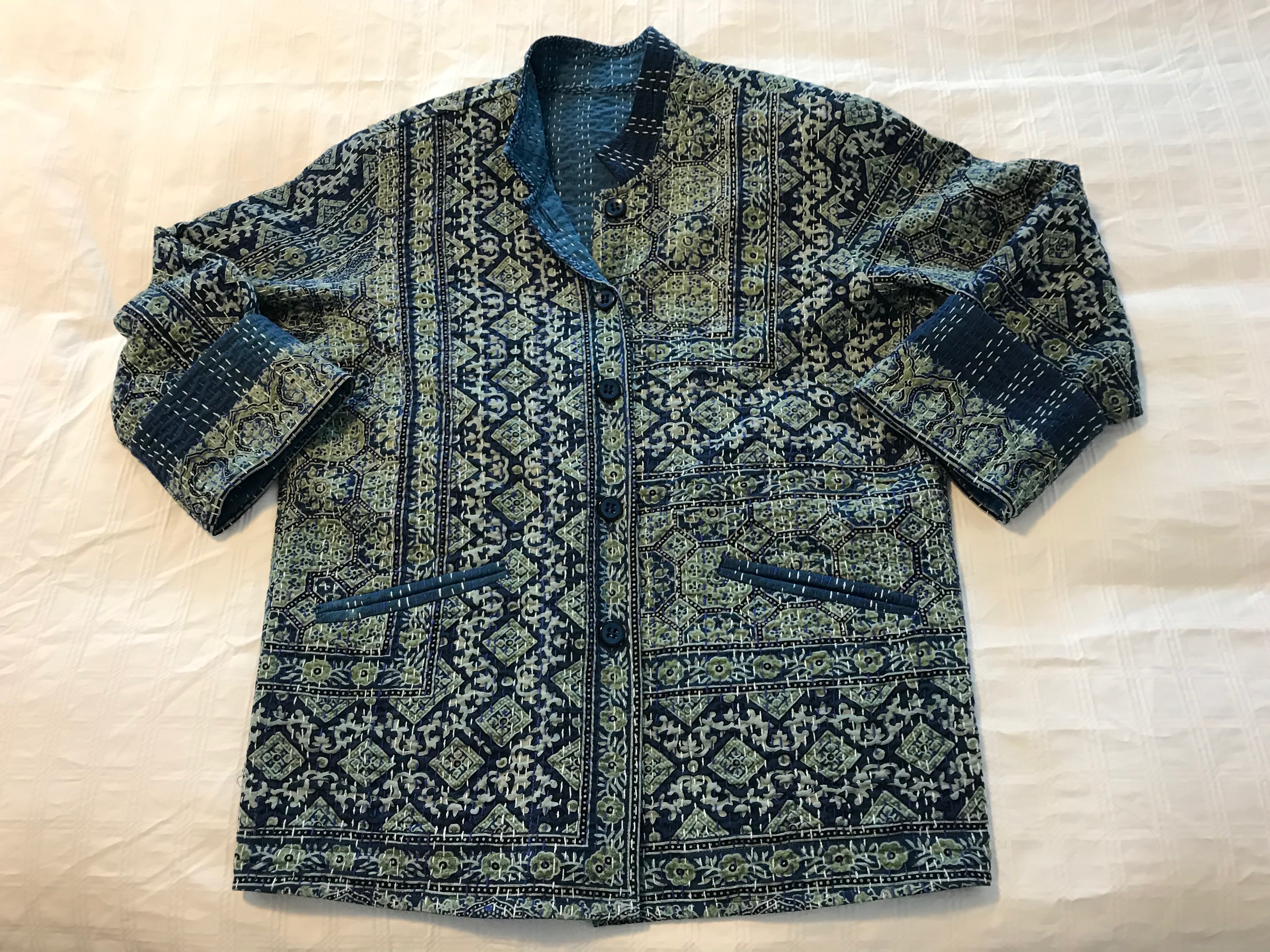
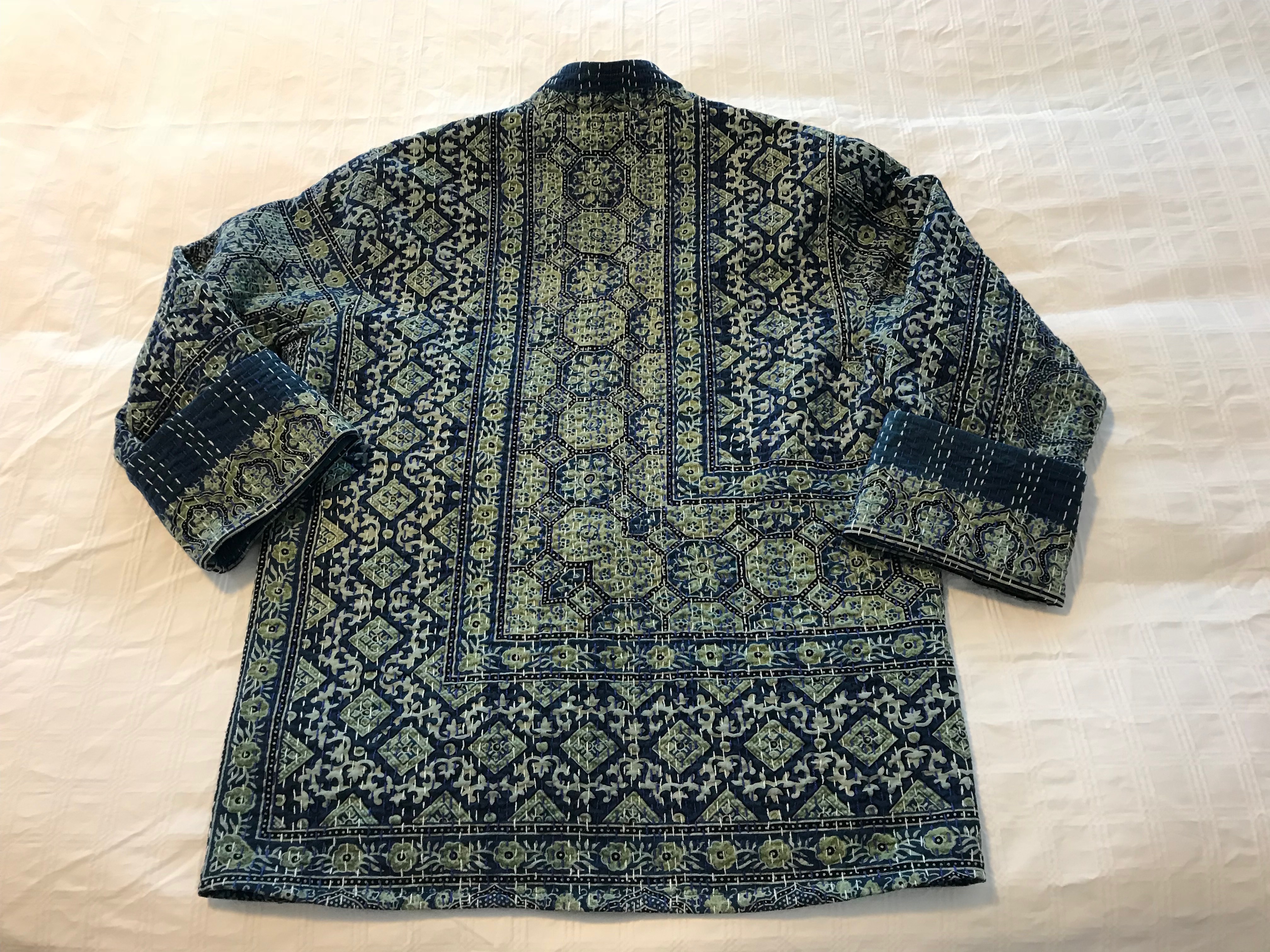
Just finished the jacket. Yesterday, I assembled the double-welt pockets, stitched the shoulders, added the collar, pinned in the sleeves. This morning, I sewed the sleeves in (bound the seams), stitched the sleeve underarm and jacket side seams (bound those seams), and finished with a hidden binding on the bottom edge.

The buttonholes took a bit of crafting – in the end I used a double thread (a black combined with an almost navy) to provide a bit of definition to the buttonholes so they show (a single thread wasn’t really visible). Last the buttons.

Kantha Jacket – Front

Then I tried the jacket on – it fit, but the sleeves were about an inch and a half too long. I removed the cuffs, shortened the sleeves and restitched the cuffs. The sleeves are now a little longer than 3/4 length – I can bring them down by lowering the cuff should I want to.

Here’s the jacket back:

Kantha Jacket – Back

I’m pleased with the result. It fits like the jacket I bought in San Francisco three years ago – a useful addition to my wardrobe.

Double Welt Pocket

There are lots of ways of constructing a double-welt pocket. I never attempt one without first doing at least one test run! Here’s a sample I mocked up late yesterday.

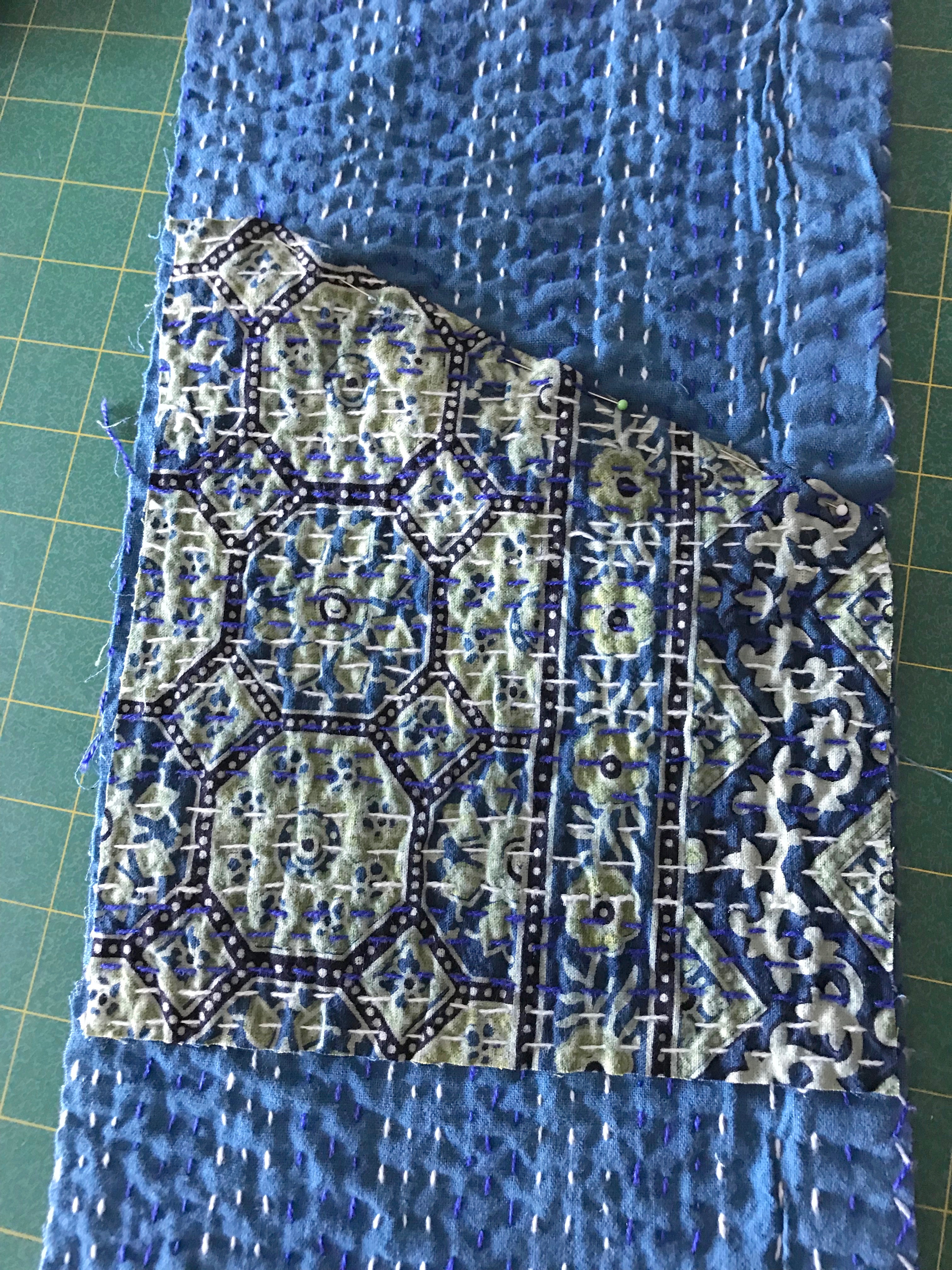
I want the pocket opening to be on a slight diagonal rather than cutting straight across (this way I can make a wider opening in a shorter width distance). The 1/4″ welts are small but set up a stabilizing contrasting detail against the very busy fabric.

Double Welt – Front of Fabric

In this practice pocket I didn’t interface the welt fabric – I need to do that and I need to use a small (slightly stiff) interfacing on the jacket fabric itself so that the pocket opening is crisp and flat.

A normal double-welt pocket uses a pocket bag – but because I want to use patterned fabric on the inside as an accent to the solid of the reverse of the jacket fabric that won’t work – too much bulk. Instead, I’m going to cut out a single piece for the pocket, do a Hong Kong finish around the edges, attach it to the inside of the top welt fabric, then straight stitch the pocket piece to the front forming the pocket. In addition, I’m going to position the top of the pocket piece to match the angle of the double welt and align the pocket piece on the vertical.

Pocket on Back Side of Fabric

I used the dimensions suggested in Andrea Brown’s tutorial – begin with 7″ x 3″ welt pieces. But the resulting 5″ opening is a tiny bit too narrow. I want to end up with a  6″ opening which might actually bring the pocket to the side seam – or very close to it. But because the welts are small, that should look OK.

Now to add the pockets to the jacket front pieces – easier to do before they’re attached to the jacket than after the parts are sewn together.

Kantha Jacket

Last spring in San Francisco, Sheila and I visited Gumps. At the front of the store was a rack of lovely casual bright print jackets by Meiko Mintz constructed out of Indian Kantha cloth. I didn’t bother trying them on – the price deterred me. The jackets were something I could easily make for myself (if I could ever find the quilted Kantha cloth).

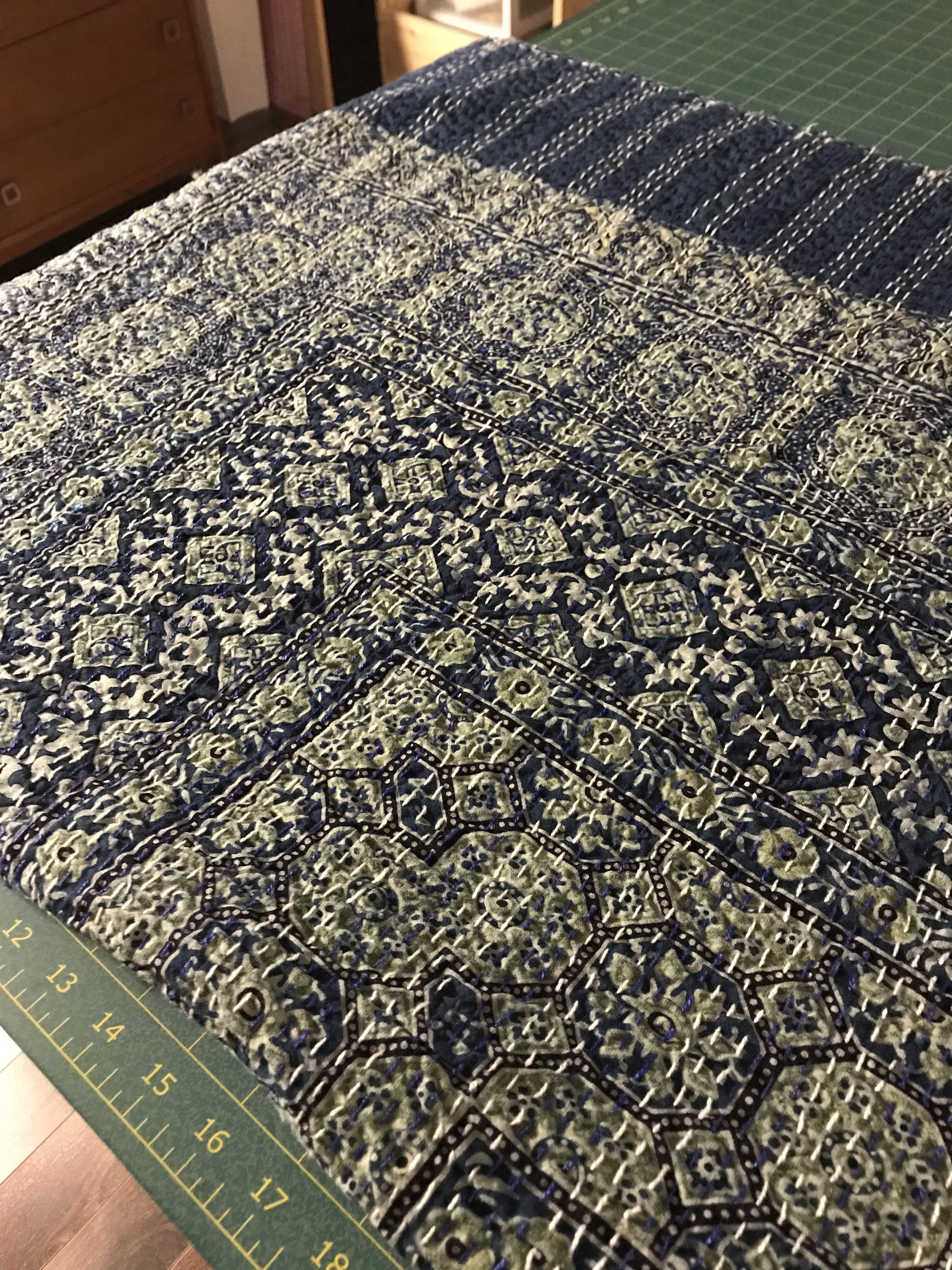
A couple of weeks ago, I came across an inexpensive king-size Kantha bedspread on Amazon which I ordered. It arrived amazingly fast – within 10 days. More than enough fabric to make a jacket.

Kantha King-Size Bedspread (folded in half)

First it had to be washed… I thought about the process for more than a week – I knew the indigo (or whatever dark blue dye had been used) would run and likely kill the white stitching which I didn’t want to happen.

I was able to fit the large bedspread in my home washing machine. I added colour collector sheets to the wash.
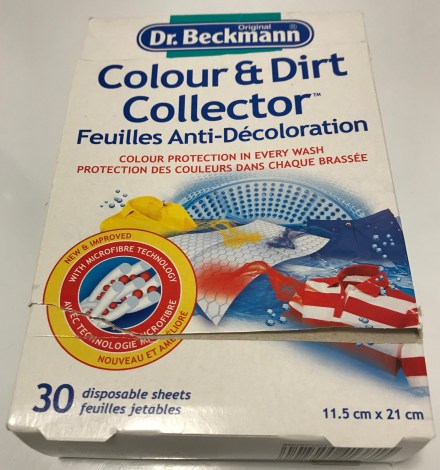
Colour Collector Sheets

I used four just to make sure I would catch as much loose colour as possible. I added some Oxyclean (to get rid of whatever dirt was in the fabric), and an unscented detergent to cool water. (I probably should have added a cup of vinegar but I wasn’t sure how it would react with the Oxyclean – I will hand wash the jacket with added vinegar once it’s done to stabilize the colour before wearing it).

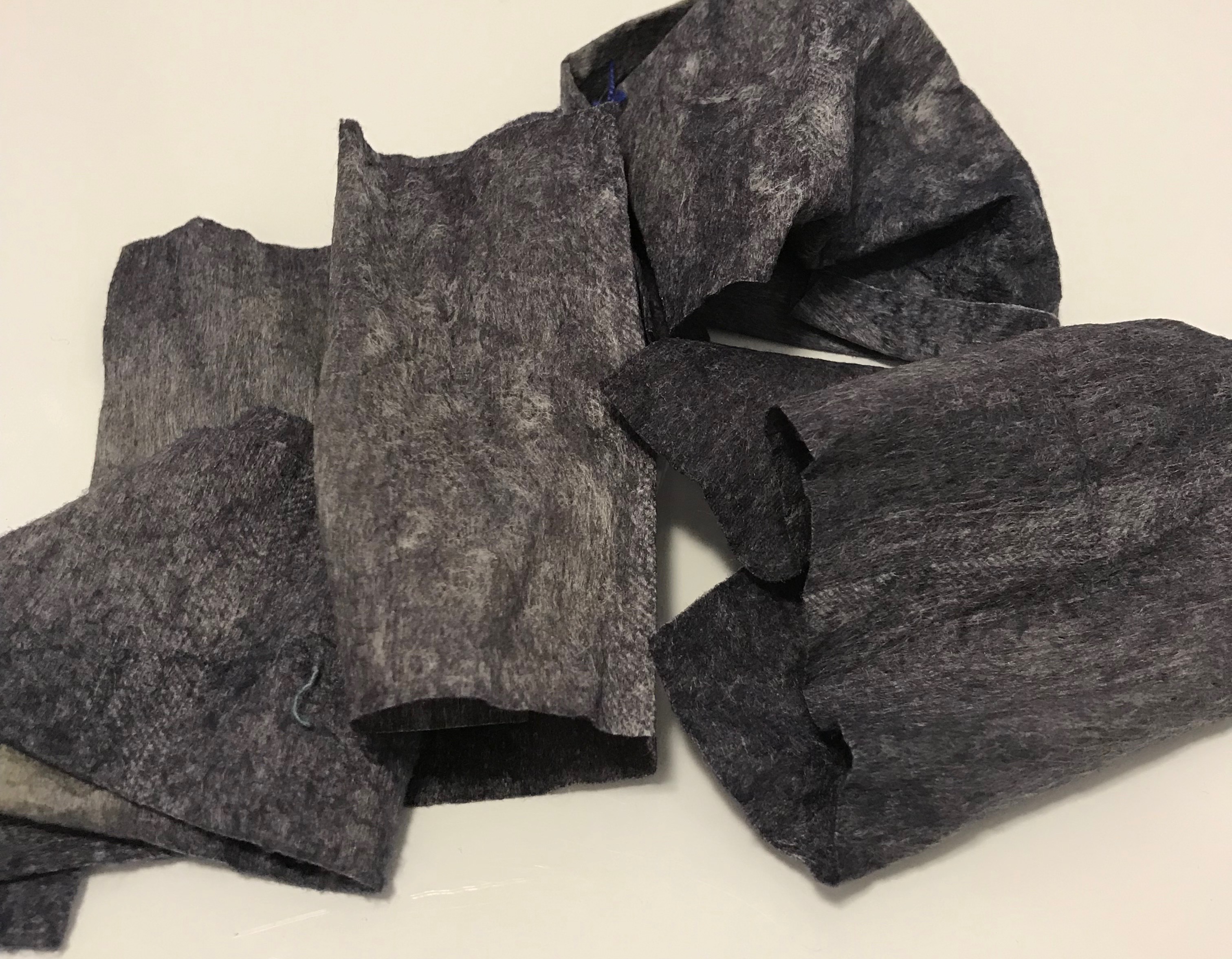
I caught a LOT of dye:
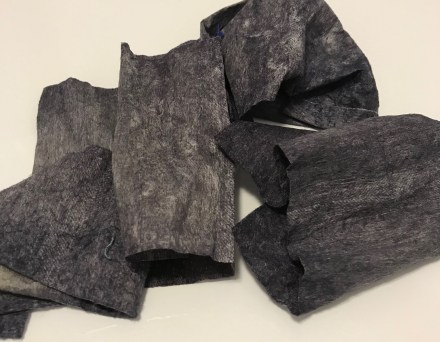
Colour Collector Sheets – After Washing

I started the garment by making a pattern from an existing jacket (which I happen to have bought at Gumps three years ago). A simple style with a Mandarin collar, turned up sleeves, pockets (too small to be useful – mine will be quite a bit larger). The thing about the jacket, which is reversible, is it’s finished with a hidden binding. Because my fabric is already quilted I will do a hidden binding finish using a batik that complements the plain fabric on the back of the bedspread fabric.

Here’s the jacket cut out and ready to begin sewing (I’ve already added the turned up cuffs to the sleeves – I constructed them separately and attached them to the sleeves so the print shows when the cuff is rolled back).

Jacket Front – Cut Out

Because of the way I’ve incorporated the the fabric detail, large patch pockets would obscure the design. Instead I’m going to make double welt pockets and use a single layer of printed fabric for the pocket on the inside of the jacket, blind binding the pocket fabric, then stitching it to the front, leaving just the double welt showing on the outside of the jacket. I’m still not sure whether I want to add a solid, darker blue strip to the bottom of the jacket – I have enough fabric to do that, although it would be an add-on and an extra seam – still thinking about that.

The finished jacket will be just a single layer, with machine stitched buttonholes. I’ve so far not looked for buttons – have to check my button collection before I go shopping.

More as the project unfolds over the weekend.
Sewing Tools Organizer – Finished

Here it is – just completed. A tiny bit wider than the original tools organizer but I was reluctant to make it narrower since I wasn’t sure how much width I was going to lose when I added in the zipper sides. Big-ish isn’t a problem, too small would have been.

So you can see the welted zipper opening on the front. What isn’t obvious is my name in the lower right – I chose the wrong colour embroidery thread! Instead of the lime green I should have used a golden orange (up close you can see the name, it just doesn’t hit you in the face).

New Exterior Case

The pattern (which I linked to yesterday – scroll down the blog entry) was helpful for dimensions and some overall construction suggestions, but because I wanted elements between outer and inner fabrics I couldn’t quilt the pieces and had to carefully think my way through construction. Not having the outer and lining fabrics on the sides not quilted was a bonus – it helped with zipper installation because I could apply the zipper to the outer fabric, then add the lining enclosing the zipper seams.

Applying the binding was a slow process – having to stitch through anywhere from 8-12 layers of fabric meant I needed to take my time although the machine handled the job perfectly well (with a new sharp universal 90 needle). In the end, I’m happy with how the binding turned out.

Here’s the interior:

Interior With Tool Pages From Original Organizer

The point of this project was to create a new case for the tools organizer – the original “pages” of pockets were fine – they just needed a new cover. Since the pattern has directions for making these pages, I may actually attempt one more – the cover is loose enough to accommodate another. What isn’t visible are the two pockets on the inside of the organizer covers – one zippered, one closed with some velcro.

Although I suspect many of the sewing ladies at Sew With Vision would be interested in making an organizer for themselves I have a feeling the sewing around these small round corners to apply binding is more difficult than many of them would be willing to attempt. I’ll take my organizer into the shop to show it off and ask what that the staff think.

Don’t know what’s next.