Today’s Project


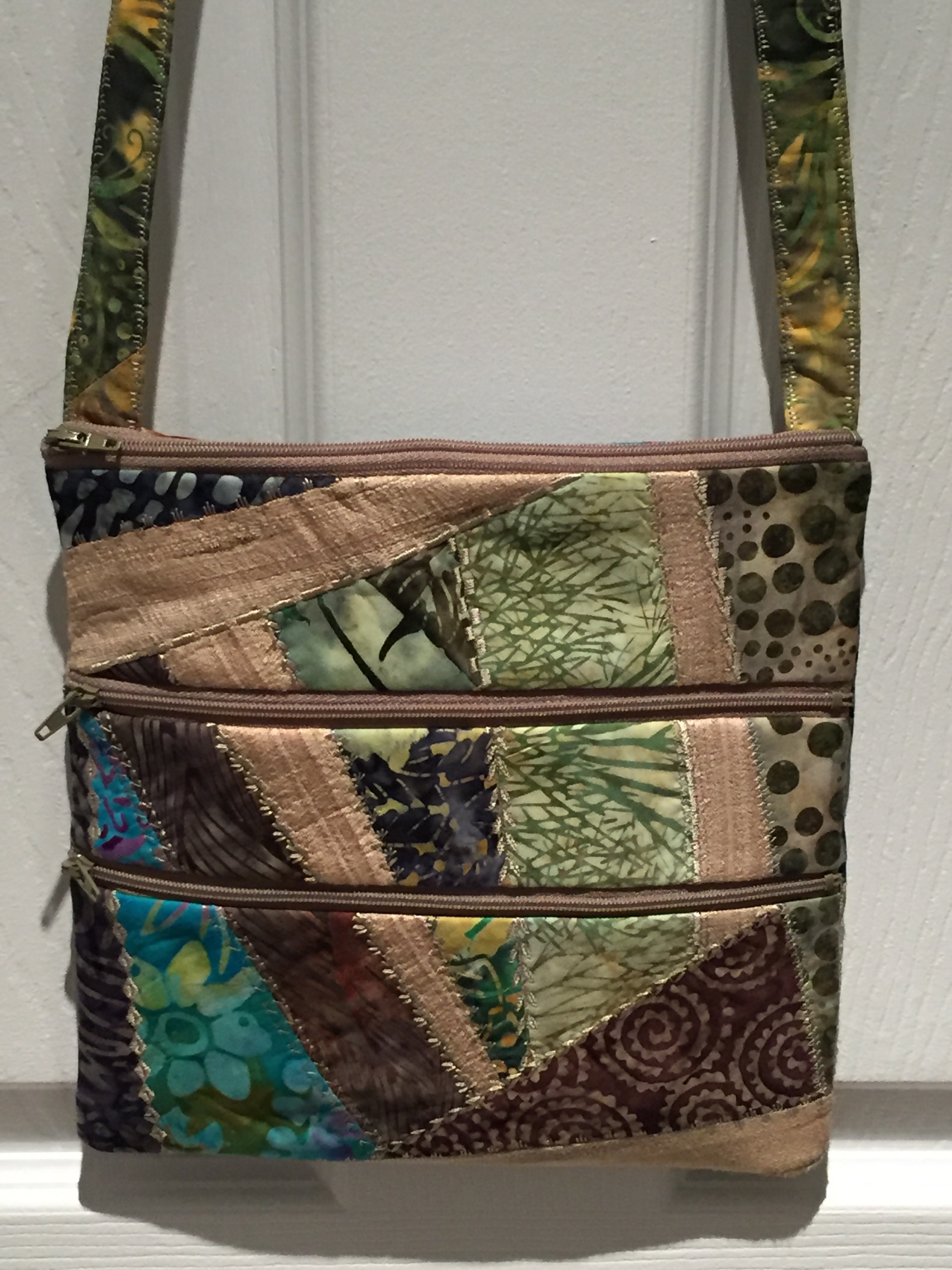
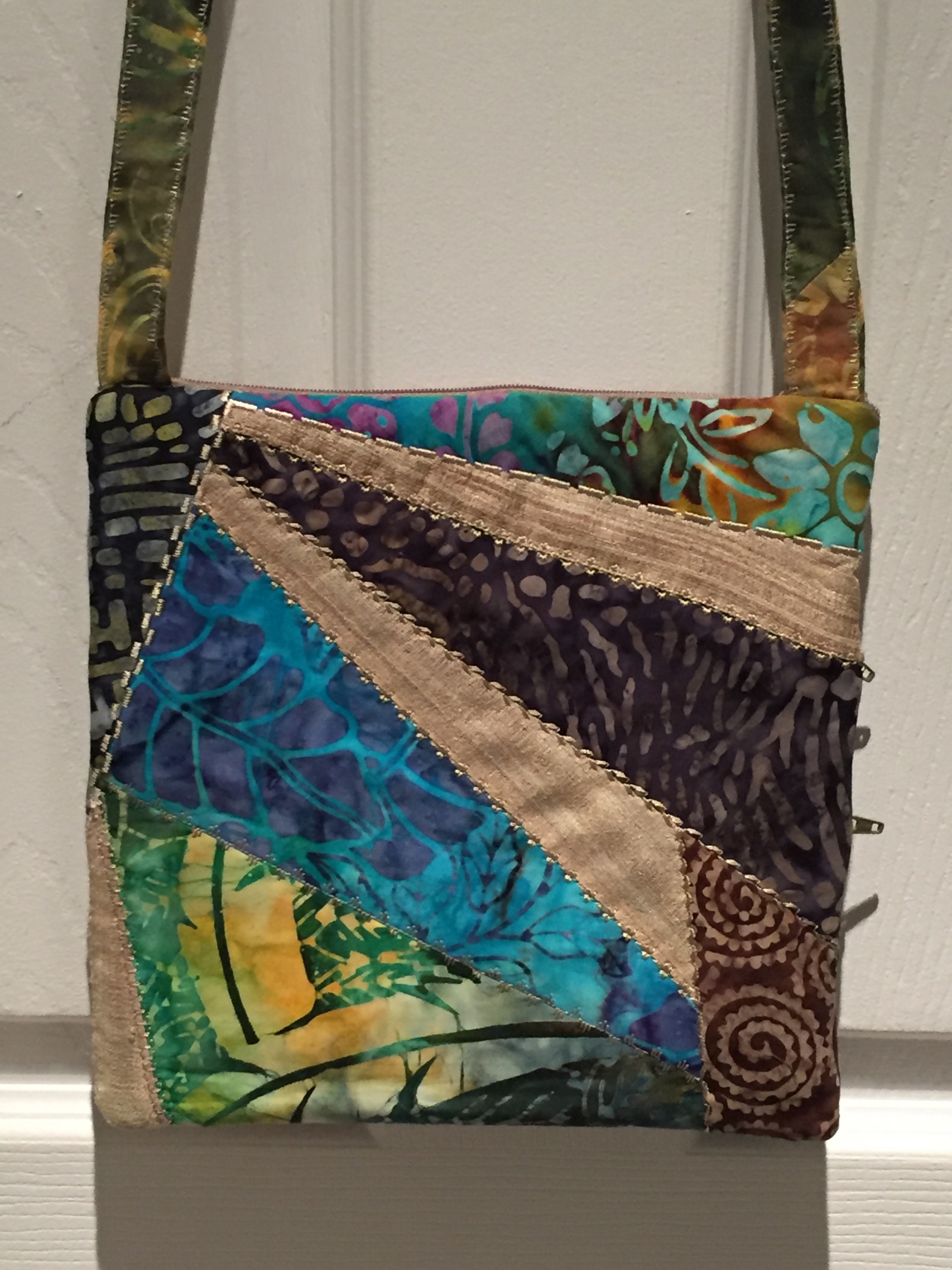
I was very happy with the crazy quilt bag I made to take to Peru. It worked very well – didn’t weigh much, held what I wanted to carry with me (including a small pack of tissues, hand cleanser, small wallet with credit cards, my Swiss army card, cloth for cleaning my glasses…).

So yesterday, after I finished the quilt top and back, I got out the two leather skins I bought in New York in the spring of 2012, cut pieces for the back and front, cut lining pieces, picked up some longish zippers (I like using a zipper longer than I need and trimming it to fit – rather than working around the slide) and so after I finished pinning back, batting, and top of the quilt together this morning I made up the leather bag. It’s just shy of an inch wider than the original (9 1/2″; a bit under 9″ tall – a useful small size), with pockets on each side of the lining of the main compartment.

Used it this afternoon – comfortable and holds the small amount if stuff I carry with me. And wearable in the rain and snow unlike the fabric one.

Shawl Update


I bought this scarf/shawl last year. I loved the woven fabric even though the shawl itself was constructed as a closed loop. I couldn’t figure out how to wear it so I decided to open it up. But the fabric was a bit too short to use as a shawl and too wide to wear as a scarf.

Many of the small hanks of alpaca yarn I picked up while in Maximo’s workshop seemed to be in color blends I could use for a fringe on the shawl to extend the length. Added the fringe yesterday.

Turned out rather well! I had it on last evening. I can see I will now use it.

Crazy Quilt Shoulder Bag


I started with some raw silk scraps, then gathered bits and pieces of batik from my scrap boxes.

Now there are a couple of ways of setting up a crazy quilt piecing – the easiest is to cut a muslin block in the projected size, cover it with fabric pieces using a stitch,  flip and press technique, then trimming away the excess fabric when the block has been completely covered.

I didn’t make my fabric pieces that way. I began by sewing (and pressing) strips and largish triangles together until I had an assembled fabric 12″ x 10″ more or less. Then I created a second piece approximately the same size. Squared both pieces and trimmed them to 10″ x 10″.

Next I backed the crazy quilt fabric with a layer of quilt batting, top stitched each seam with rayon embroidery thread using a different decorative stitch for each seam.

I wanted a couple of compartments in my bag, so I cut one of the finished pieces in three, inserted zippers, and added the lining at each zipper location. Then the top zipper – the shoulder strap was attached at this point.

I added pockets to each side of the main compartment lining before attaching it at the top zipper. I finished the bag by placing right sides together and sewing the side seams starting with the lining; then the seam across the bottom of the bag (it’s a good idea to remember to unzip the top zipper before stitching the bottom seam so you can turn the bag right side out).

I turned the bag right side out by pulling it through the lining. Finally, I stitched the bottom of the lining and push it inside the bag.

The final step is to zipper the top of the bag and steam press it so it’s flat!

Generally, I prefer not to carry a purse, building pockets into my jackets and pants instead. But every now and again I need a small bag – this one will do nicely.

Attaching Elastic…

I’ve been making my own swimsuits forever – because I can’t buy one that fits exactly the way I want it to (you know, that flat bottom with skinny legs!). Many years ago I found this Kwik Sew pattern that produced a great swimsuit – 2 hours from start to finish. The only challenge was adding the elastic to the arm/neck and leg openings. I’ve always done it using a zigzag stitch on my embroidery machine but it’s a fiddle getting the slight amount of fullness distributed evenly. Takes quite a bit of pinning and an awkward hand position as I’m sewing the elastic in small segments. Once the elastic is in, the top stitching is no problem.

I got a new serger a couple of weeks ago (a Baby Lock Evolution) and I went for my new owner lesson. I explained to Heather, the teacher, I’ve been using sergers for more than 40 years, I didn’t need help threading the machine — what I wanted to learn was how to use the serger to apply elastic to swimsuits. I had come prepared with swimsuit fabric scraps and some elastic for us to try this out. So she found the appropriate elastic foot for my machine and we got to work.

IMG_5667
Here’s the challenge – the arm/neck opening on my swimsuit is 120″. For a comfortable suit I need 106″ of elastic so the amount of gathering is minimal, but I still need a bit of fullness to be accommodated in the elastic. There are two ways of achieving that gathering – with the differential feed and with the knob on the elastic foot itself. The instructions suggest the maximum amount of gathering with the differential foot – we tried that – way too much gathering; we adjusted the differential feed back to normal and just used the knob on the foot to adjust the tension on the elastic – it didn’t need much.

When I got home I started experimenting – the ratio of fabric to elastic: 1.13 so I cut a strip of fabric 15″ long, a strip of elastic 13 3/8″ (plus 2″ for the initial feed – marking the 2″ mark with a permanent marker and positioning the elastic with that mark at the needles leaving me 13 3/8″ of elastic to be sewn to the fabric edge). My goal was to attach the elastic to the fabric edge (using the 4 thread overlock stitch) and have fabric and elastic come out about even. It turned out that I actually needed a negative differential feed setting – 0.8 seemed to work well and very little tension on the foot knob. It took several tries to find the amount of gathering I was after but I thought I was close enough so I decided to try a swimsuit I had cut out and partially assembled.

My usual way of sewing up a swimsuit is to sew the side seams, the center back seam, the should seams and the crotch. To apply elastic with the serger I needed to leave the back center seam and the crotch seams open so I could work with the openings as flat fabric. The first swimsuit I worked on required a LOT of patience — I stitched the elastic into the neckline but the fabric gathered too much; I removed it, all 106″ of it, and tried again. Second try I didn’t have enough tension on the elastic itself and so I ran out before I got to the end of the fabric; again, I removed the elastic, readjusted the tension on the elastic foot and tried a third time. It actually took a fourth try to get the tension more or less right but in the end it worked.

The leg openings required a wee bit more tension — the first leg opening turned out nicely on the first try but the second was way too gathered. I ripped the stitching out and tried a second time — it was better (good enough to live with).

I serged the center back seam and the crotch, then turned the elastic and top stitched it in place — voilà I had a wearable swimsuit (I wore my new suit to aquafit class yesterday and a couple of gals commented favourably on it).

Having finished one swimsuit successfully I cut out a second and sewed it up. This time the elastic in the arm/neck opening went well on the first try, as did the leg openings. Serging the center back seam presented a bit of difficulty because I had to start the stitching on a double thickness of elastic (on my next swimsuit I will use a starter strip of double thickness of fabric to get the seam going) but a second try was successful. Again, I sewed up the center back seam, the crotch, turned and topstitched the elastic and swimsuit #2 was done!
IMG_5666

What a difference this foot has made to the process of swimsuit construction – the elastic is easily applied and the whole production from cutting out the fabric to finishing the sewing took about two hours. The elastic foot was definitely a good investment!

Jean Jacket III (3)

Yesterday was the third class for the Jean Jacket. During the week I’d worked on my jacket getting the outside and lining set up, attached the collar, sewn the front seams (top stitched one front seam – I left the other so I could show some constructiton elements to the gals), installled sleeve headers and shoulder pads. Once I was finished I wrote the gals:

Homework:
Here’s what I’d like us to have accomplished before Thursday:

  • The outside constructed (with sleeves completed and basted in – sewn in if you think they work)
  • The lining constructed (with hidden pockets) and sleeves inserted (basted or sewing – depends on whether you’re happy with the fit)
  • Collar constructed
  • Lower band constructed – sides seams on both outer band and band facing (don’t sew the bands together – this will all happen when we use the band to finish the bottom of the jacket!)

It seems like a lot but all of it will go quite quickly. With that prep work done, in Class #3 we’ll work on:

  • whatever of the above construction work you weren’t able to get to
  • put body of jacket and lining together at the collar
  • practice a Hong Kong Seam Finish for the sleeve cuff

That will leave us:

  • stitching front edges (front panel with front facing)
  • adding bottom band
  • attaching sleeve cuffs (on inside of sleeves)
  • making button holes and attaching buttons (or putting on snaps if that’s what you’re planning on using)

Yesterday, we pretty much accomplished what I’d hoped we would. The gals will carry on – they may even come to our next class (in two weeks) with the jacket done. It’ll be fun to see how their jackets turn out – I know they’re all going to fit quite nicely because we’ve been adjusting the fit as we’ve gone along.

While we were working, a woman visiting the shop watched while we worked – she culdn’t take the class this year, she said, but she plans on doing it next fall! Who knows, we might do this again if there’s enouogh interest.

I finished my jacket this morning:

  What you can’t see are the inner zippered pockets which turned out well.

I’m happy with the final product. It’s comfortable (although a slightly different fit than the other two jackets – go know how that happens since I carefully cut and stitched the elements in exactly the same way!)
This jacket has gone into my closet – my old denim jacket has come out and now resides in the goodwill pile.

Jean Jacket III (2)

A friend asked me today how my sewing class was going – because I hadn’t written about it afterward. In part, it’s because I didn’t take photos during the session, and also because I haven’t yet got to working on the denim jacket I’m making for myself. I do have to get to it, because Thursday will be here before I know it and I, too, need to have my “homework” completed.

Thursday was our second class – I wanted us to have the fronts and back assembled so we could try the body on and make any adjustments that were needed. We took in princess seams (both front and back), lifted shoulders a smidgeon, took in side seams a bit, particularly under the arms… We adjusted sleeve patterns just a tiny bit so the cut out sleeves will fit the armscye where we’ve changed the side/shoulder seams. So homework this week: to cut out the sleeves, assemble the bottom pieces, attach to the upper sleeve, sew sleeve underarm and insert sleeves into the body of the jacket.

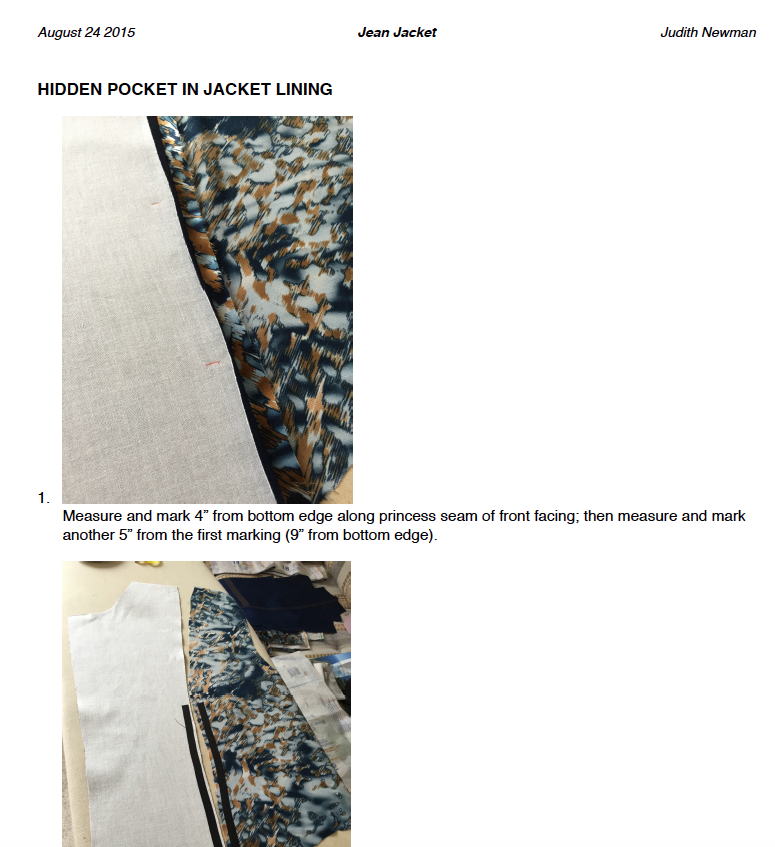
We worked on two things in class: creating and inserting the hidden pocket in the lining. I had prepared a set of instructions for making this hidden pocket so we had something to work from.

hidden pocket instructions

I had made the first pocket in my jacket lining before class; I finished the second one during the session.

We also worked on shoulder pads. I had done some research on shoulder pads (the jean jacket is shaped to accommodate them). I had decided the instructions I found in an old Reader’s Digest (1979) “Complete Guide To Sewing” would work well. So I showed them the pads I had made, and shared with them the “pattern” pieces I’d prepared to construct them.

Everybody went home pleased at having made considerable headway on their jackets.

When I tried on the body of my jacket I thought the front at the sleeve gaped a bit so I created a small dart in front (from bust point to armscye), then basted in the sleeve top to see how it would fit – no go! I’d put in a temporary dart in the front of the sleeve so it would fit the opening and adjusted the underarm seam. The whole assembly pulled and the sleeve twisted! So I took out the dart in both sleeve and jacket front and basted the sleeve back in. Definitely a better fit. Now I have to removed the sleeve, press the front and sleeve top (to remove the needle holes left from the basting) – assemble the sleeve and sew it all back together again.
IMG_5573
The back lining is ready to go, as are the two front lining panels – all I need to do is join them at the shoulders and side seams; won’t take long.
IMG_5574

Then I’ll put sleeves in the body and in the lining and stop there.

Next class (#3) we’ll make the last adjustments to the fit, then join lining to body with the collar. Once that’s done, we’ll be able to add the bottom band and sleeve inner cuffs which join lining to body at those two locations finishing the jacket construction.

The last step will be buttonholes and buttons and the jackets will be complete.

For Carrying Stuff

 
I don’t carry a traditional wallet – several years ago I pared down what I carried with me – wanted it to fit in a pocket so I made a small wallet from some ripstop scraps I have. The corners were becoming quite worn so I decided to make a new one.

The side zipper allows my various pieces of ID to fit in easily (drivers license, car ownership, health card…); the top zipper opens for cash, second zipper for change, third zipper has nothing there yet (in case I need it), fourth zipper for an extra house key and my universal screw driver.

I keep my credit cards separate (although I could rearrange stuff and put the credit cards in the top zippered compartment of the orange wallet and have everything in one).

I use this second small bag for the credit cards (cards in RFID envelopes). It’s not likely both wallets will get stolen since they are in different pockets! 

Together they weigh almost nothing and I can go without a purse. That’s a “good thing”!

Travel Vest II

My original travel vest was a ScotteVest with something like 22 pockets (pockets within pockets – all for specific purposes). I loved having all the pockets, but the vest was just a tiny bit snug if I was wearing a fleece underneath and when the pockets were loaded the vest pulled forward and was uncomfortable on my neck!

So I made my own travel vest by adapting a jacket pattern. Turned out very well and I’ve worn it lots both for travelling and for out and about when I’m home. The vest lets me go without a purse since I can put the things I want with me (credit cards, some cash/change, cough candies, kleenex, iPhone…) in the pockets. However I quickly realized there were a couple of things I’d like to change on the vest – I had installed a zipper that went to the bottom of the front opening – can’t sit in it – it’s just a one-way zipper so I have to leave it open to sit comfortably. Second, only half of the pockets had zippers – I immediately installed some velcro after the fact, but it’s difficult to open those pockets – you have to really tug. And the neck (with collar) had the same problem as the ScotteVest – too high and when the vest was loaded it dragged my neck forward.

So I modified the vest – cut off the collar (couldn’t do that with the ScotteVest because of the metal zipper and I didn’t have any fabric to create a binding), and bound the neckline. I also added a couple of buttons as toggles at the neckline so I could leave the zipper open and still have the vest closed. Much better.

But I still thought I’d like to rectify the other details that bugged me when I wore the vest.

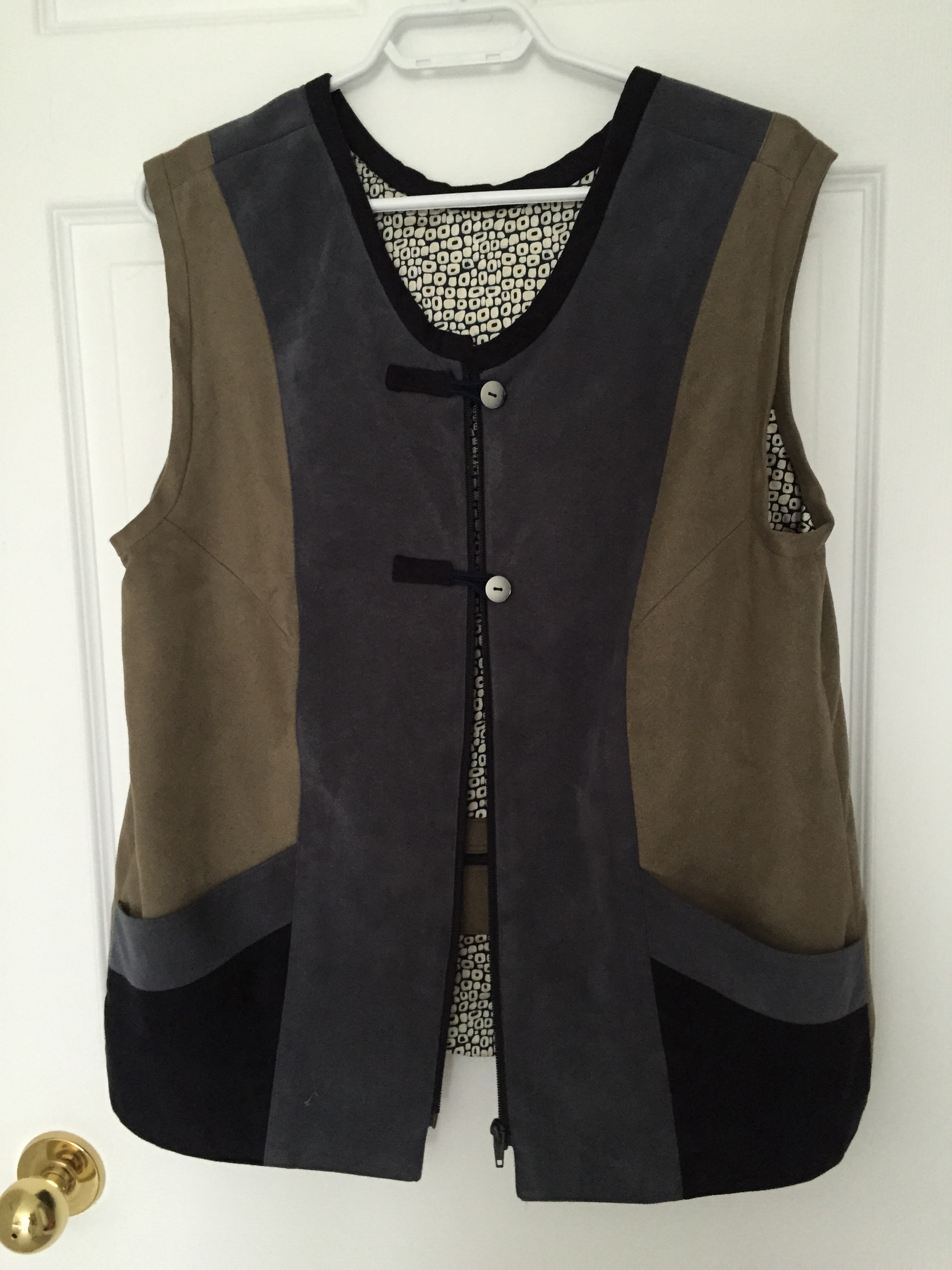
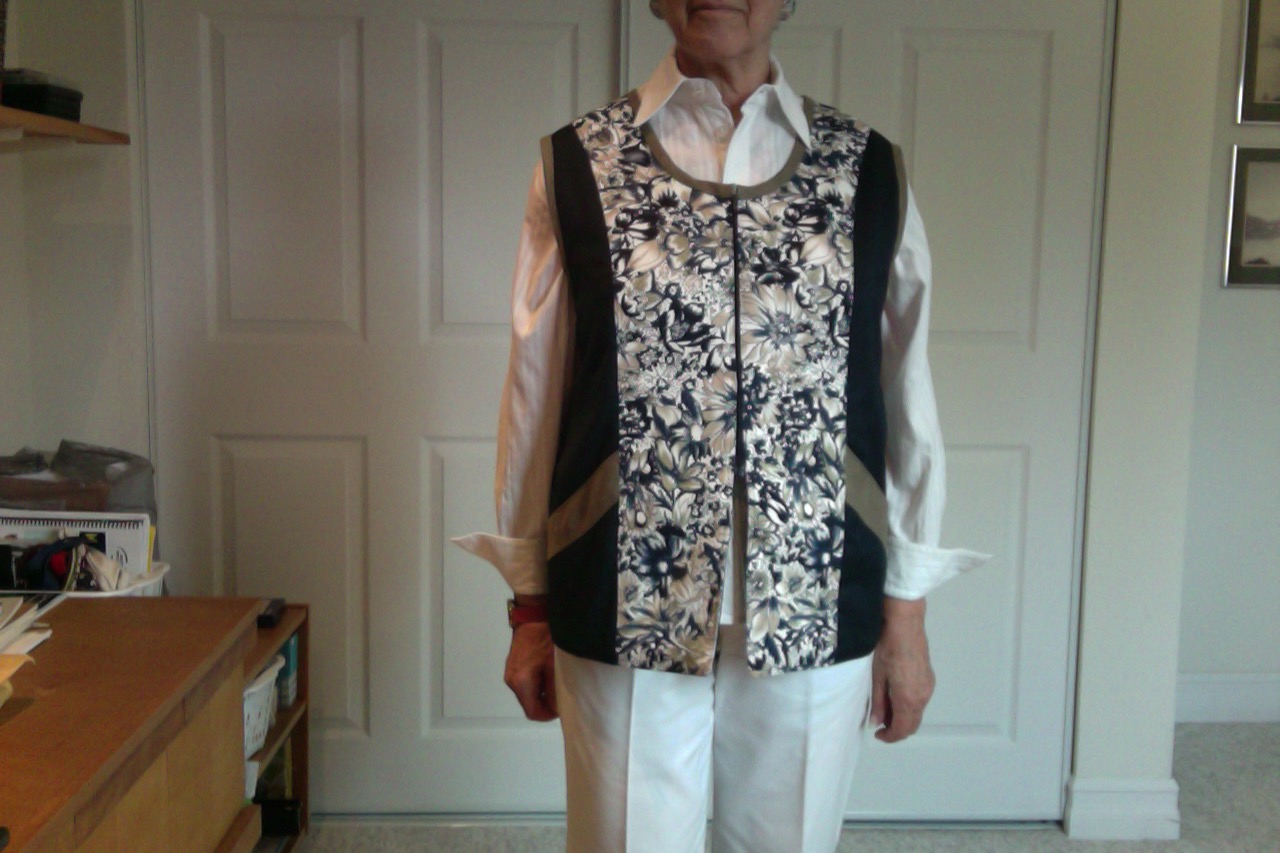
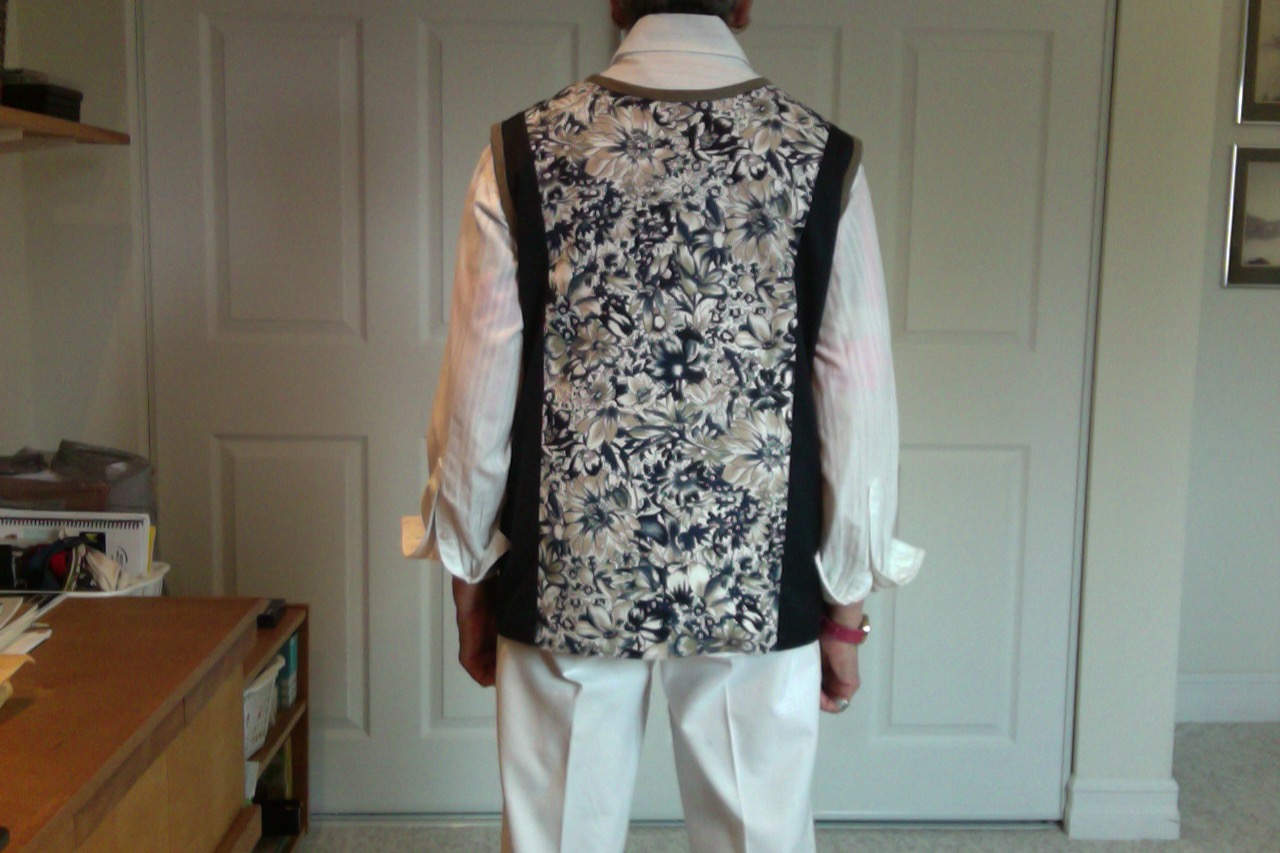
So Travel Vest II:
vest 2

The zipper starts at the waist – (still a one way zipper) – I can sit without having to unzip the vest. (Oh, I stitched in a key ring while I was constructing the outside front in the right outside pocket so my keys can’t fall out!)

The back fits really well:vest 1

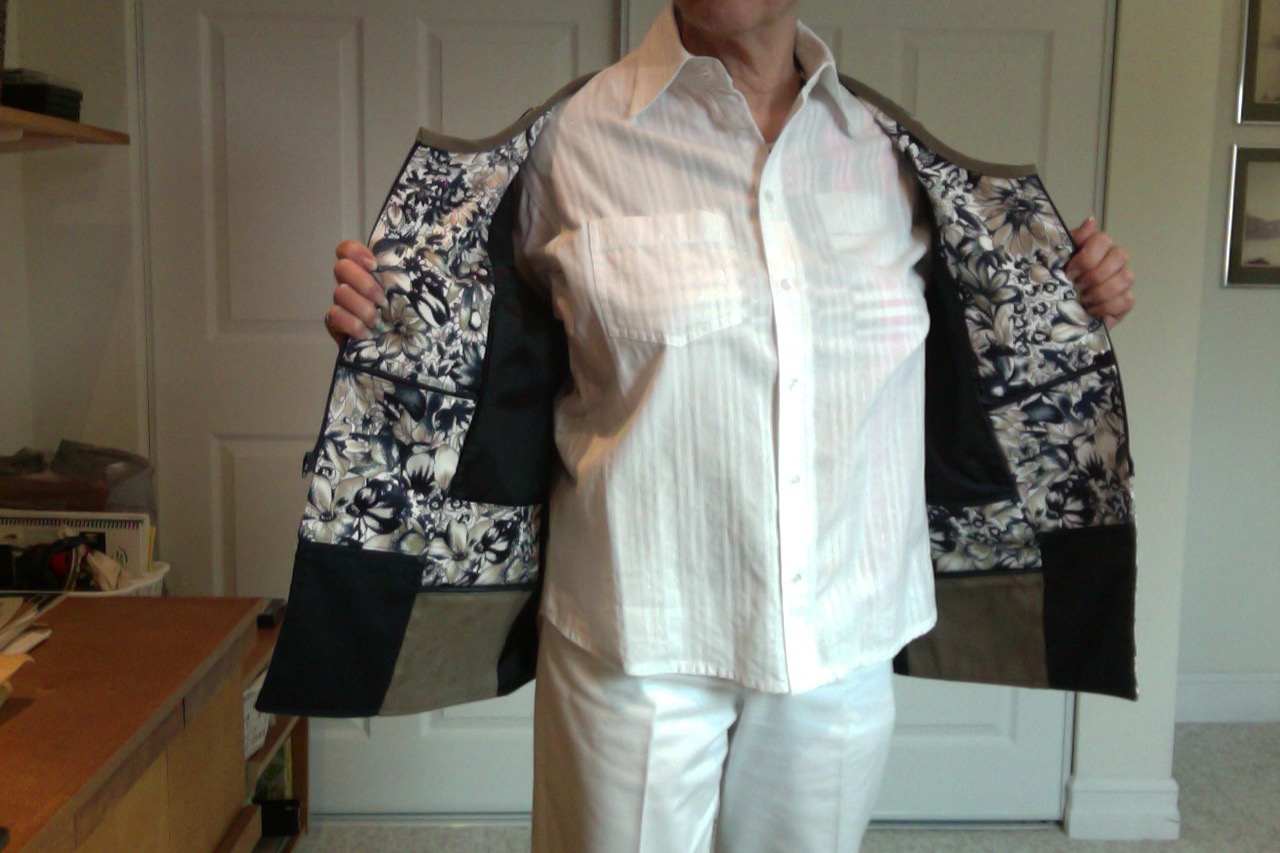
And I put zippers on seven of the eight pockets – I left the deep pocket on the left side without a zipper – handy for dropping in change, or kleenex, or sales receipts! What you can’t see is I also put two hidden pockets in the facing/lining seam (as I did in the Jean Jacket). Those are the most handy of all – they’re large enough to take my passport (in an RFID shielded envelope) tucked under my arm against my body without showing). So I have ten pockets in all.

vet 3

The only thing I’m not happy about is how the fabric drapes – the twill is stiffer than the faux suede I used on the first. The vest doesn’t move quite as nicely as the original.

So, The Wheels…

OK, so I was thinking about the wheels… my fold up cart measures 25″ in length, not an option, too long.

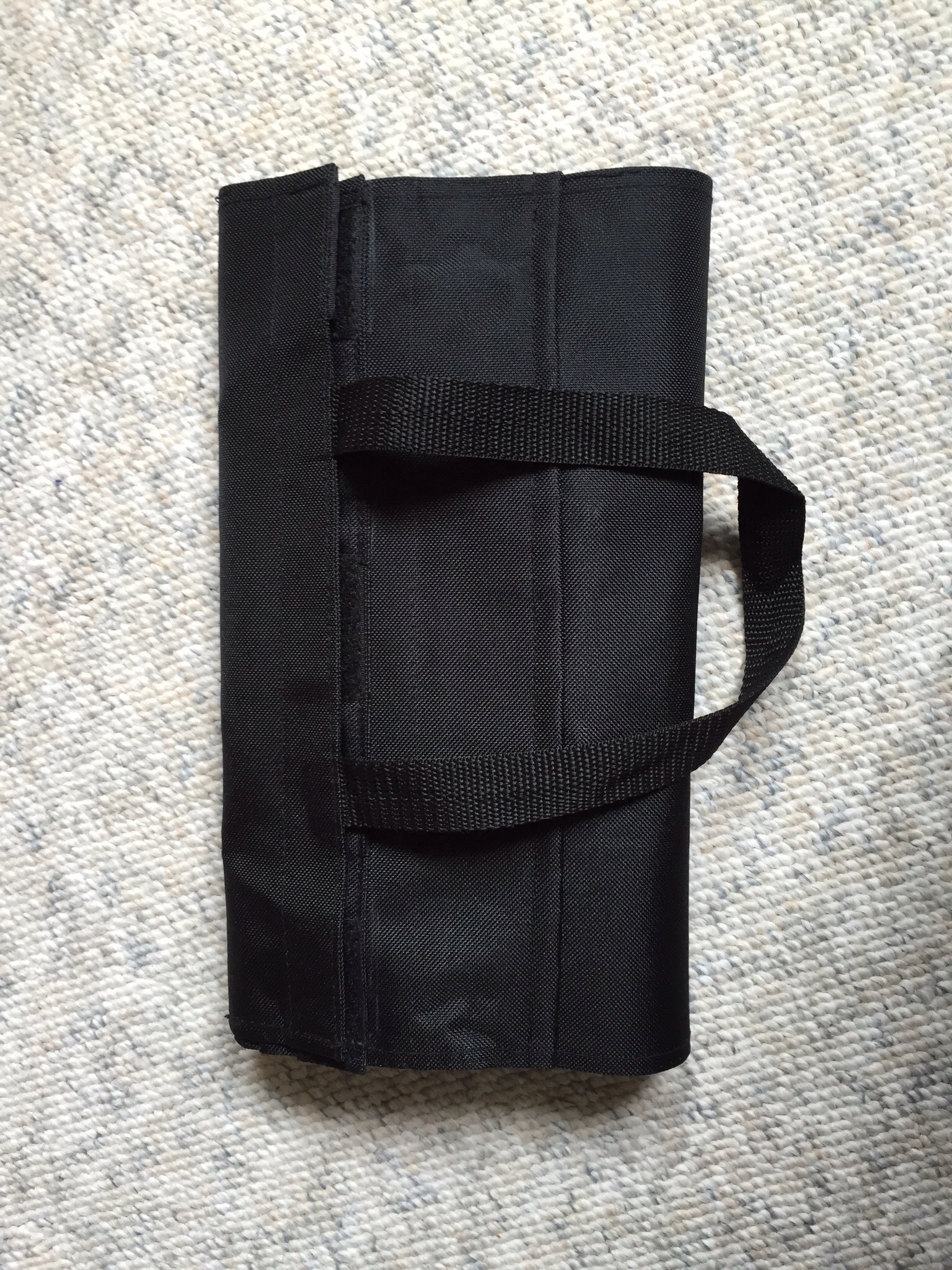
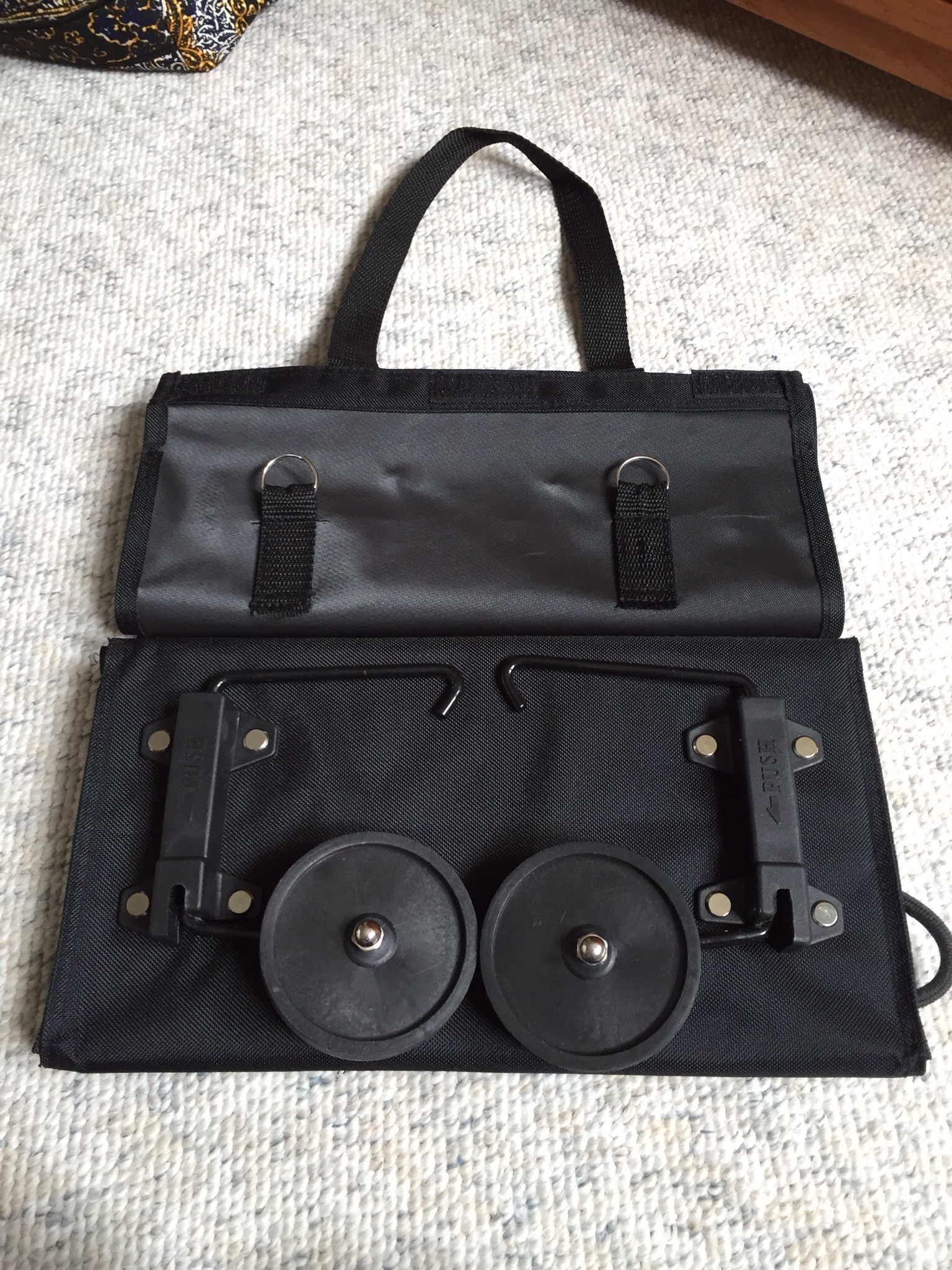
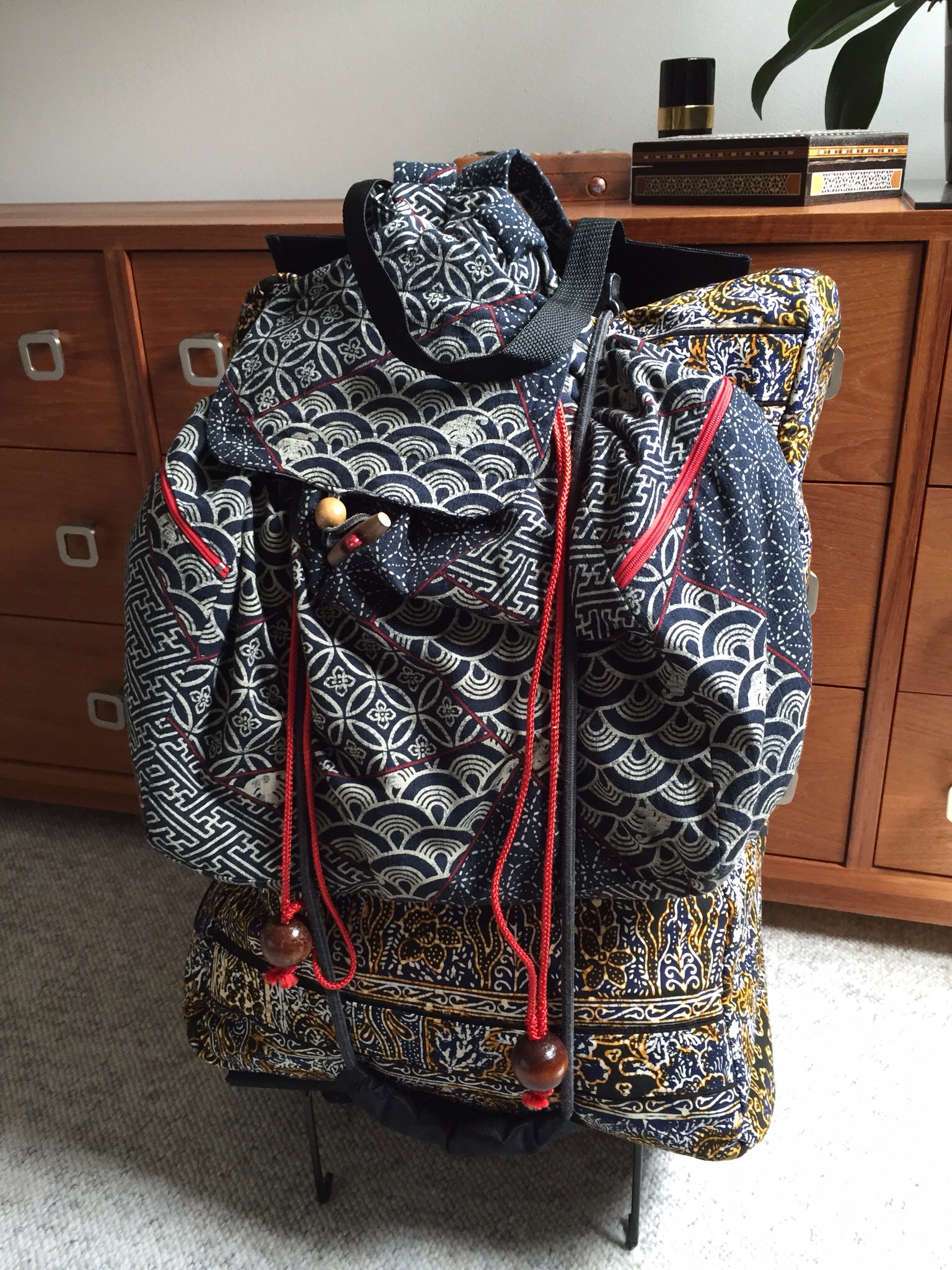
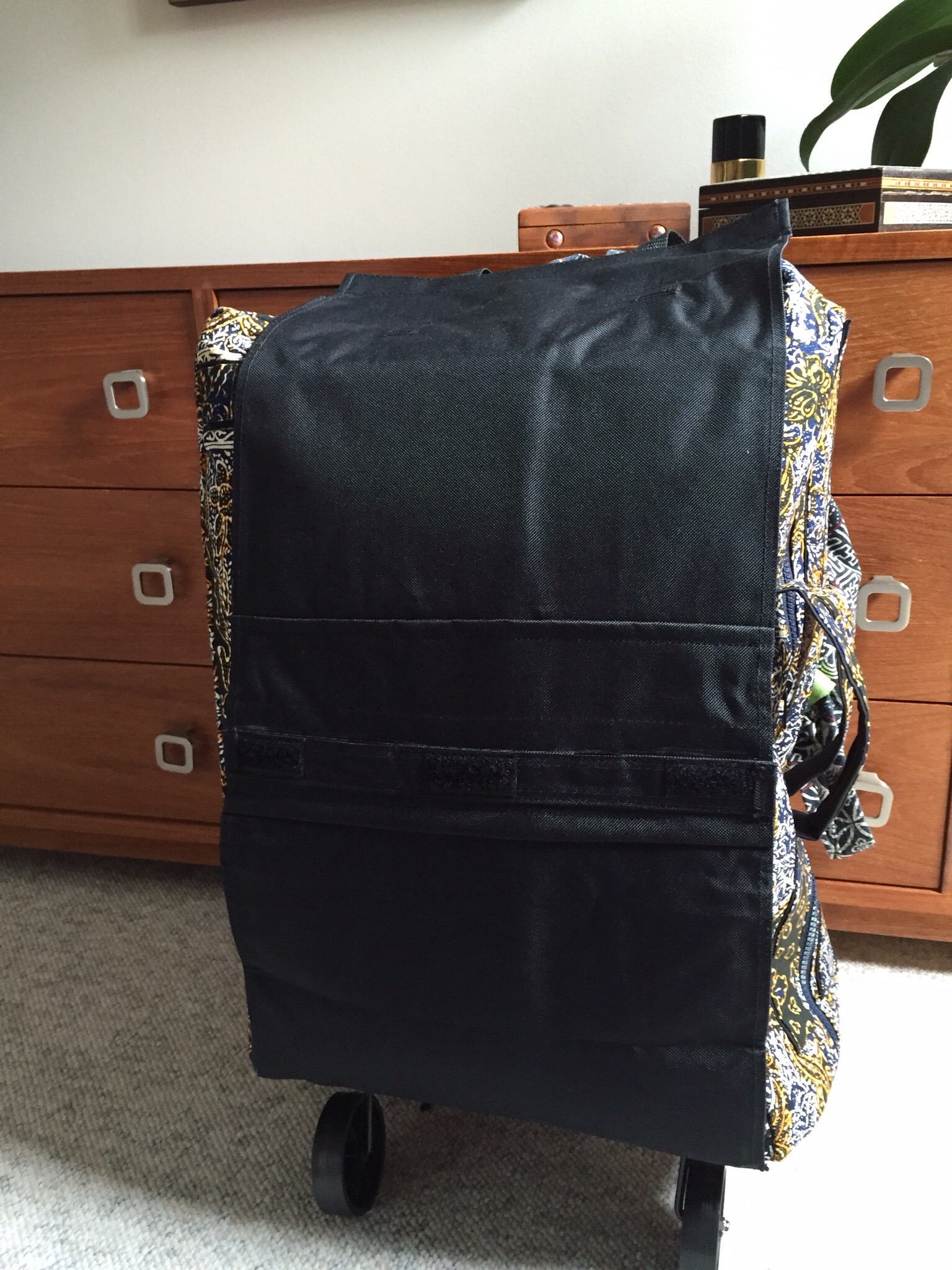
I remembered a wheeled shopping bag/cart I bought a couple of years ago, never used it. Found it in the sewing room closet.  Too long and narrow as it was to use as a carry-on, so I took it apart, cut off three of the four sides, added a “sleeve” for a bungy cord to slide through at the bottom, a couple of rings for the cord to hook to at the top, and the velcro from the cut away front to the back so I can fold it all up and tuck it away. Here it is folded up… With the wheels opened out it works perfectly with the carry-on, and I can slip my backpack in as well – better then on my small hard-side bag! 

This is the back:

How perfect is this?

Carry-on Bag – Problem Solved!

IMG_5197

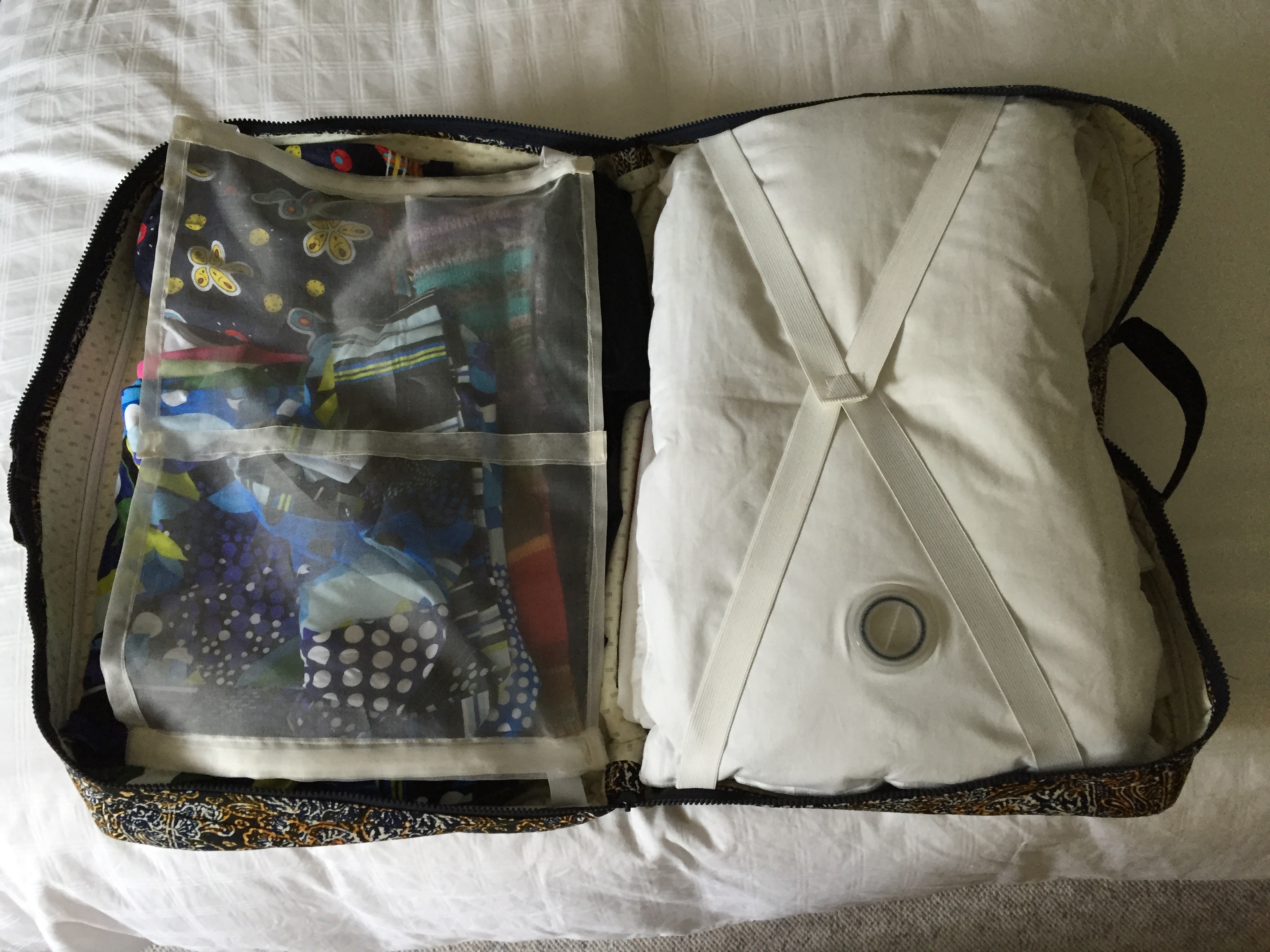
So my problem was the piece of foamcore I put along the bottom to make it more rigid – take it out and the bag opens flat! I added some elastic to hold stuff in on one side and an organza piece on the second side (may take out the organza and replace it with elastic). Much easier to pack now.

The bag holds clothing for a week, plus my travel pillow easily, maybe even one bag of cosmetics.

So now, I’m sitting on hold with Air Canada to ask whether my folding luggage cart (which I still have from the days when luggage didn’t have its own wheels – you put it on the cart to move it along) will be accepted as carry on!

folding luggage cart

Difficult question, it seems – I’m on hold while the poor soul on the other end of the line checks with superiors about this one!

Answer: If the length of the cart is 21.5″ or less it’s OK. Now I have to go measure my cart!